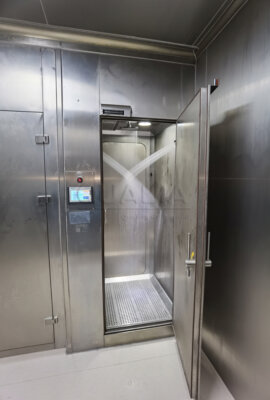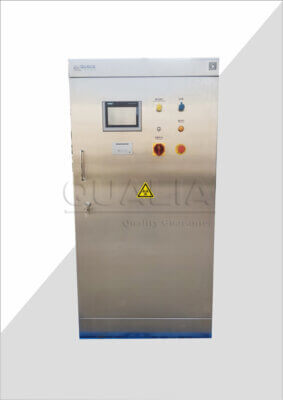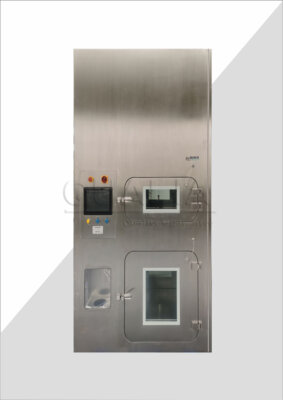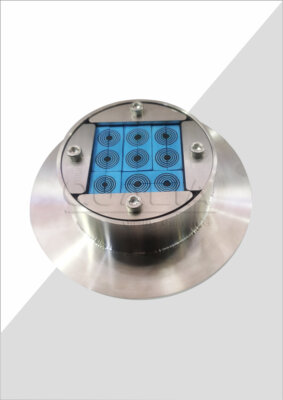

Una ducha química que se activa de forma visible, completa su ciclo y se vacía sin incidentes puede, aun así, no lograr una descontaminación adecuada —y esa deficiencia rara vez sale a la luz hasta que se lleva a cabo una auditoría de validación formal o, peor aún, una investigación de incidentes—. Los modos de fallo más relevantes no siempre son dramáticos: una válvula mezcladora atascada en una posición térmica incorrecta, un conjunto de boquillas parcialmente obstruido o una obstrucción en el desagüe que retiene el efluente estancado el tiempo suficiente como para afectar a la integridad de la cascada de presión. Cada uno de estos problemas puede superar una comprobación operativa visual y, sin embargo, no superar una prueba de cualificación controlada. Las decisiones que determinan si una secuencia de salida es defendible ante un escrutinio riguroso se toman en la fase de especificación —tipo de válvula, arquitectura de los sensores, lógica de enclavamiento y asignación de alarmas a registros— y no durante la puesta en servicio. Los lectores que se ocupen de la aceptación de las instalaciones, el diseño de protocolos de salida o la revisión posterior a un incidente encontrarán las condiciones específicas que distinguen un fallo recuperable de uno que detiene por completo la secuencia de salida.
El análisis de fallos comienza con la pulverización y la aplicación de productos químicos
La pulverización es la parte más visible de una ducha de emergencia, y precisamente por eso suele ser la que se somete a un control menos riguroso. El funcionamiento visible de la pulverización indica al evaluador que el agua llegó a las boquillas y que la presión fue suficiente para producir un patrón de pulverización. Sin embargo, no confirma que dicho patrón cubriera las zonas del cuerpo requeridas, que el tiempo de contacto cumpliera con las especificaciones del ciclo ni que la temperatura del fluido suministrado se encontrara dentro de un rango seguro y eficaz. Las evaluaciones que se limitan a la observación de la pulverización crean una deficiencia de capacidad documentada que los equipos de validación o los auditores de bioseguridad identificarán tan pronto como se introduzcan parámetros de ensayo controlados.
La configuración de la válvula mezcladora es el punto en el que se originan los fallos de suministro y donde existe —o no— la vía de recuperación. Una válvula mezcladora termostática atascada en la posición de «totalmente caliente» produce temperaturas que provocan quemaduras y obligan al operario a salir del chorro antes de que se cumpla el tiempo de contacto requerido; el ciclo se completa en el sistema de control, pero la descontaminación no. Una válvula atascada en la posición de «totalmente fría» suministra una temperatura que provoca un choque térmico y reduce la tolerancia al enjuague, con un resultado similar. Aunque resulte menos evidente, un caudal combinado insuficiente procedente de la válvula mezcladora produce un patrón de pulverización que parece funcional en la boquilla, pero que no genera el volumen suficiente para enjuagar o diluir la carga contaminante en toda la zona de exposición. Las directrices de la OMS sobre la adecuación de la descontaminación establecen que el volumen de caudal y las condiciones de contacto, en conjunto, constituyen la base para un tratamiento eficaz de las superficies, y no solo el inicio de la pulverización.
La selección de válvulas en la fase de diseño conlleva una consecuencia negativa posterior que resulta difícil de corregir una vez instalado el sistema. Una válvula ASSE 1017 está diseñada para aplicaciones de distribución y carece del comportamiento de derivación de agua fría necesario en el servicio de grifos de emergencia. Si se produce un fallo en el suministro de agua caliente con una válvula ASSE 1017 instalada, la válvula se cierra por completo en lugar de pasar por defecto al flujo de agua fría, lo que elimina la capacidad de descontaminación sin posibilidad de recuperación. Por el contrario, especificar una válvula de atemperación para grifos de emergencia ASSE 1071 preserva el comportamiento de derivación y ofrece una opción de recuperación mediante procedimientos. Se trata de una decisión de adquisición, no de una adaptación posterior; para cuando surja en la fase de homologación, la solución requerirá un rediseño del sistema en lugar de una simple actualización de los procedimientos.
Cada modo de fallo tiene una consecuencia distinta para la secuencia de salida y para el registro de auditoría.
| Modo de fallo | Efecto en la ducha | Riesgo de descontaminación / Cuestión objeto de auditoría |
|---|---|---|
| Válvula mezcladora termostática atascada en la posición de agua caliente máxima | Temperatura muy alta, peligrosa | Impide una descontaminación eficaz; riesgo de lesiones secundarias |
| Válvula mezcladora termostática atascada en la posición de frío máximo | Hipotermia, reducción del tiempo de lavado | Descontaminación inadecuada; riesgo de choque térmico |
| Caudal combinado insuficiente procedente de la válvula mezcladora | Volumen de descarga insuficiente | Contaminantes que no se han eliminado por completo al enjuagar; mayor riesgo de exposición |
| Corte en el suministro de agua fría | La válvula mezcladora se cierra por completo; caudal nulo | Elimina la capacidad de descontaminación; obliga a la parada de la salida |
| Uso de la válvula mezcladora ASSE 1017 (tipo de distribución) en una ducha de emergencia | Control de temperatura impreciso, sin derivación de agua fría en caso de avería | Fallo en la entrega sin posibilidad de recuperación; incumple los requisitos de la norma |
El escenario de pérdida del suministro de agua fría merece una atención especial, ya que es el único modo de fallo de este grupo para el que no existe una solución de mitigación en las configuraciones estándar de las válvulas mezcladoras. Cuando se pierde la presión del agua fría, la válvula mezcladora termostática se cierra por completo para evitar quemaduras —lo cual es la respuesta correcta de seguridad térmica, pero da lugar a que el caudal de la ducha sea nulo—. La secuencia de salida no puede continuar, y no existe ninguna solución alternativa que sustituya al restablecimiento del suministro. Esto convierte la continuidad del suministro de agua fría en una restricción en la fase de diseño, y no en una contingencia operativa.
El funcionamiento visual no garantiza el control de la descontaminación
El patrón de aprobación que con mayor probabilidad genera un riesgo de auditoría es aquel en el que un equipo de puesta en servicio activa la ducha, observa el chorro de agua desde todas las posiciones de las boquillas, comprueba que el desagüe se despeja y registra el resultado como satisfactorio. Este enfoque no es descabellado como comprobación funcional preliminar, pero no puede servir de base para la aceptación de un sistema de salida crítico para la descontaminación. La observación visual no permite confirmar que la temperatura del agua sea tibia en el punto de suministro, no permite verificar que el caudal cumpla el umbral de volumen exigido por las especificaciones del ciclo, ni detectar una obstrucción parcial de las boquillas que reduzca la cobertura sin eliminar el chorro visible. Cuando las pruebas de validación formales incorporan mediciones instrumentadas —sondas de temperatura, medición del caudal en el grifo, mapas de cobertura—, los sistemas aprobados únicamente sobre la base de pruebas visuales suelen mostrar desviaciones que estaban presentes desde el principio.
El riesgo de auditoría no consiste simplemente en que el sistema pueda funcionar por debajo de lo esperado. Consiste en que la instalación tenga un historial de aprobaciones que no pueda defenderse ante un cuestionamiento estructurado. Los auditores de bioseguridad que revisen los registros de los protocolos de salida según los principios de gestión de riesgos biológicos de la norma ISO 35001 buscarán pruebas de que se identificaron los modos de fallo y de que las medidas de control implantadas se verificaron según criterios definidos, y no solo se observó su funcionamiento. Un registro meramente visual no responde a la pregunta de qué se detectaría si el control de la temperatura se desviara o el caudal se degradara entre los intervalos de inspección.
La implicación para la planificación es que los criterios de aceptación deben definirse en términos que la observación visual no pueda cumplir. El rango de temperatura en el dispositivo de sujeción, el caudal mínimo y la geometría de cobertura de la boquilla son parámetros verificables que dan lugar a condiciones de «aprobado» o «suspendido». Definirlos antes de la puesta en servicio —y elaborar el protocolo de calificación operativa (OQ) en torno a ellos— subsana las lagunas que deja la revisión basada únicamente en la observación. Para los equipos que diseñan o revisan ducha química En los protocolos de cualificación, esta distinción entre la observación funcional y la verificación de parámetros controlados marca la diferencia entre un sistema que supera la revisión y otro que resiste el escrutinio de una auditoría. El Guía sobre el protocolo OQ para duchas de niebla La información sobre los criterios de aceptación relativos a la cobertura de la pulverización, el tiempo de contacto y la concentración química es directamente relevante para definir los límites de dicha prueba.
Los sensores y los enclavamientos aumentan las pruebas y la carga de mantenimiento
La monitorización instrumentada de la temperatura y el caudal genera un registro de pruebas válido ante una auditoría que la revisión basada únicamente en la observación no puede proporcionar. Una válvula de control de límite de alta temperatura con un sensor de temperatura integrado modula el caudal de agua caliente en respuesta a las condiciones medidas, proporcionando un control en tiempo real en lugar de una mezcla pasiva. Una válvula de control de caudal sensible a la presión supervisa el diferencial de presión entre las tuberías de suministro de agua caliente y fría y desvía el agua fría cuando dicho diferencial supera el umbral de diseño —un valor que varía según la instalación, pero que, en configuraciones de ingeniería, se ha situado en un rango de entre 5 y 20 psi—. En conjunto, estos componentes amplían la capacidad del sistema para detectar y responder a las variaciones en el suministro durante un ciclo de salida activo.
La disyuntiva que los equipos subestiman sistemáticamente es que cada componente añadido introduce su propia vía de fallo. Una válvula de control de límite de alta temperatura que no se haya calibrado según lo previsto puede desarrollar una deriva de medición que permita que la temperatura supere el punto de consigna de control sin activar una respuesta correctiva. El sensor parece funcionar —indica un valor y modula la válvula—, pero el valor indicado ya no refleja con precisión la temperatura suministrada. La protección para la que se instaló el componente se ve silenciosamente mermada, mientras que el registro de mantenimiento indica que el componente está presente y operativo. Lo mismo ocurre con la válvula sensible a la presión: si se aplazan las pruebas periódicas, es posible que la función de derivación no se active al diferencial correcto, lo que elimina la vía de recuperación para la que fue diseñada.
| Componente | Función | Requisitos de mantenimiento | Riesgo de fallo si no se le presta atención |
|---|---|---|---|
| Válvula de control de límite de alta temperatura con sensor de temperatura | Modula el caudal de agua caliente para regular la temperatura | Calibración periódica | La deriva de la calibración provoca una pérdida del control de la temperatura |
| Válvula de control de caudal sensible a la presión | Desvía el agua fría cuando el diferencial de presión supera los 5–20 psi | Pruebas periódicas | El bypass podría fallar, lo que eliminaría la vía de recuperación |
La cuestión de la carga que supone el mantenimiento debe abordarse en el marco de los criterios de aceptación, y no como una cuestión secundaria en el programa de mantenimiento de las instalaciones. Si los intervalos de calibración, los protocolos de prueba y las consecuencias de no realizar el mantenimiento no se definen antes de la puesta en servicio, la instrumentación aporta una evidencia aparente de control sin añadir una función protectora fiable. Para las instalaciones que gestionan obligaciones de mantenimiento continuo en los sistemas de duchas químicas y de gestión de efluentes, el Guía sobre el calendario de mantenimiento de las duchas de vapor Los procedimientos relativos a la inspección de boquillas, la calibración de sensores y la neutralización de efluentes ilustran el alcance de las obligaciones que conllevan los sistemas instrumentados más allá de la cualificación inicial.
Los procedimientos de recuperación determinan si una salida puede continuar
La asimetría más relevante en el análisis de fallos de las duchas químicas es la que existe entre los fallos de suministro del lado caliente y del lado frío, y es la que condiciona más directamente la decisión sobre el protocolo de evacuación. Estos dos escenarios no son simétricos en cuanto a sus consecuencias operativas, y tratarlos como equivalentes en el diseño del procedimiento da lugar a un protocolo que gestiona correctamente uno de ellos, pero falla en el otro.
Un fallo en el suministro de agua caliente, cuando el sistema incluye una válvula de control de caudal sensible a la presión correctamente especificada, activa un derivación de agua fría que mantiene un caudal considerable hacia el grifo. La temperatura suministrada desciende —posiblemente hasta la temperatura ambiente del agua fría—, pero se mantiene el volumen de descarga. Se trata de una situación de recuperación supervisada: el ciclo de salida puede continuar bajo supervisión, con documentación de la desviación, ya que sigue cumpliéndose el requisito fundamental de contacto y volumen sostenidos. Tanto el operador como el responsable de seguridad encargado de la supervisión deben comprender qué ha provocado el desvío y qué implica la desviación de temperatura para la adecuación de la descontaminación, pero no es necesario que la secuencia se interrumpa.
Un fallo en el suministro de agua fría produce el resultado contrario, sin que exista una vía de recuperación equivalente. La válvula mezcladora termostática se cierra por completo en respuesta a la pérdida de presión del agua fría —un comportamiento de seguridad térmica previsto que evita las quemaduras, pero que elimina por completo el caudal—. No existe ningún bypass que mantenga el suministro a una temperatura alternativa. La secuencia de salida no puede continuar porque no hay nada con lo que continuar. Esta avería no tiene solución procedimental en las configuraciones estándar de las válvulas mezcladoras; la recuperación requiere restablecer el suministro de agua fría o rediseñar el sistema para proporcionar una vía de suministro alternativa. Reconocer esta asimetría antes de redactar el protocolo de salida determina si dicho protocolo contiene un árbol de decisión auténtico o uno falso.
| Escenario de fracaso | Respuesta de Valve | ¿Un camino hacia la recuperación? | Decisión de salida |
|---|---|---|---|
| Fallo en el suministro de agua caliente | La válvula de control de caudal desvía el agua fría y mantiene un caudal considerable | Sí, pero la temperatura baja | La salida puede continuar bajo supervisión |
| Fallo en el suministro de agua fría | La válvula mezcladora termostática se cierra por completo, no hay caudal | No hay derivación disponible | La secuencia de salida debe detenerse; es necesario rediseñar el sistema o buscar un método alternativo de apagado |
La implicación operativa es que los procedimientos de recuperación deben redactarse de forma que se adapten al tipo de fallo, en lugar de aplicar una respuesta genérica a cualquier avería de la ducha. En el caso de un fallo en el lado caliente, el procedimiento debe definir los requisitos de supervisión, las expectativas de control de la temperatura y el umbral a partir del cual debe interrumpirse la secuencia de salida, aunque se mantenga el caudal. En el caso de un fallo en el lado frío, el procedimiento debe especificar la interrupción inmediata de la secuencia de salida y las condiciones para reanudarla, ya que ninguna medida de gestión procedimental puede sustituir a la ausencia de caudal.
Requisitos de aceptación: alarma, actuación y registro
Los criterios de aceptación resultan fiables cuando cada modo de fallo que pueda detener o deteriorar la secuencia de salida cuenta con un estado de alarma correspondiente, una acción definida por parte del operador, una ruta de recuperación documentada o un umbral de terminación, y un requisito de registro. Sin esa estructura, el sistema podría superar la cualificación de puesta en servicio y, aun así, la instalación se quedaría sin las pruebas necesarias para demostrar una descontaminación controlada en caso de auditoría o revisión posterior a un incidente.
La norma ASSE 1071 para válvulas de regulación de temperatura de grifería de emergencia incluye un requisito de derivación en caso de fallo: la válvula debe pasar automáticamente al flujo de agua fría si falla el suministro del lado caliente, manteniendo el funcionamiento de la ducha incluso a una temperatura reducida. Este comportamiento de derivación es una condición comprobable —o bien se activa correctamente ante un fallo simulado del lado caliente, o bien no lo hace— y crea un punto de control específico de «aprobado/suspendido» al que la documentación de aceptación puede hacer referencia directamente. Especificar y probar este comportamiento durante la cualificación transforma la selección de la válvula de una mera decisión de adquisición en un criterio de aceptación auditable.
Una alarma de alta temperatura que avisa tanto a los ocupantes como a la dirección de las instalaciones cuando la temperatura de distribución supera el rango aceptable representa la cadena de detección-acción-documentación que los marcos de gestión de riesgos biológicos exigen para los sistemas de seguridad críticos. La norma ISO 35001 establece que la gestión de riesgos biológicos requiere que las fallas se identifiquen, se actúe en consecuencia y se registren como parte de un sistema de control operativo, y no simplemente que se instalen los equipos. Una alarma que se activa pero que no está vinculada a una respuesta definida por parte del operador ni a un requisito de registro no cumple ninguna de esas tres condiciones. En el caso concreto de la ducha de emergencia química, una alarma de sobrepaso de temperatura requiere un procedimiento de respuesta por escrito, una vía de escalación definida y un registro que relacione el evento de la alarma con la acción emprendida y la decisión de salida tomada.
En sistema de descontaminación de efluentes La parte situada aguas abajo de la ducha química sigue la misma lógica de «alarma-acción-registro»: una obstrucción en el desagüe o un fallo en el tratamiento durante un ciclo de salida activo no es solo una cuestión de mantenimiento, sino un incidente que afecta a la integridad de la descontaminación y que requiere una respuesta trazable. Los criterios de aceptación del sistema de ducha deben extenderse hasta el recorrido del efluente, y no limitarse al desagüe.
La prueba práctica para comprobar que los criterios de aceptación están completos consiste en repasar cada modo de fallo de la tabla de revisión y preguntarse si la documentación existente puede responder a tres preguntas: ¿qué alarma o indicador señala este fallo?, ¿qué medida toma el operador? y ¿dónde se guarda el registro de esa respuesta? Si no es posible rastrear un modo de fallo a través de las tres respuestas, los criterios de aceptación están incompletos, y esa laguna saldrá a la luz en una auditoría formal de bioseguridad antes de que se detecte en una prueba controlada.
La conclusión más relevante que se extrae de un análisis estructurado de los modos de fallo no es qué componentes fallaron, sino si el protocolo de aceptación se diseñó, en primer lugar, para detectar y documentar los fallos. El tipo de válvula, los intervalos de calibración de los sensores, la lógica de enclavamiento y la asignación de alarmas al registro son decisiones relacionadas con las especificaciones —la mayoría de ellas tomadas antes de la fabricación— y revertirlas tras la puesta en servicio suele requerir un rediseño, más que un simple ajuste de los procedimientos. El escenario de fallo en el suministro de agua fría ilustra esto de forma directa: ningún procedimiento, alarma o protocolo de supervisión puede restablecer el funcionamiento de una válvula mezcladora termostática que se haya cerrado por completo debido a la ausencia de presión de agua fría. Ese fallo debe gestionarse en la fase de diseño.
Antes de aceptar un sistema de salida de ducha química, la revisión debe poder confirmar qué fallos detienen la secuencia, cuáles permiten que esta continúe bajo supervisión y qué documentación genera cada resultado. Si esas respuestas no figuran en los criterios de aceptación antes de que comiencen las pruebas de cualificación, las pruebas darán lugar a desviaciones que requerirán una revisión o bien a un informe de aprobación que no se podrá defender cuando se planteen las preguntas más adelante.
Preguntas frecuentes
P: ¿Qué se debe hacer inmediatamente después de que una prueba de homologación de la ducha de emergencia revele una desviación en la temperatura o en el caudal?
R: Es necesario rastrear el origen de la desviación antes de firmar cualquier acta de aceptación. Si la desviación se debe a la selección de una válvula —por ejemplo, una válvula conforme a la norma ASSE 1017 instalada en un sistema de emergencia—, la solución requiere un rediseño del sistema, no una actualización del procedimiento ni una nueva prueba. Si se debe a una deriva en la calibración de un sensor, es necesario definir en los criterios de aceptación el programa de calibración y las consecuencias de no cumplir los intervalos antes de que comience la nueva prueba. Cerrar la desviación sin identificar si se trata de un fallo en la fase de diseño o en la de mantenimiento deja la causa raíz sin resolver.
P: ¿Se aplica este marco de modos de fallo si la ducha química da servicio a una instalación de nivel BSL-2 en lugar de a un entorno de nivel BSL-3 o BSL-4?
R: El comportamiento de las válvulas, los requisitos de cobertura y los modos de fallo de la integridad del drenaje son los mismos independientemente del nivel de contención; los principios físicos no cambian. Lo que cambia en los niveles de contención más bajos es el escrutinio normativo y de auditoría que se aplica a la documentación del protocolo de salida. Una instalación de nivel BSL-2 puede tener mayor flexibilidad procedimental a la hora de gestionar las condiciones de recuperación supervisadas, pero el escenario de fallo en el suministro de agua fría sigue produciendo un caudal nulo sin vía de recuperación en las configuraciones estándar de las válvulas mezcladoras termostáticas. Las decisiones tomadas en la fase de diseño en torno a las especificaciones de las válvulas y la continuidad del suministro de agua fría siguen siendo trascendentales, incluso cuando los requisitos formales de cualificación son menos prescriptivos.
P: ¿Merece la pena instalar una válvula de control de caudal sensible a la presión si la instalación ya cuenta con una válvula de control de límite de alta temperatura?
R: Sí, porque los dos componentes abordan modos de fallo diferentes y ninguno sustituye al otro. La válvula de control de límite de alta temperatura responde al exceso de temperatura en el lado caliente; la válvula de control de límite de caudal sensible a la presión responde a la pérdida de diferencial de presión y mantiene el derivado de agua fría cuando falla el suministro del lado caliente. Una instalación que cuente únicamente con el componente de control de temperatura carece de un mecanismo para mantener el caudal de la ducha durante un fallo en el suministro del lado caliente. La contrapartida es que cada componente añadido conlleva su propia obligación de calibración y comprobación; sin embargo, la vía de recuperación que ofrece la válvula sensible a la presión en caso de fallo del lado caliente no está disponible mediante ninguna alternativa procedimental.
P: ¿En qué momento la carga de mantenimiento derivada de la incorporación de sensores y dispositivos de bloqueo supera las ventajas que aportan en materia de control?
R: Cuando los intervalos de calibración y los protocolos de prueba no se definen antes de la puesta en servicio, cada componente añadido llega a ese punto de inmediato, ya que la función de protección para la que se instaló se degrada de forma silenciosa, mientras que el registro de mantenimiento lo muestra como presente y operativo. El umbral no es un número fijo de componentes, sino que depende de si la instalación cuenta con la infraestructura de personal, planificación y documentación necesaria para mantener cada componente en el intervalo requerido. Si esa infraestructura no existe para un sensor o enclavamiento concreto, el componente añade un control aparente a efectos de auditoría sin aportar una función de protección fiable, lo que supone una situación peor que no instalarlo.
P: ¿Cómo deben estructurarse los criterios de aceptación si el protocolo de salida debe abarcar tanto una situación de recuperación supervisada como una interrupción obligatoria de la secuencia en un mismo documento?
R: Las dos condiciones deben redactarse como ramas de decisión independientes con desencadenantes distintos, y no como una única respuesta a cualquier fallo de la ducha. La rama de recuperación supervisada —aplicable al fallo del suministro de agua caliente cuando se ha instalado una válvula de derivación correctamente especificada— debe definir el requisito de control de la temperatura, las expectativas de supervisión y el umbral a partir del cual la continuación se convierte en terminación. La rama de terminación obligatoria —aplicable al fallo en el suministro de agua fría— debe especificar la parada inmediata de la secuencia y las condiciones necesarias para la reanudación, ya que ningún sistema de monitorización o supervisión puede sustituir a la ausencia de caudal. Un protocolo que aplique una respuesta genérica a ambos tipos de fallo gestionará correctamente uno de ellos y fallará en el otro, y esa asimetría saldrá a la luz en una auditoría estructurada, incluso si aún no se ha detectado durante el funcionamiento.