
Los comentarios del responsable de bioseguridad que se quedan en el documento de evaluación de riesgos y nunca llegan a los planos técnicos son la causa más habitual de costosas modificaciones durante la aceptación de la puesta en servicio. Una cascada de presión que se haya especificado en la normativa pero que nunca se haya sometido a pruebas de resistencia ante un fallo del extractor de humos no superará la prueba de humo, lo que obligará a rediseñar el sistema de climatización una vez cerradas las paredes y fijado el calendario de ocupación. La solución práctica consiste en considerar cada requisito de BSL-3 como incompleto hasta que se corresponda con una característica física de la sala, un equipo certificado, una prueba programada o un responsable del procedimiento designado. Lo que se expone a continuación ofrece a los equipos una forma de evaluar si cada requisito está realmente cerrado antes de la aprobación del diseño, y de detectar las lagunas que, por lo general, solo salen a la luz en las condiciones de aceptación.
Datos en los que se basa la evaluación de riesgos para establecer los requisitos del nivel BSL-3
La clasificación de los grupos de riesgo de patógenos es el dato inicial que justifica todo lo demás. Si dicha clasificación es incorrecta o está insuficientemente documentada, la selección del nivel de contención carece de una base defendible, y los controles individuales resultan difíciles de justificar durante la revisión reglamentaria. La clasificación también determina qué controles específicos se aplican: el BSL-3 no es un paquete universal fijo, sino una respuesta de contención adaptada a la vía de transmisión, la dosis infecciosa y la disponibilidad de tratamiento asociadas a un organismo o proceso específico.
La selección del emplazamiento influye en la evaluación de riesgos de formas que rara vez aparecen en las listas de comprobación genéricas de BSL-3. La dirección predominante del viento en relación con las entradas y salidas de aire del edificio, el trazado del drenaje superficial y la proximidad a zonas de mucho tránsito afectan a los supuestos de protección de la comunidad. Una instalación ubicada sin evaluar estos factores puede cumplir técnicamente los requisitos de la lista de comprobación, pero sin tener en cuenta una vía de exposición específica del emplazamiento; por ejemplo, una salida de gases orientada a barlovento de un edificio habitado en un recinto con alta densidad de edificios. Este es el tipo de laguna que la identificación de requisitos basada en el riesgo está diseñada para detectar, precisamente porque una lista de comprobación prescriptiva no incluye ninguna columna para ello.
La disyuntiva práctica entre los enfoques basados en el riesgo y los prescriptivos cobra relevancia desde el principio. La definición del alcance basada en el riesgo puede evitar un exceso de equipamiento —la filtración HEPA en los conductos de escape, por ejemplo, depende de las características específicas del proyecto y no es un requisito universal—, pero solo produce resultados defendibles si el responsable de bioseguridad y el equipo de diseño llegan a un acuerdo explícito por escrito sobre las decisiones relativas al alcance antes de que avance el diseño. Las listas de verificación prescriptivas son más fáciles de manejar desde el punto de vista operativo para un equipo de contratación, pero suelen pasar por alto vías de exposición específicas del emplazamiento. El mejor enfoque consiste en utilizar la evaluación de riesgos para generar una lista de requisitos específicos del emplazamiento y, a continuación, contrastar cada elemento con una referencia prescriptiva para confirmar que no se ha omitido ningún aspecto estructural.
El control de acceso y el flujo de aire direccional como controles verificables
El flujo de aire direccional es uno de los requisitos de BSL-3 que más probabilidades tiene de existir únicamente como texto normativo sin un protocolo de ensayo correspondiente. El requisito de que se mantenga el flujo de aire hacia el interior en condiciones de fallo solo funciona como medida de control cuando se han probado y documentado tres situaciones específicas: fallo del extractor, corte total de suministro eléctrico y restablecimiento del suministro tras un corte. Cada escenario genera unas condiciones aerodinámicas diferentes, y un sistema que mantiene el flujo de aire direccional en una de ellas puede invertir su sentido en otra —especialmente durante la transición al restablecimiento del suministro eléctrico, en la que la secuencia de funcionamiento del sistema de climatización puede generar brevemente una presión positiva en el lado del laboratorio—.
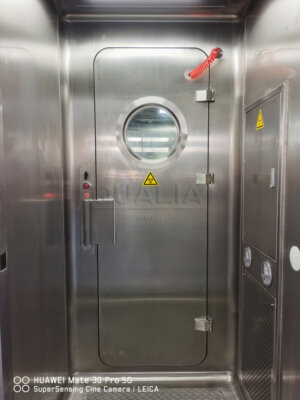
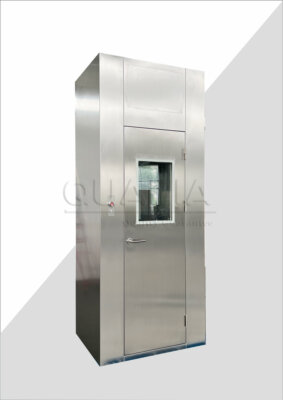
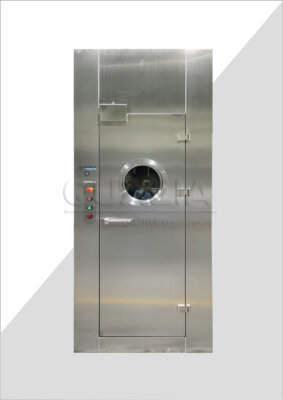
Dos puertas con cierre automático y interbloqueo constituyen la implementación física del control de acceso y la función de esclusa. Su integridad puede confirmarse mediante una inspección y pruebas de interbloqueo, lo que las convierte en un elemento de cierre binario: o bien ambas puertas están presentes, se cierran automáticamente y están interbloqueadas, o bien no se cumple el requisito de control de acceso. Esta claridad resulta útil porque evita interpretaciones ambiguas en el momento de la aceptación; no se concede un cumplimiento parcial por una sola puerta con una declaración de política respecto a la segunda.
Una nota práctica sobre las pruebas que evita falsos fallos: una breve y leve variación de la presión positiva en la puerta del laboratorio durante una situación transitoria —como el momento en que se vuelve a poner en marcha un ventilador— no supone necesariamente una inversión del flujo de aire. La confirmación mediante una varilla de humo o una prueba con hielo seco, en condiciones estables y de transición, es el método adecuado para distinguir una verdadera inversión sostenida de una fluctuación momentánea de la presión. Tratar cada variación transitoria como un fallo supone un desperdicio de esfuerzo en el rediseño; no distinguirlas de las inversiones auténticas supone un riesgo real para la contención.
| Tipo de control | Requisito o escenario de fallo | Prueba / Inspección | Aprobado/Suspenso y aclaración |
|---|---|---|---|
| Control de acceso | Dos puertas con cierre automático y enclavamiento para la entrada y la salida | Comprobar el cierre de la puerta y el funcionamiento del sistema de enclavamiento | Las puertas no se pueden abrir al mismo tiempo; se ha comprobado la integridad de la esclusa de aire |
| Flujo de aire direccional | Fallo del extractor | Simula un fallo del ventilador y observa el flujo de aire con una barra de humo o hielo seco | No se produce una inversión de flujo de aire prolongada; una breve y débil variación hacia la presión positiva no se considera un fallo si es transitoria. |
| Flujo de aire direccional | Fallo de alimentación | Simular una pérdida total de potencia y observar el flujo de aire | No se observa inversión sostenida; compruébalo con un palito de humo o con una prueba de hielo seco. |
| Flujo de aire direccional | Recuperación tras un corte de corriente | Restablecer la alimentación eléctrica y supervisar la recuperación del flujo de aire | El flujo de aire debe restablecerse sin inversión durante la transición de reinicio. |
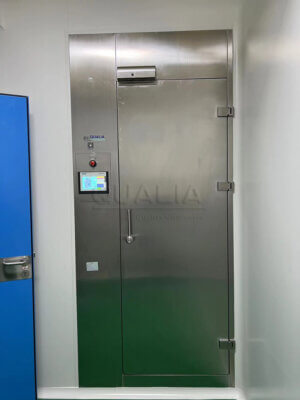
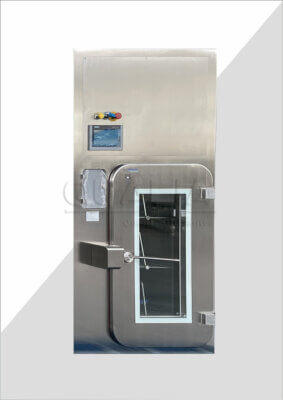
En aquellas instalaciones en las que sea necesario integrar la esclusa física y la cascada de presión en una envolvente de contención modular o prefabricada, las puertas con sellado neumático diseñadas para la gestión de la presión según los niveles BSL pueden reducir la complejidad de la interfaz entre los requisitos de control de acceso y el protocolo de pruebas del sistema de climatización (HVAC). Se puede consultar más información sobre el diseño del sellado de las puertas en los distintos niveles de contención en el Nivel de Bioseguridad (BSL) Diseño de Puerta de Sello Inflable: Normas de contención BSL-2, BSL-3 y BSL-4 referencia.
Vías de extracción y descontaminación HEPA en la identificación de requisitos
La filtración HEPA en los conductos de extracción de los laboratorios de nivel de seguridad biológica 3 (BSL-3) suele mencionarse como si fuera un requisito universal. Según las directrices del Manual de bioseguridad en los laboratorios de la OMS, 4.ª edición, se trata de un requisito condicional: su necesidad depende de la evaluación específica de riesgos del proyecto, de los organismos con los que se trabaje y de los requisitos normativos nacionales aplicables. Considerarla universal conduce a una sobredimensionación de las instalaciones; omitirla cuando realmente está justificada crea una brecha en la contención. El primer punto de decisión es si la evaluación de riesgos aborda explícitamente el aire de escape como una vía potencial de liberación y documenta una conclusión en uno u otro sentido.
Cuando se instalan filtros HEPA en el sistema de extracción de la instalación de climatización, la certificación anual es el umbral de verificación al que se hace referencia en las directrices de la OMS sobre LBM. Esa frecuencia debe figurar en el programa de mantenimiento de la instalación como un evento fijo y documentable, y no como una intención general. La misma lógica se aplica a los sistemas de descontaminación: el funcionamiento del autoclave, la capacidad de descontaminación de las salas y el tratamiento de efluentes líquidos requieren, cada uno de ellos, una verificación inicial y, como mínimo, una reverificación anual. Un sistema de descontaminación que se puso en servicio correctamente hace cinco años y no se ha vuelto a verificar desde entonces no constituye un control operativo confirmado.
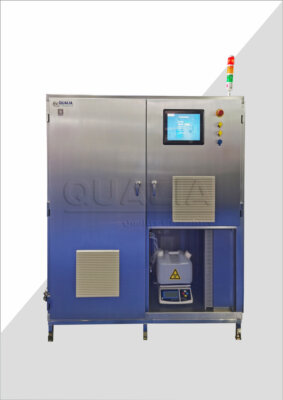
La descontaminación de residuos mediante autoclave o incineración se aplica a todos los residuos que salen del perímetro de la BSL-3. Esto convierte al autoclave en un elemento fundamental de la sala, y no en un elemento opcional de comodidad, y su ubicación respecto a la ruta de salida debe determinarse en el plano de distribución antes de la construcción. Un autoclave que figure en la lista de equipamiento pero que esté situado fuera de la zona de contención sin un sistema de paso directo incumple el requisito de descontaminación de residuos a nivel físico, independientemente de lo que establezca el documento normativo.
| Ruta de descontaminación | Condición de requisito | Características físicas / Equipamiento | Frecuencia de verificación |
|---|---|---|---|
| Filtración HEPA del aire de salida | Condicional: depende de las características específicas del proyecto; no es un requisito general. | Filtros HEPA en el sistema de ventilación y aire acondicionado (si es necesario) | Certificación anual (en los casos en que esté instalada) |
| Descontaminación de residuos | Todos los residuos que salgan del laboratorio de nivel de seguridad biológica 3 deben ser descontaminados | Autoclave o incineradora | Inicial + al menos una vez al año |
| Descontaminación de salas | Requerido | Sistema adecuado de descontaminación de salas | Inicial + al menos una vez al año |
| Descontaminación de efluentes líquidos | Requerido | Sistema de tratamiento de efluentes líquidos | Inicial + al menos una vez al año |
Para obtener información más detallada sobre las especificaciones de los filtros, la frecuencia de certificación y el riesgo de derivación en los sistemas de extracción BSL, consulte el Filtración HEPA en laboratorios BSL: Guía esencial aborda en profundidad las decisiones relativas a la selección y la verificación.
Texto normativo que no cumple su función cuando no se convierte en un elemento de la sala
La discrepancia entre un requisito escrito y un control verificado no es un problema de documentación, sino un problema de diseño. Una afirmación en el plan de bioseguridad que diga “en condiciones de fallo, el flujo de aire no se invertirá” no puede verificarse en el momento de la aceptación a menos que alguien haya definido qué condiciones de fallo deben comprobarse, qué instrumento o método debe utilizarse y en qué consiste un resultado satisfactorio. Cuando se omite ese paso de traducción, el equipo de diseño entrega un sistema que puede cumplir con la redacción de la normativa y, al mismo tiempo, no superar la prueba de aceptación. La rectificación en esa fase resulta costosa, ya que la lógica de secuencia del sistema de climatización, el accionamiento de los reguladores de tiro y la configuración de la alimentación de emergencia pueden requerir modificaciones una vez finalizada la envolvente del edificio.
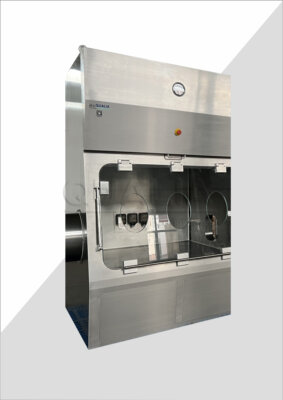
El mismo patrón de fallo se aplica a la contención primaria. Una declaración de política en la que se establezca que todo el trabajo con agentes seleccionados se realiza en cabinas de bioseguridad no garantiza la contención si la instalación recibe la autorización de ocupación antes de que se adquieran, instalen y certifiquen dichas cabinas. La cabina física debe estar presente, su certificación debe estar vigente y los procedimientos operativos estándar (SOP) deben definir qué trabajos la requieren; la declaración de política, por sí sola, no garantiza nada.
| Declaración de política | Riesgo si se deja solo como texto | Traducción física / procedimental |
|---|---|---|
| “En caso de fallo, el flujo de aire no se invertirá”.” | Una política no probada da lugar a que no se apruebe la bioseguridad; el equipo de diseño podría pasar por alto las pruebas obligatorias de escenarios de fallo. | Comprueba la dirección del flujo de aire en caso de avería del extractor, corte de corriente y restablecimiento del suministro eléctrico; documenta que no se produce ninguna inversión sostenida. |
| “Todo el trabajo se realiza en cabinas de bioseguridad” | No hay contención primaria sin una cabina de seguridad biológica (BSC) instalada y certificada; una simple política no garantiza que la cabina exista o se mantenga en buen estado. | Adquirir el BSC, programar la certificación anual y garantizar su uso mediante los procedimientos operativos estándar (SOP) |
La consecuencia derivada de dejar los requisitos tal y como figuran en el texto normativo tiende a acumularse en la fase de puesta en servicio. Múltiples requisitos no traducidos salen a la luz simultáneamente como deficiencias, cada una de las cuales requiere una acción correctiva diferente en la que intervienen distintos contratistas y subsistemas. Esa acumulación es lo que hace que el error de traducción original resulte tan costoso: la reelaboración no se limita a un único elemento, sino que supone una cascada de correcciones interdependientes frente a un plazo fijo de entrega.
Comentarios del responsable de bioseguridad traducidos a los entregables del proveedor
La función del responsable de bioseguridad en la revisión del diseño da lugar a una redacción que describe con precisión el requisito, pero que aún no es utilizable como especificación de contratación. Un comentario como “la contención primaria debe mantenerse mediante cabinas de seguridad biológica certificadas” identifica correctamente el requisito, pero no indica al contratista qué debe instalar, no establece un calendario de certificación ni obliga al proveedor de servicios a cumplir con ninguna frecuencia de entrega. Convertir ese comentario en una entrega del proveedor implica redactar un contrato de servicios que especifique la frecuencia de certificación, el alcance de cada proceso de certificación y el formato de la documentación que se aceptará en la auditoría.
Los requisitos relativos al acabado de las superficies siguen el mismo proceso de traducción. Cuando un responsable de bioseguridad especifica que los suelos, las paredes y los techos deben permitir la descontaminación y la limpieza, esa indicación debe plasmarse en una especificación de construcción que identifique materiales sin juntas y resistentes a la corrosión, con normas de instalación bien definidas. La expresión “superficies limpiables” en un documento de observaciones no impide que un contratista instale materiales con juntas de lechada, placas de yeso pintadas o penetraciones sin sellar alrededor de las aberturas de servicio, ya que todos estos elementos harían que la instalación no superara la inspección. La especificación debe ser lo suficientemente concreta como para excluir los materiales no conformes en la fase de adquisición, y no después de la instalación.
| Comentario del responsable de bioseguridad | Entrega del proveedor | Lo que debe especificar o verificar el contrato |
|---|---|---|
| La contención primaria debe mantenerse mediante cabinas de seguridad biológica (BSC) certificadas | Contrato de servicio anual de certificación BSC | Frecuencia de la certificación, ámbito de aplicación y requisitos de documentación |
| Las superficies deben permitir la descontaminación y la limpieza | Acabados sin juntas y resistentes a la corrosión en suelos, paredes y techos | Especificaciones de materiales y normas de instalación en el contrato de obra |
El principio de enlace consiste en que el texto redactado por el responsable de bioseguridad solo rige los resultados de la contratación pública una vez que se incorpora al texto del contrato. Cualquier comentario que identifique un requisito sin nombrar un objeto físico, una especificación de material, un proveedor certificado o un evento programado se considera incompleto desde el punto de vista de la contratación pública. La labor del equipo de diseño consiste en subsanar esa laguna antes de que se emita la primera orden de compra.
Comprobación del cierre de requisitos antes de la aprobación del diseño
La verificación inicial del diseño del sistema de climatización debe ser realizada y documentada por una persona cualificada antes de que la instalación entre en funcionamiento, y la reverificación solo se activará en caso de que se produzcan cambios importantes a partir de ese momento. Esto crea un filtro binario que no se puede eludir con buenas intenciones: o bien existe la documentación y está firmada por una persona cualificada, o bien la instalación no está lista para su ocupación. La 4.ª edición de la LBM de la OMS respalda la recertificación anual de las instalaciones de nivel de seguridad biológica 3 (BSL-3) como un evento de verificación programado, lo que refuerza la idea de que la certificación previa a la ocupación no es un acto puntual, sino el primero de un ciclo recurrente.
La comprobación de cierre resulta más útil como herramienta en la fase de diseño que como lista de comprobación para la puesta en servicio. Revisar los puntos antes de la aprobación del diseño permite identificar requisitos a los que no se les ha asignado ninguna característica física, ningún método de verificación ni ningún criterio de aceptación —condiciones que provocan fallos en la puesta en servicio—. En la fase de aprobación del diseño, cada punto debe tener un responsable: una característica de la sala que se pueda inspeccionar, un equipo que se pueda certificar, una prueba que se pueda realizar o un procedimiento operativo estándar (SOP) que defina quién realiza qué y cuándo. Cualquier punto que no tenga un responsable no se da por cerrado.
| Elemento de requisito | Método de verificación | Criterios de aceptación |
|---|---|---|
| Todo el trabajo realizado en los BSC | Comprueba que los BSC estén instalados y certificados | Certificación BSC vigente; zonas de obra totalmente valladas |
| Se mantiene el flujo de aire direccional | Realizar pruebas con varillas de humo y hielo seco en condiciones normales y en situaciones de fallo | Flujo de aire hacia el interior constante; sin inversión constante |
| Construcción sellada | Inspecciona las paredes, los techos y los suelos para detectar posibles perforaciones y comprobar la integridad de los sellados | No hay aberturas sin sellar; las superficies son continuas y se pueden limpiar |
| Filtración HEPA (si se especifica) | Comprobar la instalación y la certificación del filtro HEPA | Certificados de filtro válidos; sin derivación |
| Lavabo sin contacto | Comprobación de la activación y el funcionamiento del sensor | El lavabo funciona sin necesidad de tocarlo con las manos |
| Autoclave para la descontaminación de residuos | Comprobar que el autoclave esté instalado y que haya superado la verificación inicial | El autoclave admite residuos y cumple con las especificaciones de temperatura y presión |
| Certificación general de las instalaciones | Inspección independiente realizada por una persona cualificada; verificación de documentos | Certificación aprobada antes de la ocupación; volver a verificar únicamente tras cambios importantes |
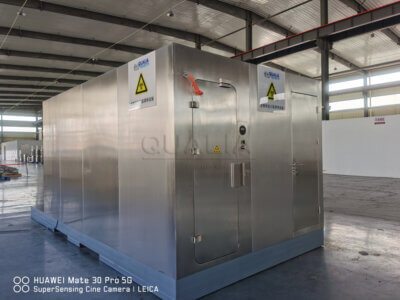
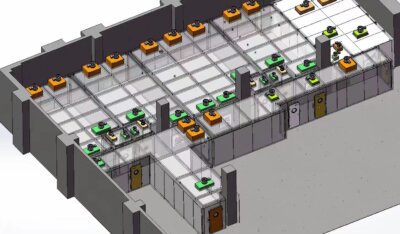
En el caso de proyectos en los que una instalación fija completa no sea la solución adecuada —por ejemplo, en situaciones de despliegue rápido, uso sobre el terreno o necesidades de contención provisionales—, un Laboratorio modular móvil BSL-3/BSL-4 aborda la misma lista de comprobación de fin de obra mediante sistemas preintegrados, lo que reduce el número de interfaces de contratistas que deben verificarse individualmente antes de la ocupación. La lógica de fin de obra es la misma; la carga de la verificación se distribuye de forma diferente a lo largo del proyecto.
El replanteamiento más útil antes de la aprobación del diseño consiste en tratar cada requisito de BSL-3 como una pregunta con una respuesta binaria: ¿existe para este requisito una característica física de la sala, un equipo certificado, una prueba programada o un responsable designado del procedimiento operativo estándar (SOP)? Si falta alguna de esas cuatro alternativas, el requisito no se da por cerrado, independientemente de lo bien que esté redactado en el documento normativo. Esta comprobación se aplica igualmente al flujo de aire direccional en caso de corte de corriente, a la ubicación del autoclave respecto al límite de contención, a la programación de la certificación de la cabina de seguridad biológica (BSC) y a las especificaciones de los materiales de superficie; todos ellos suelen aparecer como deficiencias en la puesta en servicio cuando se omite el paso de traducir la normativa en datos de diseño.
El siguiente paso práctico para cualquier proyecto que se acerque a la fase de aprobación del diseño consiste en realizar la comprobación de cierre con respecto al conjunto de planos y al paquete de especificaciones actuales, y no con respecto al plan de bioseguridad. El plan de bioseguridad describe la intención; los planos y las especificaciones describen lo que realmente se construirá, certificará y someterá a ensayo. Las discrepancias entre ambos constituyen la brecha que da lugar a costosas modificaciones, y pueden resolverse sin coste alguno antes de que se apruebe el diseño, mientras que, una vez iniciada la construcción, su resolución conlleva un coste significativo.
Preguntas frecuentes
P: ¿Qué ocurre si cambia la clasificación del grupo de riesgo de patógenos una vez que ya se ha aprobado el diseño?
R: Un cambio de clasificación tras la aprobación del diseño da lugar a una revisión del alcance de la lista de requisitos, lo que puede invalidar los controles ya especificados o en proceso de adquisición. Cualquier aumento en el grupo de riesgo puede introducir nuevos requisitos físicos —diferentes obligaciones de filtración de gases de escape, vías de descontaminación adicionales o un control de acceso más estricto— que no pueden adaptarse a bajo coste una vez que la envolvente del edificio y la lógica de secuencia del sistema de climatización estén fijadas. La comprobación de cierre debe volver a realizarse según la clasificación actualizada antes de que se proceda a cualquier otra adquisición o obra, tratando el cambio como una nueva aportación al diseño en lugar de como una revisión menor.
P: Una vez completada y firmada la verificación del sistema de climatización previa a la ocupación, ¿qué debe hacerse inmediatamente antes de que comience el primer trabajo relacionado con los patógenos?
R: Las cabinas de seguridad biológica deben adquirirse, instalarse y certificarse individualmente antes de que comience cualquier trabajo con agentes vivos; la autorización de ocupación no sustituye a la certificación de las cabinas de seguridad biológica. Los procedimientos operativos estándar (SOP) que definen qué trabajos requieren el uso de las cabinas también deben estar finalizados y asignados a responsables concretos en este momento. Si no se cumple alguna de estas condiciones, el requisito de contención primaria solo existe como texto normativo y no controla nada a nivel operativo.
P: ¿Se aplica el ciclo anual de recertificación aunque no se hayan realizado cambios importantes en las instalaciones?
R: Sí; la recertificación anual es un proceso de verificación programado, independiente de que se hayan producido cambios, y no una revisión motivada por circunstancias concretas. Las directrices de la 4.ª edición de la LBM de la OMS sitúan la certificación previa a la ocupación como el primer punto de un ciclo recurrente, lo que significa que la ausencia de modificaciones no aplaza la obligación de recertificación. La certificación de los filtros HEPA, la reverificación del sistema de descontaminación y la certificación de las cabinas de seguridad biológica (BSC) tienen la misma periodicidad anual y deben figurar como eventos fijos y documentables en el calendario de mantenimiento de las instalaciones, independientemente del historial de cambios.
P: ¿Se aplica a una unidad de contención BSL-3 prefabricada o modular la misma lista de comprobación de cierre que a una instalación fija?
R: La lista de comprobación de cierre es idéntica; se aplica la misma comprobación binaria: el flujo de aire direccional en condiciones de fallo, la filtración HEPA donde sea necesario, la ruta de descontaminación de residuos, las cabinas de seguridad biológica (BSC) certificadas y la construcción sellada deben poder verificarse antes de la ocupación. La diferencia práctica radica en que los sistemas preintegrados consolidan varias interfaces de contratistas dentro del alcance del fabricante del módulo, lo que reduce el número de pasos de verificación independientes que el equipo del proyecto debe coordinar. La carga de la verificación se distribuye de forma diferente, pero no se omite ningún punto de la lista de comprobación de cierre. A Laboratorio modular móvil BSL-3/BSL-4 aborda esta distribución directamente para situaciones de despliegue o de contención provisional.
P: ¿En qué casos un enfoque de definición del alcance basado en el riesgo genera más riesgo de incumplimiento que una lista de comprobación prescriptiva?
R: La definición del alcance basada en el riesgo genera un riesgo de incumplimiento cuando el responsable de bioseguridad y el equipo de diseño llegan a un acuerdo verbal, en lugar de escrito, sobre qué requisitos se han excluido del alcance y por qué. Si las decisiones relativas al alcance —como concluir que no se requiere un sistema de filtración de escape HEPA para un proyecto específico— no se documentan haciendo referencia a la evaluación de riesgos subyacente, un regulador o auditor que revise las instalaciones no tendrá base alguna para confirmar que la omisión fue deliberada y justificable, en lugar de un descuido. Una lista de comprobación prescriptiva deja menos margen para esa ambigüedad precisamente porque no exige una justificación documentada para cada punto. El enfoque basado en el riesgo solo produce mejores resultados cuando cada decisión sobre el alcance se registra explícitamente antes de que avance el diseño.