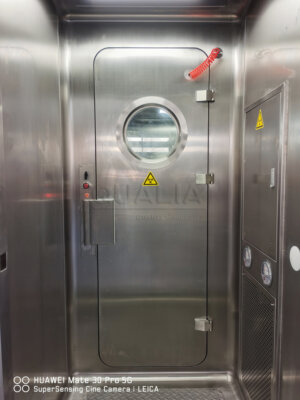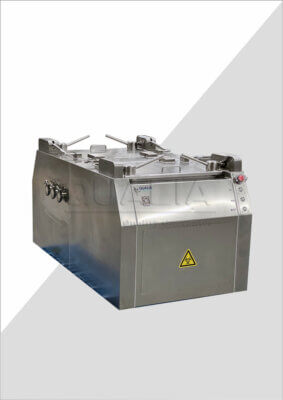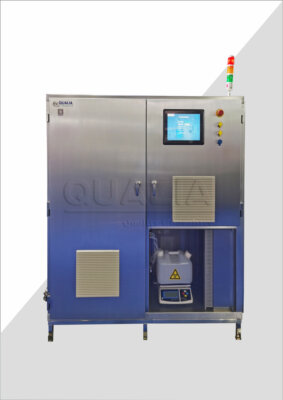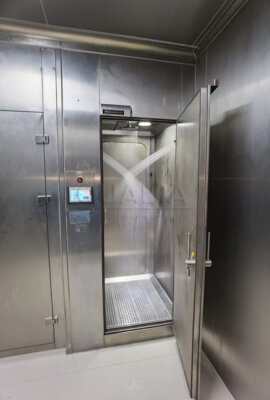


Which existing aseptic studies need review after a cRABS retrofit depends on what the retrofit actually changes—the boundary conditions, airflow paths, intervention access and transfer arrangements that the original studies were designed to represent. Not every record requires repetition, but no record can be carried forward without first confirming that its recorded context still matches the new configuration. The practical discipline is a structured impact review: map the change, then compare it against each study’s documented scope before deciding whether the evidence holds.
Describe What the Retrofit Changes
The review starts with a precise description of what is physically and operationally different after the retrofit—not a summary title but a list of changed equipment, interfaces and intended operations.
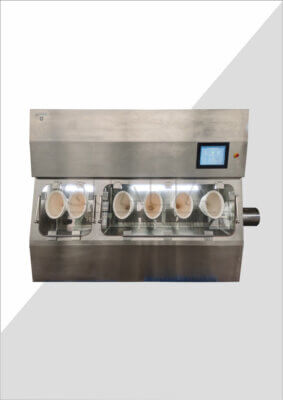
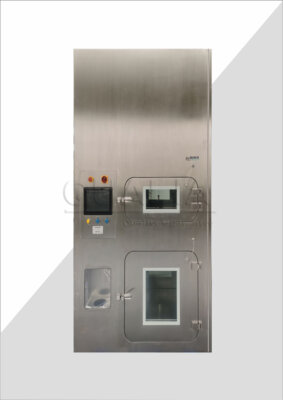
A sistema cerrado de barrera de acceso restringido introduced into an existing aseptic line changes more than the hardware. It repositions the primary boundary: the room environment no longer contacts the product zone directly, and the airflow relationship between the unidirectional air supply inside the cRABS and the room supply air becomes the critical junction. Glove ports, rapid-transfer ports (RTPs) or alpha–beta transfer systems become the controlled intervention and transfer points. The number, location and type of those interfaces, the pressure differential maintained between the barrier interior and the surrounding room, and the decontamination method applied before operations all define the new operating configuration.
Productos relacionados
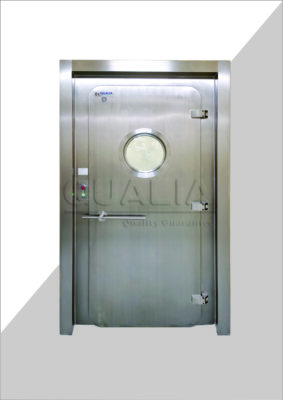
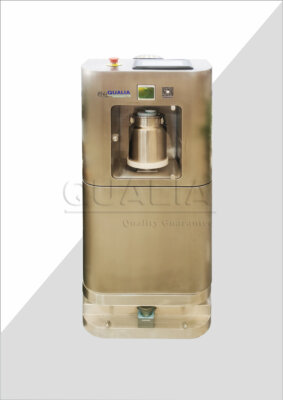
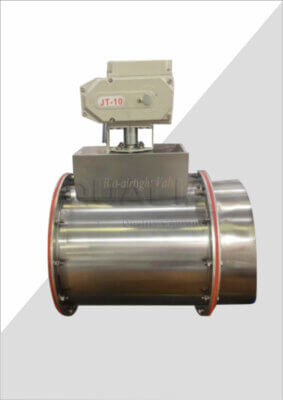
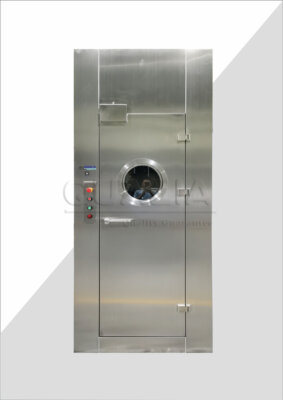
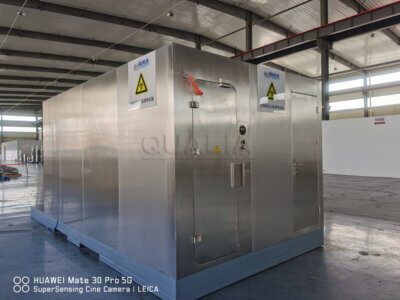
- Sistema cerrado de barrera de acceso restringido - cRABS — Inicie el debate sobre el equipo en cuestión indicando el alcance previsto de la modernización y la información sobre la instalación; esta lista no constituye una especificación técnica del proyecto ni de los sistemas de control.
Capture this in a written change description before opening any existing study folder. Include the equipment arrangement (barrier footprint, filling machine position, operator access side), the ventilation configuration (interior air supply source, recirculation or single-pass, exhaust routing), the pressure cascade values as designed, and the decontamination sequence—typically vaporized hydrogen peroxide—applied to the interior prior to each campaign. If the retrofit also changes the room pressure relationships upstream or downstream, those belong in the description too.
The change description is the reference document that every study review reads against. Without it, reviewers are comparing records to an idea rather than a defined configuration.
This step sounds procedural, but it determines whether the entire review is defensible. A reviewer who cannot point to a written change description cannot explain why a particular study was retained or repeated.
Identify Potentially Affected Study Records
Every study that characterizes airflow behavior, intervention safety, decontamination effectiveness, cleaning scope or transfer integrity is a candidate for review—not necessarily for repetition, but for assessment.
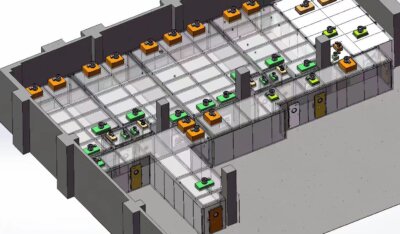
Airflow visualization and smoke studies are the most directly affected. If the room supply air pattern, the unidirectional air supply inside the barrier, and the positions of return or exhaust grilles have all changed, the recorded smoke behavior no longer represents the installed configuration. The same applies if the filling machine geometry, the size of the barrier, or the number of open interventions during the study differs from what will be operated.
Identify Potentially Affected Study Records: Buyer Review Matrix
| Existing study record | Context to identify | Review question |
|---|---|---|
| Airflow study | Room, equipment arrangement and operating conditions | Does it represent the proposed arrangement? |
| Intervention or simulation record | Activities and configuration represented | Are changed activities inside its scope? |
| Cleaning or transfer evidence | Arrangement represented before the change | Which change affects the earlier basis? |
Media fills and process simulation records are affected when the activities they represent no longer correspond to the new operating scenario. A media fill conducted with an open RABS or under room LAF protection does not demonstrate the aseptic integrity of filling under a cRABS with glove-port interventions and RTP transfers. Equally, a cRABS media fill conducted with a different number of glove-port accesses, a different batch size or a different intervention sequence than planned for the new line does not straightforwardly represent it.
Intervention and glove-integrity records represent specific glove-port designs and locations. If the retrofit installs ports at different positions, in different numbers or with a different reach envelope relative to the filling point, the earlier record reflects a different risk geometry.
Cleaning validation and surface decontamination studies belong in the inventory if the retrofit changes the internal surfaces being cleaned, the cleaning agent access, or the drainage path. A cleaning study conducted on the filling machine alone does not cover the cRABS interior; a study conducted inside a differently sized or configured barrier does not transfer automatically.
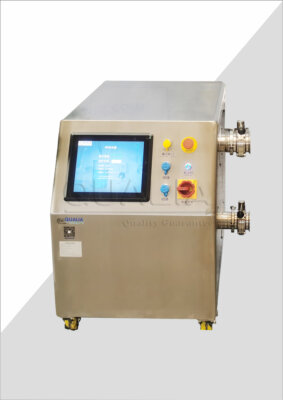
VHP cycle development and efficacy studies characterize the decontamination performance for a specific interior volume, surface loading and air-circulation path. If the barrier geometry, the product contact parts loaded during the cycle or the injection point locations differ, the cycle parameters need to be re-evaluated against the new configuration rather than assumed equivalent.
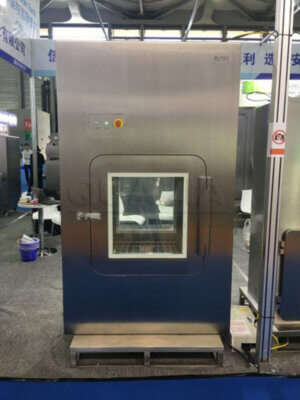
Transfer and dunk-tank or pass-box records are relevant when the retrofit changes the entry path for materials into the aseptic zone. A change from a conventional pass-box to an RTP port, or the introduction of a VHP pass box in place of a dunk tank, changes both the decontamination method and the interface geometry. The earlier transfer study may not cover the new arrangement, and the new interface may not yet have any evidence behind it.
Review Applicability Rather Than Reuse by Name
A study title does not confirm that the record is applicable to the new configuration—the review must examine what the study actually tested and whether that matches what will now be operated.
This is the distinction between reuse by name and reuse by demonstrated equivalence. A “smoke study” label on a binder covers any number of room layouts, equipment arrangements and operating conditions. The review must identify: which room, which equipment in what position, which operational state (barrier closed, one glove port open, two ports open), and which airflow rates were active when the study was conducted. Only then can a reviewer place that record against the written change description and decide whether the recorded context is sufficiently close to the new configuration to remain informative.
The same logic applies to media fills. Consider a scenario where a site conducted a media fill under an open RABS with periodic lid-open interventions and now plans to convert to a cRABS with glove-port-only access and RTP material transfer. The earlier fill demonstrates operator technique and environmental conditions under the open arrangement; it does not demonstrate that glove-port interventions in the new barrier maintain the aseptic state under cRABS conditions. The two studies represent different protection scenarios, not different versions of the same test.
Review the recorded context, not the record title.
Where a supplier provides a documentation package as part of the cRABS delivery—qualification protocols, IQ/OQ templates, airflow characterization data for the barrier itself—that package represents the supplier’s deliverable and the supplier’s scope. It does not replace the site’s decision about whether its own existing studies remain applicable in the new configuration. The two are separate: accepting a supplier document confirms that the barrier performs as described; it does not resolve whether the site’s historical process simulations still represent the new line’s operations.
Where the review confirms that an existing study remains applicable—for example, a cleaning validation for the filling machine that is unchanged by the retrofit and whose scope is clearly bounded to the machine rather than its surrounding environment—that applicability conclusion should be documented, with the comparison to the change description noted as the basis. The goal is a documented review decision, not a presumption in either direction.
Lecturas relacionadas
- ¿Cómo deben definir los compradores las restricciones de parada e instalación antes de una adaptación a cRABS? — Place the change description within the proposed retrofit work scope.
- Documentación de validación de Isolator y cRABS: pruebas de fugas, integridad de los filtros HEPA, ciclos de VHP y protección del operador — Identify documentation categories for the change review without adopting test instructions.
- Lista de comprobación del control de cambios para la recertificación de equipos de contención — Follow unresolved applicability questions into change-control documentation.
Allocate the Change-Assessment Decision
When the impact review cannot confirm that an existing study remains applicable, the unresolved scope is itself the output: a documented gap that enters the site’s change-assessment process.
The change-assessment owner at the site—typically quality assurance, with input from engineering and validation—decides what each gap requires. That decision may result in a new study, a bracketing rationale, an equipment equivalence argument, or in some cases a risk-based acceptance of reduced evidence with compensating controls. What it cannot result in is an undocumented assumption that the old study covers the new situation because nothing was formally concluded otherwise.
Assign ownership of each line in the impact-review inventory before the review begins, so that gaps surface to the right decision-maker rather than accumulating in a folder. The review team maps the change description against each study; the change-assessment owner decides the path forward for each unresolved item; the validation team executes whatever the assessment requires.
A common mistake is treating the impact review and the change assessment as the same activity. The review identifies what may have changed and gathers existing evidence; the assessment weighs that evidence against the site’s risk framework and regulatory commitments and decides what additional evidence, if any, is needed. Separating these activities prevents the review from either defaulting to repeat-everything conservatism or quietly carrying forward records that no longer represent the installed line.
QUALIA design and qualification support scope is structured around this distinction: change descriptions, interface drawings and airflow characterization data are deliverables that give the site review team a defined configuration to compare against existing records. The site’s change-assessment conclusion on those records remains the site’s responsibility.
Before bringing a cRABS retrofit to a supplier conversation, have the following ready: a written description of the existing aseptic line configuration as it stands today, a list of the existing aseptic study records with their documented scope and the configurations they represent, and a preliminary map of which interfaces, airflow paths and operations the retrofit will change. That preparation determines how quickly the review can reach documented conclusions rather than open-ended uncertainty.
Referencias
- Anexo 1 de las BPF de la UE: Fabricación de medicamentos estériles (2022) — Utiliza el contexto de control de la contaminación en la fabricación estéril para identificar los equipos y las interfaces de la planta que deben revisarse; no proporciona valores de aceptación específicos para cada proyecto en lo que respecta a las cajas de transferencia ni a los sistemas cRABS.
- EudraLex, volumen 4, anexo 15: Cualificación y validación — Hay que diferenciar la documentación del proveedor de las decisiones relativas a la homologación y aceptación del proyecto; las condiciones y desviaciones notificadas siguen siendo específicas del sistema en cuestión.
- ISO 14644-7:2004 Dispositivos de separación — Los requisitos relativos a los dispositivos de separación de bastidores y las cuestiones entre clientes y proveedores se enmarcan dentro del ámbito de aplicación verificado de la norma; las cláusulas detalladas y los límites de los equipos quedan fuera de este resumen.
- Directrices de la FDA: Medicamentos estériles fabricados mediante procesos asépticos (cGMP) — Comprueba si el proyecto se ajusta a las directrices sobre la fabricación aséptica de medicamentos antes de considerar que dicha documentación es aplicable; el resumen guardado no incluye ningún programa de pruebas de adaptación.
Preguntas frecuentes
Q: Does every retrofit require every existing study to be repeated?
A: The inventory alone gives no such conclusion. It identifies potentially affected evidence for a documented change assessment; the scope decision follows the actual change and study applicability.
Q: Can the equipment supplier decide that a site study remains valid?
A: The supplier can provide configuration and document information within its scope. Keep the site applicability decision with the project review responsibility rather than treating supplier delivery as acceptance.
Q: What if a study report cannot be found?
A: Identify the missing record and the claim it was expected to support. Avoid treating a report title in an old list as usable evidence while the actual scope remains unavailable.