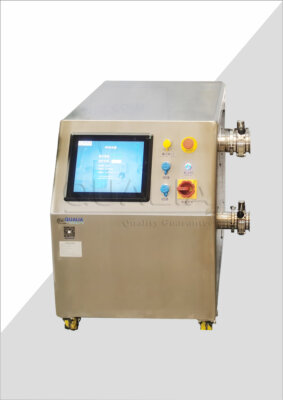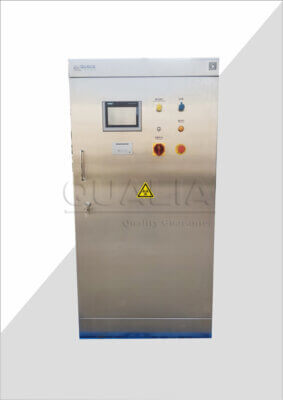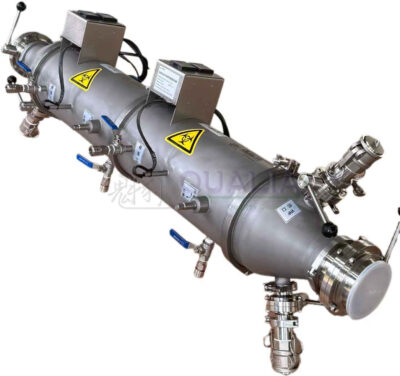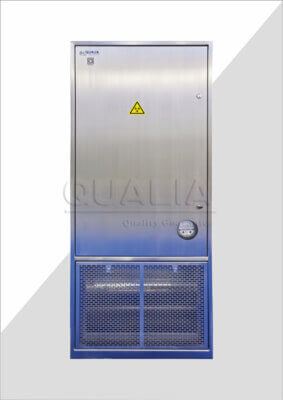
Liquid waste that looks manageable on a daily average basis can exceed an EDS’s hold capacity in a single autoclave failure event, a drain-surge after a spill response, or an unplanned flush from multiple sources arriving simultaneously. When that happens on a system sized against average flow, the validation package—built around nominal cycle conditions—cannot defend the treatment claim, and the entire kill-evidence record becomes difficult to sustain under biosafety authority review. The gap between nameplate capacity and real throughput under peak utility demand is rarely visible until commissioning, at which point corrective changes drive schedule compression that pushes validation work into the live facility. The decisions that prevent these outcomes sit almost entirely in the sizing and documentation stage, before fabrication begins, and the sections below are structured to help engineering, QA, and biosafety teams identify where those decisions need to be locked.
Waste Profile and Peak Load Basis
Sizing an EDS against average daily wastewater volume is the most consequential early mistake in BSL-3/4 liquid waste projects, and it consistently produces systems that perform within specification under routine conditions but fail the biosafety scenario they were actually purchased to control. Average flow figures may accurately represent steady-state laboratory operations, but they do not account for the discrete high-volume events—autoclave condensate purges, large-scale spill decontamination, simultaneous drain draw-down from multiple biosafety cabinets—that define the actual inactivation demand the system must satisfy in a single cycle.
The correct planning basis is the highest credible liquid-waste event the facility can generate: a defined volume, concentration, and temperature profile that a biosafety officer can review and agree is conservative and defensible. The WHO Laboratory Biosafety Manual (4th Edition) supports conservative, event-based thinking for waste stream management, though it does not prescribe a universal volume figure. What that reference reinforces is that the design scenario must bound the worst case, not approximate the typical case. If that scenario has not been formally agreed between the engineering team and biosafety review before equipment sizing is complete, it should be treated as an open risk.
The practical consequence of undersizing on this basis is that a system can be technically compliant against its stated design specification while being structurally inadequate for the facility’s real operating envelope. That distinction matters during commissioning, when the first peak-load test reveals cycle times or hold volumes that exceed the system’s capacity—and it matters more during audit, when the design basis document is expected to demonstrate that the worst credible event was the planning anchor.
| Design Basis | Risk If Used as Sole Basis | ما الذي يجب توضيحه |
|---|---|---|
| Average daily wastewater volume | Understates peak inactivation load; may result in insufficient hold or kill capacity | What is the highest credible liquid-waste event, and is it incorporated as the design scenario? |
| Highest credible liquid-waste event | Used as starting point per biosafety guidance; risk of oversizing only if no averaging for sustained small flows is considered | Is the event definition conservative, defensible, and agreed by biosafety review? |
Reviewing the design basis against the highest credible single-event load—rather than the average daily figure—is the first gate at which undersizing risk can be closed before it propagates into fabrication and validation.
Hold Capacity and Drain Continuity Risk
Hold capacity is not only a sizing question—it is a biosafety gap when drains continue feeding the system during conditions where the EDS cannot fully process inflow. The structural risk is that hold volume, treatment cycle time, and inlet control are typically specified independently, and the interaction between them is often not evaluated until commissioning. If inlet flow is not stopped or automatically managed during a treatment cycle, additional inflow can dilute the inactivation dose or cause the tank to approach high-level limits before the cycle completes.
The more serious failure mode occurs during alarm conditions and unplanned downtime. If a high-level alarm does not initiate automatic drain isolation or flow diversion, the hold tank continues filling while the system is offline. Depending on the incoming flow rate and the duration of the fault, available hold volume can be exhausted before operator intervention is possible. This converts a maintenance window—or an alarm that would otherwise be routine—into a containment gap, with no validated treatment path for the accumulated waste. ISO 35001:2019 frames biorisk management as a system-level obligation that includes control of failure modes in critical infrastructure; drain continuity during EDS unavailability fits that scope directly.
The practical planning implication is that hold capacity cannot be evaluated in isolation from the inlet control strategy. The question is not only whether the tank volume is adequate for a single treatment cycle, but whether the system as a whole—interlocks, alarm logic, diversion routing, operator response time—prevents uncontrolled accumulation of untreated waste during any foreseeable operating condition. Teams that treat hold tank sizing as a hydraulic calculation without modeling the alarm and downtime scenarios are leaving the containment case partially open.
| Operating Condition | Risk if Drain Keeps Feeding | ما الذي يجب توضيحه |
|---|---|---|
| Treatment cycle | Additional inflow may dilute inactivation dose or overfill the tank | Is inlet flow stopped or automatically managed during treatment? |
| Alarm condition | Prolonged inflow may exceed hold capacity before operator intervention | Does a high-level alarm initiate drain isolation or diversion? |
| Downtime/maintenance | Uncontrolled flow into an offline system can cause spill or release | Is there a defined procedure or interlock to divert flow when the EDS is unavailable? |
Drain isolation logic and the conditions under which it activates should be confirmed during design review, not discovered during FAT or the first maintenance event.
Kill Evidence and Acceptance Criteria
A validation package for a chemical or thermal EDS is only as defensible as the biological challenge it was built around. The most common failure pattern is not an absence of testing data—it is test data assembled without a defined biological indicator, surrogate correlation, or log reduction criterion tied specifically to the inactivation claim and the system’s operating envelope. That data can demonstrate that the EDS ran and produced treated effluent; it cannot demonstrate that the treatment was effective under the conditions that actually bound the process.
The elements that need to be defined before validation testing begins are the biological indicator organism (identity, strain, initial count, resistance characteristics), the surrogate if one is used in place of the target pathogen, and the acceptance criterion expressed as a specific log reduction value or sterility endpoint. A PMC-published biological validation study of a chemical effluent decontamination system illustrates in practice how these elements are structured and verified against each other—the surrogate’s kill curve must bound the biological indicator’s performance, and the acceptance criterion must be met at the envelope limits, not only at nominal process conditions. That framework—challenge selection, surrogate correlation, worst-case verification—reflects how validation evidence is expected to hold up under technical review, regardless of the regulatory jurisdiction.
The downstream consequence of assembling kill evidence without these elements defined upfront is that the data cannot be used to defend the treatment cycle under audit, and the validation package must be substantially rebuilt. At BSL-3/4 containment levels, a validation package that cannot demonstrate inactivation under worst-case temperature, contact time, and chemistry combinations is a qualification liability that delays occupancy or operation approval. The acceptance criterion must be stated in the validation protocol before testing begins, not inferred from results after the fact.
| Challenge Element | What Must Be Defined | Verification Against Operating Envelope |
|---|---|---|
| Biological indicator organism | Identity, strain, initial count, resistance characteristics | Confirmed inactivation across worst-case temperature/time/chemistry combinations |
| Surrogate (if used) | Demonstrated correlation to target pathogen under process extremes | Surrogate kill curve must bound the biological indicator performance |
| Inactivation acceptance criterion | Specific log reduction value or sterility claim | Criterion must be met at envelope limits, not just nominal conditions |
The operating envelope limits—not nominal setpoints—are the conditions against which kill evidence must be verified, and that boundary needs to be agreed before the biological challenge protocol is written.
Utility Limits That Change Real Capacity
Nameplate capacity describes what an EDS can process under ideal conditions. Effective capacity—what the system can actually deliver at the facility, on a peak-load day, with concurrent loads on steam, cooling, and power infrastructure—is frequently lower, and the gap between the two only becomes visible during commissioning when a peak-load run cannot complete within the required cycle time. By that point, the equipment is already on-site and the options for correction are expensive.
Each utility constraint compounds the others. A steam supply at minimum available pressure during peak facility demand extends heating ramp time, which lengthens the treatment cycle, which reduces the number of cycles per shift, which shrinks effective daily throughput. If cooling water temperature is elevated under worst-case ambient conditions, post-cycle cooling takes longer, adding further constraint on cycle frequency. If the chemical dosing pump capacity for neutralization is sized to average influent flow rather than peak flow, pH control degrades at high inflow rates, potentially invalidating the treatment claim for that cycle. A discharge permit that limits instantaneous release rate or batch frequency can create a hydraulic bottleneck at the outlet that has nothing to do with the EDS itself.
These constraints are site-specific engineering figures, not universal regulatory thresholds, and none of them is reliably apparent from equipment datasheets alone. They need to be confirmed against actual facility conditions during the sizing review—before the design basis is frozen—by mapping each utility’s minimum available value during peak concurrent demand against the EDS operating requirements. Effective capacity under those constrained conditions is the number that the validation protocol, cycle time targets, and hold volume specifications should be built around.
| المرافق | Typical Constraint | ما الذي يجب توضيحه |
|---|---|---|
| البخار | Supply pressure or flow may limit heating rate and cycle frequency | What is the minimum steam availability during peak demand? |
| الطاقة | Feeder capacity may restrict simultaneous operation of major loads | Can all EDS loads run concurrently under facility electrical limits? |
| التبريد | Chilled water temperature or flow may lengthen post-cycle cooling | Is cooling capacity sized for worst-case ambient and process conditions? |
| التحييد | Chemical dosing pump capacity may not match peak waste flow | What is the maximum influent flow the neutralization system can handle while maintaining pH? |
| التفريغ | Permitted release rate or drain capacity can bottleneck effluent outflow | Does the discharge permit limit batch frequency or instantaneous flow rate? |
Utility availability under peak concurrent facility demand—not nameplate supply figures—should be the design input for EDS cycle time and throughput planning.
Control Records Alarm Logic and Cycle Data
FAT is the point at which all the sizing and design decisions made earlier in the project are tested against documented evidence for the first time. If setpoints, alarm logic, and QA acceptance criteria are not fully defined before FAT begins, the testing program cannot verify what it is supposed to verify—and the deficiencies that surface during FAT get carried into the site, where correcting them is significantly more disruptive and more visible to biosafety authorities.
The specific risk is not that FAT will fail in a dramatic way, but that it will be conducted against incomplete documentation. Setpoints that exist in the control system but are not recorded in the design specification cannot be confirmed to match the validated process parameters. Alarm logic that has not been written into a testable logic document cannot be verified to function as intended during FAT—it can only be observed, which is not the same as verification against a defined criterion. Cycle records from factory testing that do not reflect the representative operating conditions of the target facility are difficult to use as baseline evidence during site qualification. ISO 35001:2019’s framing of biorisk management as a documented system supports the principle that these records are not administrative formalities—they are the evidentiary basis for demonstrating that the system operates within its validated envelope.
For BSL-3/4 projects specifically, the FAT package is often reviewed by biosafety officers or regulatory bodies as part of facility approval. A package that contains cycle data but not alarm logic verification, or setpoints but no documented rationale, creates review gaps that delay handover even when the equipment itself performs correctly. The practical discipline is to treat FAT readiness as a documentation milestone, not a hardware milestone: the system should not ship until the control record set is complete enough to support a biosafety authority review without supplemental explanation.
| عنصر التوثيق | FAT Verification Focus | What to Confirm Before Shipment |
|---|---|---|
| Setpoints | All process setpoints (temperature, pressure, time, level) listed with rationale | Setpoint values match design specification and are testable |
| Alarm logic | Alarm response logic for each critical parameter | Alarm triggers and interlocks function as described in the logic document |
| Cycle records | Sample cycle data from factory testing under representative conditions | Records demonstrate required performance over multiple cycles |
| QA acceptance criteria | Pass/fail criteria for each test | Criteria align with user requirements and BSL-3/4 standards |
Pre-shipment confirmation that alarm logic functions as described in the control documentation—not just that alarms trigger—is the verification check that most commonly closes gaps between FAT evidence and site qualification expectations.
FAT and Handover Package for BSL Review
The handover package is the evidentiary record that a biosafety authority, a QA team, or an external auditor will use to evaluate whether the EDS was designed, tested, and commissioned against a defensible and documented basis. Its completeness at the point of handover determines whether the facility can proceed through IQ/OQ/PQ qualification without rebuilding documentation that should have been produced during manufacturing and FAT.
A complete handover package for a BSL-3/4 EDS project should include the agreed design basis—including the highest credible waste event used as the sizing anchor—along with the validated setpoints with rationale, the alarm logic document with FAT verification records, cycle data from factory testing against representative conditions, the biological or surrogate challenge protocol with results and acceptance criteria confirmation, and the utility interface record showing confirmed supply parameters against EDS operating requirements. The WHO Laboratory Biosafety Manual (4th Edition) establishes that decontamination systems at high biosafety levels require documented evidence of effectiveness; while it does not prescribe a package format, the documentation scope expected during facility approval is consistent with the elements above. ISO 35001:2019 reinforces that biorisk control measures must be documented, monitored, and verifiable—the handover package is the primary vehicle through which an EDS satisfies that obligation at system level.
What creates the most significant project risk is not a missing document—it is a handover package that contains the right document titles but not the right content. A biological validation report that documents testing at nominal conditions without envelope-limit verification, or an alarm logic table that lists alarm types without documenting the response action and interlock behavior, will not support the qualification argument even though both documents are present. Teams reviewing the package before acceptance should confirm that each element addresses the worst-case scenario relevant to its function, not only that each element exists.
For projects involving modular BSL-3/4 laboratory infrastructure—where the EDS is integrated with the building systems at a module level—the handover package also needs to address the interfaces between the EDS control system and the facility management or building automation infrastructure, including how alarm states propagate and what the operator response protocol requires at each stage. An EDS that performs correctly in isolation but is not integrated into the facility’s alarm and containment response framework is not a complete containment solution.
The decisions that determine whether an EDS will perform as a validated containment system—rather than a technically compliant piece of equipment with an incomplete qualification record—are concentrated at two project stages: the sizing basis review before design is frozen, and the FAT documentation review before shipment. Both stages require active input from biosafety, QA, and engineering simultaneously, because the questions they each need to answer are different but interdependent.
Before procurement is finalized, the questions to confirm are: what is the highest credible single-event load, is the hold capacity evaluated against that load under alarm and downtime conditions, what utility constraints will reduce effective throughput below nameplate figures at this specific site, and what is the biological or surrogate challenge that the kill evidence will be built around? The answers to those questions should be in writing, agreed across disciplines, and incorporated into the URS before the design basis is locked. Any gap at that stage will reappear—larger—during FAT, during site qualification, or during a biosafety authority review of the facility.
الأسئلة المتداولة
Q: Our facility generates liquid waste from both BSL-3 and lower-containment zones through a shared drain network — does the EDS sizing and validation approach described here still apply?
A: Yes, but the shared drain configuration introduces an additional planning requirement the article does not address directly. When lower-containment waste co-mingles with BSL-3/4 streams before reaching the EDS, the design basis event must account for the combined peak-load scenario from all connected zones simultaneously, not only the highest-risk source in isolation. More critically, the biological challenge and acceptance criteria used for kill evidence must be set to the most demanding pathogen classification present in any connected stream — the EDS cannot be validated to a lower standard simply because most influent originates from a less hazardous zone.
Q: Once the design basis is agreed and the URS is locked, what is the first action that should trigger documentation before fabrication begins?
A: The first documented output after URS lock should be a formal utility interface record that confirms actual available supply values — steam pressure, cooling water temperature, power capacity, discharge permit limits — against EDS operating requirements under peak concurrent facility demand. This record needs to exist before the design basis is frozen into fabrication drawings, because any utility gap identified after that point requires a design change rather than a specification adjustment. Waiting until commissioning to surface these figures is the sequence failure the article identifies as the primary driver of late-stage schedule compression.
Q: At what point does the validation approach described here stop being sufficient — for example, if the target pathogen is a Tier 1 select agent or falls under national biosafety authority jurisdiction with specific technical requirements?
A: The framework described — event-based sizing, worst-case kill evidence, documented alarm logic — remains applicable, but it becomes a floor rather than a ceiling when select agents or nationally regulated pathogens are involved. Competent authorities overseeing Tier 1 select agents or equivalent national classifications typically impose specific inactivation standards, prescribed biological indicators, minimum log reduction values, and independent verification requirements that go beyond what any internal validation protocol can self-certify. In those cases, the design basis and biological challenge protocol should be reviewed against the applicable authority’s technical guidance before the validation approach is finalized, because an internally defensible package may still be insufficient for regulatory acceptance without additional prescribed elements.
Q: Is a thermal EDS meaningfully harder to validate than a chemical EDS, or do the same kill-evidence requirements apply equally to both?
A: Both must satisfy the same structural validation requirements — defined biological challenge, surrogate correlation if applicable, worst-case envelope verification, and a stated acceptance criterion before testing begins — but the envelope variables that must be bracketed differ. For thermal systems, the critical worst-case conditions are minimum temperature at the coldest point in the treatment zone and minimum hold time at that temperature; for chemical systems, they are minimum active concentration at maximum inflow dilution and minimum contact time. A thermal system’s kill evidence is generally more directly correlatable to standard biological indicator data, while a chemical EDS requires additional work to establish that surrogate performance bounds the target organism at the specific chemistry and contact time combination used. Neither approach is inherently more difficult to validate, but the failure modes during worst-case testing are different and require different bracketing strategies.
Q: For a project with a constrained capital budget, is it worth investing in oversized hold capacity upfront, or is it more cost-effective to rely on operational controls like drain scheduling and staff protocols to manage peak-load risk?
A: Operational controls are not a reliable substitute for adequate hold capacity at BSL-3/4 containment levels, and treating them as equivalent introduces a validation liability that is typically more expensive to resolve than the upfront cost difference. The core issue is that a biosafety authority reviewing the containment case will expect the EDS to remain within its validated envelope under any foreseeable operating condition — including alarm states, maintenance windows, and unplanned concurrent drain events — without depending on real-time operator judgment to prevent hold volume exceedance. Procedural controls can supplement hardware, but they cannot replace the containment function of adequate hold volume and automated drain isolation in a system where the failure consequence is uncontrolled release of potentially infectious waste. The cost comparison should be evaluated against the schedule and qualification cost of redesigning hold capacity after commissioning reveals it to be insufficient, not against the cost of the controls documentation alone.
المحتويات ذات الصلة:
- بيوسيف EDS: إزالة التلوث بعوامل الحرب البيولوجية
- بيوسيف EDS: أنظمة المعالجة المستمرة على دفعات
- بيوسيف EDS: الأنظمة الحرارية لمعالجة النفايات السائلة
- التدفق المستمر EDS: حلول BioSafe الفعالة من BioSafe
- وحدات إزالة التلوث البيولوجي المتنقلة: وحدات إزالة التلوث المتنقلة من BioSafe متعددة الاستخدامات
- تحسين EDS لكفاءة غرف التنظيف EDS من أجل تحسين كفاءة غرف التنظيف
- EDS: إحداث ثورة في بروتوكولات سلامة المختبرات
- إدارة مجرى النفايات السائلة: بيوسيف EDS الآمنة بيولوجيًا
- دمج EDS مع HVAC في مختبرات السلامة البيولوجية: دليل شامل