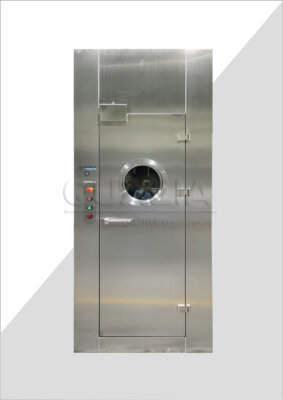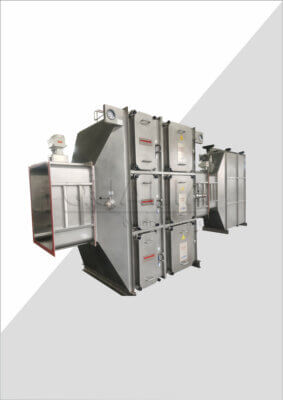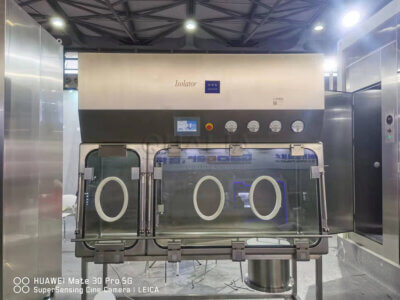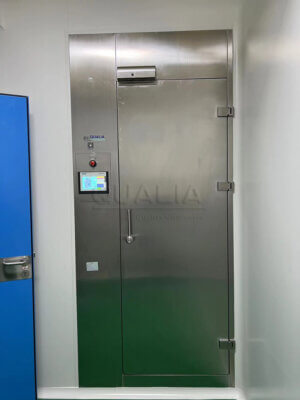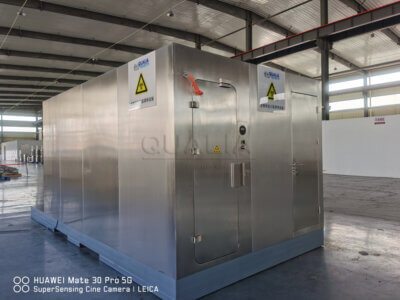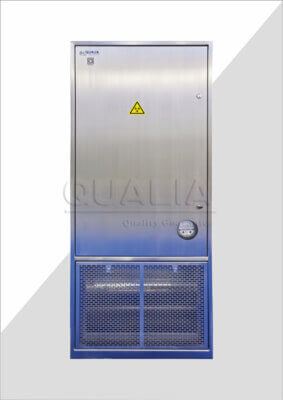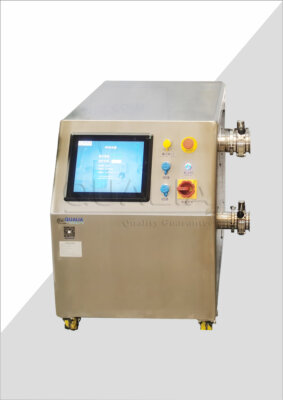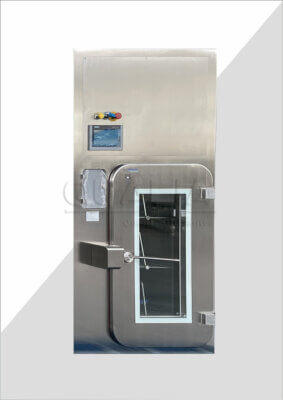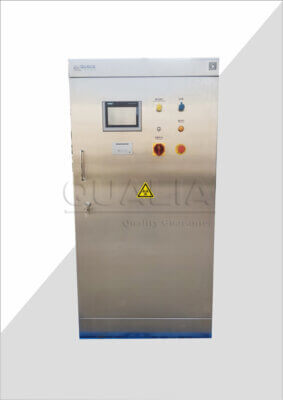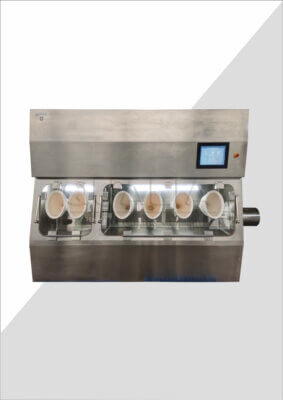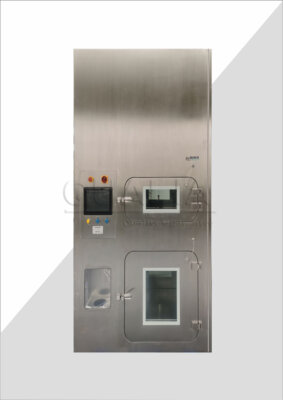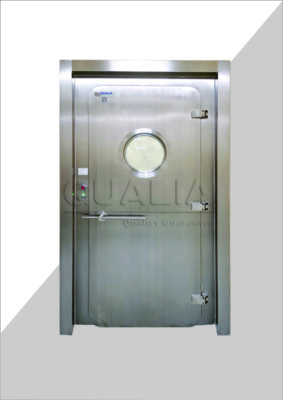

Selecting the wrong containment system for a fill-finish or HPAPI process often becomes visible at the worst possible moment — during validation, a regulatory walkthrough, or the first high-potency product changeover. The structural mismatch between equipment design and operational reality cannot be corrected by revising an SOP after installation. A facility that installs a rigid isolator expecting manageable changeover cycles, then discovers that frequent product switches create sustained downtime, has a commissioning problem, not a procedure problem. Understanding how rigid isolators, flexible isolators, and RABS differ in practice — and what conditions make each the right or wrong choice — is what allows a procurement or engineering team to make a defensible selection before equipment is ordered.
Rigid Isolator Construction and Performance
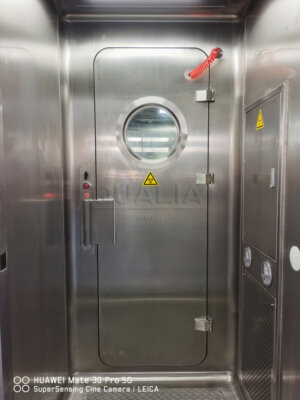
Rigid isolators earn their dominance on sterile fill-finish lines primarily because their leak profiles are predictable and their service life is long. That predictability is not incidental — it is a direct result of the construction features that define the platform. Pressure configuration is the starting point. Positive pressure is standard for sterile operations, maintaining a clean barrier that resists environmental ingress. Negative pressure applies where toxic products are handled, directing airflow inward to contain hazardous material. Confusing the two, or specifying positive pressure for a cytotoxic product line because it was already in the template, creates a containment inversion that cannot be resolved without re-engineering the ventilation system.
Where negative pressure is required, the buffer zone requirement is one of the most frequently underestimated planning constraints in facility design. A separate buffer area is needed to exhaust incoming room air and outgoing positive pressure air, preventing hazardous air migration beyond the containment envelope. Discovering late in design development that exhaust routing and room air separation demand significant structural changes is a recognized source of commissioning delay — and one that is entirely avoidable if the buffer zone is scoped at the layout stage rather than treated as an installation detail.
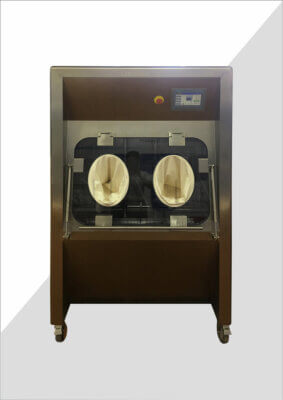
HEPA filtration architecture reinforces the pressure logic. Containment isolators for hazardous drug manufacturing typically use single HEPA supply and double HEPA exhaust, with the second exhaust stage providing a redundant barrier against hazardous air exiting the system. Work deck surfaces follow the same principle of eliminating hold-up points: smooth, non-porous, decontamination-resistant stainless steel with minimal seams and corners is the operational standard, not a cosmetic preference. Each design feature in a rigid isolator is load-bearing in the containment sense — specifying any of them incorrectly compounds risk downstream.
| ميزة التصميم | المتطلبات النموذجية | ما أهمية ذلك |
|---|---|---|
| Pressure Configuration | Positive pressure for sterile operations; negative pressure for toxic products | Matches product safety needs and prevents uncontrolled contamination |
| Closed Transfer System | Aseptic connections to auxiliary equipment; no direct openings to surroundings | Maintains continuous isolation and reduces contamination risk |
| Buffer Zone (Negative Pressure) | Separate buffer area exhausting incoming room air and outgoing positive pressure air | Prevents hazardous air migration beyond the containment envelope |
| HEPA Filtration for Hazardous Products | Single HEPA supply, double HEPA exhaust | Double exhaust ensures hazardous air does not exit the system |
| Work Deck Surfaces | Smooth, non-porous, decontamination-resistant stainless steel with minimal seams and corners | Facilitates cleaning and reduces hold-up points for contamination |
The practical implication for procurement teams is that rigid isolator specifications are interdependent. A decision made on pressure configuration drives buffer zone requirements, which drive facility layout, which drives HEPA configuration. Treating these as independent line items in a spec sheet rather than a connected system is where early-stage scoping errors originate. ISO 13408-6:2021, which addresses aseptic processing for isolator systems, provides a useful process-reference framework for evaluating how these features interact in a closed-system context.
Flexible Isolator Applications in HPAPI
The case for flexible isolators in HPAPI handling is not primarily about containment performance — both rigid and flexible isolator platforms can achieve the negative pressure and HEPA filtration configurations required for toxic product containment. The case is about reconfiguration speed and operational adaptability when product changes are frequent.
Negative pressure ventilation in flexible isolators directs airflow away from operators and toward HEPA filters, isolating fumes and protecting personnel during cytotoxic drug or HPAPI handling. That mechanism is operationally identical to what a rigid system achieves. The difference materializes when a facility runs multiple HPAPI compounds on a rotating basis. Rigid isolators, despite their superior leak predictability and longer service life, carry a reconfiguration cost that becomes consequential under high changeover frequency. Flexible isolator designs are increasingly specified in these scenarios because the softer enclosure structure allows process configurations to be adjusted without the downtime penalty that a rigid system would impose.
The mistake pattern here is worth naming directly: teams that evaluate isolator type primarily on purchase price — or on containment performance benchmarks alone — often discover that the operational cost of reconfiguring a rigid system is where the total cost of ownership diverges from the procurement estimate. A flexible isolator may carry a shorter service life and less mechanical rigidity, but for a facility running frequent HPAPI product changes, the ability to absorb reconfiguration cleanly is a performance characteristic, not a concession. The decision should be driven by changeover frequency, product mix, and operational cadence — not by which platform scores higher on a single-product containment benchmark.
Closed RABS Design Principles
Closed RABS occupies a clearly defined position in the containment hierarchy — it delivers genuine sterility assurance benefit over traditional laminar airflow setups, but it achieves that benefit through operational discipline rather than through the engineering controls inherent in an isolator. That distinction has direct consequences for validation and for the sustainability of the system’s performance over time.
The core operating condition for closed RABS is straightforward: all processing interventions occur via gauntlet gloves attached to the barrier walls, and doors are opened only at setup, then locked for the duration of operations. This is not a conservative recommendation — it is the condition under which the sterility assurance case for closed RABS holds. When that condition is consistently met, closed RABS delivers meaningful contamination reduction at lower capital cost than an isolator. When it is not, the benefit erodes in proportion to how often the locked-door discipline breaks down.
| RABS Type | الوصول إلى التدخل | Door Policy | Sterility Assurance Risk |
|---|---|---|---|
| نظام RABS المغلق | All processing interventions via gauntlet gloves attached to walls | Doors opened only at setup, then locked during operation | Low risk if doors remain locked; glove-based interventions preserve the barrier |
| افتح RABS | Allows rare door openings during aseptic operations for exceptional interventions | Doors may be opened on an exceptional basis only | Higher risk; routine door openings undermine sterility assurance and may not improve over traditional aseptic processing |
Open RABS introduces a different risk profile. The design permits rare door openings during aseptic operations for genuinely exceptional interventions. The failure risk is not that door openings are inherently disqualifying — it is that the definition of “exceptional” drifts in practice. Facilities that cannot enforce strict behavioral standards around door-opening frequency may find that their open RABS system provides sterility assurance no better than a traditional aseptic process. That gap typically becomes visible during validation or an FDA walkthrough, not during the procurement cycle when the capital savings looked most attractive. ICH Q9’s risk management framework offers a useful lens here: the residual risk of any RABS installation should be assessed against the realistic discipline standard the facility can sustain, not the ideal standard described in the operational procedure.
Containment Level Comparison by Type
The containment hierarchy across these system types reflects a gradient from engineering-controlled barrier to behavior-controlled barrier, and the decision logic for selecting a tier is most useful when framed against what the facility can actually sustain operationally.
Rigid and flexible isolators sit at the top of the hierarchy because containment is structurally enforced — pressure differentials, closed transfer systems, and HEPA filtration create a continuous isolation envelope that does not depend on operator behavior to remain intact. Closed RABS delivers good sterility assurance when door discipline is maintained, but sits below isolator performance by design. Open RABS performance is contingent on operational behavior in a way that closed RABS is not. Traditional laminar airflow and open processes represent the baseline that all of these systems were developed to improve upon — and it is now unusual for a sterile drug operation to run without either an isolator or RABS protective design in place.
| نوع الاحتواء | مستوى الاحتواء | ضمان العقم | الاستخدام النموذجي |
|---|---|---|---|
| Isolator (Rigid) | Highest; continuous closed environment with pressure control | عالية جداً | Sterile fill-finish; toxic product manufacturing |
| Isolator (Flexible) | Highest; negative-pressure option with HEPA filtration | عالية جداً | HPAPI handling; frequent reconfiguration |
| نظام RABS المغلق | Moderate; gauntlet glove barrier with locked doors | Good, but below isolator | Aseptic processing with lower capital cost |
| افتح RABS | Lower than closed RABS; occasional door openings permitted | Depends on operator discipline | Capital-limited aseptic applications |
| Traditional Laminar Flow Hood / Open Process | Lowest; no physical barrier | محدودة | Largely superseded; not standard for sterile drug operations |
The decision implication from this hierarchy is not simply that higher is better. Isolators carry higher capital cost and, in the case of rigid systems, higher reconfiguration cost. The threshold question is whether the contamination risk profile of the product, and the operational discipline realistically available in the facility, justify placing a RABS solution at the top of the selection list — or whether the compliance defensibility risk of a lower tier outweighs the capital savings. A facility with inconsistent shift-to-shift discipline and a product that demands high sterility assurance has a structural problem if it selects open RABS: the containment performance will be variable in a way that an isolator would prevent.
Cost and Operational Tradeoff Analysis
RABS emerged in the 1990s as a lower-cost alternative to isolators, which had entered pharmaceutical manufacturing roughly a decade earlier. That origin story still defines the tradeoff: the capital savings are real, but they come with a corresponding obligation that does not appear on the purchase order.
The discipline tax embedded in RABS — particularly open RABS — is the hidden variable in most cost comparisons. An isolator’s higher capital cost purchases engineering-enforced containment. The containment works whether or not operators are having a disciplined day, because the barrier is structural. A closed RABS system transfers a portion of that containment assurance to operator behavior, and an open RABS system transfers more. The capital savings are genuine only if the behavioral standard holds consistently enough to realize the sterility assurance that the RABS design is capable of delivering.
| التكنولوجيا | التكلفة الرأسمالية | Operator Discipline Required | Key Contamination Risk |
|---|---|---|---|
| المعزل | عالية | Lower; containment is inherent in design | Risk of operator complacency, but engineering controls prevent breaches |
| نظام RABS المغلق | Lower than isolator | High; doors must remain locked during operations | Contamination risk if doors are opened improperly |
| افتح RABS | Lower (similar to closed) | Very high; door openings must be truly exceptional | Routine door use removes sterility advantage; may not improve over traditional aseptic processes |
The failure risk for open RABS is conditional, not inherent to the design. A facility with strong procedural controls, a well-trained workforce, and genuine enforcement of exceptional-only door openings can make open RABS perform reliably. The problem is that this standard is harder to sustain across shift rotations, staff turnover, and production pressure than it appears during commissioning and initial qualification. Facilities that cannot realistically enforce that standard in daily operation are not saving money by choosing RABS over an isolator — they are deferring the cost of a sterility assurance failure to a less convenient point in time.
The practical check for any procurement team evaluating this tradeoff: confirm changeover frequency first, then map it against realistic reconfiguration cost for each system type, then assess whether the behavioral standard required by RABS is enforceable in the facility’s actual operational context. A selection driven by capital cost alone, without those confirmations, is solving the wrong problem.
Across all three system types, the most durable procurement principle is that the wrong selection creates a structural compliance problem — one that cannot be remedied by procedure revision after the equipment is validated and in service. Rigid isolators are not the correct default; flexible systems are not simply a cost concession; and RABS is not an inferior isolator. Each platform performs well under the conditions it was designed for and performs poorly when those conditions are not met.
Before finalizing a specification, the questions worth anchoring to are: How often will this process be reconfigured, and what does reconfiguration cost under each system type? Can the facility’s operational environment realistically sustain the discipline standard that RABS requires to deliver its sterility assurance benefit? And has the facility layout already accounted for the buffer zone and exhaust routing demands of any negative-pressure configuration? Answering those three questions with specificity, rather than at the level of general intent, is where defensible isolator selection actually begins.
الأسئلة المتداولة
Q: Does the containment hierarchy still hold if a facility is operating under BSL-3 conditions rather than pharmaceutical aseptic processing?
A: The hierarchy — isolator above closed RABS above open RABS — was established in the context of sterility assurance for drug manufacturing, and the behavioral discipline assumptions underpinning it are specific to that environment. BSL-3 containment operates under a different regulatory and risk framework, where negative pressure room design, personnel protective equipment, and decontamination protocols carry weight that is not accounted for in the pharmaceutical RABS-versus-isolator comparison. Mapping the article’s selection logic directly onto a BSL-3 laboratory context without adjusting for those structural differences would be a category error in risk assessment.
Q: Once a containment system type is selected and specified, what should an engineering team address first before detailed design begins?
A: Buffer zone and exhaust routing should be the first items resolved at the facility layout stage, before any other detailed design work proceeds. The article identifies these as the most frequently underestimated planning constraints — particularly for negative-pressure configurations — because late-stage discovery that exhaust routing requires significant structural changes is a recognized source of commissioning delay. Locking in the layout implications of pressure configuration and HEPA architecture early prevents those decisions from becoming expensive corrections during detailed engineering or construction.
Q: At what changeover frequency does a rigid isolator’s reconfiguration cost outweigh its containment and service-life advantages over a flexible system?
A: The article does not define a specific threshold, and no universal frequency exists, because reconfiguration cost depends on product type, cleaning validation requirements, and the mechanical complexity of the specific rigid isolator design. What the article establishes is that this calculation should be made explicitly rather than assumed. A facility running multiple HPAPI compounds on a rotating basis is the profile where flexible isolators are increasingly specified — but the crossover point requires a facility-specific analysis of actual downtime cost per changeover under each system type, not a general benchmark applied from outside.
Q: Is closed RABS a viable long-term choice for a facility that expects staff turnover to be high?
A: Closed RABS becomes increasingly risky as a long-term selection under high staff turnover conditions. The sterility assurance case for closed RABS depends on consistent enforcement of locked-door discipline across all shifts and personnel rotations. The article identifies the erosion of that behavioral standard — not a design flaw in the equipment — as the primary failure mechanism. High turnover compresses the window between training and unsupervised operation, which is precisely the condition under which door-opening discipline tends to drift. Facilities anticipating sustained turnover should weight the engineering-enforced containment of an isolator more heavily in the selection tradeoff, even at higher capital cost.
Q: For a facility already operating open RABS reliably, is there a meaningful compliance or performance reason to upgrade to a closed RABS or isolator?
A: A reliable open RABS operation does not automatically justify capital investment in an upgrade — but two conditions make the case for reconsideration credible. First, if the product portfolio shifts toward higher sterility assurance requirements or higher-potency compounds, the behavioral contingency built into open RABS creates regulatory exposure that an isolator would eliminate structurally. Second, if the facility cannot demonstrate consistent procedural enforcement during an FDA walkthrough or validation review, the compliance risk of remaining on open RABS may exceed the cost of a planned upgrade on terms the facility controls. The decision should be driven by product risk profile and demonstrable operational discipline, not by the original capital investment.