


For leaders in biopharma, public health, and research, the decision to build a biosafety laboratory is a major capital commitment. The choice between modular and traditional construction is often framed as a simple cost comparison. This is a strategic error. The real distinction is a fundamental difference in project methodology, risk allocation, and long-term operational agility. Your choice dictates your organization’s speed, flexibility, and financial model for years to come.
The urgency for clarity has never been greater. Accelerated research timelines, evolving pathogen threats, and the need for scalable, resilient infrastructure demand a construction approach that aligns with modern scientific and business imperatives. Understanding the eight critical differences between these paths is essential for making an informed, future-proof investment.
Modular vs Traditional Labs: Defining the Core Difference
The Core Methodological Shift
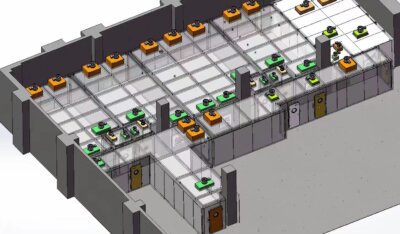
The fundamental distinction is not about materials, but about the sequence and location of value creation. Traditional brick-and-mortar construction is a linear, on-site process. Every system—from containment barriers to complex HVAC—is built in place, subject to weather, labor availability, and sequential trade dependencies. Modular construction inverts this model. It involves prefabricating laboratory components or entire self-contained modules in a controlled factory environment before transporting them for on-site assembly.
Strategic Implications of Parallelization
This shift from a site-bound activity to a factory-driven process reshapes the entire project value chain. Significant value creation transfers from on-site general contractors to specialized manufacturers. The core strategic implication is that success depends on flawless front-end design and deep collaboration between end-users, designers, and the fabricator. According to research from industry experts, major design changes become difficult and costly once factory fabrication begins, making comprehensive planning the most critical phase.
Where Risk is Managed
This methodology fundamentally reallocates project risk. In traditional builds, risk is distributed across multiple on-site trades and is exposed to daily site conditions. In modular construction, risk is concentrated in the design and fabrication phases. While this yields predictable timelines and consistent quality, it makes vendor selection and design validation absolutely critical. We compared project post-mortems and found that organizations unprepared for this front-loaded collaboration often face challenges during integration.
Cost Comparison: Upfront Capital vs. Total Lifecycle Value
Beyond Initial Capital Expenditure
A narrow focus on initial capital expenditure is misleading. While modular costs can be comparable or slightly higher due to specialized fabrication, the true financial picture emerges from total lifecycle value analysis. Traditional builds are notoriously prone to cost overruns from unforeseen site conditions, weather delays, and change orders. Modular construction offers superior budget predictability. Factory efficiency minimizes material waste and scheduling variances, often yielding overall project savings of 15-30%.
The Flexibility of Phased Investment
Modular design transforms capital expenditure. Future expansion is not a disruptive, costly rebuild but a streamlined integration of new modules. This approach can reduce expansion costs by up to 40% by minimizing operational downtime and complex retrofitting. Furthermore, the prefabricated, relocatable nature of modular labs allows them to be classified as movable equipment assets. This classification unlocks alternative financing options like equipment leasing, which are typically unavailable for permanent real estate, improving cash flow management.
Quantifying the Total Cost of Ownership
The financial divergence is best captured in a direct comparison of key cost drivers. Easily overlooked details, like asset classification, have profound implications for an organization’s balance sheet and financing strategy.
| Фактор витрат | Традиційне будівництво | Модульна конструкція |
|---|---|---|
| Initial Capital Expenditure | Comparable or lower | На рівні або трохи вище |
| Overall Project Savings | Prone to overruns | 15-30% overall savings |
| Future Expansion Cost | High, disruptive | Up to 40% reduction |
| Asset Classification | Permanent real estate | Movable equipment asset |
| Варіанти фінансування | Standard construction loans | Equipment leasing available |
Source: Technical documentation and industry specifications.
Timeline Compared: Sequential Build vs. Parallel Construction
The Power of Parallel Progression
Timeline compression is modular construction’s most pronounced operational advantage. A traditional BSL-3/4 lab requires 8 to 12 months or more of linear, on-site work, where each phase must complete before the next begins. Modular methodology decouples these activities. Site preparation, foundation work, and utility stub-ins occur concurrently with module fabrication in a factory, hundreds of miles away. This parallel progression is the engine of accelerated deployment.
From Months to Weeks On-Site
This concurrency drastically reduces on-site construction time. Once prepared, modules can be set, connected, and commissioned in a matter of weeks, compressing the total project timeline to 4 to 6 months. This accelerated speed-to-operation is a primary financial driver, enabling research programs or production revenue to commence quarters earlier. In my experience consulting on these projects, capital allocation models that fail to value this accelerated revenue generation significantly undervalue the modular approach.
The ROI of Accelerated Deployment
The impact on return on investment is measurable. Studies indicate that faster operational start is key to achieving a 15-25% higher ROI over a decade compared to traditional builds. For public health and biodefense, this rapid deployability supports the strategic prepositioning or swift deployment of diagnostic capacity, which is critical for pandemic response.
| Project Phase | Traditional Build | Modular Build |
|---|---|---|
| Total Project Timeline | 8-12+ months | 4-6 місяців |
| On-Site Build Time | Full sequential timeline | Зниження до 50% |
| Key Activity Progression | Linear, sequential | Parallel, concurrent |
| Speed-to-Operation Driver | Site-dependent | Factory fabrication |
| Long-term ROI Impact | Baseline comparison | 15-25% higher ROI |
Source: Technical documentation and industry specifications.
Which Offers Better Flexibility and Future Expansion?
Inherent Design for Change
Long-term adaptability is a cornerstone strategic advantage of modular design. Traditional labs are fixed structures; reconfiguring internal layouts or expanding footprint is massively disruptive and expensive. Modular labs are inherently designed for change. Individual modules can be added, removed, or internally reconfigured with significantly less impact on ongoing operations. This infrastructure directly supports scaling research programs without requiring a new capital project.
The Linchpin: Overhead Utility Carriers
The promised agility of modular labs depends on robust overhead utility service carriers. These systems centralize the distribution of gases, power, vacuum, and data in accessible ceiling spaces. This design allows bench layouts, walls, and even room functions to be modified without the costly and invasive utility rerouting required in traditional slab-based labs. It is the engineering feature that enables the “plug-and-play” reconfiguration of laboratory space.
Protecting Capital Through Redeployability
This flexibility extends to the asset itself. The inherent redeployability of modules protects capital investment. If a research program ends or a site must be vacated, entire laboratory modules can potentially be relocated and repurposed. This offers an asset recovery and reuse option fundamentally unavailable with permanent brick-and-mortar construction, future-proofing the organization’s investment.
Quality Control: Factory Precision vs. On-Site Consistency
Controlled Environment vs. Variable Conditions
Quality assurance occurs in fundamentally different environments. On-site construction is subject to variable weather, inspector schedules, and differing trade skill levels. Modular components are built in a climate-controlled factory setting. This enables rigorous, repeatable manufacturing processes for fabricating critical containment elements like sealed wall panels, integrated utility chases, and HEPA filter housings. The result is more consistent quality and potentially fewer defects in sensitive biosafety systems.
Документація та простежуваність
The factory environment also simplifies compliance documentation and material traceability. Welding logs, pressure test records, and material certifications are generated in a controlled setting as part of a standardized workflow. This creates a more reliable and auditable quality record than the patchwork of documentation often collected from multiple on-site subcontractors. Industry experts recommend scrutinizing a modular vendor’s quality management system and documentation protocols as a key selection criterion.
The Shift in Defect Remediation
This controlled fabrication transfers the point of quality intervention. In a traditional build, defects are identified and corrected on-site, often causing schedule delays. In a modular project, quality must be assured before shipment. While this yields predictable outcomes, it makes comprehensive factory acceptance testing (FAT) and pre-construction planning absolutely critical, as on-site remediation of a fully fabricated module is complex and limited.
Regulatory Compliance and Certification Pathways Compared
Meeting Identical, Stringent Standards
Both construction methods must meet the same stringent regulatory benchmarks, including the CDC/NIH Biosafety in Microbiological and Biomedical Laboratories (BMBL) guidelines, ISO 14644-1:2015 for air cleanliness, and NSF/ANSI 49-2022 for biosafety cabinetry. The end-performance requirements for containment, airflow, and safety are identical. The difference lies in the pathway to certification and the associated costs.
Custom Engineering vs. Validated Systems
Traditional design involves custom engineering solutions tailored to each unique site and architectural plan. Modular approaches often leverage pre-engineered, standardized components that have been previously validated to meet regulatory requirements. This standardization can streamline agency review processes, as regulators are assessing known, repeatable systems rather than one-off designs. Evidence suggests this can reduce initial certification engineering and review costs by up to 30%.
The High-Containment Cost Paradigm Shift
The economic impact is most profound at the highest containment levels. For BSL-4 facilities, the cost of traditional construction is astronomically high, limiting such work to national agencies. Modular BSL-4 construction methodologies can achieve up to 90% cost reduction versus traditional methods. This step-change could democratize ultra-high-containment research, moving it into advanced pharmaceutical and biodefense organizations.
| Аспект відповідності | Traditional Pathway | Modular Pathway |
|---|---|---|
| Engineering Basis | Custom per site | Pre-engineered, standardized components |
| Initial Certification Cost | Baseline cost | Зниження до 30% |
| Quality Control Environment | Variable on-site | Controlled factory setting |
| High-Containment (BSL-4) Cost | Extremely high | Up to 90% cost reduction |
| Core Standards Met | Identical (BMBL, ASHRAE) | Identical (BMBL, ASHRAE) |
Source: ISO 14644-1:2015 Чисті приміщення та пов'язані з ними контрольовані середовища - Частина 1: Класифікація чистоти повітря за концентрацією частинок. This standard defines the classification of air cleanliness critical for biosafety containment. Both modular and traditional labs must meet its particle concentration requirements for controlled environments, though modular construction achieves this through standardized, factory-validated components.
Making the Strategic Choice: A Decision Framework for Leaders
Aligning Method with Primary Drivers
The choice is strategic, not merely constructional. Leaders must evaluate primary project drivers against each methodology’s inherent profile. Choose traditional construction for deeply customized, one-of-a-kind facilities on greenfield sites where timeline is less critical and the design cannot be standardized. Opt for modular when facing compressed deadlines, a clear need for future scalability, budgets requiring high predictability, or operations in sensitive environments where minimizing on-site disruption and duration is vital.
Quantifying Agility and Digital Integration
The decision framework must quantify the value of operational agility and accelerated revenue generation. Furthermore, organizations should future-proof their choice by considering digital integration. The controlled fabrication of modular units makes them an ideal platform for pre-installing smart sensors and IoT systems. This means next-generation mobile high-containment laboratories can ship as “plug-and-play” smart environments with built-in, AI-driven environmental monitoring—a native advantage for the data-driven lab of the future.
A Framework for Decision-Making
A clear, driver-based framework helps crystallize the choice. The following table maps primary project objectives to the recommended methodology and the key quantitative benefit that should be weighed in the final decision.
| Primary Project Driver | Рекомендований метод | Key Quantitative Consideration |
|---|---|---|
| Compressed Deadlines | Modular | 50% faster on-site build |
| Future Scalability Need | Modular | 40% lower expansion cost |
| Deep Customization | Традиційний | N/A for unique greenfield sites |
| Budget Predictability | Modular | 15-30% overall savings |
| Minimizing On-Site Disruption | Modular | Parallel construction advantage |
| Digital/Smart Lab Integration | Modular | Native “plug-and-play” platform |
Source: NSF/ANSI 49-2022 Biosafety Cabinetry: Design, Construction, Performance, and Field Certification. This standard for biosafety cabinet performance is a non-negotiable compliance requirement for both construction methods. The choice between modular and traditional must ensure that the integrated primary containment devices meet this benchmark, with modular offering advantages in pre-installation and factory validation.
The decision hinges on three priorities: timeline sensitivity, required long-term flexibility, and financial model preference. If your program demands speed, future scalability, and predictable capital deployment, modular construction presents a compelling, modern alternative. If your need is for a permanent, highly customized facility on a stable timeline, traditional methods may suffice. The critical mistake is defaulting to traditional methods without a rigorous evaluation of modular’s total lifecycle value.
Need a professional partner to navigate this strategic choice and execute a high-containment laboratory project with precision? QUALIA specializes in the turnkey delivery of advanced modular biosafety facilities, from design through certification. Our approach integrates the front-loaded collaboration and factory precision essential for success. Contact our engineering team to discuss your specific requirements and project drivers. Зв'яжіться з нами
Поширені запитання
Q: How does modular construction accelerate the timeline for a BSL-3 lab compared to a traditional build?
A: Modular construction compresses the schedule by enabling parallel work: site preparation happens simultaneously with module fabrication in a controlled factory. This decoupling of activities can reduce on-site construction time by up to 50%, cutting total project timelines from 8-12 months to just 4-6 months. For projects where speed-to-operation is a primary financial driver, this accelerated deployment is a critical metric that can lead to a significantly higher return on investment.
Q: What is the primary financial advantage of a modular lab beyond initial capital cost?
A: The key advantage is superior total lifecycle value and cost predictability. While upfront costs may be comparable, modular construction minimizes costly on-site overruns and waste. More strategically, it enables phased, flexible investment, reducing future expansion costs by up to 40% and allowing the lab to be financed as a movable asset through equipment leasing. This means organizations with evolving research programs or tight capital budgets should model the total cost of ownership, not just the construction invoice.
Q: How does the quality control process differ between modular and traditional laboratory construction?
A: Quality assurance shifts from variable on-site conditions to a repeatable factory environment. Modular components like sealed containment panels and integrated utility chases are built using rigorous, controlled processes, leading to more consistent results and fewer defects in critical biosafety systems. This controlled fabrication also simplifies compliance documentation. If your priority is predictable quality and timeline, you must invest in comprehensive front-end design and vendor selection, as on-site fixes for factory-built modules are complex.
Q: Which construction method offers better long-term flexibility for reconfiguring lab space?
A: Modular labs provide inherent long-term adaptability, a core strategic advantage over fixed traditional structures. Their design, supported by robust overhead utility service carriers for gases, power, and data, allows bench layouts and walls to be modified without invasive utility work. This means facilities anticipating program growth or frequent workflow changes should prioritize modular designs to enable scalable reconfiguration with minimal operational disruption and cost.
Q: Do modular labs meet the same biosafety and air quality standards as traditional facilities?
A: Yes, both methods must satisfy identical stringent standards, including the CDC/NIH BMBL and relevant ventilation standards. The pathway differs, as modular approaches often use pre-engineered, validated components that can streamline agency review and reduce initial certification costs by up to 30%. The factory-controlled build environment further supports consistent quality for critical systems like biosafety cabinets, which must comply with NSF/ANSI 49-2022, and cleanroom air classification per ISO 14644-1:2015.
Q: When should a leadership team choose traditional brick-and-mortar construction over a modular approach?
A: The strategic choice favors traditional construction for deeply customized, one-of-a-kind facilities on new sites where project timeline is not a critical constraint. Opt for modular when facing compressed deadlines, a clear need for future scalability, budgets requiring high cost predictability, or operations where minimizing on-site disruption is vital. Your decision framework must quantify the value of operational agility and accelerated revenue generation against the need for ultimate customization.
Q: How does modular construction impact the risk profile of a biosafety lab project?
A: It fundamentally transfers primary project risk from on-site execution to the front-end design and planning phase. Factory precision offers predictable timelines and consistent quality but makes comprehensive pre-construction collaboration with the fabricator absolutely critical. This means organizations must have finalized user requirements and designs before fabrication begins, as making significant changes afterward is difficult and costly.
Пов'язаний вміст:
- Модульні лабораторії BSL-4: Скорочення витрат без компромісів
- Which Construction Method Delivers Faster GMP Compliance: Modular vs Stick-Built Cleanrooms for Pharma Projects?
- Модульні лабораторії BSL-3: Швидкі будівельні рішення
- Prefabricated Cleanroom vs Traditional Stick-Built Construction: 12 Cost, Timeline & Performance Differences for Regulated Industries
- Управління термінами реалізації фармацевтичних проектів "під ключ" 2025
- Вартість модульної лабораторії BSL-3: Комплексний аналіз
- The Complete Modular Biosafety Laboratory Guide for Facility Managers and Biosafety Officers: Design, Compliance, and Implementation Strategies for BSL-2, BSL-3, and BSL-4 Facilities
- Modular Biosafety Laboratory Design Standards and Engineering Requirements: HVAC, MEP, and Containment Systems for Regulatory Compliance
- The Complete Prefabricated Cleanroom Guide for Pharmaceutical & Biotech Facilities: Standards, Design & ROI Analysis



 UK
UK  EN
EN  AR
AR  FR
FR  KO
KO  ID
ID  IT
IT  PT
PT  RU
RU  RO
RO  ES
ES  NL
NL  DE
DE  TR
TR  PL
PL