
Qualification failures on mist shower systems rarely stem from equipment malfunction. They stem from acceptance criteria that were either set at the wrong threshold, tested with the wrong method, or documented in a way that cannot be traced back to the installation baseline. A facility that sets spray coverage at 100% will generate repeatable OQ failures at boot sole and underarm test points — not because the nozzles are wrong, but because 100% is unachievable at those positions without repositioning, and the protocol has no mechanism to distinguish a repositioning problem from a threshold problem. The practical consequence is delayed qualification, rework cycles, and in some cases a full OQ repeat when only partial remediation was needed. Understanding exactly which thresholds apply to which parameters — and what evidence each requires — is what separates a defensible OQ package from one that creates audit exposure.
Spray coverage acceptance criteria: the percentage threshold, test point definition, and what disqualifies a test result
Spray coverage is the most visually intuitive OQ parameter and the one most likely to be set incorrectly. The common mistake is anchoring the threshold at 100% without accounting for the geometric constraints of the enclosure. Boot sole surfaces and underarm positions have the lowest spray access of any body-surface test point; at these locations, nozzle angle and spray cone geometry create predictable shadow zones that no concentration adjustment will fix. Setting the pass threshold at 100% converts a geometry problem into a documentation problem, because the test will fail and the corrective path — nozzle repositioning — is the same regardless of whether the threshold is 95% or 100%.
The industry-grounded threshold is ≥95% of defined body-surface test points showing visible tracer dye contact, combined with a spray coverage coefficient exceeding 0.85 (the ratio of actual to theoretical coverage). These two criteria work together: the coefficient captures spatial uniformity across the spray pattern, while the test point percentage captures binary contact at discrete body positions. A protocol that specifies only the coefficient without defining test points, or only test points without a coefficient requirement, creates ambiguity that auditors will surface.
What disqualifies a result is equally important to define upfront. Any single test point that falls below the contact threshold is not an exception to be justified — it is a nozzle repositioning trigger. Documenting an exception rationale for a failed boot sole test point will not survive audit scrutiny under a risk-based review, because the failure mode is predictable and correctable at the equipment level. The OQ protocol should state explicitly that below-threshold results require corrective action and re-test, not a deviation disposition.
| Coverage Metric | Поріг | What Disqualifies a Test Result |
|---|---|---|
| Spray Coverage Coefficient | >0.85 (ratio of actual to theoretical) | Not meeting the coefficient threshold typically requires investigation. |
| Body-Surface Test Points | ≥95% of points with visible contact (per Practitioner Insight) | Any single test point falling below the defined threshold requires nozzle repositioning and re-test, not an exception. |
The test point grid itself must be defined in the protocol before testing begins, not retrospectively. If the grid is defined after a failed run to exclude the failing positions, the entire coverage result is invalidated. Auditors reviewing OQ packages frequently check whether the test point map was established during IQ or protocol authoring, and whether it remained unchanged across all test runs.
Chemical concentration acceptance criteria: nominal setpoint, tolerance range, and the number of cycles required for OQ
A chemical concentration acceptance criterion expressed as a single-point measurement is not sufficient for OQ. The core problem is that a single passing result proves nothing about the system’s ability to deliver consistent concentration across operational cycles. GMP auditors reviewing mist shower OQ records routinely request multi-cycle concentration data, and a package containing only one measurement leaves the qualification team unable to demonstrate process consistency — which is the actual intent of OQ under both EudraLex Volume 4 Annex 15 and the operational verification principles of ASTM E2500-22.
The correct structure is to document concentration measurements across at least 3 consecutive spray cycles, with each result falling within ±10% of the nominal setpoint. Three cycles is the minimum that provides any statistical basis for consistency; facilities operating higher-risk processes or running personnel decontamination showers at the boundary of BSL-3/4 containment zones should consider whether a larger cycle count is warranted by their site-specific risk assessment under ICH Q9(R1). The ±10% tolerance is not a regulatory specification — it is a practitioner-established standard that reflects achievable precision across metering system variability, ambient temperature effects on viscosity, and supply pressure fluctuation.
| Параметр | Критерії прийняття заявок | Notes / Context |
|---|---|---|
| Chemical Concentration Tolerance | ±10% of nominal setpoint (per Practitioner Insight) | Must be documented across at least 3 consecutive cycles for OQ. |
| Water Conductivity | <1.1 μS/cm | Required for high-potency APIs to ensure chemical purity. |
| Microbial Limits | <10 CFU/100mL | Required for high-potency APIs to ensure chemical purity. |
For facilities working with high-potency APIs, water quality parameters introduce an additional layer of acceptance criteria that must be addressed within the same OQ protocol. If the chemical agent is prepared or diluted using process water, conductivity below 1.1 μS/cm and microbial limits below 10 CFU/100 mL are appropriate acceptance criteria to prevent the water vehicle itself from compromising chemical purity. These are not universal OQ requirements for all mist shower applications — they are context-driven parameters that should appear in the protocol when the process risk justifies them.
Cycle timer acceptance criteria: tolerance limits, the test method, and why PLC versus relay-based control affects achievability
Cycle timing is the OQ parameter where the choice of control architecture has the most direct impact on whether acceptance criteria are sustainably achievable. The standard OQ tolerance for cycle duration is ±5 seconds — meaning the measured cycle must fall within 5 seconds of the programmed setpoint across all timed test runs. This tolerance is achievable and maintainable with PLC-controlled systems. It is not reliably achievable over time with timer relay-based systems, and that gap has real consequences for recalibration frequency, periodic review burden, and the risk of out-of-specification cycles occurring between qualification intervals.
The mist generation phase, which typically runs 15 to 30 seconds, is the most tightly controlled segment of the cycle and the most sensitive to timing drift. Relay-based systems operating under temperature variation — common in facility locations near HVAC discharge or heat-generating equipment — can exceed the ±5 second tolerance within 6 months of calibration. A relay that passes OQ in January may be generating non-conforming cycle times by June without any visible indication at the operator level. This failure mode is particularly problematic because it is silent: the shower runs, the indicator light completes, and nothing in the basic user interface signals that the decontamination cycle was short.
| Параметр | Поріг / Діапазон | Consequence / Note |
|---|---|---|
| Warning Alarm | >50 seconds | Triggers a warning for extended cycle duration. |
| Abort Alarm | >60 секунд | Leads to cycle abort if duration is exceeded. |
| Mist Generation Phase | 15-30 секунд | Establishes the baseline duration for timing verification. |
| Система управління | Achievable Tolerance (Industry Standard) | Long-Term Stability Risk |
|---|---|---|
| PLC-Controlled | ±5 seconds | Stable; sustains compliance as it is less prone to drift. |
| Timer Relay-Based | Exceeds ±5 seconds within 6 months of calibration | Prone to drift over temperature, making sustained compliance difficult. |
The OQ test method for cycle timing should use a calibrated independent timer — not the system’s own display — to record the actual duration of each phase. The PLC-logged time and the independent measurement should be compared and documented together. If the system’s internal timer and the external reference diverge by more than an allowable margin, that discrepancy is itself a finding that requires investigation before OQ can be accepted. Alarm threshold calibration — the warning trigger at cycle durations exceeding 50 seconds and the abort trigger above 60 seconds — should be verified during the same test sequence, since these limits define the operational boundaries the system is designed to enforce.
Documentation structure: how OQ records must link IQ installation data to test results for GMP audit readiness
The single most consistently missing element in mist shower OQ packages is an explicit, traceable link between IQ-verified nozzle position records and the OQ spray coverage test grid. This connection is what allows an auditor — or a future re-qualification team — to confirm that coverage results are attributable to the specific installation documented at IQ, and not to a configuration that has since changed. Without this mapping, a passing spray coverage result cannot be meaningfully defended: there is no documented basis for concluding that the tested configuration was the installed configuration.
IQ establishes the baseline. It records materials, dimensional checks, utility connections, control system functionality, and review of drawings, manuals, and certifications. OQ then operates against that baseline, testing atomization performance, pressure differentials, interlocks, alarms, cycle timing, and water quality. The documentation structure must make these two layers explicitly connected — not just chronologically adjacent. The OQ protocol should reference specific IQ record identifiers when invoking nozzle positions, interlock configurations, or control system parameters, and those references must resolve to actual IQ data entries, not just the IQ summary approval page.
| Documentation Stage | Key Elements to Link / Verify | Audit-Ready Requirement |
|---|---|---|
| IQ (Installation) | Materials, dimensional checks, utility connections, control system functionality, drawings/manuals/certifications | Provides the baseline installation data that OQ results must reference. |
| OQ (Operational) | Atomization performance, pressure differentials, interlocks, alarms, cycle timing, water quality | Test results must explicitly map back to the IQ-verified installation (e.g., nozzle positions). |
| Реєстрація даних | All door and interlock events | Must be retained for a period of at least 2 years for audit traceability. |
Data logging retention is a non-negotiable audit requirement. All door and interlock events must be logged to an independent system — not solely to a controller that can be power-cycled or reconfigured — with retention of at least 2 years. Facilities that log only to the PLC’s internal memory without a validated data export or historian create an audit gap: if the controller is replaced or reprogrammed between qualification and audit, the historical event log may be inaccessible. This is a straightforward infrastructure requirement, but it is one that must be confirmed during IQ so that OQ testing does not proceed on a system with unverified logging continuity.
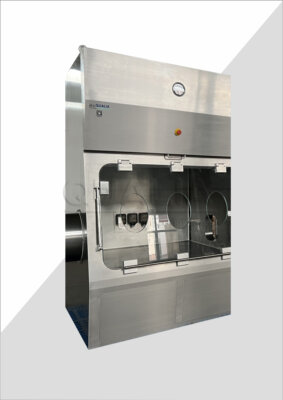
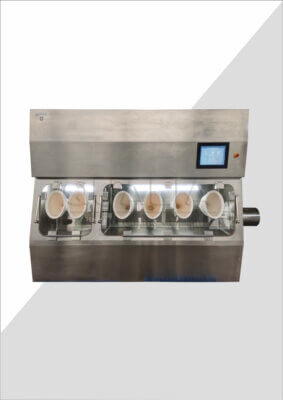
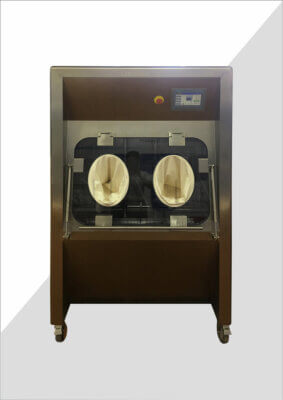
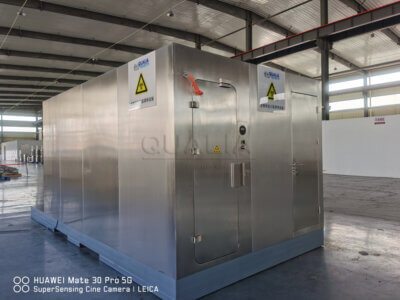
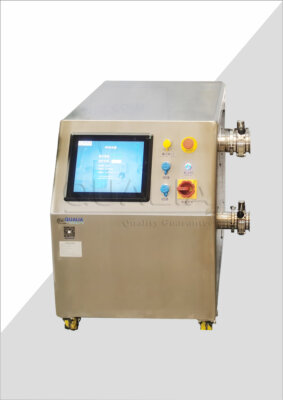
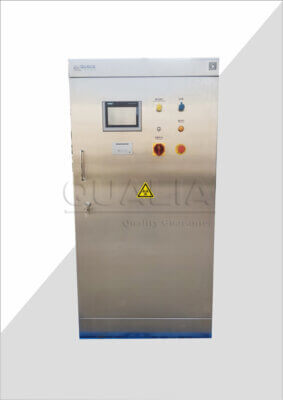
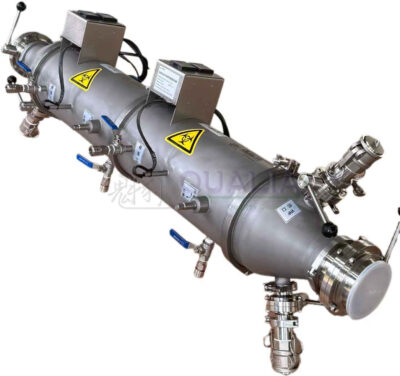
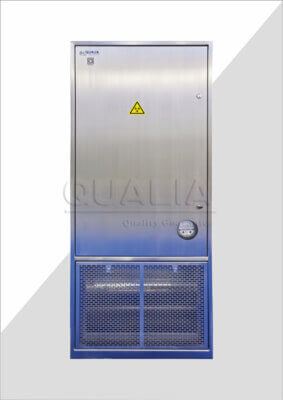
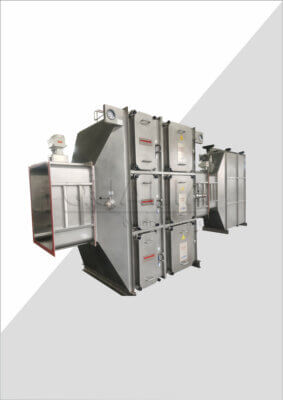
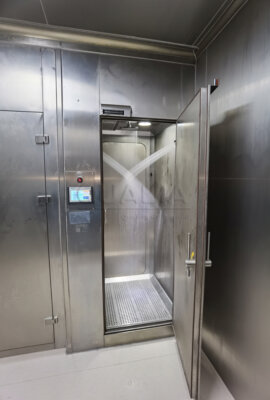
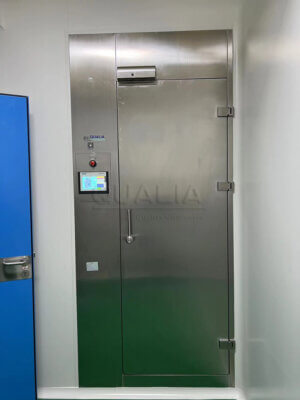
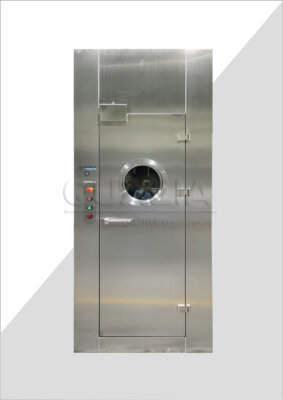
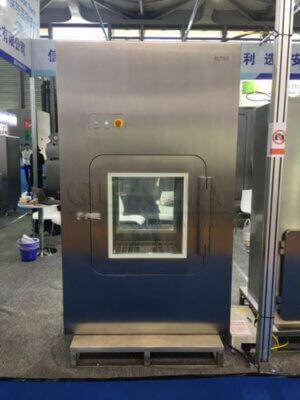
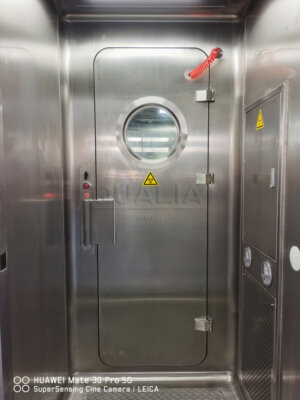
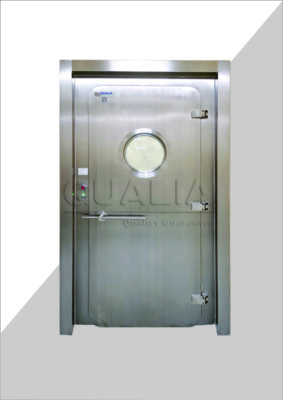
More information on how a properly specified mist shower system integrates these control and logging requirements is available in Туманний душ QUALIA: Передове рішення для контролю забруднень.
Handling OQ failures: what remediation requires and when a partial re-test is acceptable versus a full OQ repeat
Not every OQ failure requires a complete restart. The decision between partial re-test and full OQ repeat depends on the nature of the failure, what was changed in response, and whether the change affects parameters other than the one that failed. Getting this judgment wrong in either direction has consequences: an unnecessarily full repeat wastes qualification resources and delays operational readiness, while an insufficiently scoped re-test leaves the OQ package incomplete and creates audit exposure when the failure scope is later questioned.
The general principle is that a partial re-test is appropriate when the corrective action is isolated, the change is bounded, and the change does not affect the baseline conditions established at IQ. A nozzle repositioning that addresses a failed spray coverage test point at the boot sole position is a contained corrective action — it changes a physical parameter that is also IQ-documented, which means the IQ record must be updated to reflect the new position before the partial re-test is conducted. The re-test scope then covers spray coverage only, with the updated nozzle position recorded and cross-referenced. No other OQ parameters need to be re-tested unless the repositioning also changes pressure distribution, which should be assessed before the re-test is scoped.
A full OQ repeat is appropriate when the failure is systemic rather than isolated — for example, when concentration variability across cycles reveals a metering system malfunction, when cycle timing failures point to a control system fault, or when enclosure airtightness testing reveals containment degradation that was not present at FAT or SAT. Airtightness failures are a particular trigger for re-scope: a leakage rate increase exceeding 50% from the initial baseline value indicates seal degradation that changes the operational context in which all other OQ parameters were tested. If the enclosure was not airtight during OQ, the spray coverage, concentration, and timing results were obtained in a configuration that no longer matches the installation — which means those results cannot be carried forward.
У "The Qualia Bio mist shower platform is designed to support traceable qualification by maintaining documented calibration states for nozzle positions, control parameters, and alarm configurations across FAT, SAT, and site OQ stages — reducing the scope uncertainty that makes re-test decisions difficult. When the equipment’s configuration state is clearly tracked from factory to installed condition, the boundaries of a partial re-test become easier to defend.
OQ should be accepted as complete only when spray coverage meets the ≥95% threshold at all defined test points, chemical concentration remains within ±10% of nominal across at least 3 consecutive cycles, and cycle timing falls within ±5 seconds of setpoint across all timed runs. Any parameter outside these bounds is a corrective action trigger, not a documentation exercise.
Before finalizing an OQ package for a mist shower installation, the most productive pre-audit check is not a review of individual test results — it is a review of the traceability chain. Can every spray coverage result be linked to a specific nozzle position that appears in the IQ record? Can every concentration measurement be traced to a specific cycle run with a timestamped independent record? Does the timing verification include both PLC-logged and independently measured durations, compared against each other? These are the questions an auditor asks first, and they expose gaps that individual test results cannot compensate for.
The downstream implication of a weak OQ package is not just an audit finding — it is a qualification repeat under time pressure, usually at the point when the facility is ready to transition to performance qualification or begin product operations. Defining acceptance criteria correctly, testing against them with the right method, and documenting the IQ-to-OQ linkage explicitly are the three decisions that determine whether the OQ package closes cleanly or generates a remediation cycle at the worst possible project stage.
Поширені запитання
Q: Does the ≥95% spray coverage threshold still apply if the mist shower is used exclusively for equipment surface decontamination rather than personnel decontamination?
A: The ≥95% threshold and coverage coefficient requirement are grounded in body-surface test point geometry, so they do not map directly onto equipment decontamination applications. When the target surface is equipment rather than a defined human silhouette, the test point grid must be redefined around the specific geometry of the object being decontaminated, and the acceptance threshold should be justified through a site-specific risk assessment under ICH Q9(R1) rather than carried over from personnel shower protocols by default.
Q: Once the OQ is accepted, what is the first action required before the system transitions into routine operational use?
A: The immediate next step is to initiate the Performance Qualification phase, but before that begins, the completed OQ package — including the updated IQ cross-references for any nozzle repositioning done during remediation — must be formally reviewed and approved. Operating the mist shower for actual personnel or equipment decontamination before PQ is complete and before the data logging infrastructure has been confirmed to be capturing events to an independent, validated historian creates both a compliance gap and an undefended data void if the system is later audited.
Q: At what point does adding more consecutive cycles to the chemical concentration test stop improving the defensibility of the OQ package?
A: Three cycles is the documented minimum, and beyond approximately five to seven cycles the incremental audit value diminishes significantly unless a process-specific risk assessment requires a larger dataset. The point of diminishing return is reached when the cycle results demonstrate consistent within-tolerance behavior across the range of conditions the system will encounter in operation — ambient temperature variation, supply pressure at the low end of specification, and fresh versus aged chemical solution. Running additional cycles beyond that range without a defined rationale adds volume to the package without adding defensibility.
Q: Is a PLC-controlled mist shower always the right choice, or are there installation contexts where a relay-based system is adequate for sustained OQ compliance?
A: Relay-based control is adequate only in tightly controlled environments where ambient temperature is stable year-round and the recalibration interval can be shortened to less than six months to compensate for relay drift. In practice, most facility locations near HVAC equipment or in non-climate-controlled service corridors make that condition difficult to guarantee, and the recurring calibration burden typically exceeds the cost difference between relay and PLC control over a two-to-three year qualification cycle. For any installation where the ±5 second cycle timer tolerance must be sustained through annual requalification without frequent intervention, PLC control is the more defensible architecture.
Q: If the mist shower passes all three OQ acceptance parameters but the IQ-to-OQ documentation link was never formally established, can the gap be closed retrospectively without repeating the OQ tests?
A: A retrospective documentation correction is possible only if the original IQ records are intact, unaltered, and contain sufficient specificity — exact nozzle positions, dimensional references, and control configuration identifiers — to construct the traceability mapping after the fact. If those records exist and can be formally cross-referenced to the OQ test grid without requiring any assumptions or interpolation, a documented addendum to the OQ package may satisfy audit requirements. If the IQ records are incomplete or ambiguous, the traceability gap cannot be closed by documentation alone, and the affected OQ tests — most critically spray coverage — must be repeated with the mapping established before testing begins.
Пов'язаний вміст:
- Як працюють туманні дощі: Час контакту механізму розпилення та розподіл крапель на виходах з утримувача
- Протокол кваліфікації туманного душу: Документація IQ OQ та PQ для відповідності вимогам GMP та BSL-3
- Системи туманного душу: Технічний довідник для дезактивації персоналу BSL-3 та BSL-4
- Графік технічного обслуговування туманного душу: Калібрування датчика перевірки форсунок і процедури нейтралізації стічних вод
- Туманний душ проти повітряного душу для дезактивації персоналу BSL-3: Який протокол виходу є доцільним
- Технічні характеристики туманного душу: Розміри камери Потужність форсунок і стандарти матеріалів для установок GMP
- Форсунки для повітряного душу: Високошвидкісне очищення
- Вимоги до туманного душу згідно з BMBL 5-го видання: Що повинні включати протоколи виходу BSL-3
- Випробування повітряного душу: Перевірка продуктивності