Accepting VHP cycle sign-off and EDS acceptance as two separate milestones is one of the more expensive sequencing mistakes a BSL-4 commissioning team can make. The two systems share decontamination loads, alarm states, and shutdown dependencies in ways that only become visible under combined testing — and by the time the gap surfaces, construction access is often constrained and control-logic corrections require extended downtime. The practical cost is not just rework: a facility that passes individual system reviews but cannot demonstrate compliant material exit under BMBL requirements is not operationally ready, regardless of what each sign-off says. What follows will help you judge where the integrated readiness threshold actually sits and what records and test results must exist before combined system release can be claimed.
VHP release and EDS treatment readiness together
BMBL 6th edition is unambiguous on a point that commissioning teams sometimes treat as administrative: all materials exiting a BSL-4 facility must be decontaminated by an approved method. That requirement links room decontamination and waste treatment into a single compliance obligation, not two independent checkboxes. If VHP release has been proven but waste treatment capacity has not been validated against the loads that a full decontamination cycle produces, compliant material exit cannot be demonstrated — and the facility is not operationally ready under that standard, even if both systems have individual acceptance records.
The planning implication is that VHP release criteria and EDS treatment readiness need to be scoped together from the start of commissioning. A decontamination cycle that successfully completes a room or transfer chamber release generates a defined liquid waste volume with a specific thermal and chemical profile. That profile must fall within the validated operating envelope of the EDS. If the two systems were designed or accepted in parallel without a shared load analysis, the interface between them is an untested assumption — one that may not be visible until a full-cycle test is attempted under realistic conditions.
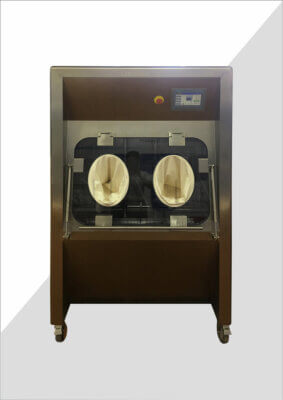
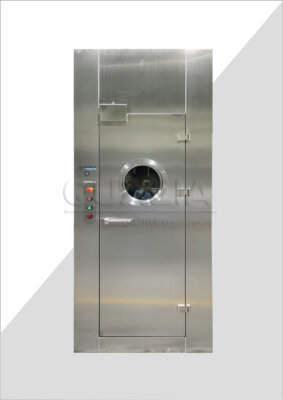
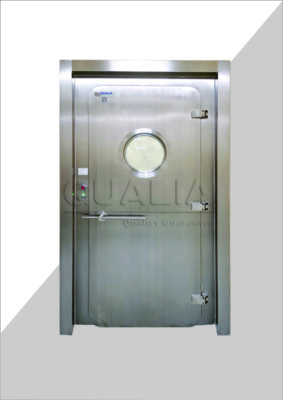
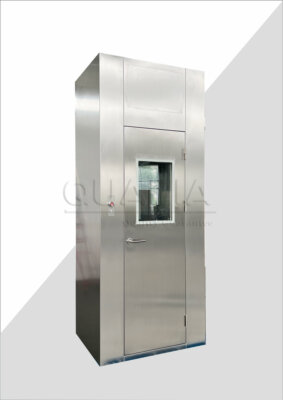
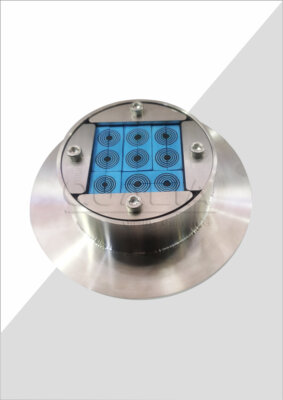
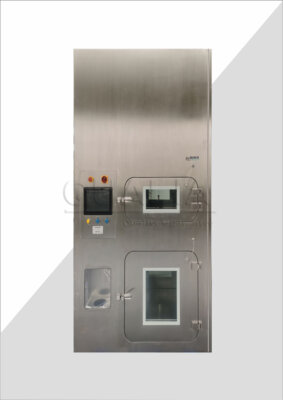
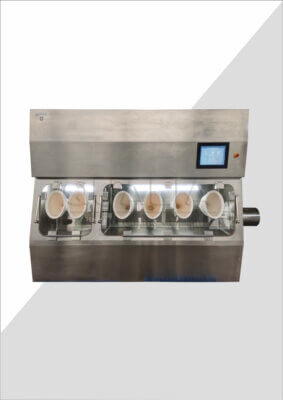
This linkage also affects how transfer operations are sequenced. A VHP Pass Box or similar transfer decontamination equipment generates its own waste stream, and if that stream routes to the same EDS handling primary laboratory waste, the combined load during a high-activity period must be part of the capacity validation, not a separate exercise.
Decontamination and waste-handling failure modes
The failure modes relevant to combined system readiness divide along decontamination method, and the distinction matters for how waste handling is planned and validated. Formaldehyde fumigation — still present in older BSL-4 infrastructure and legacy validation frameworks — introduces toxic paraformaldehyde residues that require physical cleaning before a space can be released. Those residues create a waste-handling complication that is not resolved by the fumigation cycle itself, and if cleaning waste is not accounted for in EDS capacity planning, the decontamination method and the waste system can be technically accepted separately while being practically incompatible.
High-concentration VHP systems avoid residue toxicity but introduce a different failure mode: excess condensation. Over-saturation during a cycle can increase material degradation risk and extend downtime, and if surface loading is not controlled, the additional liquid volume entering the waste stream may fall outside the EDS’s validated intake parameters. This is not a guaranteed outcome in every deployment, but it is a failure mode that must be addressed through cycle design and confirmed through compatibility testing before combined system release is claimed.
| Метод знезараження | Режим відмови | Impact on Waste Handling & Readiness |
|---|---|---|
| Фумігація формальдегідом | Toxic paraformaldehyde residues requiring physical cleaning | Incomplete removal creates waste handling failure risks and complicates decontamination acceptance |
| High‑concentration VHP | Excess condensation increasing material degradation and downtime | Can affect waste treatment system compatibility and delay combined release readiness |
The practical guidance from this comparison is not that VHP is always the safer choice at the system level — it is that each decontamination method carries a distinct failure mode, and waste treatment readiness must be validated against the specific method in use. Switching decontamination chemistry after EDS acceptance, or treating them as independently configurable, can silently invalidate the waste handling record.
Emergency shutdown sequence across linked systems
Emergency shutdown scenarios expose the tightest dependency between VHP and EDS systems, and they are consistently underrepresented in early-phase testing. A shutdown that interrupts an active VHP cycle mid-sequence creates a defined state: partially decomposed hydrogen peroxide, possibly elevated room concentration, and a waste stream that may be mid-treatment in the EDS. The question for combined readiness is whether the control logic across both systems handles that state in a defined and safe way — not whether each system handles its own nominal shutdown independently.
VHP’s chemistry simplifies part of this picture. Hydrogen peroxide decomposes to water vapor and oxygen without leaving toxic residues, which reduces chemical hazard in the residual waste stream compared to a formaldehyde system interrupted mid-fumigation. That is a meaningful process detail for shutdown sequence design, but it does not eliminate all shutdown hazards across linked systems. The EDS still needs to handle the liquid volume and concentration that exist at the point of interruption, and the interlock logic needs to ensure that a VHP system in an aborted state does not create an incompatible condition for EDS intake or bypass.
This is where combined abnormal-event testing earns its cost. Running a simulated mid-cycle shutdown — with both systems active and instrumented — will surface alarm threshold mismatches, sequencing gaps in interlock logic, and procedural ambiguities that do not appear when each system is tested in isolation. The friction is that these tests are most valuable early in commissioning, when corrections are still feasible, but they require sufficient construction completion and system integration to be meaningful. Teams that defer abnormal-event scenarios to late-stage acceptance testing often find the correction window is already closed.
Testing sequence that avoids unsafe conditions
The sequencing principle that governs safe integrated testing is straightforward in concept and difficult in practice: decontamination validation must precede maintenance access, and material compatibility must be confirmed before full operational cycles are run. BMBL establishes this logic explicitly for BSL-3 spaces — validated decontamination must cover the entire space before maintenance or renovation access is permitted — and the same principle applies as a framework reference for BSL-4 integrated testing, even though the BSL-4 governing requirements are more specific.
The downstream consequence of violating this sequence is not just a procedural gap. Running a VHP cycle in a space with unverified material compatibility, or allowing maintenance access before decontamination validation is complete, creates conditions where either equipment damage or personnel exposure risk may not be detected until later in the project when investigation is more disruptive. High-concentration VHP in particular can degrade surface finishes and seal materials in ways that accumulate across cycles, making early compatibility confirmation a practical safeguard rather than a documentation exercise.
| Testing Consideration | Unsafe Condition Avoided | Що потрібно підтвердити |
|---|---|---|
| Sequence decontamination validation before maintenance access | Accidental exposure to active pathogens or hazardous chemicals | Entire space has a validated decontamination method before any maintenance entry |
| Low‑concentration H2O2 dry‑cycle approach | Condensation leading to surface hazards, material degradation, and extended downtime | Cycle maintains optimal concentration without over‑saturating surfaces |
| Material compatibility testing | Equipment damage or failure that could compromise containment | Finishes and materials are compatible with the selected VHP concentration and cycle parameters |
The low-concentration dry-cycle approach addresses condensation risk at the process level, and it is a relevant design criterion when selecting VHP equipment for integrated operation. A system that maintains optimal concentration without over-saturating surfaces reduces the risk of generating waste-stream volumes that fall outside EDS parameters during testing. That said, dry-cycle design does not substitute for explicit compatibility confirmation — it reduces the probability of a specific failure mode, not all failure modes in the sequence.
One sequencing decision that teams sometimes get wrong is running integrated load tests before individual system acceptance is complete. Integrated testing reveals combined failure modes, but it assumes each component is performing within its designed range. If the EDS is still being calibrated when a combined cycle test is run, any anomaly in the test result is difficult to attribute, and the test may need to be repeated. The cleaner sequence is individual acceptance first, followed by interface and load testing, followed by abnormal-event scenarios — each stage building on a confirmed baseline.
Records needed before BSL-4 operation
BMBL’s emphasis on risk assessment as a foundational obligation establishes the documentation principle clearly: specific risks must be assessed and recorded before operation, not reconstructed after the fact. For combined VHP and EDS systems, that obligation extends beyond individual system qualification records to include documentation of how the two systems behave together — under nominal conditions, under design-limit loads, and under abnormal events.
The records that matter most for combined system release fall into three categories. First, decontamination cycle validation records for each space and transfer point, including biological indicator results that demonstrate the system can reliably achieve the required efficacy against the selected challenge organism. Second, EDS capacity and treatment validation records that confirm the system handles the waste volumes and chemical loads generated by those cycles, including the thermal profile if applicable. Third, abnormal-event records — documented test results showing how the combined system responds to interruptions, alarms, and off-nominal conditions — along with any corrective actions taken and the resulting control-logic or procedural changes.
The third category is the one most likely to be missing or incomplete at the point of combined release review. Individual system sign-offs often produce the first two categories as a matter of course, but abnormal-event records for the combined system require deliberate planning and dedicated test scenarios. Their absence does not mean the systems are unsafe — it means the integrated behavior under stress has not been confirmed, which is a different kind of readiness gap and one that is difficult to defend in a regulatory or operational review. For a fuller picture of what the commissioning sequence leading up to these records should look like, the Введення в експлуатацію БСЛ-4: Кроки до оперативної готовності framework is a useful reference.
Material compatibility records also belong in this set. If high-concentration VHP is in use, pre-operation compatibility testing for surfaces, seals, and equipment finishes should be documented and tied to the specific cycle parameters used in validation. These records serve a dual purpose: they protect against silent damage that could compromise containment performance, and they provide a baseline against which post-cycle inspection results can be compared over time.
Readiness threshold for combined system release
The threshold for combined system release is not defined by a single document, but it can be described precisely by assembling the applicable benchmarks. Three distinct types of requirements converge on this threshold.
| Threshold Type | Вимоги / орієнтир | Readiness Implication |
|---|---|---|
| Facility infrastructure (BMBL) | BSL‑4 must have a dedicated chemical decontamination system for the entire lab | Proven VHP capability is a prerequisite for combined system release |
| Regulatory recognition (FDA) | VHP elevated to Established Category A sterilization, ISO 22441:2022 | External benchmark that VHP must meet before combined readiness can be claimed |
| Sterility assurance (ISO) | SAL 10⁻⁶ against Geobacillus stearothermophilus | Quantifiable efficacy criterion to verify VHP system meets operational readiness |
Together, these thresholds mean that a combined release claim requires more than a statement that both systems are installed and accepted. The VHP system must be able to demonstrate SAL 10⁻⁶ against Geobacillus stearothermophilus under ISO 22441:2022 — a quantifiable efficacy criterion, not a general assertion of sterilization performance. The FDA’s 2024 elevation of VHP to Established Category A sterilization status reinforces this benchmark as an external regulatory reference point, though it does not by itself govern facility-level combined system release. The BMBL infrastructure requirement — a dedicated chemical decontamination system for the entire laboratory, proven before operation — establishes the prerequisite condition: VHP capability must be demonstrated, not assumed.
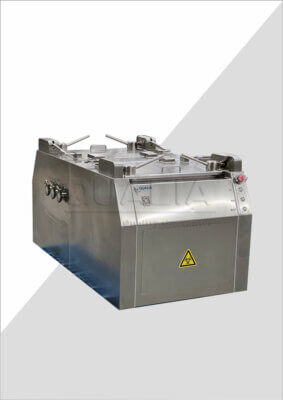
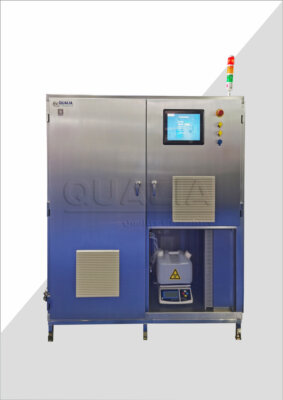
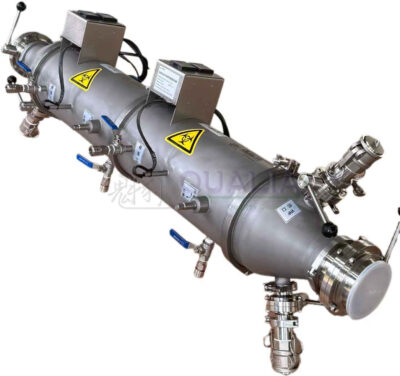
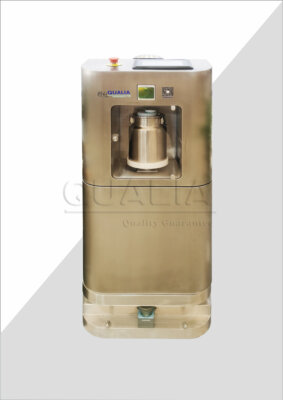
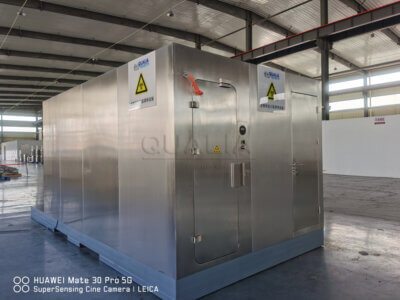
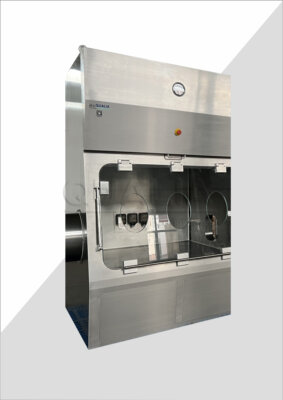
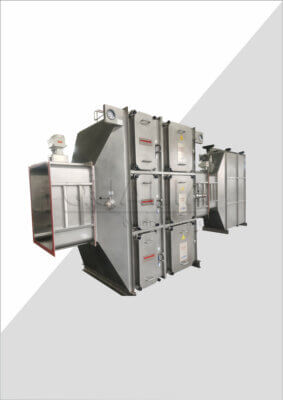
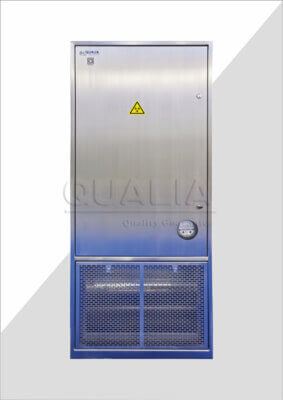
What the table does not capture is the integration condition that sits above all three thresholds: the VHP system and EDS must have been tested together under conditions that represent real operational loads, including the waste volumes, chemical concentrations, and abnormal events that arise during combined operation. A facility can satisfy each threshold in the table and still be unable to demonstrate compliant material exit if the interface between the two systems has not been verified. That gap — between individual compliance and integrated readiness — is the practical criterion that separates a facility ready for operation from one that has completed paperwork. The Effluent Decontamination System from Qualia Bio is designed to operate within BSL-4 maximum containment contexts, but its readiness contribution is only fully realized when validated against the specific decontamination loads and interface conditions of the facility it serves.
The most useful question to ask before claiming combined system readiness is not whether VHP and EDS have each been accepted, but whether there is a documented record of how they behave together when something goes wrong. That record — covering mid-cycle interruptions, capacity limits, and alarm response across both systems — is what distinguishes a facility that has been proven from one that has been assembled. Before operation begins, confirm that the waste treatment capacity validation was run against actual VHP cycle loads, that abnormal-event scenarios are documented with outcomes and any corrective changes noted, and that material compatibility records exist for the specific cycle parameters used in biological validation. If any of those records are absent or incomplete, the combined release threshold has not been met — regardless of what the individual sign-offs say.
Поширені запитання
Q: Our facility is transitioning from formaldehyde fumigation to VHP mid-project — does the EDS acceptance need to be repeated?
A: Yes, a decontamination chemistry change after EDS acceptance functionally invalidates the waste handling record, because the chemical and thermal profile entering the EDS changes with the method. Formaldehyde fumigation produces residue-laden waste requiring physical cleaning; VHP produces a different liquid volume and concentration profile. The EDS was validated against one set of intake conditions, and switching the upstream chemistry means the validated envelope no longer maps to actual operating loads. Capacity and treatment validation must be re-run against the specific cycle parameters of the new decontamination method before combined release can be claimed.
Q: Once individual system sign-offs are complete, what is the immediate next step before claiming combined readiness?
A: The immediate next step is running interface and load testing with both systems active under conditions that reflect realistic operational cycles — not nominal-only scenarios. Individual acceptance confirms each system performs within its designed range, but it does not verify the shared load, alarm thresholds, or interlock logic at the boundary between VHP and EDS. That boundary test — including at least one simulated abnormal event such as a mid-cycle shutdown — is what generates the combined behavior record required for integrated release. Without it, the gap between individual compliance and integrated readiness remains undocumented.
Q: Does meeting the SAL 10⁻⁶ threshold under ISO 22441:2022 mean the facility satisfies combined release criteria?
A: No — achieving SAL 10⁻⁶ against Geobacillus stearothermophilus satisfies the VHP efficacy criterion but is only one component of the combined release threshold. The BMBL infrastructure requirement and EDS treatment validation against actual decontamination cycle loads are separate conditions that must also be met. A VHP system that demonstrates the required sterility assurance level under ISO 22441:2022 has cleared the efficacy benchmark, but if the waste volumes and chemical concentrations that cycle produces have not been validated against EDS operating parameters, compliant material exit under BMBL cannot be demonstrated. All three threshold types must converge, not just the sterilization efficacy measure.
Q: How should teams weigh the cost of early combined abnormal-event testing against the risk of deferring it to late-stage acceptance?
A: Early combined abnormal-event testing is the lower-risk option in almost every commissioning timeline, even though it requires more construction completion upfront. The correction window for control-logic mismatches, alarm threshold gaps, and sequencing errors in interlock design is significantly wider early in commissioning than at late-stage acceptance. Teams that defer these scenarios often find that anomalies surface after construction access is constrained and extended downtime carries direct schedule and budget consequences. The friction of coordinating both systems early is real, but it is bounded; the friction of rework after individual sign-offs have been issued is both harder to scope and harder to explain in a regulatory review.
Q: Is integrated VHP and EDS readiness testing relevant for smaller BSL-4 facilities with lower waste volumes, or only for high-throughput operations?
A: Integrated readiness testing applies regardless of throughput, because the failure modes it targets — mid-cycle shutdown behavior, alarm state mismatches, and waste-stream compatibility — are driven by system architecture and interdependency, not by volume alone. A lower-throughput facility may face smaller absolute waste loads, but if the VHP and EDS were accepted in isolation, the interface between them is still an untested assumption. The BMBL requirement for proven decontamination capability and compliant material exit does not scale down for smaller facilities. Combined testing scope can be proportionate to operational loads, but the principle — that integrated behavior under abnormal conditions must be documented before operation — holds at every scale.