

A facility that reaches 95% mechanical completion and treats that milestone as readiness for occupancy review is operating on an assumption that tends to break down at the worst possible moment. A single missing calibration certificate, an unsigned redline drawing, or an FAT/SAT protocol that cannot be traced to the installed configuration is enough to suspend handover for two to seven days while the gap is resolved under active schedule pressure. The cost is not just time — it is the compounding effect of assembled review teams, confirmed attendance schedules, and regulatory submission timelines that cannot absorb undocumented slippage. The judgment that resolves this is treating handover as a documentation completeness gate, not a construction progress milestone, and the evidence index, deviation log, and owner assignments that make that gate functional are the subject of what follows.
Evidence index by system, room and owner
The starting failure pattern in most handover packages is organization by contractor package rather than by system and room. When test records arrive sorted by who delivered them rather than by what they verify, a biosafety officer reviewing containment performance cannot efficiently cross-reference airflow behavior against the responsible design owner, or confirm that a HEPA housing change logged at factory acceptance actually propagated into the as-built drawings. The evidence exists, but its structure turns a verification task into an investigative one — and that distinction matters when review time is finite and occupancy is scheduled.
A functional evidence index assigns each critical system a named accountable owner across the phases that generate evidence: design, fabrication, installation, controls, and commissioning. Ownership is not a formality. It is what makes each evidence entry usable for biosafety review rather than merely present. Without a named owner, a deviation in a pressure test record has no one to question, no escalation path, and no accountability for whether the resolution was adequate. The WHO Laboratory Biosafety Manual and CDC BMBL treat containment verification as a system-level responsibility — the implication for documentation is that the system boundary, not the contractor boundary, is the correct organizing unit.
The minimum documented categories for BSL-3/4 handover — airflow and pressure strategy, HEPA filtration arrangement, envelope integrity, decontamination compatibility, and utilities resilience — represent the containment-critical systems where incomplete evidence carries direct operational consequence. These are not a closed regulatory list, and facility-specific scope may extend them, but they reflect the categories where evidence gaps most frequently surface during biosafety review. Room pressure differential stability and critical alarm behavior are verified against facility-specific specified ranges established in the approved design basis, not against universal pass/fail thresholds independent of that basis.
Each entry in the index should carry traceable drawings, FAT/SAT protocols, material records, an O&M package, and a change log — not because completeness is an administrative preference, but because any one of those elements missing from a critical system entry creates a traceability gap that a biosafety officer cannot sign past.
| Система | Key Evidence Documents | Measurable Acceptance Criteria | Accountable Owner (Design / Fabrication / Installation / Controls / Commissioning) |
|---|---|---|---|
| Airflow & Pressure Strategy | Traceable drawings, FAT/SAT protocols, change logs, O&M package | Room pressure differentials stable within specified range under normal and upset conditions; critical alarms trigger, annunciate, and prompt correct operator response | To be assigned per responsibility matrix |
| HEPA Filtration Arrangement | Material records, factory test data, traceable drawings | Installed configuration matches design; housing maintainability records included | To be assigned per responsibility matrix |
| Envelope Integrity | Traceable drawings, test scripts, material records, change logs | Pressure decay/leakage tests meet specified criteria under commissioning conditions | To be assigned per responsibility matrix |
| Сумісність зі знезараженням | Protocols, material compatibility records, test logs | Sequences documented, witnessed, and reproducible; efficacy verification data included | To be assigned per responsibility matrix |
| Utilities Resilience | O&M package, material records, change logs | Systems maintain operation under upset conditions; backup power, gas, drain resilience verified | To be assigned per responsibility matrix |
As-built packages must capture approved changes, final component schedules, and maintenance references — not the design-intent configuration as submitted at project start. If the evidence index is populated from early-stage documentation and never updated to reflect commissioning-phase changes, it describes the facility as it was planned, not as it was built, and that distinction is precisely what biosafety review is intended to catch.
Deviations and operating restrictions before handover
Open deviations at handover are a structural problem, not an administrative inconvenience. A deviation that is logged but unresolved means the system it affects has not been accepted — and an unaccepted system cannot support a handover claim, regardless of how the rest of the package reads. The practical requirement is that every deviation carries traceable closure: a resolution description, supporting evidence, and a record of who approved it. Handover review that encounters an open deviation without these elements has no basis for determining whether the system is safe to occupy.
Two process controls reduce the risk of deviations accumulating without resolution. The first is a 24-hour logging rule with a single change approval owner — a recommended practice that prevents undocumented changes from escaping review and invalidating test records that were witnessed under different conditions. The second is a documented freeze on critical software settings and control setpoints before witnessed protocols begin. These are not codified regulatory requirements; they reflect sound commissioning discipline. Their practical value is that they establish a clear before/after boundary: any change made after the freeze is a deviation by definition, and any change made before it is part of the verified baseline.
The more nuanced control point is operating restrictions. When a system cannot meet its original acceptance criteria but has been accepted under a documented workaround — a reduced pressure differential, a manual monitoring substitution, a bypass condition — that restriction does not resolve automatically at handover. It must be reviewed and formally accepted by the biosafety officer before handover proceeds. This is a planning criterion, not a temporary gap. The biosafety officer’s acceptance of a restriction is a documented decision about what conditions the facility can safely operate under, and it belongs in the handover record as a permanent entry, not a transitional note.
| Control Point | Ризик у разі відсутності | Що потрібно підтвердити |
|---|---|---|
| All deviations recorded and closed with resolution evidence | Open deviations undermine handover acceptance | Verify every deviation has traceable closure and supporting evidence before handover |
| 24-hour logging rule with single change approval owner | Undocumented changes can escape review and invalidate test records | Confirm logging procedure and assign a single approval owner for deviations |
| Critical software and setpoints frozen before witnessed protocols begin | Unapproved changes may invalidate test results | Check that a freeze is documented and in effect before any witnessed testing starts |
| Operating restrictions and workaround controls documented and reviewed | Known deviations without documented controls risk unsafe operation | Ensure all restrictions are approved, communicated, and accepted by the biosafety officer |
The downstream consequence of skipping this review is that operating restrictions become institutional memory rather than documented controls — known informally by the team that commissioned the facility, unknown to the operators and maintenance staff who inherit it. That knowledge gap is the condition under which workaround controls fail.
SOP and training records tied to acceptance
The most common training documentation mistake at handover is treating records as proof of delivery rather than evidence of readiness. A sign-off sheet confirms that training occurred; it does not confirm that the right person received training relevant to their actual role, or that the SOP they trained against reflects the system as commissioned rather than as designed.
Role separation is the planning criterion that makes training records meaningful. Operators, maintenance personnel, and emergency response teams interact with BSL-3/4 systems differently, face different failure modes, and need different procedural references. Bundling all three audiences into a single general training record creates documentation that is difficult to use as evidence in a biosafety review — and nearly impossible to use as a credible audit trail if an incident triggers a post-occupancy investigation. The separation is not a formal standard mandate; it is the condition that transforms training records from a compliance checkbox into usable acceptance evidence.
The timing problem compounds this. Training, SOP review, and maintenance orientation that are deferred to the final weeks before handover consistently arrive incomplete. The practical recommendation is to integrate these activities into the commissioning calendar so that they track system completion — operators trained on airflow controls when those systems are commissioned and verified, maintenance teams oriented on HEPA replacement procedures when those systems are walked down. This prevents the scenario where handover is blocked not by a missing test record but by an SOP that was never reviewed against the as-built configuration.
The reconciliation step between supplier-provided documentation and site SOPs is where this gap most often materializes. Supplier O&M documentation reflects equipment as delivered and factory-tested. It does not reflect how that equipment integrates into the site’s containment strategy, what the site-specific alarm response procedures are, or what the facility’s emergency decontamination sequence looks like. Closing that gap before handover requires active effort — a comparison between supplier content and site SOP, with a documented reconciliation record. Without it, training records reference documentation that does not describe the actual operating environment, and the biosafety officer reviewing integrated readiness has no basis for confirming alignment.
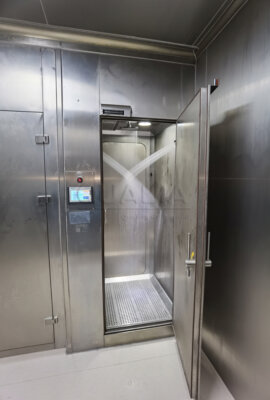
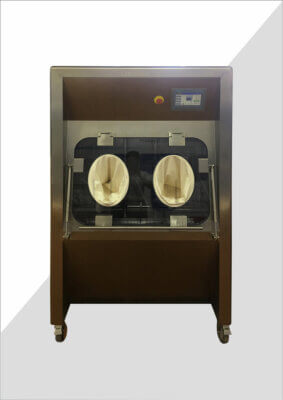
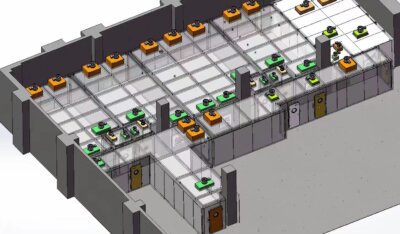
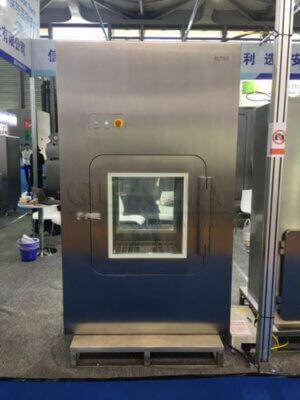
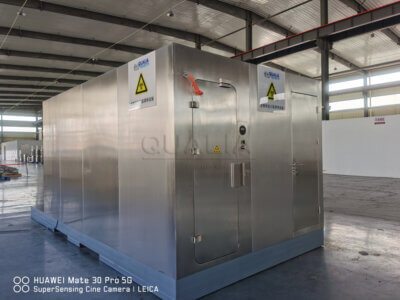
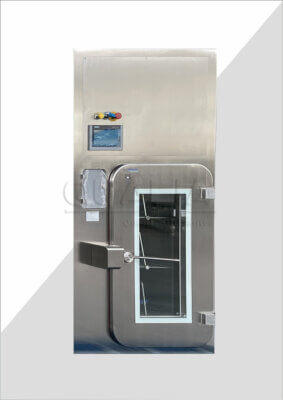
For facilities using modular containment infrastructure, this reconciliation step applies to the interface between the Модульна лабораторія BSL-3/BSL-4 equipment documentation and the site-level SOPs governing containment operations — a gap that is easy to overlook when factory acceptance and site integration are managed as separate workstreams.
Maintenance access evidence for critical systems
Maintenance evidence is a handover gate criterion, not a post-occupancy deliverable. If a biosafety officer accepts a facility without documented evidence that containment-critical components can be safely maintained, the acceptance is based on the assumption that maintenance is possible rather than on verified proof — and that assumption tends to encounter its limits during the first scheduled maintenance event, not during commissioning.
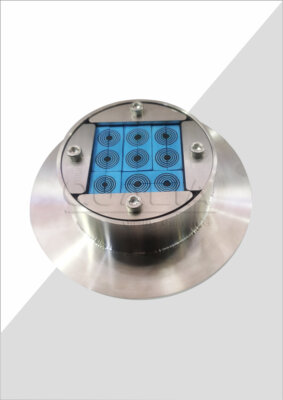
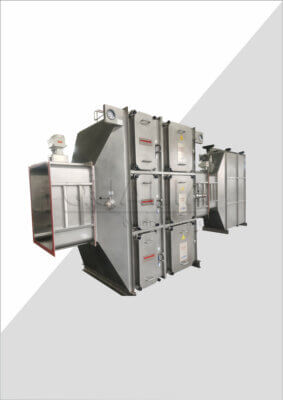
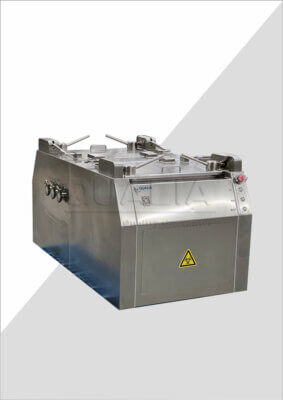
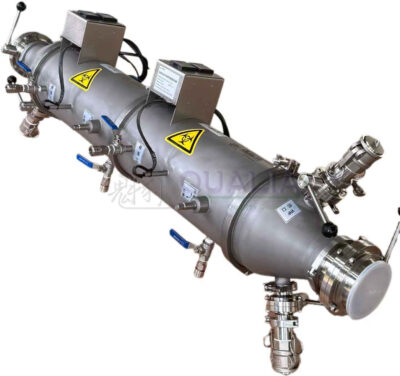
The HEPA filtration system is the clearest example of where this gap creates direct containment risk. Bag-in/bag-out systems used in BSL-3/4 environments must support contamination-safe filter replacement without compromising containment integrity. Evidence for this should include documented testing access procedures, housing maintainability records, and written confirmation that replacement can be performed under the facility’s biosafety procedures. A system where filters were installed and tested but where the replacement procedure has not been verified and documented against the installed configuration leaves the facility without a safe maintenance pathway — which means it cannot be sustainably operated regardless of how well it performed at commissioning. For facilities reviewing HEPA containment maintenance requirements, «Bag In Bag Out» system documentation provides a useful reference point for what housing maintainability evidence should include.
The O&M package and spare parts strategy carry a different but equally important risk. Calibration intervals that are not documented before handover typically default to manufacturer recommendations that may not reflect the facility’s actual use conditions or regulatory requirements. Response times for critical spare parts that were never confirmed during commissioning may become a scheduling problem the first time a component fails. A preventive support plan that includes recommissioning intervals and a critical spare strategy is not a bureaucratic addition to the handover package — it is the information that maintenance personnel need to sustain system reliability over the operational life of the facility.
| Maintenance Evidence Category | Ключові компоненти | Risk if Incomplete |
|---|---|---|
| HEPA filter testing and replacement access | HEPA filter testing access, housing maintainability, contamination-safe replacement procedures | Inability to safely replace filters, leading to containment breach or extended downtime |
| O&M package and spare parts strategy | Calibration intervals, response times, spare parts list | Unplanned outages due to lack of parts or unclear maintenance schedules |
| Preventive support plan | Recommissioning intervals, critical spare strategy, periodic review cadence | Long-term reliability degraded without planned recommissioning |
The trade-off here is real: building complete maintenance access evidence during commissioning adds documentation burden to a phase that is already under schedule pressure. But the cost of deferring it is a facility where the maintenance team inherits undocumented procedures, unknown calibration gaps, and no defined recommissioning schedule — conditions that degrade containment reliability over time in ways that are difficult to detect until a failure event makes them visible.
Biosafety officer review of integrated readiness
Integrated readiness review is not a final walkthrough. It is a structured assessment against documented criteria, and its output — the biosafety officer’s acceptance — is only defensible if the review was conducted against a complete evidence package rather than a partial one assembled under time pressure.
The practical gate criteria before witness testing begins reflect this requirement. A system completion threshold of at least 95% with no open critical defects is a recommended minimum, not a formal regulatory standard, but it represents the condition below which witnessed testing may produce results that do not reflect the facility’s actual commissioned state. More importantly, 100% of required documents must be present before the review begins — calibration certificates, as-built markups, control narratives, training records, test scripts, deviation logs, and resolution evidence. The incompleteness rule is not proportional: a single missing document in a critical category is not a minor gap. It is a gap that the biosafety officer cannot review around, and attempting to do so creates an audit exposure that is harder to defend than a delayed handover.
Two weeks of advance notice for confirming owner-side attendance at critical tests is a planning criterion grounded in practical necessity. When attendance is confirmed late, critical witnesses are unavailable, tests are witnessed by personnel without the authority to accept them, and the review record reflects a procedural gap that may need to be addressed before the package can be submitted. ISO 35001:2019 provides a biorisk management governance framework that supports systematic review and risk acceptance processes — the attendance confirmation principle reflects that kind of disciplined stakeholder engagement, even if the specific timing is a practical recommendation rather than a standard-defined requirement.
| Gate Criterion | Поріг | Що перевіряти |
|---|---|---|
| System completion | ≥95% complete, no open critical defects | Walk down system to confirm no critical unfinished work |
| Documentation availability | 100% of required documents present (calibration certificates, as-built markups, control narratives, training records, test scripts, deviation logs, resolution evidence) | Verify completeness against the evidence index checklist |
| Role attendance | All required owner-side representatives confirmed for critical tests at least two weeks in advance | Check attendance schedule and confirm availability |
| Unmanaged high-risk items | No unmanaged high-risk items remaining | Review risk register; all items must be closed or accepted with documented controls |
The integrated readiness review also carries the responsibility of confirming that supplier records have been reconciled with facility SOPs. This is where fragmented evidence packages create the most friction: supplier data, commissioning results, and site documentation that were managed in parallel must be cross-referenced to verify that the facility’s containment strategy is coherent across all of its contributing systems. A biosafety officer who cannot perform that cross-reference efficiently — because evidence is organized by contractor rather than by system — faces a review task that cannot be completed in the time allocated for it.
For teams working through commissioning readiness in parallel with this review preparation, the step-by-step commissioning guide for BSL-3 labs provides a useful reference for sequencing the evidence generation activities that support integrated readiness review.
Handover block for missing critical records
The most common form of handover block is also the most preventable: a documentation gap in a critical system that was complete at 95% mechanical completion but never had its evidence package finalized. The construction team treats mechanical completion as readiness; the documentation team treats it as a separate workstream with a later deadline; and the biosafety officer, reviewing an evidence index with a missing calibration record or an unsigned redline, has no choice but to suspend acceptance until the gap is resolved.
The 2–7 day delay range associated with resolving missing items during handover is a practitioner-experience figure, not a contractual guarantee or an empirical study finding. Its value is as a scheduling consequence to take seriously, not a precise forecast. What it describes is realistic: tracking down a calibration certificate from a supplier who has demobilized, obtaining a signature on a redline from a design engineer who has moved to another project, or reconstructing FAT/SAT traceability for an equipment package that was documented outside the main commissioning record all take time that the occupancy schedule cannot easily absorb. The pressure to fill the gap quickly often produces documentation that is present but not properly verified — which trades a handover delay for an audit exposure.
The incompleteness rule should be treated as a deliberate control point: if any critical system lacks evidence, a named owner, or a documented operating restriction, handover is incomplete. This is not a proportional assessment. Ninety-five percent mechanical completion does not equal handover readiness if documentation is incomplete, and that distinction must be explicit in the project’s acceptance criteria rather than assumed from construction progress reports.
A live punch-list dashboard with aging targets — 48 hours for urgent items, 72 hours for standard items, 7 days for items that require supplier response — provides a proactive mechanism for preventing overdue gaps from accumulating into a handover block. The value of the aging structure is that it creates a visible escalation threshold before the handover review date arrives. When items age past their target without resolution, the schedule consequence is already visible rather than becoming apparent only when the biosafety officer sits down with the evidence index.
| Стан | Наслідок | Typical Delay Impact |
|---|---|---|
| Missing calibration record, redline, SOP, or FAT/SAT traceability | Handover cannot proceed until the missing record is provided | 2–7 day delay per missing item |
| Any critical system lacks evidence, owner, or operating restriction | Handover considered incomplete | Indefinite block until criteria are met |
| Mechanical completion at 95% but documentation incomplete | Construction progress alone is not sufficient; handover blocked | Delay dependent on documentation backlog |
| Overdue missing records beyond punch-list aging targets | Escalation and potential schedule overrun | Cumulative delays, risk to occupancy timeline |
The underlying principle that separates functional handover packages from ones that delay occupancy is the same one that applies throughout the commissioning process: documentation gaps that are identified and tracked during evidence generation are manageable; gaps that are discovered during biosafety review are a scheduling problem under pressure. The punch-list aging structure, the 100% documentation gate, and the incompleteness rule all serve the same purpose — they move the discovery point earlier, when resolution is still straightforward.
A BSL-3/4 handover package that functions as an acceptance instrument rather than a construction history record is distinguished by three conditions at every critical system entry: a named accountable owner, a closed deviation status with resolution evidence, and a documented operating restriction where one applies. The absence of any one of these does not degrade the package incrementally — it changes the nature of the biosafety officer’s review from a verification task to an investigative one, with a timeline that the occupancy schedule is unlikely to accommodate.
The practical next step for teams approaching handover is to audit the evidence index against those three conditions before the biosafety officer review is scheduled — not after it begins. Identifying which critical system entries are missing an owner assignment, which deviations remain open, and which operating restrictions have not been formally reviewed and accepted gives the project team a specific, prioritized resolution list rather than a general sense of readiness that may not survive contact with a structured review. That pre-review audit is the difference between a handover package that accelerates occupancy and one that delays it.
Поширені запитання
Q: What happens if the facility was designed and built in phases, with different contractors managing different systems — can the evidence index still be organized by system and room?
A: Yes, and phase- or contractor-fragmented projects make system-based organization more necessary, not less. When multiple contractors generate evidence across overlapping timelines, the biosafety officer’s verification task becomes genuinely investigative unless the index imposes a system-and-room structure over the top of that fragmentation. The practical requirement is a responsibility matrix that assigns a named accountable owner per system across all contributing phases — design, fabrication, installation, controls, and commissioning — regardless of how many contractors contributed evidence to each entry. Without that unifying structure, cross-referencing a pressure test record against a HEPA housing change logged at factory acceptance requires the reviewer to reconstruct relationships that the index should have made explicit.
Q: If an operating restriction cannot be resolved before the scheduled handover date, does it automatically block acceptance or can it be formally accepted in a limited-occupancy state?
A: An unresolved operating restriction does not automatically block handover, but it must be formally reviewed and accepted by the biosafety officer before handover proceeds — it cannot simply carry over as an informal understanding. The distinction matters because a documented restriction that has been reviewed and accepted by the biosafety officer is a defined condition of safe operation; an undocumented one becomes institutional memory that operators and maintenance staff who inherit the facility will not have access to. The handover record must reflect the restriction as a permanent entry with documented workaround controls, not a transitional note expected to resolve post-occupancy. What the facility cannot do is proceed to occupancy with a restriction that has not yet been reviewed, regardless of schedule pressure.
Q: Once the biosafety officer signs off on the integrated readiness review, what is the immediate next step before occupancy begins?
A: The biosafety officer’s acceptance closes the documentation gate but does not itself initiate occupancy. The immediate next step is confirming that the handover package — including the accepted deviation log, operating restrictions, as-built index, and training records — has been formally transferred to the facility operations team with a defined handover of ownership for each critical system. This means the named owners in the responsibility matrix transition from commissioning accountability to operational accountability, and the punch-list aging structure shifts from a pre-handover tracking tool to a post-handover corrective action register. Any open non-critical items accepted conditionally should have documented resolution timelines confirmed before the first operational use of the containment environment.
Q: Is a modular BSL-3/4 facility held to the same handover package completeness standard as a stick-built facility, or does factory pre-qualification reduce what needs to be documented at site?
A: Factory pre-qualification reduces duplication of certain fabrication-phase evidence, but it does not reduce the completeness requirement for site-level acceptance. The distinction is between what the factory acceptance test verifies — equipment performance under controlled manufacturing conditions — and what site acceptance testing must verify — integrated system performance within the actual containment envelope, connected utilities, site-specific control setpoints, and local SOPs. Calibration certificates, as-built markups reflecting site installation, control narratives aligned to site alarm response procedures, and the reconciliation between supplier O&M documentation and site SOPs are all site-generated requirements that factory pre-qualification cannot substitute. A modular package that arrives with complete FAT records still requires a full site evidence index before the biosafety officer can verify integrated readiness.
Q: At what point does adding more documentation to the handover package stop improving biosafety review efficiency and start creating noise that slows it down?
A: The threshold is the boundary between critical-system evidence and supporting context. Documentation that directly traces containment performance — FAT/SAT protocols, calibration certificates, deviation logs with resolution evidence, as-built markups, and training records tied to specific roles — improves review efficiency because it answers the biosafety officer’s verification questions directly. Documentation that describes project history, vendor qualifications, or general compliance context without linking to a specific system entry in the evidence index adds volume without adding traceability. The practical control is the evidence index itself: if a document cannot be assigned to a specific system, room, and owner entry in the index, it is unlikely to be usable during review. Completeness within that structure is always the goal; completeness outside it creates the investigative burden the index is designed to prevent.