
Procurement teams that initiate HPAPI equipment scope before toxicology has produced even a provisional band consistently create the same downstream problem: suppliers receive requests with no containment class defined and default to semi-open handling configurations that EHS rejects months later. The rework is not abstract — it means reissuing specifications, requalifying vendors, and in the worst cases, redesigning installed equipment because the original design had no second layer of protection within primary containment. The decision that prevents this is not equipment selection itself, but the toxicology-gated checkpoint that must precede it: establishing a provisional exposure band, documenting the uncertainty level attached to it, and defining the required containment class before any supplier receives a scope request. What follows will help you judge when a compound is genuinely ready for equipment discussion, and what must be in place before that conversation is defensible.
Toxicology Inputs Needed When No OEL Exists
The absence of a formal occupational exposure limit does not suspend the obligation to assess compound potency — it changes the method used to estimate it. For new chemical entities without established OELs, the standard approach draws on structural analogy, mechanism-of-action data, in vitro and in vivo results where available, and where data remain sparse, quantitative structure-activity relationship (QSAR) modelling based on molecular properties. QSAR provides an initial categorisation, not a substitute for a compound-specific OEL, and should be framed that way internally. It reduces uncertainty enough to support a provisional band assignment; it does not resolve uncertainty in a way that justifies lowering the containment requirement.
The practical planning criterion — treated as a defensible early-stage decision practice rather than a binding regulatory mandate — is to classify the compound at the more restrictive band when data are incomplete. This matters most when a single endpoint is missing or when the only available data come from analogue compounds rather than the target substance itself. Under-specifying at this stage because the data gap feels temporary is a documented failure pattern: the band may remain provisional for longer than anticipated, and any equipment already specified against an optimistic classification will need to be re-evaluated once additional endpoints arrive.
The toxicology inputs that most affect provisional band assignment include potency and dose-response relationships, genotoxicity and carcinogenicity findings, reproductive and developmental toxicity data, target organ effects, and any reversibility data. When several of these are absent simultaneously, the uncertainty level is not merely higher — it represents a qualitatively different risk profile that should be documented explicitly in the provisional band record. That documentation is what allows reviewers later to evaluate whether reclassification is warranted, and it is what makes the provisional band defensible under EHS scrutiny rather than simply a number on a project form.
How Exposure Banding Supports Early Containment Selection
A provisional exposure band does something structurally useful in early project stages: it translates an incomplete toxicology picture into a containment class that engineering teams can act on without waiting for the full compound-specific OEL. Systems such as NIOSH occupational exposure banding and process-based approaches like the PBLEC framework provide structured methods for categorising compounds based on available hazard indicators, generating a band estimate even when pharmacokinetic and chronic exposure data are not yet complete. The output is a provisional control level, not a validated OEL — but for equipment scoping purposes, that distinction matters less than having a containment class assigned and documented before supplier discussions begin.
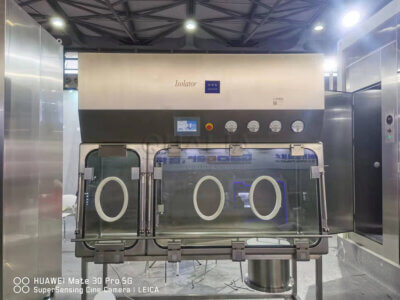
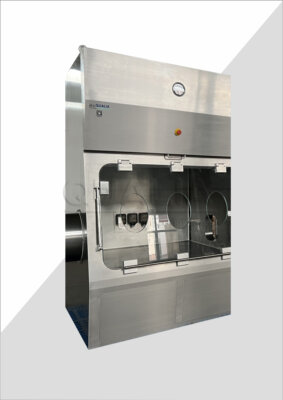
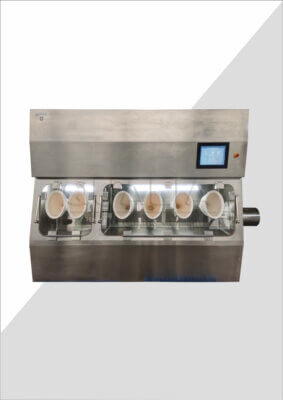
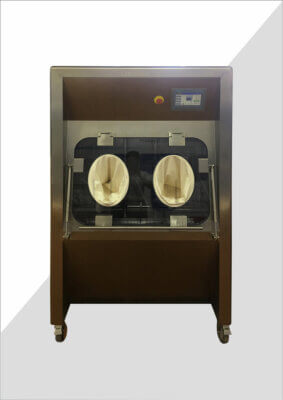
The procurement implication is concrete. OEB 4 and OEB 5 compounds require isolator-grade containment with validated containment performance testing (CPT) data; lower bands may be adequately controlled with hoods or local exhaust ventilation. Quoting against the wrong tier does not create a minor specification gap — it creates a fundamentally different equipment category, with different capital cost, different footprint requirements, different qualification scope, and different transfer port technology. The conservative assignment of an incomplete compound to the higher band feels like over-specification and draws budget pressure, but the cost of that early conservatism is recoverable if the compound later bands lower. The cost of under-specifying and then reclassifying upward mid-project is not.
| Exposure Band Category | Typical Containment Hardware | Key Validation Requirement |
|---|---|---|
| OEB 1–3 | Hoods, local exhaust ventilation (LEV) | Standard engineering control verification; validated CPT data typically not required. |
| OEB 4–5 | Isolator-grade containment | Validated Containment Performance Testing (CPT) data required. |
| Provisional (incomplete data) | Treat as OEB 4–5; isolator-grade containment | Validated CPT data required until sufficient evidence supports reclassification to a lower band. |
The provisional row in that mapping carries a specific implication for procurement: treat any compound with incomplete toxicology data as OEB 4–5 for equipment planning purposes until sufficient evidence supports reassignment to a lower band. This is not a regulatory mandate — it is a defensible planning criterion supported by the downstream consequence of getting it wrong. The OEB 3 vs OEB 4 vs OEB 5 equipment requirements comparison covers the structural differences between these tiers in more detail, including transfer port requirements and pressure cascade design that change meaningfully between categories.
Risk of Quoting Semi-Open Handling Before EHS Review
Suppliers asked to scope equipment before a containment class is defined will make a default decision: they will propose the handling approach that fits the described process steps, which often means semi-open transfer configurations between enclosed zones. This is not a supplier failure — it is a foreseeable consequence of receiving an incomplete brief. The risk belongs to the project team that issued the brief without a containment class attached.
Any open transfer step between enclosed zones represents a containment gap that must be independently justified and controlled. Without an EHS review completed before the supplier quote is issued, that gap may not be identified until the design is already in procurement, at which point corrective options are limited and expensive. The more serious version of this failure occurs when a compound is initially quoted against OEB-4 requirements and is later reclassified to OEB-6 once additional phase data arrives. At an OEL of 20 ng/m³, the design requirement shifts to include a second layer of protection within primary containment — double-chamber isolators or liner systems — which the original configuration did not provide. Retrofitting that into an installed system is not a specification revision; it is effectively a replacement project.
| What Supplier Might Propose | Risk Without EHS Review | Key Example / Threshold |
|---|---|---|
| Open transfer step between enclosed zones | Uncontrolled containment gap; EHS may later reject the quoted solution. | Every open transfer must be justified and controlled. |
| Equipment quoted for provisional OEB-4 | Compound may be reclassified to OEB-6 (OEL 20 ng/m³), requiring costly upgrade. | Real case: upgrade to double-chamber isolators within one year. |
| Missing second layer of protection for high-potency compounds | Design gap for OEB-6 compounds; remediation may force expensive retrofit. | OEL <100 ng/m³ substances need double-chamber isolators or liner systems. |
The systemic issue these scenarios illustrate is not that suppliers quote poorly — it is that EHS review is treated as a downstream approval step rather than a prerequisite for issuing scope. When review happens after quotes are received, the reviewer is in a position of rejecting work already done, which creates project pressure to accept a configuration that should have been caught earlier. Moving EHS review to before the RFQ is issued changes the reviewer’s role from gatekeeper to input provider, and it changes the supplier’s brief from an incomplete request to a specified containment requirement. The OEB Level 1–5 classification and equipment selection matrix provides a structured reference for matching hazard bands to the appropriate containment solutions before that conversation with suppliers begins.
Transition From Provisional Band to Compound-Specific OEL
A provisional band assigned during early development is not intended to be permanent, but it will persist unless a deliberate governance checkpoint forces its review. The availability of additional toxicology and pharmacology data in phases II and III does not automatically trigger a band reassignment — someone in the organisation must own the responsibility for comparing new data against the provisional classification and initiating a formal review when the data set has materially changed. Without that checkpoint, projects continue operating against a provisional band that may no longer reflect the compound’s risk profile.
The timing tension here is structural. Formulation and analytical teams often need equipment decisions earlier than toxicology teams can produce a compound-specific OEL. That gap is manageable when the provisional band is conservative and well-documented. It becomes a project liability when the provisional band was assigned optimistically, when the uncertainty level was not recorded, or when no one is tracking the trigger conditions for a formal review. Phase II is typically when enough pharmacological data exists to meaningfully refine the band; phase III may bring reproductive toxicity, chronic exposure, or carcinogenicity findings that alter it further.
The equipment consequence of a deferred band review is not theoretical. A compound operating under OEB-4 or OEB-5 provisional classification that is reclassified to OEB-6 in phase III — with an OEL confirmed at 20 ng/m³ — requires a full production line upgrade rather than a specification amendment. The NIOSH Alert on preventing occupational exposures to antineoplastic and other hazardous drugs illustrates the seriousness of operator exposure gaps when containment design fails to keep pace with compound potency data; the principle applies equally when potency is confirmed late rather than underestimated early. The governance implication is to build formal band review into the phase transition schedule, with the toxicology team explicitly accountable for confirming whether the provisional band remains appropriate at each clinical milestone. If the containment level calculation methodology was used to support the original provisional assignment, that same methodology should frame the review at each update point.
RFQ Readiness Check for HPAPI Equipment Duty
The decision to move to RFQ is frequently treated as a project milestone driven by schedule — formulation needs equipment by a certain date, so procurement opens the process. The toxicology-gated framing treats it differently: RFQ readiness is a function of what the project package contains, not of what the calendar requires. A provisional band number alone is not sufficient. The uncertainty level attached to that band, and the required containment class derived from it, must both be documented and visible to reviewers before the package goes out. Without that context, reviewers cannot evaluate whether a supplier’s claimed OEB capability is appropriate for the compound, and they cannot assess whether quoted CPT evidence was generated under conditions relevant to the intended application.
The practical pre-commitment checks address three areas. First, containment performance evidence: verbal claims of OEB capability from suppliers are not a substitute for CPT reports conducted under simulated operational conditions. Requesting that documentation before selection, rather than after contract award, changes what the evaluation can actually confirm. Second, system specifications: OEB rating, validated performance data for each containment system in the proposed configuration, transfer port technology — RTP or SBV — and the date and outcome of the most recent CPT should all be confirmed before equipment selection. An OEB4/OEB5 isolator or a bioveiligheid isolator operating in HPAPI duty should have CPT data available and attributable to the specific configuration being quoted, not to a reference unit or a different glove port arrangement.
| Checkpoint | Waarom het belangrijk is | Wat bevestigen? |
|---|---|---|
| Containment performance evidence | Prevents relying on verbal OEB capability claims that can lead to gaps. | Request CPT reports conducted under simulated operational conditions. |
| Systeemspecificaties | Ensures all critical specs are reviewed before equipment selection. | Confirm OEB rating, validated performance of each containment system, transfer port technology (RTP or SBV), and date/outcome of most recent CPT. |
| Visibility of banding parameters | Aligns with pre-commitment review to avoid later EHS rejections. | Confirm that the provisional band, uncertainty level, and required containment class are documented and visible to all reviewers. |
These checks are pre-commitment verification practices, not a substitute for site-specific EHS review, and they do not constitute an exhaustive procurement checklist for every project context. What they address is the specific failure mode where an RFQ is issued before the banding package is complete, supplier quotes are received against an undefined or under-documented containment class, and EHS review then functions as a rejection mechanism rather than a design input. Completing these checks before the RFQ is issued is what moves EHS review back to its correct position in the project sequence.
When the compound reaching your procurement team has no established OEL, the question is not whether to proceed — it is whether the provisional band, its uncertainty level, and the required containment class are all documented clearly enough that a reviewer can evaluate supplier capability claims against them. If any of those three elements is absent or undocumented, the project is not ready for equipment discussion, regardless of schedule pressure.
The most useful pre-RFQ confirmation is not the band number itself, but whether the uncertainty attached to it has been characterised and whether the containment class derived from it reflects a conservative assignment rather than an optimistic one. A provisional band that assumes the compound will band lower once data mature is a planning liability. A provisional band that assumes the compound will band higher until data prove otherwise is a defensible design basis — and one that is far less expensive to revise downward than to upgrade under time pressure after reclassification.
Veelgestelde vragen
Q: What if the compound is a biological or protein-based therapeutic rather than a small molecule — does exposure banding still apply?
A: Exposure banding frameworks like NIOSH occupational exposure banding and PBLEC were developed primarily around small-molecule chemistry and rely on structural and physicochemical properties as hazard indicators. For protein-based therapeutics, potency, immunogenicity, and pharmacological activity may not map cleanly onto those frameworks, meaning the banding output carries higher uncertainty than it would for a conventional HPAPI. In that situation, the conservative assignment principle applies with even greater force: classify at the more restrictive band and document the methodological limitation explicitly in the provisional band record, so reviewers can evaluate it rather than inherit an undisclosed assumption.
Q: Once a compound-specific OEL is finalised, what is the first concrete action if it confirms a higher band than the provisional assignment?
A: The first action is a formal gap assessment comparing the installed or specified containment configuration against what the confirmed OEL now requires — before any additional development work proceeds using that equipment. If the confirmed OEL places the compound at OEB-6 with an OEL below 100 ng/m³, and the current configuration does not include a second layer of protection within primary containment, that gap must be escalated to EHS and engineering immediately. Continuing to use under-specified equipment while the upgrade is planned is the failure mode the provisional band was intended to prevent, not a tolerable interim position.
Q: Is there a point in late-stage development where the provisional band should simply be retired rather than updated again?
A: Yes — when a compound-specific OEL has been formally derived from a complete toxicology data set, the provisional band should be formally closed and replaced with the compound-specific OEL as the binding containment criterion. Keeping the provisional band active alongside a confirmed OEL creates ambiguity about which figure governs equipment acceptance criteria and operator exposure limits. The governance checkpoint at phase III should include an explicit sign-off confirming that the provisional band is retired, the compound-specific OEL is adopted, and any containment specifications that referenced the provisional band have been reviewed against the confirmed value.
Q: How does the conservative provisional band assignment compare to simply waiting for the compound-specific OEL before selecting equipment?
A: Waiting for a compound-specific OEL before any equipment discussion is rarely viable because formulation and analytical teams need containment infrastructure before toxicology timelines allow a full OEL derivation. The provisional band exists precisely to bridge that gap without forcing a choice between premature equipment commitment and project standstill. The relevant trade-off is not between banding and waiting — it is between a conservatively documented provisional band, which supports defensible early equipment decisions, and an optimistic or undocumented provisional assignment, which creates the rework and retrofit risk the article describes. A well-characterised provisional band with documented uncertainty is the functional alternative to waiting, not a lesser substitute for it.
Q: How should a project team respond if a supplier verbally confirms OEB-5 capability but cannot produce CPT reports for the quoted configuration?
A: Reject the verbal claim as insufficient for equipment selection and request CPT documentation before advancing the supplier in the evaluation. Containment performance testing conducted under simulated operational conditions — not on a reference unit or a different glove port arrangement — is the only evidence that confirms whether the quoted configuration actually achieves the stated OEB rating. Accepting verbal confirmation and deferring documentation to post-contract creates the precise verification gap that pre-commitment checks are designed to close. If a supplier cannot produce CPT reports for the specific configuration being quoted, that is a selection criterion, not a paperwork formality to resolve after award.
Gerelateerde inhoud:
- How to Set a Containment Performance Target Before SMEPAC Testing
- OEB4/OEB5 Containment Performance and SMEPAC Testing Guide for HPAPI Isolator Projects
- Hoe bereken je het vereiste insluitingsniveau voor API en HPAPI met behulp van toxicologiegegevens?
- OEB4 vs OEB5 Containment: OEL, OEB Banding and Containment Performance Target Logic
- OEB 3 vs OEB 4 vs OEB 5: verschillen in uitrusting en inperkingsstrategie
- Wat zijn OEB-niveaus in de farmaceutische productie en hoe worden ze bepaald?
- URS for High-Containment Equipment: What to Define Before Asking Suppliers for a Quote
- De juiste OEB-isolator kiezen: Gids van experts
- Real-Time Insluitingsmonitoring vs. Jaarlijkse SMEPAC-tests: Frequentievereisten per OEB-niveau