
Compounds arriving at a containment specification with only provisional exposure banding and an equipment label are a recurring source of expensive late-stage problems. The typical failure is not that the wrong isolator was selected—it is that no one verified which task the claimed OEB rating was actually tested against, and the cleaning or transfer step carrying the highest exposure risk was never evaluated as a discrete operation. When clinical data later matures and the compound moves from OEB4 to a more restrictive classification, the retrofit is rarely a single device replacement; it runs through the entire production line. The judgment that prevents this is establishing an OEL-derived containment performance target, defining the tested task explicitly, and tying both to the URS before any equipment conversation begins. What follows will help you assess the OEB4 and OEB5 distinction in terms that hold up through procurement, qualification, and the first regulatory inspection.
Exposure Target Differences Behind OEB4 and OEB5
The practical gap between OEB4 and OEB5 is a tenfold difference in airborne concentration limit—1 to 10 µg/m³ versus sub-1 µg/m³—and that gap cascades through every design and validation decision downstream. It is not a difference in category; it is a difference in the precision required across engineering controls, containment verification, and analytical detection.
OEB4 classifications can, in practice, rely on provisional exposure banding when compound data is still maturing. OEB5 requires a formal OEL supported by ADE/PDE derivation and review by an expert occupational toxicologist. That documentation difference matters before equipment selection because it determines how defensible the containment performance target is when a regulator or QA team asks for the basis. If the classification is provisional, it should be treated as a planning figure subject to revision—not as an acceptance criterion.
The hazard profile that typically triggers OEB5 includes therapeutic doses below 0.5 mg/day, along with genotoxic, carcinogenic, or reproductive hazard designations. These are useful early indicators for hazard assessment, but they are not an exhaustive classification rule; the formal toxicological review remains the governing step. The engineering consequence of landing in OEB5 is significant: where OEB4 containment may be achieved with a single-layer approach, OEB5 compounds typically require additional protection layers and impose analytical detection demands near 1 ng/m³ for containment verification—roughly three orders of magnitude below what OEB4 verification requires.
| Factor | OEB4 | OEB5 |
|---|---|---|
| Airborne OEL | 1-10 µg/m³ | <1 µg/m³ |
| Therapeutic dose trigger | Typically >0.5 mg/day | <0.5 mg/day or genotoxic, carcinogenic, reproductive hazard |
| Documentation basis | May rely on provisional exposure band; less rigorous data acceptable | Requires formal OEL and ADE/PDE; expert toxicologist review |
| Typical equipment | Single-layer glovebox or simple isolator | Double-chamber isolator with pressure cascades |
| Detection limit for verification | 0.1–1 µg/m³ | 1 ng/m³ |
The detection limit difference is the constraint that is most often underbudgeted. Achieving and validating analytical methods at nanogram-per-cubic-meter levels demands specific sampling protocols, longer collection times, and method validation that adds time and cost to the qualification program. This burden should appear in the project budget before equipment is shortlisted, not during IQ/OQ planning.
Why the Tested Task Matters More Than the Label
An OEB rating on a product datasheet is a claim about a specific tested configuration performing a specific task, not a blanket performance guarantee across all operations involving that device. The ISPE SMEPAC protocol—which uses lactose monohydrate surrogate powder, personal air samplers in the operator breathing zone, and gravimetric or HPLC analysis to derive time-weighted-average concentrations—is the accepted framework for generating those task-specific claims. A device that has been SMEPAC-tested for weighing has a verified performance figure for that task. Whether that same device, configured in the same way, meets the same containment target during a cleaning procedure, a liner change, or a transfer connection is a separate and unanswered question unless testing was performed against those operations explicitly.
This distinction becomes a project risk when procurement translates an OEB5 label into a hardware specification without asking which task generated it. The downstream consequence is an operation that is overspecified on paper—an OEB5-rated isolator—while the transfer step or post-batch cleaning procedure that actually creates the highest operator exposure opportunity has no verified performance data behind it.
The Fareva Excella reclassification illustrates the failure pattern that results from treating OEB classification as static. A compound that entered development assigned to OEB4 was later reclassified to OEB6 as clinical data accumulated, with a final OEL of 20 ng/m³. The consequence was not a single equipment swap; upgrades were required across weighing, sampling, and packaging operations—the full production line. The lesson this illustrates is not that every compound will be reclassified, but that treating the initial OEB band as permanent, rather than as a provisional planning figure, creates the conditions for a whole-line retrofit obligation rather than an orderly design revision.
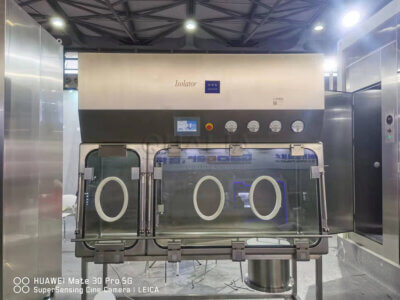
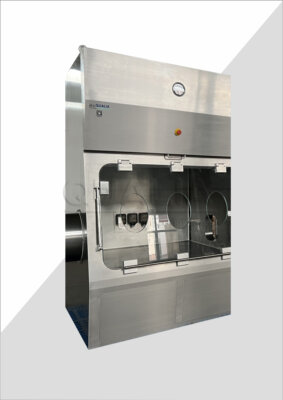
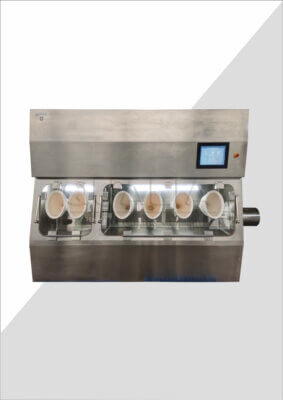
For OEB4, a single glovebox or simple isolator is often sufficient for weighing. The same task at OEB5 or OEB6 may require two separate isolator chambers—one for the weighing operation, one serving as a decontamination lock—with an internal pressure cascade between them. The equipment configuration is different not because of the label, but because the tested task at the verified exposure target demanded it.
OEL-Based CPT Versus Provisional Exposure Banding
Compounds are routinely assigned to an OEB before sufficient toxicology data exists to derive a numerical OEL. That provisional assignment serves a real purpose early in development—it establishes a conservative planning boundary when clinical data is sparse. The risk is that provisional bands are used as acceptance criteria they were never designed to support. Once a compound’s pre-clinical and clinical data set matures, the band should be revisited and a formal OEL derived as the containment performance target (CPT). Deferring that revision is the proximate cause of the misclassification pattern that drives costly retrofits.
The documentation and review threshold differs materially between the two approaches. Provisional OEB4 assignment may proceed with limited analogy-based data and without a formal occupational toxicologist review. OEB5 classification, by contrast, requires review of all relevant pre-clinical and clinical information by an expert in occupational toxicology. That is not simply a compliance formality; it is also the step that catches the kind of hazard signal—genotoxicity, reproductive risk, unexpected potency—that would otherwise escape notice until clinical data forces a reclassification.
| Aspect | Provisional Exposure Banding | OEL-Based CPT |
|---|---|---|
| Basis | Risk classification when compound data is incomplete (e.g., early clinical) | Numeric OEL derived from full toxicology and ADE/PDE |
| Data requirements | Limited; may use analogy or early signals | All relevant pre-clinical and clinical data; rigorous review |
| Expert review | Less formal; OEB4 may skip occupational toxicologist | OEB5 requires review by expert occupational toxicologist |
| Suitability for acceptance | Weaker; should be revisited when data matures (e.g., Fareva reclassification from OEB4 to OEB6 at OEL 20 ng/m³) | Stronger; forms the foundation for acceptance criteria and URS |
| Misclassification risk | Significant if not updated—can force costly whole-line upgrades | Lower once data is mature, but demands early toxicology investment |
The practical implication for project teams is that OEL-derived CPTs are the stronger foundation for equipment acceptance criteria and URS performance requirements. Provisional banding can inform early engineering decisions and hazard control planning, but if the formal OEL has not been derived by the time equipment specifications are being locked, that gap represents a known misclassification risk that should be documented and flagged for scheduled review. Treating the band as final when data is available to support a numerical OEL is a deferral with a likely cost attached.
Equipment Boundaries for Isolators, cRABS and Closed Transfer
For both OEB4 and OEB5 compounds, open handling is not a viable option; the exposure target at either band requires engineered containment across all handling steps. The decision point is not whether to use containment equipment but which configuration is appropriate for the specific task and transfer boundary—and whether that configuration has been verified at the required performance level.
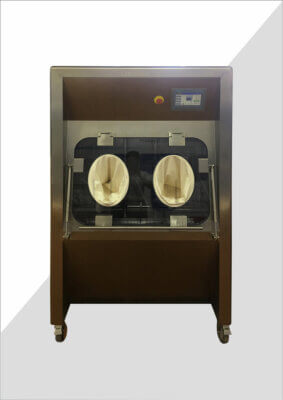
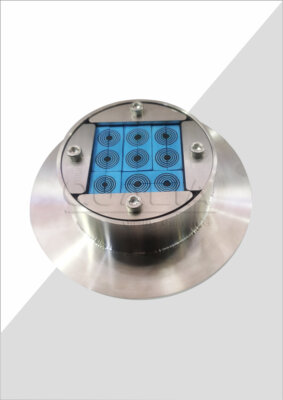
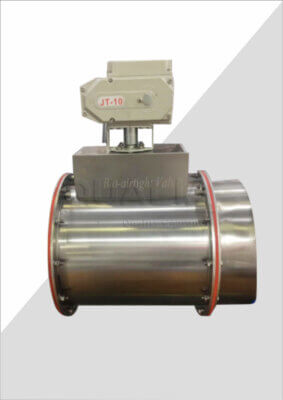
Split butterfly valves can achieve OEB5 containment performance—below 1 µg/m³—when tested per SMEPAC, using precision-machined mating faces and dual O-ring seals. That performance figure is conditional on task-specific validation; it does not transfer automatically to every installation or operation where an SBV is present. Flexible isolators equipped with containment split valves or BIBO ports can achieve OEB4 and OEB5 targets for weighing and dispensing when purpose-configured for the target exposure level. The critical qualifier in both cases is that the configuration and the task must match what was actually tested.
| Apparatuur/Systeem | Containment Level Achievable | Belangrijkste kenmerken | Trade-off Note |
|---|---|---|---|
| Split butterfly valves (SBVs) | OEB5 (<1 µg/m³) when tested per SMEPAC | Precision-machined mating faces, dual O-ring seals | Requires task-specific SMEPAC validation |
| Flexible isolator with containment split valves or BIBO ports | OEB4 and OEB5 | Nanogram-level containment for weighing/dispensing | Must be purpose-configured for the target OEB |
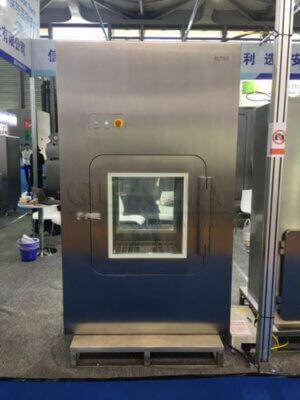
| Double-chamber isolator with pressure cascades | OEB5/6 | Outer chamber as decontamination lock; second protection layer | Higher capital cost and complexity |
| Closed transfer systems (SBVs, liners, alpha/beta ports) with single-use bags | OEB4 and OEB5 | Maintains containment during material movement; single-use bags eliminate cleaning validation burden for OEB5 | Ongoing single-use consumable cost |
The transfer boundary is the equipment selection decision that is most commonly underspecified. Single-use bags and liner systems maintain containment during material movement while eliminating the cleaning validation burden for OEB5 compounds—a meaningful trade-off given how demanding cleaning validation becomes at nanogram-per-cubic-meter acceptance limits. The offset is ongoing consumable cost and the supply chain management that comes with single-use components. That trade-off belongs in the URS, not in a post-procurement discussion about why cleaning validation is taking longer than planned.
For OEB5 and more restrictive classifications, double-chamber isolators with internal pressure cascades provide a second layer of protection, with the outer chamber functioning as a decontamination lock before material discharge. The capital cost and operational complexity of that configuration are substantially higher than a single-chamber approach—but the design is driven by the performance target and the tested task, not by a preference for more complex hardware. Specifying a double-chamber isolator without documenting the task-specific CPT it was selected to meet creates a qualification gap that will surface during OQ.
For projects involving aseptic processing or sterility testing in parallel with high-potency API handling, the containment and aseptic requirements may need to be addressed through separate isolator configurations with clearly delineated pressure cascade logic. Merging containment and aseptic requirements into a single specification without validating the pressure relationships between zones is a design risk that affects both operator safety and product protection.
URS Trigger Before Asking Suppliers for OEB5 Capability
Sending a supplier an RFQ that asks for OEB5 capability before the URS defines which tasks require it, what the CPT basis is, and how cleaning validation will be managed is a reliable path to procurement misalignment. The supplier will respond to what was asked—an OEB5-rated device—rather than to what was needed: a device whose tested task matches the operation, whose containment claim has a verified analytical basis, and whose design accommodates the cleaning strategy and qualification scope the project actually requires.
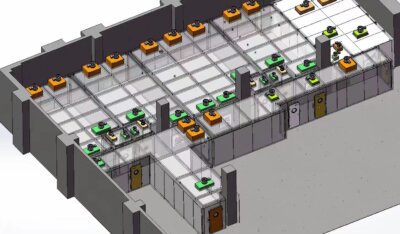
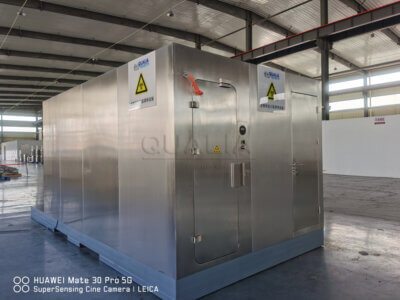
The containment level should be specified per task in the URS, not as a single facility-wide designation. This is the lesson the Fareva Excella timeline makes operational: a complete OEB6 production line—isolators, sampling, packaging—was planned, installed, qualified, and running within one year, but that timeline was achievable only after a URS that specified the required containment level for each task individually. Without that task-level specificity, the same project would have required design iterations during installation qualification rather than confirming a design that was correct from the start.
Cleaning validation strategy and scheduling constraints are URS content, not post-procurement surprises. At OEB5 and beyond, cleaning limits are lower, the analytical methods required to verify them are more demanding, and production scheduling must account for the constraint of not running high-dose products immediately after a potent compound campaign. Discovering these constraints during validation planning—after equipment has been specified and fabricated—significantly increases both cost and timeline pressure.
| URS Item | Waarom het belangrijk is | Risk If Not Specified |
|---|---|---|
| Containment level specified per task | Drives equipment design and avoids later reclassification (Fareva moved from OEB4 to OEB6, requiring whole-line upgrade) | Costly retrofits, project delays |
| Installation qualification requirements and early vendor engagement | Ensures compliance with FDA and EMA expectations across the delivery chain | Late-stage design changes, regulatory non-compliance |
| Cleaning validation strategy for OEB5/6 | Lower cleaning limits and scheduling rules (avoid high-dose after potent) make validation significantly harder | Validation failures, production scheduling conflicts |
| Use of single-use liners inside isolators | Reduces cleaning validation burden for OEB5 compounds | Excessive cleaning effort and documentation cost |
Single-use liners inside isolators are a planning decision that belongs in the URS if the intent is to reduce cleaning validation burden for OEB5 compounds. Specifying liner compatibility after equipment fabrication is possible but typically requires design concessions. If the project’s cleaning validation strategy depends on single-use liner systems, that dependency should appear in the URS alongside the performance target, the tested task, and the IQ/OQ requirements—so supplier qualification scope, FAT protocols, and site acceptance criteria are aligned before a purchase order is issued.
Early vendor engagement is not a courtesy; it is a mechanism for verifying that the supplier’s qualification documentation, FAT/SAT scope, and delivered test data will satisfy the IQ evidence trail the project needs. The NIOSH framework for occupational exposure banding and the SMEPAC methodology both support this principle: containment performance is task-specific and evidence-dependent, and the evidence chain needs to be defined before hardware is selected, not reconstructed from supplier datasheets during commissioning.
The core judgment this article supports is straightforward to state but frequently bypassed in practice: the OEB band tells you the hazard tier; the OEL-derived CPT tells you the acceptance criterion; the SMEPAC-tested task tells you what the equipment has actually been verified to do. None of the three substitutes for the others, and procurement decisions made with only the band—or only the product label—are missing two of the three elements needed to defend the specification during qualification or inspection.
Before engaging suppliers on OEB5 capability, confirm that the compound’s OEL derivation is complete or is on a defined timeline, that the CPT for each task is documented in the URS, that the cleaning validation strategy and its analytical detection requirements have been scoped, and that the tested task in any supplier performance claim matches the operation it is being selected for. If any of those elements is missing, the equipment conversation will surface the gap eventually—at a point in the project where resolving it costs significantly more than it would have before the URS was written.
Veelgestelde vragen
Q: What happens if the compound’s OEL hasn’t been formally derived yet—can OEB4 or OEB5 still be used to drive equipment selection?
A: Provisional banding can inform early engineering decisions, but it should not be used as a final acceptance criterion for equipment specification. Until a formal OEL supported by ADE/PDE derivation exists, the band is a planning figure subject to revision—document this gap explicitly in the URS and flag it for scheduled review once toxicological data matures. Using the band as though it were final creates the conditions for a whole-line retrofit if the compound is later reclassified.
Q: Once the right isolator is procured and installed, what is the immediate next step to confirm it actually meets the required containment performance?
A: Task-specific SMEPAC testing is the necessary next step—not reliance on the supplier’s datasheet rating. Because OEB performance claims are tied to the specific task and configuration that were tested, each high-risk operation (weighing, transfer, cleaning, liner change) requires its own verified containment data using surrogate powder, personal air samplers in the operator breathing zone, and gravimetric or HPLC analysis. A device passing SMEPAC for weighing provides no verified performance figure for cleaning or transfer until those tasks are tested separately.
Q: At what point does specifying OEB5 hardware become overspecification rather than appropriate caution?
A: Overspecification occurs when an OEB5-rated device is selected for an operation whose task-specific exposure risk and CPT could be met at OEB4—and when the transfer and cleaning steps that carry the actual highest exposure have no tested performance data behind them at all. The OEB5 label on the isolator does not protect an unverified transfer step; overspecifying the primary containment while leaving adjacent operations unevaluated produces a system that is simultaneously overbuilt and underqualified. The boundary condition is always the tested task against the documented CPT, not the product rating in isolation.
Q: Is a cRABS a viable alternative to a double-chamber isolator for OEB5 compounds, or does the pressure cascade requirement rule it out?
A: For OEB5 compounds, a cRABS is generally not equivalent to a double-chamber isolator where a second protection layer and internal pressure cascade are required by the task’s containment performance target. cRABS designs rely on unidirectional airflow and physical barriers rather than a sealed decontamination lock, which means they do not provide the independently verifiable second containment layer that OEB5 and more restrictive classifications typically demand. The governing question is always whether SMEPAC-tested data for the specific task confirms the device meets the sub-1 µg/m³ target; for most high-exposure tasks at OEB5, that evidence currently points to closed isolator configurations rather than cRABS.
Q: For a contract manufacturing organization handling multiple compounds across different OEB bands, does investing in OEB5-capable infrastructure across all suites make financial sense?
A: Not automatically—and standardizing on OEB5 hardware site-wide without task-level URS documentation for each suite creates qualification gaps rather than eliminating them. The more defensible approach is to characterize each suite by the tasks performed and the CPTs those tasks require, then verify that equipment in each suite has SMEPAC-tested performance data matching those operations. For a CMO, the real financial risk is not the capital cost differential between OEB4 and OEB5 hardware; it is the retrofit and requalification cost when an OEB band is reclassified mid-campaign and the production line—weighing, sampling, packaging—was specified against the original provisional band rather than a task-level performance target.
Gerelateerde inhoud:
- Welk inperkingsniveau biedt een OEB5 isolator?
- Essentiële specificaties van de OEB4 isolator die u moet weten
- De toekomst van insluiting: OEB4 vs OEB5 isolatoren
- OEB4/OEB5 Isolator reinigen: Effectieve protocollen
- GMP-gids voor gebruik van OEB4/OEB5 isolatoren
- OEB4/OEB5 isolatoren voor farmaceutische poederverwerking
- OEB4/OEB5 handschoenkastjes: Omgaan met krachtige stoffen
- Veiligheidsprotocollen voor OEB4/OEB5 isolatiewerkzaamheden: Beste werkwijzen
- OEB4/OEB5 isolatoren voor het verwerken van zeer krachtige verbindingen