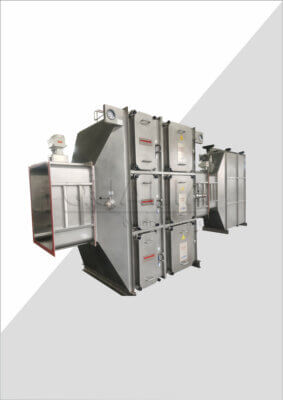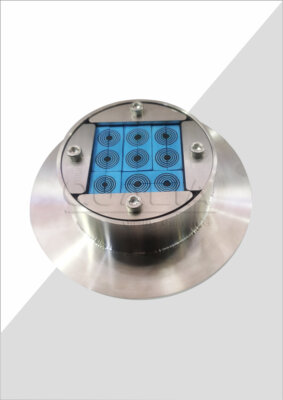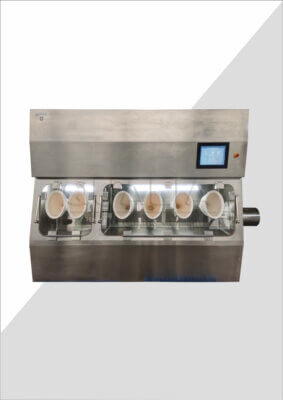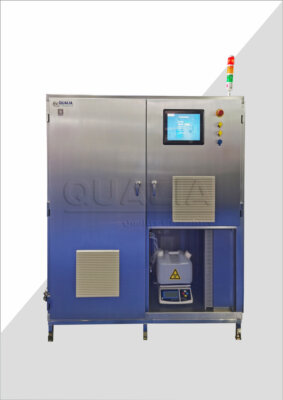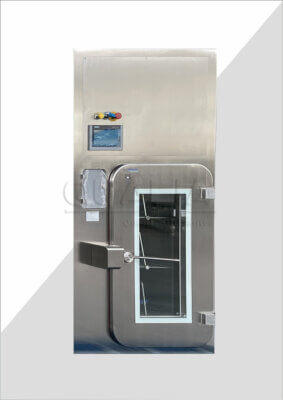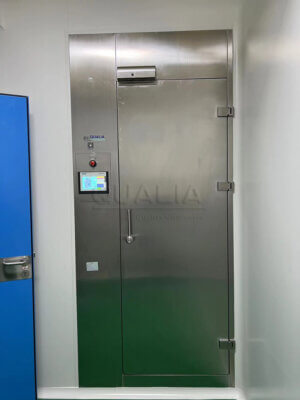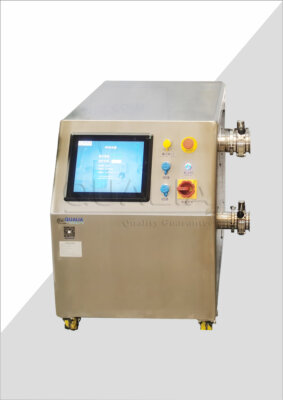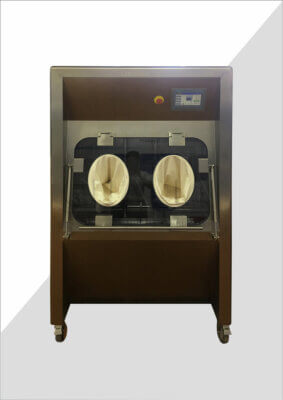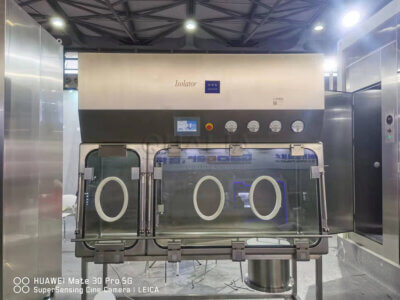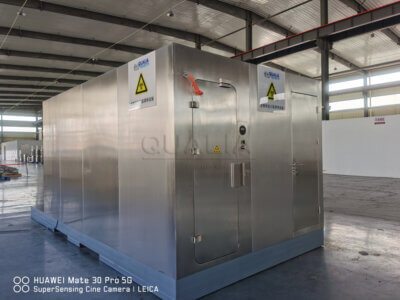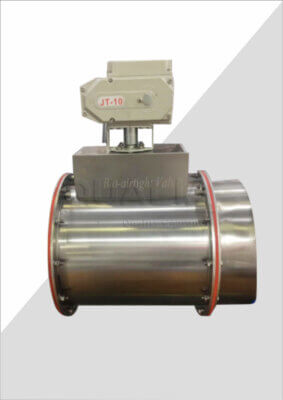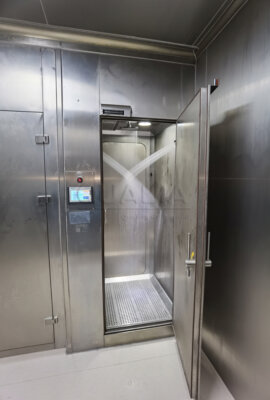

When cleaning, waste removal, or filter change opens the HPAPI containment boundary, the equipment leaves its normal operating state and enters a condition that was not designed to be the default. The question a project team needs to answer before the intervention begins is not whether the boundary can be opened safely in principle, but which specific interface is opening, what route the material or component takes once it crosses that interface, and what evidence will confirm the boundary is back to its verified state before processing resumes.
Define Each Intervention at the HPAPI Containment Boundary
| Boundary operation | Interface or movement to plan | Project-specific decisions to define |
|---|---|---|
| 청소 | Dirty-to-clean movement of tools, bags, components, and operators | Where material is contained and decontaminated, and how verified release will be established |
| Solid-waste removal | Containment, bagging, labeling, and transfer across the boundary | The contained-waste route and the points for decontamination, labeling, and transfer |
| HEPA filter change | The filter-change interface and the removed-filter route | Isolation, differential-pressure status, safe-change provisions, leak testing, and contained routing of the removed filter |
Cleaning, solid-waste removal, and filter change are three distinct interventions, and treating them as a single generic “opening the isolator” event removes the detail a project needs to plan around. Each has its own interface, its own movement of material or personnel across the boundary, and its own evidence requirement at completion. Cleaning moves tools, bags, components, and operators between a contaminated zone and a clean zone, and the project must define where that material is contained, where it is decontaminated, and how release from the dirty side is verified rather than assumed. Solid-waste removal is a different movement: contained waste must be bagged, labeled, and transferred across the boundary at defined points, and the project must define the waste route itself rather than treating waste as a byproduct that is “dealt with” generically. Filter change is a third interface again, with its own isolation requirements, pressure status, safe-change provisions, and a removed-filter route that is distinct from the waste route even where it eventually merges with it.
The reason this separation matters for equipment selection and configuration is that each interface implies different hardware. A boundary designed to support safe tool and component transfer does not automatically support safe bulk waste transfer at the same point, and a waste-transfer interface does not automatically double as a filter-change interface with its own isolation and safe-change housing. Where a project treats these as one undifferentiated “access point,” the equipment specification tends to under-define exactly the feature that matters: the safe-change housing dimensions for filter work, the bagging and labeling sequence for waste, or the verified-release logic for cleaning. Where the project instead separates these three interventions early, the equipment review can ask a narrower, more answerable question for each: what is the interface, what crosses it, and what confirms closure.
This distinction also changes how the project reads vendor documentation. A supplier describing containment performance for routine processing is not automatically describing performance during cleaning, waste removal, or filter change, because the boundary conditions differ. A project team preparing a specification or a supplier review should ask, for each of the three interventions separately, what the boundary state is assumed to be and what evidence exists for that specific state — not for the equipment’s performance in closed, routine operation.
Map Cleaning from Residue Characterization to Verified Release
Cleaning at an HPAPI boundary is not a single action but a sequence that starts with characterizing what residue is present and ends with a verified release decision, and the gap between those two points is where planning detail belongs. Residue characterization determines what the cleaning method needs to remove and what detection or confirmation method is capable of verifying that removal. This is a project-specific question because the residue depends on the material processed, and the acceptable cleaning method and verification method both follow from that residue, not from the equipment category alone.
Between characterization and release sits the movement itself: dirty-to-clean transfer of tools, bags, components, and operators. Where the project defines this movement clearly, each item has a known state at every point — contaminated, in-process, decontaminated, released — and the operator or inspector can confirm which state applies by looking at a defined marker, label, or location rather than relying on memory or assumption. Where this movement is left loosely defined, the same tool or component can be ambiguous between two states, and that ambiguity is itself an exposure-relevant condition, independent of whether decontamination was performed correctly.
The release step is the point most easily under-specified. A cleaning record documenting that an activity occurred is not the same evidence as a release decision documenting that the activity was verified to meet the condition required for return to the clean side. Where a project conflates “cleaning was done” with “cleaning was verified,” the restart decision rests on weaker evidence than the project believes it has. This distinction becomes concrete during intervention planning: the project should define, for each type of cleaning event, what verification method applies and what result constitutes release, before the intervention occurs rather than during it.
Configuration choices affect how achievable this mapping is. An interface designed with clear, physically distinct dirty-side and clean-side zones makes the state of a tool or component easier to track and verify. An interface where dirty and clean movement share the same physical path makes verified release dependent on procedural discipline alone, with no physical barrier reinforcing it. Where the project can choose, favoring physical separation of dirty-to-clean movement reduces how much the release decision depends on procedure alone — but this is a design preference to evaluate against the specific interface, not a guarantee any configuration provides automatically.
Sequence Solid-Waste Containment, Bagging, Labeling, and Transfer
Solid waste generated inside an HPAPI boundary carries the same hazard classification as the process material until it has been contained, and the sequence of containment, bagging, labeling, and transfer is what converts an open hazard into a controlled item that can leave the boundary. Skipping or reordering a step in this sequence reintroduces the exposure risk the boundary was designed to prevent, which is why the sequence itself — not just the individual actions — is the planning unit.
Containment comes first: waste must be captured in a way that prevents dispersion before it is moved at all. Bagging follows, and the bagging method needs to match the containment approach already established, since a bagging step that assumes a containment state that was not actually achieved creates a false sense of control. Labeling identifies the bagged waste’s hazard status and often its handling requirements for whoever receives it downstream, which matters because the person accepting the waste at the transfer point may not be the person who generated it and will rely on the label rather than on direct knowledge of the process. Transfer is the final step, and it is also the point where the interface design matters most: a transfer point built for routine waste volume and frequency behaves differently from one that was not designed with that specific interface in mind.
The project-specific decision is not whether this sequence exists in principle — it does, for any HPAPI waste stream — but where each step physically happens relative to the containment boundary, and who is responsible for confirming that one step is complete before the next begins. Where the project defines these points explicitly, responsibility and timing are clear. Where the project leaves them implicit, the sequence can still occur, but confirmation that it occurred correctly becomes harder to produce after the fact, which matters directly for the restart and inspection-readiness decisions that follow any intervention.
Plan HEPA Isolation, BIBO Safe Change, Removed-Filter Routing, and Leak Testing
| Planning element | Project-specific definition needed | 결정 경계 |
|---|---|---|
| 격리 | Isolation state for the filter-change interface | Define the state for this intervention before the interface is opened |
| Differential-pressure status | Differential-pressure status required during the change | Apply the value and interpretation established for the applicable project and test context |
| BIBO safe change | Safe-change provisions for the filter-change interface | Equipment designation alone does not establish containment performance; evaluation remains tied to defined conditions |
| Removed-filter routing | Contained route for the removed filter through waste handling and transfer | Include the applicable bagging, labeling, decontamination, and transfer points in the route |
| 누수 테스트 | Test method, test context, and project-specific acceptance values | Interpret the result in its applicable test context rather than as a universal pass value |
Filter change is the intervention with the most interface detail to define, because it combines an isolation decision, a pressure-status decision, a safe-change mechanism, a removed-filter route, and a leak-test interpretation, and each of these is a separate thing the project must specify rather than assume from the equipment category.
Isolation defines the state the filter-change interface must be in before it is opened — which parts of the system are isolated from which, and in what order. This is a project-specific sequence because it depends on the system architecture around that particular filter housing, not on a generic rule for “filter changes.” Differential-pressure status is a related but distinct element: the pressure relationship across the boundary during the change needs to be established and verified against the project’s own acceptance values and test context, not against a figure assumed to be universal across installations.
BIBO — 백인백아웃 — safe-change provisions are what allow filter removal and insertion without the filter media or its captured material becoming exposed during the transfer itself. The WHO guidance on pharmaceutical products containing hazardous substances describes facility, closed-system, and barrier controls together with safe-change housings for captured-dust filter replacement, and this describes the category of control relevant here, within its hazardous-pharmaceutical context rather than as a universal cleaning or filter-change procedure for every system. The presence of a BIBO-style housing on a piece of equipment does not by itself establish that containment performance during the change meets a specific project’s requirement; that evaluation depends on the defined conditions of the change itself, which is why equipment designation and demonstrated performance need to be treated as separate questions during specification and review.
Removed-filter routing is where filter change rejoins the waste sequence: the filter, once removed inside its safe-change bag, needs a contained route through the same bagging, labeling, decontamination, and transfer logic that applies to other HPAPI waste, and the project should map this explicitly rather than treating the filter as a special case exempt from the waste route.
Leak testing closes the loop, and its interpretation depends entirely on test context. ISO 14644-3 sets out test methods and procedures for cleanroom and clean-zone performance parameters, but the published material is an abstract of method, and site-specific acceptance values require the applicable test context to be defined for that installation — a result is only meaningful against the acceptance criteria established for that specific test, not as a generic pass or fail. Similarly, the ISPE SMEPAC good practice guide describes containment evaluation using airborne-emission and surface-deposition sampling under defined conditions, and its summary material supports the existence of a structured evaluation methodology without supplying a ready-made acceptance interpretation for any given project; the detailed protocol and the acceptance values both require a defined scenario matched to the installation being tested. A project reviewing a HEPA change — including the configuration detail covered in a dedicated guide to HEPA filter replacement in OEB4/OEB5 isolators — should ask the supplier what test method applies, what test context the acceptance values assume, and whether those values have been confirmed for the specific installation, rather than accepting a general claim that leak testing was performed.
Control Tools, Operators, and Materials Through Dirty-to-Clean Movement
Across cleaning, waste handling, and filter change, the same underlying question recurs: at any given moment, is this tool, bag, component, or person on the dirty side or the clean side of the boundary, and what evidence supports that classification? Mapping dirty-to-clean movement is not a separate task from the interventions already described — it is the control layer that runs underneath all of them, and its quality determines whether the individual intervention records mean what they claim to mean.
A tool used during cleaning or filter change has a state: contaminated, in-process, or released. An operator moving between zones has a comparable state defined by what personal protective sequence they followed and when. A component removed from the system — a filter, a waste bag, a cleaning implement — follows the same logic. Where the project defines clear transition points — a specific location, a specific hand-off, a specific documented check — each of these items or people has a known state at every moment, and that state can be confirmed by inspection rather than inferred from procedure compliance alone.
The condition that changes this judgment is how physically distinct the dirty and clean zones are at the interface in question. Where dirty and clean paths are physically separated with a controlled transfer point between them, the state of an item is reinforced by its physical location: being on one side or the other is itself informative. Where dirty and clean movement share a common path and rely on timing or procedure alone to separate them, the same physical space must serve two different control states at different moments, and the control depends entirely on that timing being followed correctly every time, with no independent physical check available.
This is a relevant question for Qualia to understand during project review, because the specific tools, components, and operator-movement patterns a customer’s process requires shape what interface configuration — bagging points, transfer locations, safe-change housings — a project-specific equipment configuration needs to support, and that detail is part of what a customer’s project information conveys when a configuration or quotation review begins.
Accept Intervention-Specific Evidence Before Restart
| Intervention condition | Evidence to review | What the evidence supports |
|---|---|---|
| Cleaning was performed | Cleaning records | Documented completion of the cleaning activity; this does not by itself establish boundary integrity or filter condition |
| The containment boundary was opened or affected | Boundary integrity checks | The post-intervention condition of the containment boundary |
| A HEPA filter was changed | Filter test results interpreted in the defined test context | The tested filter condition under the applicable method and project-specific acceptance values |
| The intervention affected alarm status | Alarm-restoration evidence | Restoration of the applicable alarms before restart |
| The intervention-specific evidence has been reviewed | Authorization to resume processing | The explicit decision to restart; authorization does not replace the underlying cleaning, integrity, filter, or alarm evidence that applies |
Restart after any HPAPI intervention should rest on evidence matched to what actually happened during that intervention, not on a generic sign-off that treats all interventions as interchangeable. The evidence set differs by condition, and conflating them weakens the restart decision even where each individual piece of evidence is itself valid.
Where cleaning was performed, the cleaning record documents that the activity took place, but this record alone does not establish that the containment boundary is intact or that any filter affected by the work is in good condition — those are separate facts requiring separate evidence. Where the containment boundary was opened or affected by the intervention, a boundary integrity check is the evidence that speaks to the boundary’s post-intervention state specifically, and this check is not replaced by a cleaning record or a filter test result, because it answers a different question. Where a HEPA filter was changed, the filter test result — interpreted within its defined test context and against project-specific acceptance values, consistent with how ISO 14644-3 and SMEPAC-style evaluation frame test interpretation — is the evidence that speaks to filter condition, and a result from a different test context does not transfer cleanly to this one. Where the intervention affected alarm status, alarm restoration evidence confirms those alarms are back in their required state before the system resumes unattended or semi-attended operation.
The final step — authorization to resume processing — is a distinct decision layered on top of this evidence, not a substitute for it. Authorization documents that someone reviewed the applicable evidence and made the explicit decision to restart; it does not itself constitute the cleaning, integrity, filter, or alarm evidence that decision depends on. A project team assembling restart documentation, including the kind of handover and maintenance record expectations described for OEB4/OEB5 아이솔레이터, should be able to show which evidence applies to which condition from this specific intervention, rather than a single undifferentiated completion record covering cleaning, waste, and filter change together. Where more than one condition applied — for example, a filter change that also required boundary opening and alarm interruption — all the relevant evidence types apply together, and authorization should reflect review of each one rather than the presence of any single record.
자주 묻는 질문
Q: Should an isolator and a BIBO filter-change arrangement be treated as alternative equipment choices?
A: No. They can be integrated within one containment design. Map the BIBO change interface into the isolator boundary and define its isolation state, differential-pressure status, safe-change provisions, leak-testing context, and removed-filter route before equipment selection.
Q: What should be mapped before an HPAPI cleaning procedure is finalized?
A: Start with the residue to be addressed, then trace the dirty-to-clean movement of tools, bags, components, and operators. Mark where residue is contained, where decontamination occurs, and what cleaning evidence will support release after the work.
Q: How can a project prepare a contained solid-waste transfer route?
A: Trace the waste from its point of generation through containment, bagging, labeling, decontamination, and transfer. At each boundary crossing, define the package condition and the handover point so the receiving step is known before waste removal begins.
Q: What should be agreed before opening a HEPA filter-change interface?
A: Define the required isolation state and differential-pressure status, confirm the BIBO safe-change provisions, and establish the contained route for the removed filter. Also specify the applicable leak-test method, test context, and project-specific acceptance values before the intervention.
Q: What should the post-intervention handover contain before processing resumes?
A: Assemble the evidence that matches the work performed: cleaning records, boundary integrity checks when the boundary was affected, filter test results after a filter change, and alarm-restoration evidence where applicable. Record the review and explicit authorization to resume processing rather than treating any single record as the complete handover.