
Procurement teams that finalize a VHP generator RFQ without resolving aeration capacity first often discover the gap only during commissioning — after the unit is installed, connected, and failing to reduce residual H2O2 below 1 ppm within the required turnaround window. That single omission forces cycle redesign, delays validation, and in some cases requires replacing equipment that was never wrong on paper. The specifications that cause the most downstream damage are rarely the headline parameters; they are the conditional thresholds — vaporization rate margin, injection mode, material compatibility data — that procurement teams treat as secondary until they become blocking constraints. Working through the RFQ with those thresholds defined upfront is what separates a cleanroom commissioning schedule that holds from one that doesn’t.
Specifications to Evaluate Before Issuing a VHP RFQ
An RFQ that omits environmental cycle conditions forces the supplier to assume defaults that may not match your application, and those assumptions compound during validation when deviations become difficult to attribute and harder to correct. Pressure, temperature, relative humidity, and exposure time are not boilerplate items to fill in later — they are the envelope within which sterilization effectiveness is guaranteed. If any one of those variables is left open in the RFQ, the resulting proposal may appear compliant until commissioning reveals that the equipment was sized or configured against a different operating assumption.
For loads that include lumen devices or geometrically complex items with internal channels, the RFQ must also specify vacuum depth, sterilant concentration at the device interior, and exposure time under those conditions. Residual air trapped in lumens physically impedes vapor penetration, and incomplete sterilization in these locations is not recoverable through extended dwell time alone. An RFQ that specifies chamber conditions without addressing lumen penetration requirements may generate technically accurate proposals that still cannot meet your actual load requirements.
Validation language belongs in the RFQ before procurement closes, not after equipment is delivered. Specifying ISO 14937 validation requirements and identifying 지오바실러스 스테아로모필루스 as the required biological indicator gives the supplier the regulatory acceptance criteria against which cycle design must be demonstrated. Omitting this language does not just create ambiguity — it can result in a fully installed system whose validation package is not defensible to the relevant authority, requiring re-qualification work that was entirely avoidable.
| Specification Area | What to Include in RFQ | 불분명하거나 생략된 경우 위험 |
|---|---|---|
| Sterilization cycle conditions | Pressure, temperature, humidity, exposure time | Deviations can compromise sterilization effectiveness |
| Lumen device sterilization | Vacuum depth, sterilant concentration, exposure time | Residual air impedes vapor penetration; incomplete sterilization risk |
| Validation and biological indicators | ISO 14937 validation requirement; Geobacillus stearothermophilus as biological indicator | Regulatory rejection of cycle validation and acceptance |
Vaporization Rate Requirements for Maintaining Gas Concentration
The vaporization rate of a VHP generator — expressed in grams of H2O2 vapor per minute — must be sized against the chamber’s actual demand, not its nominal volume. Chamber demand is a function of volume, target concentration, and the rate at which surfaces and materials absorb vapor during the dwell phase. A generator operating at exactly the demand threshold has no margin to compensate for absorption variation, load density changes, or minor fluctuations in line pressure, which means gas concentration during the dwell phase may not be maintained reliably.
As a design figure, the generator’s rated vaporization capacity should exceed the calculated chamber demand by at least 30 percent. This margin is not a regulatory floor — it is a practical specification buffer that accounts for the real-world gap between a clean-chamber calculation and an occupied chamber with variable surface area and absorption characteristics. Suppliers who cannot provide a vaporization rate figure tied to your specified chamber volume and target concentration cannot meaningfully guarantee dwell-phase performance.
The downstream consequence of under-specified vaporization rate appears first in cycle development, where achieving and sustaining target concentration becomes inconsistent across runs. At that stage, the problem is usually diagnosed as a process issue rather than an equipment issue, which delays the correct corrective action. Specifying the minimum required vaporization rate — with margin — in the RFQ eliminates this ambiguity before it costs time during qualification.
H2O2 Concentration Range and Injection Control
The target gas-phase H2O2 concentration in an industrial decontamination cycle is typically designed within the range of 1–2 mg/L, using 35% liquid hydrogen peroxide vaporized above 100°C. These are cycle-design figures, not universal regulatory minimums, but they define the operating envelope that injection control hardware must be capable of delivering and sustaining. An injection system that cannot maintain concentration within this range across the full dwell phase produces cycles whose efficacy is difficult to defend in a validation context.
What degrades that control most reliably is condensation. When vapor contacts a surface that is cool enough to transition the gas phase back to liquid, active H2O2 is removed from the atmosphere and deposited onto surfaces as liquid condensate — a process that depletes gas-phase concentration and can create localized over-exposure on materials sensitive to liquid contact. Deep vacuum preconditioning before injection addresses this by removing air and residual humidity from the chamber before any H2O2 is introduced, which raises the dew point ceiling and allows injection to proceed at higher concentrations without triggering condensation. An RFQ that does not specify vacuum preconditioning capability leaves this cycle-design dependency to the supplier’s default configuration, which may not match your chamber geometry or load requirements.
| 매개변수 | Required Value/Condition | 중요한 이유 |
|---|---|---|
| Target H2O2 concentration | 1–2 mg/L | Defines cycle design and sterilization efficacy |
| Liquid H2O2 source concentration | 35% H2O2 | Ensures proper vaporization output |
| Vaporization temperature | >100°C | Maintains vapor phase and prevents condensation |
| Vacuum preconditioning | Deep vacuum before injection | Removes air and humidity; prevents condensation that would deplete vapor |
The injection control specification in the RFQ should address both the source concentration and the vaporization temperature as confirmed equipment parameters, not as inferred capabilities. Suppliers should be asked to confirm that these conditions are met at rated output, not just at reduced load.
Aeration Flow Capacity as an RFQ Rejection Point
Aeration is consistently the most overlooked side of VHP equipment specifications, and it is the most common reason a technically capable generator fails operationally. The goal of the aeration phase is to reduce residual H2O2 concentration below 1 ppm — the threshold at which occupied spaces are considered safe for re-entry under standard occupational exposure guidelines — within the time window that the facility’s operational schedule actually allows. If the unit cannot accomplish that reduction within the required turnaround time, every cycle runs over, and the downstream effect accumulates across shifts.
The failure pattern is predictable: procurement teams invest significant effort specifying sterilization-side parameters — concentration, dwell time, generator output — and then treat aeration flow capacity as a secondary item that will be resolved during commissioning. It is not secondary. A unit with excellent injection performance but undersized catalyst beds, inadequate HEPA-filtered exhaust capacity, or low aeration airflow will reliably fail to meet turnaround requirements, and that failure is not correctable through operational adjustment. The generator either has the aeration capacity your cycle requires or it does not, and discovering this after installation means either accepting slower cycle times or procuring a different unit.
When issuing an RFQ, specify the maximum acceptable time to reach sub-1 ppm residual concentration from the end of dwell as a hard performance requirement. Require suppliers to provide aeration performance data from comparable chamber volumes. Treat the inability to provide that data — or a proposal that does not address the aeration specification — as a rejection criterion, not a clarification item.
Type II Versus Type III Specs for Different Volumes
The decision between a Type II and Type III generator is fundamentally a throughput-versus-recovery trade-off, and selecting on throughput alone without accounting for recovery speed is a recurring source of cycle bottlenecks. Type II units are designed for larger decontamination spaces and deliver higher output — but they consume more H2O2 per cycle and the aeration recovery time associated with the higher gas load is longer. For large spaces where sterilization output is the binding constraint, this trade-off is acceptable. For smaller chambers where cycle frequency is high and fast aeration recovery is what enables the operational schedule, it is the wrong trade-off entirely.
Type III generators are optimized for smaller chambers, typically within an industrial application band extending to roughly 280 ft³ on the upper end, with faster aeration recovery as the design priority. Selecting a Type II unit for a chamber in this range because it carries a higher throughput specification will not produce faster cycles — it will produce longer ones, because the excess gas load extends the aeration phase beyond what the schedule allows. The apparent upgrade becomes a recurring bottleneck.
Before finalizing generator type, the RFQ should specify chamber volume and required cycle frequency in the same document. For applications where those two parameters conflict with the generator type the supplier has proposed, the conflict should be surfaced and resolved before procurement closes, not treated as an application-tuning exercise after installation. For teams evaluating the full specification range across both generator types, the Type II VHP Generator Specs resource provides a more detailed comparison of design differences and performance boundaries.
Material Compatibility Data from Manufacturers
Procurement teams frequently close without requesting material compatibility test data from the generator manufacturer — and the cost of that omission depends entirely on what is in the load. Most polymers, sensors, electronics, metals, and HEPA filters are compatible with VHP cycles. Cellulose-based materials are not reliably compatible and can cause cycle aborts when included in the load, because cellulose absorbs hydrogen peroxide at a rate that depletes gas-phase concentration during the dwell phase and may trigger the generator’s low-concentration safety response. This is not a guarantee that every cellulose-containing load will abort every cycle, but it is a load-planning criterion serious enough to verify before committing to a cycle design.
Packaging choice also materially affects sterilant delivery. Tyvek achieves approximately 87.7% H2O2 penetration versus roughly 30% for medical paper — a difference large enough to affect whether interior device surfaces receive adequate sterilant exposure. This is a design figure that should inform packaging selection during load qualification, not an afterthought once cycles are already validated.
The most consequential compatibility mistake occurs when a device’s Instructions for Use references a platform like STERRAD, and the procurement team interprets that as evidence of VHP incompatibility rather than as a prompt to request clarification. STERRAD is a hydrogen peroxide-based platform, and many devices cleared for STERRAD cycles can be demonstrated compatible with VHP through the manufacturer’s device compatibility matrix. Assuming incompatibility without requesting that matrix can incorrectly eliminate VHP from consideration or introduce unvalidated substitute processes. When any IFU language is ambiguous about sterilization method compatibility, the correct step is to request the manufacturer’s device compatibility documentation before drawing a conclusion.
| Material or Situation | Compatibility Guidance | 주요 고려 사항 |
|---|---|---|
| Tyvek packaging | 호환성 | Achieves 87.7% H2O2 penetration vs. 30% for medical paper |
| Medical paper packaging | Avoid | Low penetration reduces sterilant delivery |
| Cellulose‑based materials | Exclude from load | Absorbs H2O2, causing cycle aborts |
| Polymers, sensors, electronics, metals, HEPA filters | 호환성 | No damage or incompatibility issues during cycles |
| Device IFU mentions STERRAD | Request manufacturer’s device compatibility matrix | Resolves ambiguity and confirms VHP compatibility |
Dual-Injection Specification Threshold Above 100 m³
Single-injection generators have a performance ceiling that becomes a hard operational constraint at high volumes and high cycle frequency. Where decontamination volume exceeds 100 m³ and cycles run more than twice per shift, the cycle-time demands on a single-injection system create a compounding shortfall: each cycle takes longer to complete, the system has less recovery time between cycles, and the effective throughput falls below what the operational schedule assumes. That gap cannot be recovered through software adjustment, cycle parameter tuning, or extended shifts — the injection system either has the mechanical capacity to sustain the required output rate or it does not.
The 100 m³ and two-cycles-per-shift threshold is a design figure that functions as a procurement decision point. Below it, single-injection systems can typically be specified without performance risk if the rest of the parameters are correctly defined. Above it, specifying dual-injection capability is a planning criterion, not an optional enhancement — and it must appear in the RFQ because dual-injection capability is an equipment design choice that cannot be retrofitted after procurement closes.
Teams sometimes defer this specification on the assumption that operational scheduling can be adjusted to reduce cycle frequency. In practice, cycle frequency is usually driven by the throughput requirements of the larger facility workflow, not by the generator’s limitations, and assuming flexibility in that schedule before confirming it creates a procurement decision that may not survive contact with actual operating conditions. The VHP Generator Procurement Guide provides a structured checklist for confirming these design triggers against facility-specific requirements before issuing the RFQ.
The most important procurement discipline when specifying VHP sterilization equipment is sequencing: define the aeration requirement before evaluating generator output, resolve material compatibility before finalizing load design, and specify injection mode before the RFQ closes. Each of these decisions has a point in the procurement timeline after which correction becomes expensive — not because the specification was wrong, but because the equipment delivered against a different one.
Before issuing the RFQ, confirm the chamber volume, required cycle frequency, target turnaround time, and load configuration as fixed inputs. Those four variables determine the generator type, vaporization rate margin, aeration flow requirement, and injection mode that belong in the specification. Any proposal that does not address all four in its technical response deserves a clarification request, not a provisional approval — because the gaps that proposals leave unanswered during procurement are the same gaps that delay commissioning after installation.
자주 묻는 질문
Q: What happens if the facility’s operational schedule can’t be adjusted to accommodate longer aeration times after procurement?
A: The generator must be replaced or supplemented, because aeration capacity is a fixed equipment characteristic that cannot be corrected through scheduling or parameter adjustment after installation. If sub-1 ppm clearance cannot be achieved within the required turnaround window, every cycle overruns, and that deficit compounds across shifts. The only reliable corrective action is procuring a unit with the aeration flow capacity — catalyst bed size and HEPA-filtered exhaust rate — matched to the actual turnaround requirement from the outset.
Q: Does the 30 percent vaporization rate margin still apply if the chamber will routinely run at low load density?
A: No — low load density reduces surface absorption, which lowers chamber demand and may make a smaller margin defensible in practice. However, the 30 percent buffer is a design figure for variable real-world conditions, and a chamber that runs at consistently low density today may not do so throughout the equipment’s service life. If load density is genuinely stable and well-characterized, the margin can be refined through demand calculation; if load density varies across shifts or products, the 30 percent buffer remains the safer specification input.
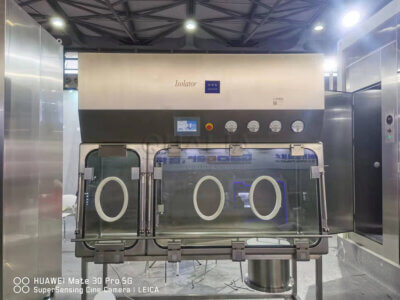
Q: If the article’s advice applies to VHP generators, does it apply equally to VHP-capable isolators that include an integrated generator module?
A: Most of the same parameters apply, but integrated isolator systems introduce additional constraints the RFQ must resolve separately — specifically, whether the integrated generator’s vaporization rate and aeration capacity are rated for the isolator’s internal volume alone or also for any interconnected transfer or glove-port zones. A specification built against the isolator’s headline chamber volume without accounting for connected dead volumes can produce the same undersizing problems as a standalone generator RFQ that omits absorption margin.
Q: Is there a point at which Type III generator throughput becomes inadequate even for chambers within the 35–280 ft³ range?
A: Yes — chamber volume alone does not determine adequacy; cycle frequency does. A Type III unit operating within its rated volume range will reach a throughput ceiling if cycle frequency is high enough that aeration recovery time between cycles cannot be completed before the next cycle must begin. If cycle frequency approaches or exceeds twice per shift even for a chamber within the Type III range, the RFQ should specify the required inter-cycle recovery window as a hard performance parameter and require suppliers to confirm it is achievable at rated output — not just at reduced load.
Q: Should material compatibility verification be completed before or after selecting the generator type?
A: Before — because load composition directly affects both vaporization rate margin and cycle design, and those inputs must be known before generator type can be correctly specified. If cellulose-based materials are present in the load and must be excluded, load redesign may change the absorption profile and alter the minimum vaporization rate requirement. Selecting a generator type before the load is fully characterized and compatibility-verified risks building an RFQ around cycle parameters that do not reflect the actual load the system will run.
관련 콘텐츠:
- VHP 발전기의 작동 원리 | 과산화수소 멸균 공정
- 생물안전 패스 박스: BSL 애플리케이션을 위한 유형 및 선택 가이드
- VHP 생성기 문제 해결 | 일반적인 문제 및 해결 방법
- 휴대용 VHP 발생기: 간소화된 멸균
- VHP 발전기 최적화 | 공정 제어 및 품질 보증
- 유형 II VHP 발전기 특징 | 사양 및 성능 비교
- VHP 발전기 기본 사항 | 과산화수소 멸균 기본 사항
- 최고의 VHP 과산화수소 발생기 2025 | 공급 업체 가이드
- VHP Decontamination Equipment and Standards for BSL-3/4 Facilities