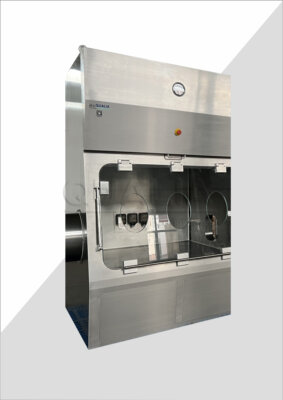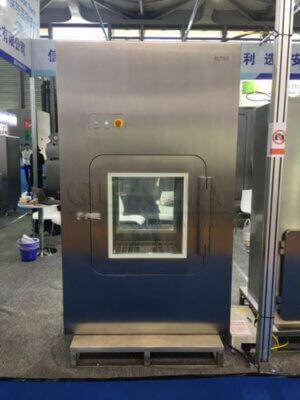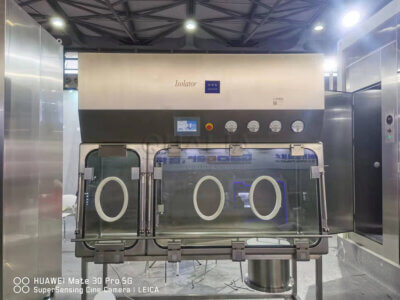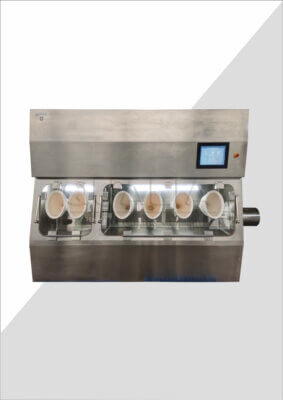
Cleanroom supervisors often discover the sanitization-versus-sterilization distinction too late — after SOPs have been written, cycles have been validated, and an audit has flagged a documentation gap that requires revalidation and operational hold to correct. The problem is not VHP technology itself but the sequence in which decisions get made: cycle parameters get specified, equipment gets selected, and only afterward does someone check whether the process’s actual microbial kill capability matches the classification of the space it is being used in. That sequencing error has a concrete cost — revalidation campaigns, SOP revision across multiple controlled documents, and potential regulatory exposure. The decisions that prevent it are made earlier than most teams realize, and they depend on understanding what sanitization can and cannot do before committing to it as a method.
Log Reduction Capability of VHP Sanitization
VHP sanitization reliably achieves a 3–4 log reduction of vegetative bacteria and most fungi under properly controlled conditions. That performance level is adequate for many cleanroom environments, but the boundary of adequacy is defined by the organisms most likely to persist in the space after the cycle — and spore-forming organisms sit outside that boundary.
Geobacillus stearothermophilus is the organism used to benchmark the upper resistance threshold for VHP in hospital sterilization validation contexts. Its resistance sets a meaningful reference point: if a sanitization cycle is designed without reaching the parameter intensity required for sporicidal action, any spore-forming organisms present in the space are not reliably eliminated. This is not a failure of VHP as a technology — VHP sterilization cycles can achieve much higher log reductions — but it is a documented limitation of sanitization-level cycles specifically. Treating the 3–4 log performance of sanitization as equivalent to sterilization capability is the first place where risk gets mischaracterized.
The practical implication is that the acceptability of a 3–4 log outcome is entirely conditional on the microbial risk profile of the space. For ISO Class 7 and 8 cleanrooms where the critical risk is vegetative contamination from personnel and materials, this performance level is defensible. For ISO Class 5 critical zones where aseptic operations are performed and where spore-forming organisms set the risk threshold, it is not. No amount of cycle refinement at sanitization parameters closes that gap — achieving sporicidal action requires a different cycle design, not an incremental extension of the same one.
Sanitization Cycle Parameter Ranges
The effective window for VHP sanitization is narrower than practitioners often expect, and it has a property that makes over-engineering actively counterproductive. H₂O₂ concentration and dwell time are both bounded in ways that offer no additional microbial kill beyond the upper edge of the window — exceeding those bounds does not improve kill efficacy but does increase condensation risk on surfaces.
Cycle parameters for sanitization-level applications generally operate with H₂O₂ concentration and contact time calibrated to achieve surface disinfection without driving the process into a sterilization-range cycle. Once the upper threshold is exceeded, condensation can occur before antimicrobial benefit increases, creating a surface compatibility concern — particularly relevant for sensitive materials, electronic components, or equipment with metal contact surfaces. The instinct to extend dwell time or increase concentration as a safety buffer has the opposite effect of what is intended.
This constraint also means that cycle design requires accurate characterization of the space beforehand: room volume, surface materials, bioburden baseline, and temperature and humidity conditions all influence where the effective window sits for a specific application. These variables are not fixed across facilities, which is why sanitization parameters should be treated as implementation-specific rather than universally transferable from one validated site to another. A cycle that performs within range in a humidity-controlled ISO Class 8 corridor may produce condensation in a space with different baseline conditions, even at nominally identical concentration inputs.
The practical check during cycle development is to confirm that the target parameters have been selected based on the characteristics of the actual space — not carried over from a different application, a manufacturer reference cycle, or a sterilization protocol that was then reduced without recharacterization.
Cycle Time Advantages for Shift Turnover
For shift-based operations where cleanroom downtime directly affects production throughput, the total cycle time difference between sanitization and sterilization is operationally significant. VHP sanitization at appropriate parameters completes including aeration in under 45 minutes in many configurations — roughly half to one-third the time required for full sterilization cycles, which commonly run 90–120 minutes after accounting for full aeration and residual removal.
Part of that efficiency advantage is structural rather than just a matter of cycle duration. VHP requires only electrical power and no dedicated ventilation infrastructure — no steam connections, no gas supply, no engineered exhaust pathways for residual sterilant removal.
| Factor | VHP Sanitization | Steam/EO Sterilization |
|---|---|---|
| Ventilation Required | No es necesario | Required to remove residual sterilant |
| Conexiones de servicios públicos | Electric power only | Multiple utilities (steam, water, gas) |
| Complejidad de la instalación | Simplified; no facility modifications | May require facility upgrades |
| Plazo de entrega | Reduced (no extended aeration for residual removal) | Longer (full aeration and venting cycle) |
That installation simplicity has a downstream scheduling benefit: the cycle can be deployed in spaces that were not originally designed for sterilant gas infrastructure, without facility modification. For operations running multiple shifts with tight turnaround windows, this makes VHP sanitization a practical fit in a way that steam or ethylene oxide cycles are not.
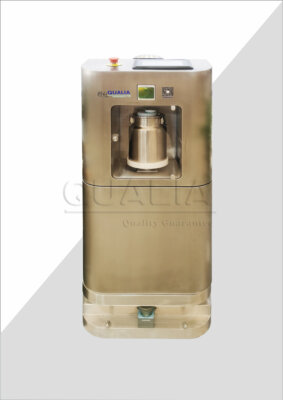
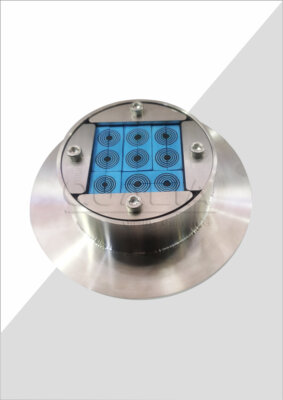
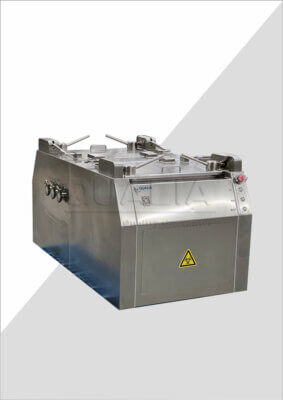
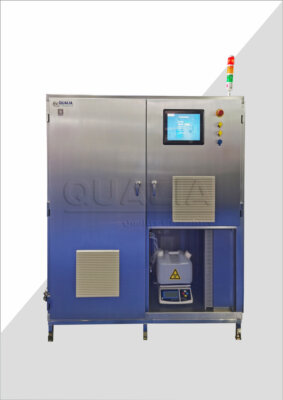
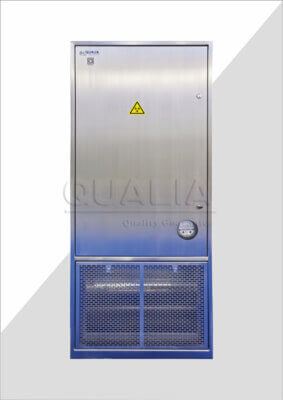
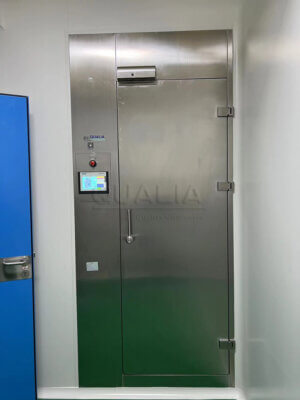
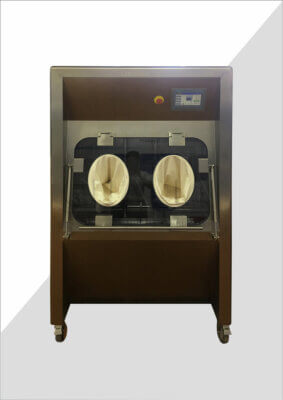
The caveat is straightforward but consequential. The speed advantage is only operationally valid when the space being turned over has a classification that sanitization can adequately address. Using a sub-45-minute cycle to turn over an ISO Class 5 critical zone — because it fits the shift schedule — does not meet the microbial risk requirements of that space. The efficiency gain becomes a liability if the space classification and the method’s kill capability are not matched first. Shift scheduling decisions should follow the sanitization-versus-sterilization decision, not precede it. For portable generation equipment suited to flexible deployment across rooms with varying classifications, the Generador portátil VHP Tipo II/III offers deployment options that don’t require permanent installation.
SOP Labeling Risks and Audit Exposure
Mislabeling a sanitization cycle as sterilization in an SOP is among the more avoidable documentation errors in cleanroom operations — and among the harder ones to correct after the fact. The mechanism of exposure is straightforward: when auditors review cycle validation records and find log reduction data at 3–4 logs, a procedure title or SOP classification that reads “sterilization” creates an immediate and visible discrepancy. The SOP claims a higher efficacy standard than the validation data supports, and that gap requires explanation, remediation, and in most cases, revalidation under the correct classification.
The correction pathway is costly in proportion to how deeply the mislabeled terminology has propagated. If a single SOP is affected, revision is relatively contained. If the label has been used in batch records, cleaning logs, equipment qualification protocols, or facility validation summaries, the remediation scope expands significantly. The audit exposure is not simply a documentation technicality — a sterilization claim that is unsupported by sporicidal validation data raises questions about the process understanding and risk assessment behind the original SOP, which is a harder conversation to manage than fixing a label.
The practical check is to confirm that every procedure title, SOP classification field, and summary record uses terminology that accurately reflects the validated outcome. Sanitization achieves disinfection-level kill and should be documented as such. If the intent of a cycle genuinely requires sterilization-level performance, the validation program must be redesigned to support that claim — not retrofitted by relabeling an existing sanitization protocol. The distinction matters during review because regulators familiar with EN 17180:2018 and ISO 14937 expect terminology to track with validated performance, and cycles described as sterilization are evaluated against sporicidal efficacy requirements. A cycle that meets sanitization criteria does not automatically satisfy the validation expectations applied to sterilization, regardless of what the SOP header says.
Cleanroom Classification as Sanitization Guide
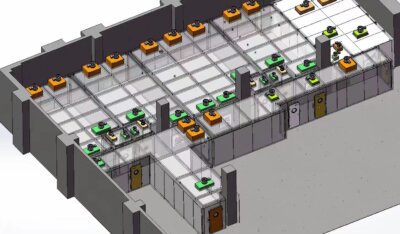
The question of whether to use sanitization or sterilization for a given space should be settled by cleanroom classification before cycle parameters, equipment, or scheduling are ever specified. Classification defines the contamination control standard the space must maintain, and that standard determines the minimum kill efficacy required of any decontamination cycle. Reversing that sequence — choosing a method first for operational convenience and then checking whether it meets classification requirements — creates the revalidation and operational hold risk that could have been avoided by making the classification-first decision.
For ISO Class 7 (EU GMP Grade C) and ISO Class 8 (Grade D) cleanrooms, documented practice shows that sanitization using H₂O₂ or peracetic acid can achieve ISO 14644 compliance. This is a validated finding from specific facility cases, not a universal rule that applies to all sanitization agents or all room configurations — but it establishes a meaningful benchmark. At these classifications, the contamination risk profile centers on vegetative organisms, and the 3–4 log reduction that sanitization reliably delivers is consistent with maintaining the environmental standard.
| Cleanroom Classification (ISO 14644) | EU GMP Grade | Sanitization Adequate? | Example Sanitization Protocol |
|---|---|---|---|
| ISO 7 | Grado C | Yes, H₂O₂/peracetic acid sanitization achieved compliance | Weekly quaternary ammonium disinfection; monthly sporicidal application |
| ISO 8 | Grado D | Sí | Weekly quaternary ammonium disinfection; monthly sporicidal application |
The frequency schedule embedded in practice for these classifications — routine disinfection on a weekly basis with a sporicidal agent applied monthly — reflects a risk-based approach rather than a mandated regulatory interval. It acknowledges that routine sanitization handles ongoing vegetative contamination, while the periodic sporicidal application manages the low-frequency spore-forming risk that sanitization alone does not address. Teams adopting this kind of tiered regimen should confirm the frequency is justified by their own environmental monitoring data and bioburden history, not simply adopted from another facility’s program without that characterization step.
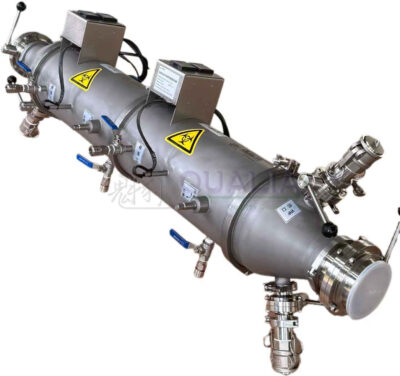
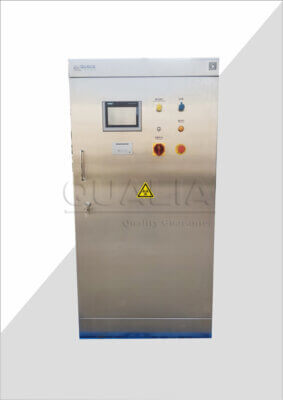
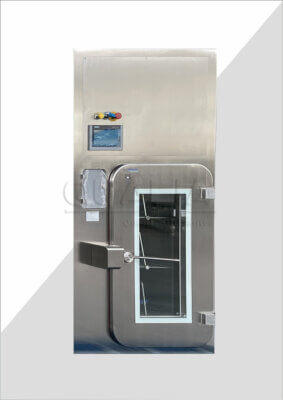
For ISO Class 5 critical zones, the analysis is categorically different. Activities conducted in those spaces — direct product contact, aseptic assembly, open sterile processing — carry spore-forming organism risk at a threshold that sanitization cannot reliably address. A sterilization cycle, validated to sporicidal standards, is the appropriate method regardless of the time pressure or scheduling advantage that sanitization would otherwise offer. No operational convenience argument changes the risk logic when the consequence of insufficient decontamination is contaminated sterile product. For higher-throughput facilities where fixed-room sterilization infrastructure is warranted, the Generador de peróxido de hidrógeno VHP Tipo I is designed for integrated cleanroom applications. Teams evaluating the broader equipment landscape can also use the Mejor equipo de vapor de peróxido de hidrógeno 2025 comparison as a starting reference before specifying to a particular configuration.
The most durable takeaway for teams specifying or auditing a VHP sanitization program is that classification drives method selection, and method selection drives everything downstream — cycle parameters, validation scope, SOP terminology, and the frequency schedule for auxiliary sporicidal treatment. Any program that was assembled in the opposite sequence carries risk that may not surface until an audit creates pressure to explain why cycle validation records show sanitization-level data under a sterilization-labeled procedure.
Before finalizing a sanitization program, confirm three things: that the cleanroom classification has been formally matched to the method’s validated kill capability, that all controlled documents use terminology consistent with that capability, and that any ISO Class 5 critical zones in scope have been pulled out and assigned to a sterilization protocol rather than accommodated within a sanitization cycle that was extended to cover them. Those three checks will not make the program perfect, but they will eliminate the most common and most expensive sources of revalidation pressure.
Preguntas frecuentes
Q: Does VHP sanitization remain adequate for ISO Class 7 and 8 spaces if environmental monitoring data shows recurring spore-forming organisms?
A: No — recurring spore-forming organisms in monitoring data change the risk profile of the space and can disqualify sanitization as the sole decontamination method, regardless of classification. The 3–4 log reduction that sanitization delivers is benchmarked against vegetative contamination risk. If bioburden history shows persistent spore-formers, the frequency of sporicidal treatment needs to increase or full sterilization cycles need to replace sanitization until monitoring trends support a return to the tiered approach. Classification sets the minimum requirement; actual environmental monitoring data sets the practical floor.
Q: After implementing a tiered regimen of routine sanitization with periodic sporicidal application, how should teams confirm the frequency schedule is justified rather than arbitrary?
A: The frequency schedule should be anchored to the facility’s own environmental monitoring data and bioburden trend history, not adopted from another site’s validated program. The practical next step after implementing a tiered regimen is to establish a review trigger — typically tied to environmental monitoring results — that prompts reassessment of sporicidal frequency if spore-forming organisms appear in routine samples. A schedule that has not been characterized against the specific room’s contamination history carries the same audit exposure risk as a mislabeled SOP: it represents a process decision that cannot be defended with facility-specific data.
Q: If a team is already running validated sanitization cycles, at what point does extending the dwell time or increasing H₂O₂ concentration to close the gap toward sporicidal performance become a viable option?
A: It does not become viable at any point within sanitization parameter ranges — this is the boundary condition where the advice changes. Exceeding the effective window for sanitization increases condensation risk before it delivers additional microbial kill, and the sporicidal performance gap cannot be closed incrementally. Achieving sporicidal action requires a fundamentally different cycle design validated against sporicidal efficacy standards, not an extension of an existing sanitization protocol. Teams facing this situation need to treat it as a new validation exercise, not a parameter adjustment.
Q: What is the practical difference between using a portable VHP generator versus a fixed integrated system for facilities that operate both ISO Class 7/8 and ISO Class 5 spaces?
A: The decision turns on whether sanitization and sterilization cycles need to run in different rooms on overlapping schedules, and whether the ISO Class 5 space was designed with fixed infrastructure in mind. A portable generator offers deployment flexibility across lower-classification spaces without permanent installation, but it is not a substitute for fixed infrastructure in ISO Class 5 critical zones where sterilization cycles must be reliably reproduced under controlled, room-integrated conditions. Facilities with both space types typically require separate equipment strategies for each classification tier rather than a single portable unit covering both.
Q: Is VHP sanitization a viable option for facilities that cannot meet the infrastructure requirements of steam or ethylene oxide cycles?
A: Yes, and infrastructure simplicity is one of VHP sanitization’s genuine structural advantages — it requires only electrical power, with no steam connections, gas supply, or engineered exhaust pathways. This makes it deployable in spaces that were not originally designed for sterilant gas infrastructure. The important qualification is that this advantage only holds where sanitization-level kill efficacy is sufficient for the space’s classification. For ISO Class 5 critical zones, the infrastructure barrier to steam or EO does not make VHP sanitization an acceptable substitute — the classification requirement for sporicidal performance remains, and the equipment strategy must accommodate it rather than work around it.