
Para los directores de instalaciones y jefes de proyecto de los sectores farmacéutico, biotecnológico y de fabricación de dispositivos médicos, la selección de un método de construcción de salas blancas es una decisión estratégica de alto riesgo. La elección entre la construcción modular prefabricada y la construcción tradicional se simplifica a menudo a una comparación básica de costes, ocultando diferencias críticas en el modelo financiero, el riesgo de plazos y el valor de los activos a largo plazo. Este falso binario puede encerrar a las organizaciones en un activo rígido y costoso que no soporta el crecimiento futuro o los cambios normativos.
El ritmo acelerado del desarrollo y la fabricación de fármacos requiere una estrategia de instalaciones que dé prioridad a la agilidad. En un entorno en el que la velocidad de comercialización repercute directamente en la ventaja competitiva y el rendimiento de la inversión, la propia metodología de construcción se convierte en un elemento crítico. Una evaluación holística debe ir más allá de los presupuestos iniciales para considerar la inversión total, la interrupción operativa y la flexibilidad inherente necesaria para adaptarse a un futuro incierto.
Prefabricado vs Stick-Built: Definición de las principales diferencias
El cambio fundamental de metodología
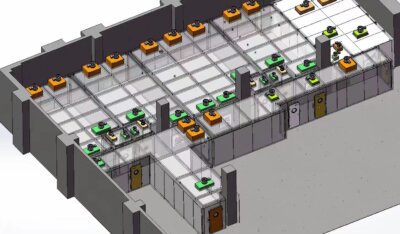
La divergencia comienza con los primeros principios. Las salas blancas tradicionales son elementos arquitectónicos permanentes. Se construyen secuencialmente in situ a partir de materias primas (montantes, paneles de yeso, sellantes) y cada uno de los oficios (carpintería, electricidad, calefacción, ventilación y aire acondicionado, acabados) trabaja a su vez. De este modo, la sala limpia queda profundamente integrada en la estructura del edificio, creando un activo fijo. Por el contrario, las salas blancas modulares prefabricadas son sistemas de rendimiento diseñados. Los componentes principales, incluidos los paneles de pared con acabados integrados, las rejillas del techo y las canalizaciones de servicios, se fabrican con precisión en un entorno de fábrica controlado. Turnos de trabajo in situ de construcción a montaje, un proceso más limpio, rápido y predecible.
Implicaciones para la gestión de proyectos y riesgos
Este cambio metodológico altera fundamentalmente la dinámica de los proyectos. Los proyectos de construcción en serie implican la gestión de múltiples subcontratistas e interfaces, lo que aumenta la complejidad de la coordinación y la difusión de la responsabilidad. Según nuestra experiencia, este enfoque fragmentado es una fuente habitual de retrasos en la validación, ya que el seguimiento de una no conformidad a través de varios oficios se convierte en un reto. La construcción modular consolida la responsabilidad del diseño y el rendimiento con un único proveedor. La sala blanca se entrega como un kit de sistema validado, lo que agiliza el proceso de puesta en servicio y reduce el riesgo de interfaz, que es primordial para cumplir requisitos normativos estrictos como los de Anexo 1 de las PCF de la UE.
Comparación de costes: Capital inicial frente a inversión total
Más allá del presupuesto inicial
Un análisis superficial muestra a menudo un menor coste inicial de los materiales en el caso de las construcciones autoportantes. Sin embargo, este punto de vista es engañoso. No tiene en cuenta los importantes costes variables de la mano de obra in situ, que está sujeta a retrasos, condiciones meteorológicas y escasez de mano de obra. Las soluciones modulares presentan un precio inicial más elevado que incluye calidad prediseñada, mano de obra de fábrica y, lo que es más importante, costes fijos predecibles. El perfil de riesgo financiero es intrínsecamente más bajo.
El papel fundamental de la amortización
La diferencia financiera más importante suele ser el tratamiento fiscal y la clasificación de los activos. Una sala limpia de construcción fija se considera un bien inmueble permanente, que se amortiza en 39 años. En cambio, una sala blanca modular prefabricada suele considerarse equipo o propiedad personal tangible, que puede amortizarse de forma acelerada en 5-7 años. Esto mejora drásticamente el flujo de caja a corto plazo y el valor actual neto (VAN), lo que hace que las soluciones modulares sean mucho más competitivas en costes con un modelo financiero moderno.
En el cuadro siguiente se desglosan los principales diferenciadores financieros que llevan el análisis más allá del simple gasto de capital.
| Componente de coste | Prefabricados Modulares | Construcción tradicional |
|---|---|---|
| Precio inicial | Más alto | Baja |
| Previsibilidad de costes | Fijo, previsible | Variable, alto riesgo de rebasamiento |
| Imputación de costes laborales | Parte inferior in situ | Mayor, variable in situ |
| Clasificación de activos | Bienes muebles materiales | Bienes inmuebles permanentes |
| Calendario de amortización | 7 años acelerados | Norma de 39 años |
Fuente: Documentación técnica y especificaciones industriales.
¿Cuál ofrece un plazo más rápido y menos trastornos para la empresa?
La ventaja del proceso paralelo
La previsibilidad de los plazos es una ventaja estratégica fundamental de la prefabricación. El proceso de construcción en serie es lineal: preparación del terreno, armazón, servicios, acabados, cada uno de los cuales depende de la finalización del paso anterior. Esta secuencia suele durar varios meses, durante los cuales la zona de construcción genera una importante contaminación por partículas y trastornos operativos. Las salas blancas modulares aprovechan los procesos paralelos. La fabricación en fábrica se lleva a cabo simultáneamente con los trabajos de cimentación e instalación de los servicios públicos. El montaje in situ es entonces cuestión de semanas o incluso días, lo que reduce drásticamente los plazos y minimiza el tiempo de inactividad de las operaciones GMP adyacentes.
Cuantificación de la velocidad y la agilidad
Este despliegue acelerado no es meramente cómodo, sino que confiere agilidad normativa y de mercado. La capacidad de implantar ISO 14644-1-Un entorno de producción clasificado en línea más rápido permite a las empresas responder a nuevas fases de ensayos clínicos, vías reglamentarias aceleradas o contratos de fabricación a corto plazo. La reducción de la actividad in situ también implica un menor riesgo de contaminación de los espacios limpios existentes, lo que simplifica el proceso final de limpieza y certificación.
Aquí se resumen el calendario comparativo y los factores de perturbación:
| Factor temporal | Prefabricados Modulares | Construcción tradicional |
|---|---|---|
| Metodología del proyecto | Procesos paralelos | Operaciones secuenciales |
| Lugar de fabricación | Fábrica controlada | En el sitio |
| Duración de la actividad in situ | Semanas o días | Varios meses |
| Interrupción de las instalaciones | Tiempo de inactividad mínimo | Perturbación significativa |
| Agilidad normativa | Alta (despliegue más rápido) | Bajo |
Fuente: Documentación técnica y especificaciones industriales.
Rendimiento y conformidad: ¿Son ambos métodos realmente iguales?
Cumplir las normas no es todo
Ambas metodologías son plenamente capaces de alcanzar clasificaciones de limpieza rigurosas, incluida la ISO 5 (Clase 100) y superiores. La diferencia fundamental radica en el camino hacia la conformidad y la coherencia del rendimiento a largo plazo. La construcción en seco implica una fabricación “sucia” in situ -corte, lijado, pintura- que genera una contaminación sustancial por partículas. Esto hace necesaria una extensa y crítica fase final de limpieza y descontaminación antes incluso de que puedan comenzar las pruebas de validación.
La ventaja del control de fábrica
Los componentes modulares se fabrican en un entorno controlado con materiales aptos para salas limpias, como acero revestido de vinilo o aluminio con recubrimiento de polvo, que desprenden menos partículas. El montaje es un proceso mecánico de unión de piezas preacabadas. El resultado es un entorno más limpio al inicio de la puesta en marcha, lo que permite un proceso de validación más sencillo y fiable. El entorno de fábrica también garantiza una calidad constante de los materiales y tolerancias precisas, lo que reduce el riesgo de variabilidad del rendimiento debido a la mano de obra.
Los itinerarios de rendimiento ponen de relieve estas distinciones operativas:
| Factor de rendimiento | Prefabricados Modulares | Construcción tradicional |
|---|---|---|
| Max. Clase de limpieza | ISO 5 (Clase 100) alcanzable | ISO 5 (Clase 100) alcanzable |
| Camino hacia la conformidad | Puesta en servicio más limpia y rápida | Se requiere una limpieza final exhaustiva |
| Contaminación in situ | Mínima generación de partículas | Alto de corte, lijado |
| Consistencia material | Alta (controlada de fábrica) | Variable (en función del lugar) |
| Proceso de validación | Más sencillo | Fase más compleja y crítica |
Fuente: ISO 14644-1:2015 Salas blancas y entornos controlados asociados - Parte 1. Clasificación de la limpieza del aire por concentración de partículas: Clasificación de la limpieza del aire por concentración de partículas.. Esta norma define las clasificaciones ISO (por ejemplo, ISO Clase 5) que deben cumplir ambos métodos de construcción, estableciendo la referencia de rendimiento universal para la validación de la limpieza del aire.
Flexibilidad Comparada: Facilidad de modificación y futura ampliación
Rigidez inherente frente a adaptabilidad diseñada
Aquí es donde las dos filosofías divergen por completo. Una sala blanca tradicional es una caja arquitectónica fija. Las paredes son permanentes y los servicios están enterrados detrás de paneles de yeso. Cualquier modificación para incorporar una nueva línea de proceso o un nuevo instrumento requiere una demolición, reconstrucción y revalidación disruptivas, similares a las de una nueva construcción. Las salas blancas modulares prefabricadas están diseñadas para el cambio. Sus paredes paneladas pueden desmontarse y reconfigurarse. Los conductos de servicios integrados permiten cambiar el cableado y las tuberías. Esto permite a las instalaciones adaptar rápidamente la distribución o realizar ampliaciones por fases añadiendo nuevas naves modulares.
Proteger el capital contra la incertidumbre
Esta agilidad inherente protege directamente la inversión de capital. En un sector en rápida evolución, una sala blanca que no pueda adaptarse se convierte en un activo inmovilizado. La verdadera modularidad depende de la profundidad de la prefabricación; los sistemas con aberturas de servicio precortadas y cableado preinstalado dentro de los paneles maximizan las ventajas de la velocidad y la mínima interrupción in situ durante los cambios. Este enfoque de diseño para el cambio está en consonancia con los principios de IEST-RP-CC012.3, que hace hincapié en el diseño para el mantenimiento y las necesidades futuras.
Valor a largo plazo: Mantenimiento, reubicación y ciclo de vida de los activos
Filosofías de mantenimiento operativo
El impacto operativo a largo plazo es muy diferente. El mantenimiento de una sala blanca de construcción fija suele requerir un acceso amplio e intrusivo. Reparar una fuga o actualizar el cableado detrás de una pared permanente puede requerir el cierre de toda la zona. El mantenimiento modular es específico. Los paneles individuales pueden retirarse para acceder directamente a los servicios sin comprometer la integridad de toda la envolvente estéril, lo que minimiza el tiempo de inactividad y los costes de mantenimiento.
Transformar el coste en activo recuperable
La diferencia de valor más profunda radica en el ciclo de vida de los activos. Una sala blanca prefabricada es un coste irrecuperable, fijado permanentemente a su ubicación con un valor residual cero si la empresa se traslada. Una sala blanca modular de alta calidad es un activo reutilizable y reubicable. Puede desmontarse, trasladarse a una nueva instalación y volver a ponerse en servicio. De este modo, deja de ser un coste de instalación para convertirse en un activo de capital recuperable con valor de reventa, lo que fomenta un modelo de economía circular ideal para espacios alquilados o empresas con huellas cambiantes.
La propuesta de valor a largo plazo queda clara en esta comparación:
| Factor de valor | Prefabricados Modulares | Construcción tradicional |
|---|---|---|
| Tipo de mantenimiento | Acceso específico y modular | Acceso amplio e intrusivo |
| Tiempo de inactividad | Minimizado durante el mantenimiento | Posibles cierres totales |
| Traslado de activos | Activo reutilizable y reubicable | Coste hundido, ubicación fija |
| Valor de reventa | Alto (capital recuperable) | Ninguno |
| Perfil de riesgo financiero | Inferior (economía circular) | Superior (inversión permanente) |
Fuente: Documentación técnica y especificaciones industriales.
Factores clave para la toma de decisiones en proyectos de la industria regulada
Evaluación de los motores estratégicos
Para seleccionar el método óptimo es necesario cotejar los requisitos técnicos con los factores clave de la empresa. Los principales factores son: la criticidad de velocidad de comercialización y minimizar la interrupción de la producción; la necesidad de futura agilidad operativa para acomodar los cambios en las tuberías; la estrategia financiera en torno al CapEx, la depreciación y el coste total de propiedad; y el permanencia de las instalaciones. Los proyectos en edificios alquilados o con un alto grado de incertidumbre en los procesos son muy favorables a las soluciones modulares.
Eficiencia espacial
Un factor que a menudo se pasa por alto es la eficiencia espacial. Los sistemas modulares avanzados integran las cámaras de retorno de aire en la profundidad de los paneles de pared, optimizando la superficie útil del edificio. La construcción tradicional suele requerir paredes dobles o conductos externos que ocupan mucho espacio, lo que reduce la superficie útil generadora de ingresos dentro de la misma estructura del edificio. Esta eficiencia repercute directamente en el rendimiento de las instalaciones y en la rentabilidad de la inversión.
La matriz de decisiones que figura a continuación ayuda a enmarcar estas opciones estratégicas:
| Factor de decisión | A favor de los prefabricados | Favores Stick-Built |
|---|---|---|
| Velocidad de comercialización | Alta prioridad | No es una prioridad |
| Necesidad de agilidad en el futuro | Alta incertidumbre | No se prevén cambios en el futuro |
| Estrategia financiera | Enfoque de amortización acelerada | Amortización estándar aceptable |
| Permanencia de las instalaciones | Espacio alquilado o huella en evolución | Edificio permanente en propiedad |
| Necesidad de eficiencia espacial | Alta (persecuciones integradas de servicios públicos) | Inferior (se aceptan conductos externos) |
Fuente: IEST-RP-CC012.3 Consideraciones sobre el diseño de salas limpias. Esta práctica recomendada cubre principios de diseño críticos como la eficiencia espacial, el flujo de aire y la selección de materiales, que son factores clave a la hora de evaluar los métodos de construcción de salas blancas para proyectos regulados.
Elección de la solución de sala limpia adecuada a sus necesidades
Una decisión estratégica, no sólo técnica
La elección es fundamentalmente estratégica. Para las industrias reguladas en las que la previsibilidad de los plazos, la eficiencia financiera, la optimización fiscal y la adaptabilidad a largo plazo son primordiales, la construcción modular prefabricada presenta una alternativa convincente y de igual rendimiento. Consolida el riesgo del proyecto, permite una respuesta reglamentaria rápida y trata la sala blanca como un activo gestionable y reutilizable. Esto es especialmente importante para las necesidades de alta contención, en las que la fabricación controlada de una sala limpia es un factor clave. laboratorio modular móvil BSL-3 garantiza la integridad y simplifica la implantación.
El nicho de la construcción tradicional
La construcción tradicional con estructura autoportante sigue siendo viable para instalaciones permanentes altamente personalizadas en las que el edificio y la sala blanca se diseñan como una entidad única e inmutable desde el principio, y no se prevén modificaciones futuras. Es una solución para la permanencia absoluta.
Las organizaciones deben llevar a cabo una evaluación holística que sopese la depreciación acelerada, la reutilización de activos y el valor estratégico de la agilidad frente a los mandatos de cumplimiento específicos. El modelo anticuado de comparar únicamente los primeros costes es un lastre financiero y operativo en el panorama regulado actual.
La decisión depende de alinear la metodología de construcción con la velocidad empresarial y la estrategia financiera. Dé prioridad a la prefabricación cuando la reducción de plazos, la flexibilidad de los activos y el coste total de propiedad definan el éxito del proyecto. Este enfoque convierte el despliegue de instalaciones de una limitación en una palanca competitiva.
¿Necesita una solución para salas blancas que se ajuste a estas prioridades estratégicas? QUALIA se especializa en entornos modulares de ingeniería diseñados para el cumplimiento de normativas y la adaptabilidad. Póngase en contacto con nuestro equipo técnico para modelar el escenario de inversión total para los requisitos específicos de su proyecto.
Preguntas frecuentes
P: ¿Cómo cambia el análisis financiero de una sala blanca si se comparan los sistemas modulares prefabricados con la construcción tradicional?
R: Es esencial tener en cuenta el coste total de propiedad. Aunque los componentes modulares pueden tener costes iniciales más elevados, ofrecen precios predecibles y cubren la calidad prediseñada. Los presupuestos de construcción tradicionales son más vulnerables a los excesos de mano de obra in situ. Y lo que es más importante, las salas blancas modulares suelen considerarse equipos a efectos fiscales, lo que permite una amortización acelerada en 7 años, frente a los 39 años de los bienes inmuebles permanentes. Esto significa que los proyectos centrados en el flujo de caja a corto plazo y el valor actual neto deben modelizar las implicaciones fiscales de cada método.
P: ¿Puede una sala blanca modular prefabricada obtener la misma clasificación ISO que una sala de construcción fija?
R: Sí, ambos métodos de construcción son plenamente capaces de cumplir las estrictas normas de limpieza del aire, incluida la ISO Clase 5 (Clase 100) y los entornos más limpios. El punto de referencia universal para este rendimiento se define en ISO 14644-1:2015. La diferencia fundamental es el camino hacia la validación: los sistemas modulares se ensamblan a partir de componentes de fabricación limpia, lo que permite un proceso de puesta en servicio más rápido y sencillo, con menos contaminación inicial de partículas. Para los proyectos en los que es prioritario minimizar el tiempo de validación y el esfuerzo de descontaminación, el montaje modular ofrece una clara ventaja.
P: ¿Cuáles son los factores clave a la hora de decidir entre una sala blanca modular y una fija en unas instalaciones alquiladas?
R: La impermanencia de un espacio alquilado favorece en gran medida una solución modular. Una sala limpia de construcción fija se convierte en un coste irrecuperable fijado a la ubicación, mientras que un sistema modular es un activo reubicable que puede desmontarse y trasladarse. De este modo, la sala blanca pasa de ser un gasto de las instalaciones a un capital recuperable, protegiendo así su inversión. Si su empresa opera en un edificio alquilado o tiene una huella en evolución, debe dar prioridad a las soluciones que ofrezcan reutilización de activos y flexibilidad financiera.
P: ¿Cómo influye el diseño de salas limpias para fabricación estéril en la elección del método de construcción?
R: Ambos métodos deben cumplir rigurosos requisitos reglamentarios para el procesamiento aséptico, como los que se indican en Anexo 1 de las PCF de la UE. Los sistemas modulares con conductos de servicios integrados y materiales de calidad controlada pueden agilizar el proceso de cualificación. Además, su diseño en paneles permite un mantenimiento específico sin paradas de toda la zona, lo que favorece la conformidad continua. Para la fabricación estéril, donde la agilidad operativa y la reducción al mínimo de las interrupciones de la producción son fundamentales, el enfoque modular ofrece importantes ventajas operativas a largo plazo.
P: ¿Qué método de construcción de salas blancas es mejor para una futura ampliación o cambio de proceso?
R: Las salas blancas modulares prefabricadas están intrínsecamente diseñadas para adaptarse. Sus paneles de pared pueden reconfigurarse y las canalizaciones integradas permiten realizar modificaciones accesibles en los servicios. La construcción tradicional incrusta los servicios en paredes permanentes, por lo que cualquier cambio supone un proyecto de demolición costoso y perturbador. Esto significa que las instalaciones que prevean cambios en las tuberías, aumentos de escala o redistribución de procesos deben elegir un sistema modular para proteger su inversión de capital frente a incertidumbres futuras y reducir el tiempo de inactividad durante las modificaciones.
P: ¿Pone en peligro una sala blanca prefabricada la calidad del diseño o el cumplimiento de la normativa?
R: No, las salas blancas modulares son sistemas de ingeniería que se rigen por los mismos principios fundamentales de diseño que las construcciones tradicionales. Directrices como IEST-RP-CC012.3 cubren factores críticos como el flujo de aire, la presurización y la selección de materiales para todos los tipos de salas blancas. El entorno de fábrica controlado de los componentes modulares suele garantizar una calidad de materiales más homogénea y tolerancias más precisas. Las organizaciones deben evaluar a los proveedores en función de su experiencia en ingeniería y su adhesión a estas normas de diseño, y no sólo en función del método de construcción.
Contenidos relacionados:
- Laboratorios prefabricados BSL-3: Soluciones de despliegue rápido
- Guía completa de salas blancas prefabricadas para instalaciones farmacéuticas y biotecnológicas: Estándares, Diseño y Análisis ROI
- Laboratorios BSL-4 modulares: Reducción de costes sin concesiones
- ¿Qué es mejor? ¿Construcción autoportante o modular?
- ¿Cuál es la diferencia entre las salas blancas modulares y las prefabricadas?
- ¿Cómo saber si una casa es modular o prefabricada?
- Costes del laboratorio modular BSL-3: Análisis exhaustivo
- Laboratorios modulares BSL-3: Soluciones de construcción rápida
- Laboratorios modulares BSL-3/4: Soluciones de rápida implantación