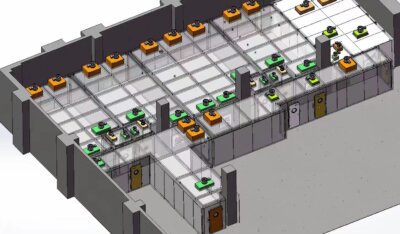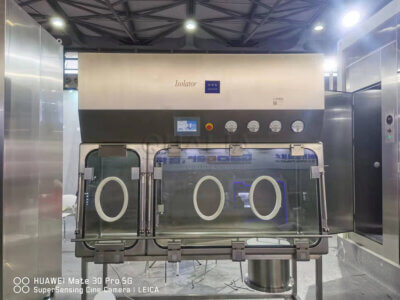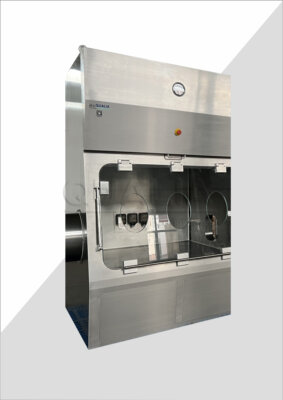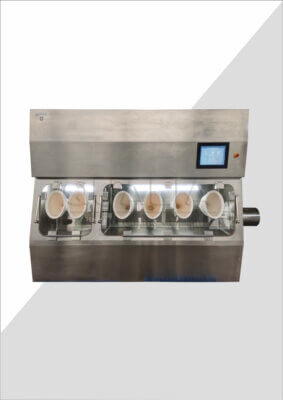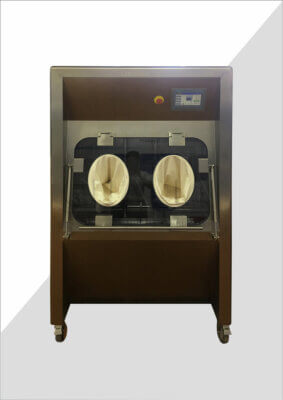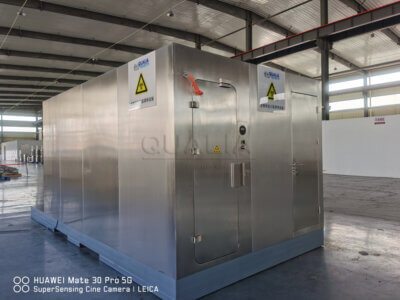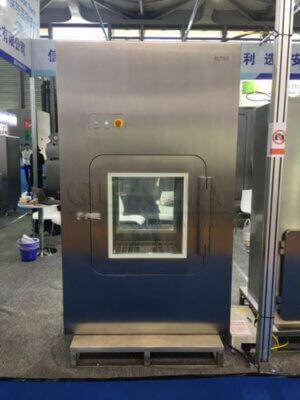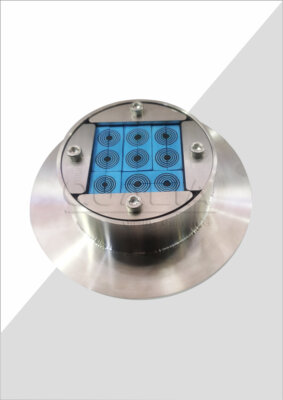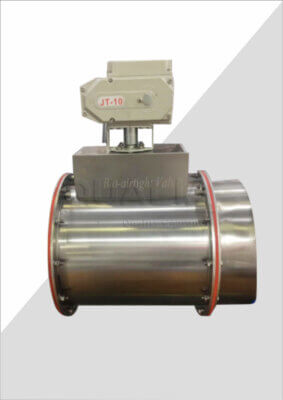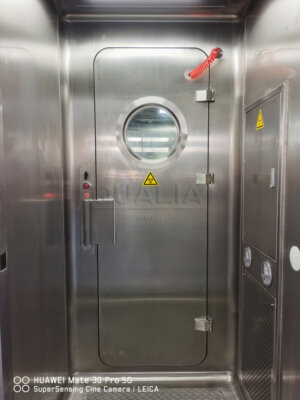
Selecting the wrong exit decontamination system for a BSL-3 facility rarely surfaces as an obvious design error — it surfaces six months later, during an institutional biosafety audit, when the biosafety officer reviews the risk assessment and identifies that surface contamination on PPE was always the controlling exit hazard, not loose particle transfer. At that stage, construction budgets are closed, and the cost of retrofitting a chemical decontamination system into a finished airlock is significantly higher than getting the decision right at concept. The exit system selection hinges on a single, often misframed question: is the primary exit risk the physical transfer of particles, or is it viable biological agent on the surface of the personnel protective equipment leaving the zone? The answer to that question — documented by the IBC and traceable to specific agent characteristics and procedures — is what determines whether an air shower or a mist shower is the defensible choice.
The difference BMBL draws between particulate removal and biological decontamination: why air shower and mist shower serve different purposes
These two systems are not interchangeable risk controls at different price points. They address categorically different hazards, and treating one as a budget-constrained substitute for the other is the foundational error in BSL-3 exit system design.
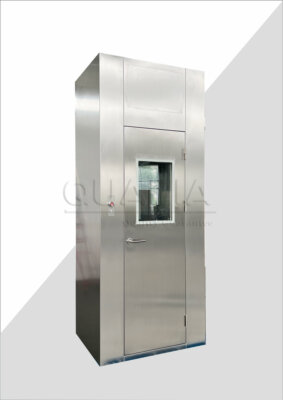
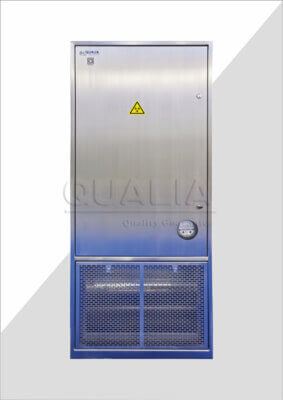
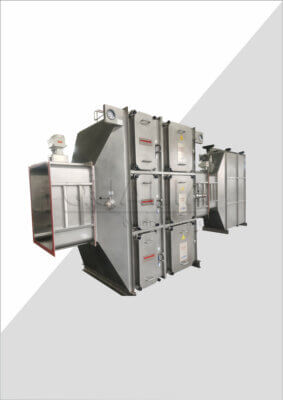
An air shower’s mechanism is purely physical. High-velocity HEPA-filtered air dislodges and captures loose particles from PPE surfaces before personnel exit a controlled zone. The system is engineered for particle transfer control — it reduces the probability that contaminated particulates leave the zone attached to clothing. What it cannot do is inactivate a biological agent. If a viable pathogen is present on the surface of a glove, a sleeve, or a face shield, air velocity has no decontamination effect on it. The agent remains viable; it has simply been partially redistributed or, at best, captured in the HEPA filter if it was already aerosolized and loose.
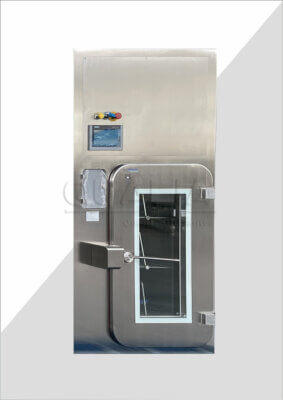
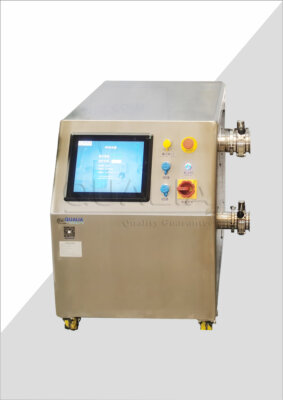
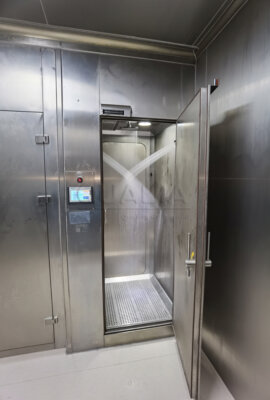
A mist shower operates on an entirely different principle. A fine chemical disinfectant mist is delivered across PPE surfaces to chemically inactivate biological agents before the wearer exits the containment boundary. The system’s value is a verifiable log-reduction — a demonstrated kill of the target organism under conditions that represent actual use. This is the system that belongs in an exit protocol where the concern is not whether a particle leaves the room, but whether a viable pathogen leaves on the person.
The CDC BMBL 6th Edition and the WHO Laboratory Biosafety Manual 4th Edition both treat decontamination as a distinct function from containment engineering, and neither document conflates particulate removal with biological inactivation. That functional boundary is not a regulatory technicality — it is the logical framework that makes either system defensible under audit. A facility that installs an air shower where the risk assessment identifies surface contamination as the primary exit hazard has not made a cost-saving decision; it has made a risk-control gap that the biosafety officer will eventually identify.
What air showers actually do: performance specifications, air velocity requirements, and the contamination category they address
Air showers perform their intended function well — within the contamination category they were designed to address. The system’s design figures confirm both its capability and its ceiling.
The key specifications describe a system optimized for particulate dislodgement, not biological inactivation.
| Parámetro | Especificación |
|---|---|
| Nozzle Velocity | 7,800 feet per minute (fpm) for optimal contaminant dislodgement |
| Sistema de filtración | Recirculates air through a pre-filter and a 99%-efficient HEPA filter |
| Standard Cleaning Cycle | 4-8 seconds of cleaning |
| Purge Cycle | 2-4 seconds after cleaning before exit |
At 7,800 fpm nozzle velocity, the system creates sufficient turbulence to dislodge particles from fabric and surface interstices, which are then captured by the recirculating 99%-efficient HEPA filtration. The cleaning cycle of 4 to 8 seconds, followed by a 2 to 4 second purge before the exit door unlocks, is designed to clear the chamber of dislodged particulates before personnel step through. These figures are equipment design parameters — they are not regulatory minimums established by BMBL or any federal standard, and they should be treated as such when specifying performance requirements or writing SOPs. Particulate removal efficiency of 90 to 99% for particles ≥1 micron is achievable at these velocities, which is the relevant performance metric for this system.
The contamination category an air shower legitimately addresses is one where loose particulate transfer — not viable surface contamination — is the primary exit hazard. That condition applies most clearly in cleanroom environments, semiconductor manufacturing, and some low-aerosolization-potential biological work where personnel are moving from a controlled zone into a lower-classification environment and the concern is cross-contamination by inert particles rather than pathogen carryout. In BSL-3 contexts, that condition is narrower than many facility planners initially assume, and the agent characteristics and procedural profile determine whether it is met at all.
The maintenance obligation for air showers is real but manageable: pre-filters require regular replacement to maintain airflow characteristics and prevent bypass, and HEPA filter integrity must be confirmed on a defined schedule. Deferring pre-filter changes degrades nozzle velocity distribution and reduces the system’s already-limited effectiveness. This is the routine maintenance check that keeps the air shower performing at its specification — and it is the only validation-type obligation the system carries, since there is no biological inactivation claim to support with indicator testing.
What mist showers actually do: disinfectant delivery mechanism and the risk category that requires chemical decontamination
A mist shower’s function is to deliver a disinfectant formulation across the full exterior surface of PPE at a concentration and contact time sufficient to inactivate the target biological agent. The system is the correct exit control when the exit protocol must produce a verifiable kill — not a particle reduction, but a demonstrated log-reduction of viable organisms.
The chemical selection and cycle design reflect the specific agent and risk level being addressed.
| Componente | Detalles |
|---|---|
| Example Disinfectants | 5% Micro-Chem Plus (MCP) or peracetic acid (PAA) for suit decontamination |
| Validated Protocol Example (BSL-4) | 2-minute chemical deluge followed by a 3-minute water rinse |
The examples drawn from validated BSL-4 chemical shower protocols — 5% Micro-Chem Plus or peracetic acid as the disinfectant, with a 2-minute chemical deluge followed by a 3-minute water rinse — are not prescriptive standards for all BSL-3 applications. They are benchmarks that illustrate the depth of engineering and validation involved. A BSL-3 mist shower protocol will be designed around the specific agent’s susceptibility profile, the disinfectant’s validated efficacy data, contact time requirements, and the physical characteristics of the PPE being decontaminated. The cycle parameters that appear in a facility’s validated SOP are the output of that process, not inputs borrowed from a higher-containment reference.
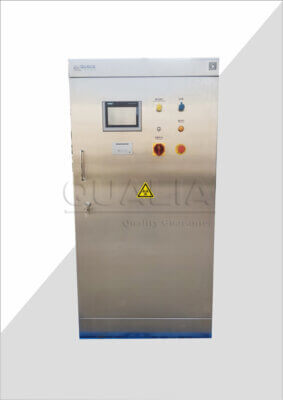
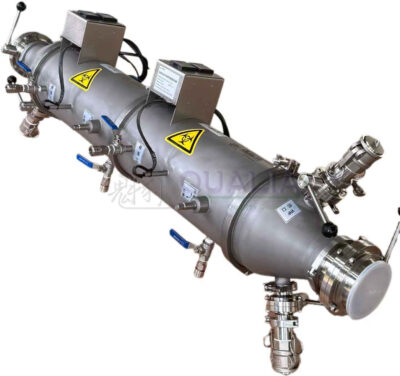
What the BSL-4 reference communicates clearly is the validation commitment. A mist shower system does not come with a default, acceptable protocol — it comes with a validation obligation. That obligation includes demonstrating that the disinfectant reaches all relevant PPE surfaces at effective concentration, that contact time is sufficient, and that efficacy is confirmed using biological indicators under conditions representative of actual use. Facilities that underestimate this requirement during concept design frequently encounter it as a schedule and budget problem during commissioning, when biological indicator testing reveals coverage gaps that require nozzle repositioning or cycle extension. For detailed information on how a purpose-built mist shower system is engineered to meet these demands, the Mist Shower product page describes system configuration and delivery mechanism in practical terms.
When BMBL allows an air shower as the primary exit control and what institutional documentation supports that decision
BMBL does not publish a table that approves air shower use for specific named agents. What BMBL and the WHO LBM 4th Edition establish is a risk-assessment framework, and within that framework, the permissibility of an air shower as the primary BSL-3 exit control is a conditional outcome — not a blanket authorization.
The condition under which an air shower can function as the primary exit control is when the biosafety risk assessment, reviewed and approved by the IBC, concludes that surface biological contamination on exiting PPE is not the dominant exit hazard for the specific agent and procedures in use. This conclusion is supportable in a narrow set of circumstances: the facility works exclusively with inactivated or attenuated BSL-3 strains, aerosol-generating procedures are not performed or are restricted to Class III biosafety cabinets that prevent surface PPE exposure, and the agent’s transmission characteristics do not create a credible surface contamination route during normal exit. When all of those conditions are met and documented, the air shower’s particulate removal function may be the appropriate primary control.
The institutional documentation that supports this decision is not optional — it is what makes the decision defensible. The biosafety manual must reflect the specific rationale: which agent, which procedures, which risk-assessment conclusion, and which IBC review approved the air shower selection. Without that traceable logic, the air shower’s presence in the exit protocol cannot be distinguished from a cost-driven shortcut during a regulatory or incident review. Facilities that install air showers under the assumption that BMBL implicitly permits them for BSL-3 generally, rather than for a specific, documented agent-and-procedure combination, are the facilities most likely to face audit findings.
The practical implication for project timelines is significant. When the biosafety committee disagrees internally about whether the exit risk profile meets the conditions for an air shower, that disagreement is not resolved by a BMBL citation — it is resolved by a detailed agent-specific risk assessment that the IBC must formally approve. That process routinely adds four to eight weeks to facility sign-off when it is not initiated until the design phase, which is why the exit system selection decision needs to be treated as a critical-path item in the biosafety committee’s pre-design review, not a construction detail resolved by the architect.
When a mist shower is required: the agent characteristics and procedural risk factors that trigger chemical decontamination obligations
Certain agent and procedure combinations effectively foreclose the air shower option regardless of cost or construction preference. Identifying those triggers early is the only way to avoid a post-construction exit system replacement.
| Categoría de activación | What Requires a Mist Shower |
|---|---|
| Regulatory Agent Lists | Work with Select Agents, which may mandate a chemical shower exit and effluent treatment |
| High-Risk Procedures | Propagative work with high-titer virus cultures (e.g., for neutralization assays) |
Wild-type BSL-3 agents — particularly those with robust environmental stability or demonstrated surface transmission potential — represent the clearest case for chemical decontamination at exit. When the agent can survive on PPE surfaces during the time it takes to move through an exit airlock and the risk assessment identifies that route as a credible exposure pathway, air velocity provides no relevant protection. The exit protocol must produce a log-reduction, and only a validated chemical decontamination step delivers one.
Select Agent designation adds a regulatory overlay that warrants specific IBC and institutional legal review. Some Select Agent programs, through their institutional-level site security plans and CDC/USDA registration requirements, effectively mandate chemical shower exit and treatment of laboratory effluent. This is not always reflected in BMBL directly — it may appear through the Select Agent Program’s requirements on the facility registration and the corresponding institutional biosafety manual. Facilities that work with Select Agents should treat the exit decontamination requirement as a regulatory compliance question, not only a biosafety design question, and confirm the applicable obligations before selecting the exit system.
Procedural risk is the other dimension. Propagative work with high-titer virus cultures — including neutralization assays that require building up significant viral stocks — represents a qualitatively different exposure risk than work with small quantities of a characterized strain in a Class II cabinet. The procedures performed in the space, not just the agent’s base risk group, determine whether surface PPE contamination during work is likely. When high-titer propagative work is part of the facility’s scope, the case for chemical decontamination at exit is substantially stronger, and the risk assessment should address that specific procedural risk factor explicitly rather than defaulting to the agent’s general BSL-3 classification.
Cost and infrastructure comparison: what each system requires in facility design, maintenance, and validation documentation
The 30 to 50% lower installation cost of an air shower over a mist shower system is real, and it is the figure that often drives preliminary design decisions. What is less consistently scoped at concept stage is the full infrastructure and lifecycle cost profile of each system.
| Requisito | Ducha de aire | Ducha nebulizada |
|---|---|---|
| Carga de validación | Not required for biological inactivation | Required for decontamination process using biological indicators under in-use conditions |
| Mantenimiento rutinario | Regular changing of pre-filters | Requires chemical inventory management and EDS connection |
The air shower’s infrastructure requirements are comparatively simple: electrical service, HEPA filter housing, and a maintenance schedule for pre-filter replacement. It carries no chemical handling obligations, no effluent management requirements, and no biological indicator validation program. The lifecycle cost is predictable and the operational burden is low. If the risk assessment genuinely supports air shower selection, this cost profile is a real advantage — not a compromise.
The mist shower’s infrastructure requirements are substantially more complex. Chemical inventory management, storage, and handling introduce regulatory obligations and operational procedures that must be maintained consistently to keep the system compliant and effective. The effluent drain system connection — required to manage spent disinfectant and rinse water — needs to be scoped and designed at concept stage; retrofitting it into a finished facility is expensive and may require structural modification. The validation documentation burden is the item most frequently underestimated: demonstrating decontamination efficacy using biological indicators under in-use conditions is not a one-time commissioning activity. It establishes an ongoing performance standard that must be maintained through periodic revalidation, particularly when disinfectant formulations change, nozzle configurations are modified, or new PPE types are introduced.
The hidden cost dynamic that regularly creates budget and schedule problems is the failure to scope mist shower infrastructure at concept. Facilities that identify the need for chemical decontamination only after floor plans are finalized face drain routing conflicts, chemical storage compliance gaps, and validation timeline overruns during commissioning — all of which were avoidable if the exit system decision had been linked to the biosafety risk assessment at the start of the design process.
How to document the exit system selection decision in the facility biosafety manual
The biosafety manual entry documenting the exit system selection is the primary surface against which any future regulatory review, institutional audit, or incident investigation will be conducted. It is not a procedural formality — it is the mechanism by which the decision becomes defensible or indefensible.
A defensible biosafety manual entry addresses four specific factors: the pathogen’s risk group and agent stability, the agent’s transmission route and surface survival characteristics, the specific work performed in the space (including aerosol-generating procedures and titer levels involved), and the risk-assessment conclusion that links those factors to the exit control selected. When all four are present and traceable to a specific IBC or biosafety officer review decision, the documentation can withstand scrutiny. When any of them is absent, the documentation creates an audit gap — and the most common gap is a generic reference to the agent’s BSL-3 classification without a procedure-specific rationale for the exit control choice.
The documentation should explicitly state what hazard the exit system addresses and why that hazard is the primary exit risk for the described agent and procedures. For an air shower, that entry needs to affirmatively document that surface biological contamination was evaluated and assessed as not the controlling exit hazard — that finding is what distinguishes the selection from an undocumented cost decision. For a mist shower, the entry should reference the validated decontamination protocol, the disinfectant used, the cycle parameters, and the biological indicator data that confirm efficacy. The QUALIA Mist Shower blog post provides useful context on how system design supports the documentation and validation process.
The biosafety manual should also record the approval date and reviewer — IBC chair, biosafety officer, or both — and specify the conditions under which the exit protocol must be reassessed. Agent changes, procedural scope expansion, and Select Agent additions are all conditions that trigger a documentation review. Facilities that treat the initial biosafety manual entry as a fixed record rather than a living risk-assessment document frequently find that their exit protocol documentation no longer accurately reflects their operational scope, which is itself an audit finding independent of whether the physical system is appropriate.
The exit system selection decision resolves to a single prior question: what is the actual exit hazard? If a credible biosafety risk assessment, reviewed by the IBC, concludes that surface biological contamination on exiting PPE is not the controlling risk for the specific agent and procedures in use, an air shower may be the appropriate primary control — and the cost and infrastructure advantages are real. If the agent is wild-type, the procedures generate aerosols or high-titer material, or Select Agent requirements apply, a mist shower with a validated decontamination protocol is the defensible choice, and that infrastructure scope needs to be built into the facility design from concept.
Before finalizing either selection, confirm that the risk assessment explicitly addresses PPE surface contamination as a distinct exit hazard category — not only airborne particle transfer. Confirm that the IBC review covers the specific procedures planned for the space, not only the agent’s base risk group. And confirm that the biosafety manual entry documents the rationale with enough specificity to support an audit review of the actual decision logic, not just the system installed. Those three confirmations, made before construction begins, are what separate a defensible exit protocol from a costly post-occupancy correction.
Preguntas frecuentes
Q: Can a mist shower be retrofitted into an existing BSL-3 airlock that was originally built for an air shower?
A: Retrofitting is possible but frequently expensive enough to eliminate the original cost savings from choosing an air shower. The mist shower’s infrastructure requirements — effluent drain routing, chemical storage compliance, and nozzle positioning validated for full PPE surface coverage — are difficult to add to a finished airlock without structural modification. Drain routing conflicts are the most common and costly issue, particularly in below-grade or slab-on-grade airlocks where cutting new penetrations is constrained. If there is any realistic probability that agent scope or procedures will expand to require chemical decontamination, scoping mist shower infrastructure at concept — even if the air shower is installed initially — is substantially cheaper than a post-occupancy retrofit.
Q: What happens to the air shower’s particulate removal performance if pre-filter replacement is deferred?
A: Deferred pre-filter maintenance degrades nozzle velocity distribution, which directly reduces particulate dislodgement efficiency. The air shower’s performance depends on maintaining airflow at or near the 7,800 fpm nozzle specification — when pre-filters become loaded, resistance increases, velocity drops, and the turbulence required to dislodge particles from fabric interstices weakens. Because the air shower carries no biological inactivation claim, its only auditable performance metric is particulate removal, and a poorly maintained system may no longer meet even that function. Pre-filter replacement intervals should be defined in the SOP and treated as a compliance item, not a discretionary maintenance task.
Q: If the IBC has approved an air shower for the current agent scope, does adding a new BSL-3 agent automatically require switching to a mist shower?
A: Not automatically, but the addition triggers a mandatory reassessment that may produce that outcome. The air shower’s permissibility is conditional on the specific agent, procedures, and risk-assessment conclusion the IBC approved — it is not a facility-level authorization that extends to new agents by default. If the incoming agent is wild-type, has greater environmental stability, involves aerosol-generating procedures, or carries Select Agent designation, the risk-assessment conclusion that originally supported the air shower selection may no longer hold. The biosafety manual should specify agent and procedural scope changes as explicit triggers for exit protocol review, and that review should be completed before the new agent enters the space.
Q: Between a mist shower and a chemical shower, which system is appropriate for BSL-3 versus when would the higher-intensity chemical shower be warranted?
A: A mist shower delivering a validated disinfectant protocol is the appropriate primary exit control for most BSL-3 chemical decontamination requirements; a chemical shower involving full-volume chemical deluge — more commonly associated with BSL-4 suit lab exits — is warranted when containment levels, agent characteristics, or program-specific requirements demand a more intensive decontamination cycle than a fine mist delivery system provides. The distinction is not purely a function of biosafety level: it reflects the PPE type being decontaminated, the agent’s surface stability, and the validated contact time and disinfectant concentration required for the target log-reduction. BSL-3 facilities working with particularly stable wild-type agents or operating under stringent Select Agent site security plan requirements should confirm with their biosafety officer which delivery intensity the validated protocol demands. Qualia’s Ducha química is designed for applications where the decontamination protocol exceeds what a mist delivery system can reliably achieve.
Q: How specific does the biosafety manual rationale need to be for an air shower selection to survive a CDC or institutional audit?
A: The rationale must be specific enough to demonstrate that surface biological contamination was explicitly evaluated as an exit hazard category and affirmatively concluded not to be the controlling risk — a generic reference to the agent’s BSL-3 classification is not sufficient. A defensible entry documents the agent’s transmission route and surface stability characteristics, the specific procedures performed in the space, the risk-assessment finding that those factors do not produce credible PPE surface contamination at exit, and the IBC or biosafety officer review that approved that conclusion. The absence of that affirmative finding — rather than simply the absence of a mist shower — is what auditors identify as the gap, because it makes the air shower selection indistinguishable from an undocumented cost decision.
Contenidos relacionados:
- Sistemas de ducha de nebulización: Una referencia técnica para la descontaminación de personal BSL-3 y BSL-4
- Duchas de aire para hospitales: Control de infecciones
- Las duchas de aire evitan la contaminación cruzada: ¿Cómo?
- Seguridad en las duchas de aire: Cumplimiento de la normativa
- Certificación de duchas de aire: Garantizar la conformidad
- Requisitos de las duchas de nebulización según la 5ª edición de la BMBL: Qué deben incluir los protocolos de salida BSL-3
- Duchas de aire energéticamente eficientes: Diseño que ahorra costes
- Duchas de aire con filtros HEPA: Eficiencia 99.97%
- Validación de duchas de aire: Garantizar el rendimiento