
Las fugas de contención en instalaciones de nivel BSL-4 rara vez se deben a un único fallo catastrófico de un componente. Lo más habitual es que se deban a una cascada de presión que funciona de forma aceptable en cada zona cuando se prueba por separado, pero que pierde su integridad en el momento en que se ejecuta una secuencia de transición real: se abre una puerta, cambia la presión en una sala de trajes, una válvula de escape reacciona medio segundo demasiado tarde. Cuando eso ocurre durante la puesta en servicio, la consecuencia es tener que volver a trabajar: reajuste de los PID, reubicación de sensores, ajuste de la respuesta del sistema de climatización y retraso en la ocupación. Cuando surge durante el funcionamiento, la consecuencia es una alarma de contención, un escrutinio regulatorio y una revisión forense de los registros de pruebas que deberían haber detectado el problema meses antes. Lo que marca la diferencia entre estos resultados es si la verificación trató la ruta de acceso —esclusas, salas de trajes y sistemas de extracción— como una cascada interconectada en condiciones reales de transición, o como zonas independientes y aceptables por sí mismas. Lo que sigue le ayudará a determinar si su plan de verificación está estructurado para detectar los modos de fallo que realmente se producen.
Secuencia de las cámaras de compensación en la cascada de presión
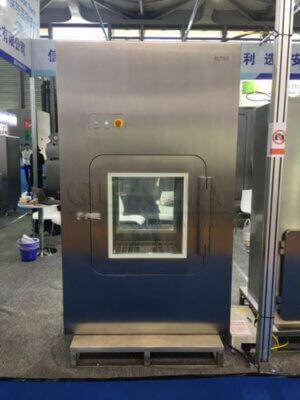
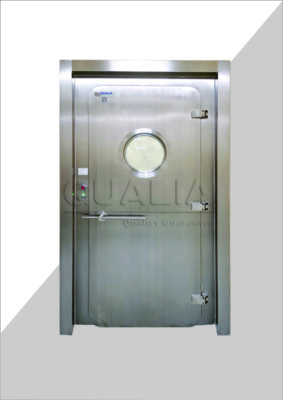
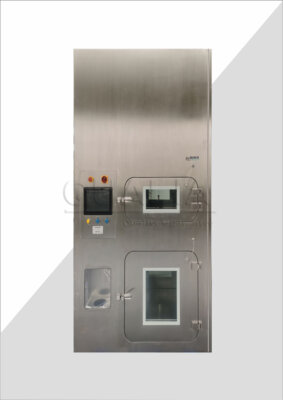
Las esclusas no son cámaras de presión estáticas. Son zonas de transición dinámicas que deben absorber la perturbación de presión que se genera cada vez que una puerta realiza un ciclo. Durante una secuencia de inflado o desinflado de 5 segundos en una puerta con sellado neumático, la cascada puede descender por debajo del diferencial de 15 Pa que define la integridad de la contención, no porque el hardware sea defectuoso, sino porque el sistema de control de presión nunca se ha puesto a prueba en condiciones reales de ciclo. Los modos de fallo que producen esta caída son específicos: un ajuste PID adecuado para el estado estacionario pero incapaz de seguir el ritmo de una perturbación transitoria con la suficiente rapidez; una ubicación de los sensores que crea zonas muertas en las que no se mide el diferencial de presión relevante; y unas velocidades de respuesta del sistema de climatización que son, sencillamente, más lentas de lo que exige el ciclo de la puerta.
Estos fallos pasan desapercibidos en las pruebas de presión estática. Una sala que mantenga un diferencial negativo de 25 Pa en condiciones estables parecerá superar todas las pruebas de cada zona por separado, y la cascada parecerá estable sobre el papel. La fisura solo se hace visible cuando se introduce el ciclo de apertura y cierre de la puerta como condición de ensayo y se registra la presión de forma continua. Por eso, la verificación no puede considerar la integridad de la esclusa como un resultado de «aprobado/suspenso» en un único instante: es necesario observar lo que ocurre durante la transición, incluido el breve intervalo en el que la esclusa no se encuentra ni en estado totalmente sellado ni totalmente abierto.
Más allá de la condición de ciclo, también debe confirmarse el comportamiento predeterminado de «fail-secure» como parte de las pruebas de secuencia de la esclusa de aire. Cuando se produce un corte de corriente, los cierres electromagnéticos deben activarse y los sellos neumáticos deben inflarse mediante el aire comprimido almacenado, manteniendo la cascada sin control activo del sistema de climatización. Se trata de una comprobación de revisión, no de un umbral de rendimiento cuantificado, pero forma parte de la misma secuencia de pruebas porque los escenarios que generan mayor riesgo de cascada de presión —el ciclo de las puertas y el corte de corriente— son precisamente aquellos en los que la contención no debe depender de supuestos de estado estacionario.
| Condición de prueba | Qué hay que comprobar | Modos de fallo potenciales |
|---|---|---|
| Ciclo de inflado y desinflado de la puerta (ciclos de 5 segundos) | La presión diferencial en cascada se mantiene en un valor ≥15 Pa durante todos los ciclos | Ajuste del PID inadecuado, zonas muertas en la colocación de los sensores, respuesta del sistema de climatización más lenta que el ciclo de la puerta |
| Modo predeterminado de seguridad ante fallo en caso de corte de corriente | Los cierres electromagnéticos se activan y las juntas neumáticas se inflan mediante el aire comprimido almacenado | Falla en el sistema de contención durante un corte de suministro eléctrico de emergencia |
Ambos modos de fallo que figuran en la tabla comparten una causa común: solo se detectan cuando la cámara de equilibrio se somete a ensayo como elemento dinámico dentro de la cascada completa, y no como una sala aislada.
Interacción entre la cámara de traje y el sistema de escape durante la transición
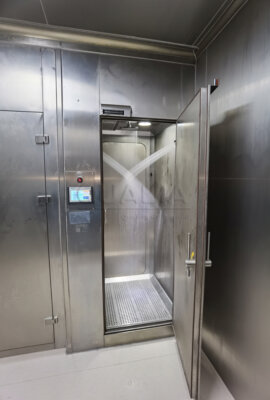
La sala de trajes se encuentra en un punto crítico de cualquier ruta de acceso a un laboratorio de nivel de seguridad biológica 4 (BSL-4). Debe mantener simultáneamente su relación de presión tanto con el pasillo limpio adyacente como con la zona de contención interior, y esa relación se ve sometida a tensión cada vez que el personal la atraviesa con el traje puesto. El problema práctico es que la transición crea una situación de extracción breve y asimétrica: los patrones de flujo de aire de suministro cambian cuando se abre una puerta, el sistema de extracción compensa y la presión en el límite de contención varía de forma transitoria. Que esa variación se mantenga dentro de los límites aceptables depende en gran medida de la rapidez con la que el sistema de instrumentación y control pueda detectar y responder al cambio.
En el límite de contención, el transmisor de presión debe detectar las desviaciones con la precisión suficiente para distinguir una desviación real de la cascada del ruido del instrumento, y con la rapidez suficiente para que el sistema de control tenga tiempo de responder. Las cifras de diseño extraídas de las especificaciones del sistema de control y de los sensores sugieren una precisión del transmisor de presión diferencial de ±1 Pa y un tiempo de respuesta igual o inferior a 50 ms —aproximadamente dentro de un ciclo de exploración del PLC— para detectar desviaciones de la cascada durante las transiciones de las puertas. No se trata de valores reglamentarios de obligado cumplimiento universal; el BMBL de los CDC y el Manual de Bioseguridad en Laboratorios de la OMS establecen los principios de contención que hacen necesario este nivel de precisión en los límites de los laboratorios BSL-4, sin especificar los parámetros exactos de los sensores. La implicación práctica es que un transmisor con una precisión de ±2 Pa o un tiempo de respuesta de 200 ms puede parecer adecuado en condiciones de estado estacionario, pero no detectará de forma sistemática las desviaciones transitorias que se producen durante los cambios de traje, lo que generará datos que ofrecen una falsa seguridad en lugar de una verificación genuina.
La interacción entre la presión de la sala de trajes y el comportamiento del sistema de extracción también influye en cómo responde la cascada una vez que se resuelve un evento de transición. Si el sistema de extracción está dimensionado o controlado principalmente para la presión de la sala en estado estacionario, las transiciones en la sala de trajes pueden provocar oscilaciones —un breve valor inferior al objetivo seguido de un valor superior— mientras el sistema de control se adapta a la situación. Probar la sala de trajes y el sistema de extracción como zonas vinculadas, en secuencias de transición reales, es la única forma fiable de determinar si esa oscilación se mantiene dentro de los límites o supera el umbral mínimo de la cascada.
Pasos para la verificación de la ruta de acceso al BSL-4
La verificación de la ruta de acceso no puede completarse en una única fase del proyecto. Las variables que determinan la estabilidad de la cascada difieren entre las condiciones de fábrica y las de obra de formas que son relevantes: la longitud del recorrido de los conductos, el tiempo de respuesta del aire de impulsión, la desviación de la presión estática local debida a la altitud o a la presurización del edificio, y la interacción entre los sistemas de control instalados y la geometría física real. Una instalación que funcione bien durante las pruebas de aceptación en fábrica puede seguir mostrando inestabilidad en la cascada tras la instalación si esas variables específicas de la obra nunca se introdujeron como condiciones de prueba.
Poreid c aeimenmreaNs(eazrau u mecpneiibú óncneu tlaFhp ío uelálaofnieos)SstActssrSbnóo)rllsoeirn l elaóiarcreao, l neir m asipibp pnsfoórete aaocofóed sclt,eve eove qpa cisenipefreCsslasca e,tniii meCeeml aengneeuleude ss slrustoe eoaereoorrurc qdnooaA iedndie uenlvan a reccntcbdemcnTdi(i cds cnpcdmarsa nui tensnATl adie rloasi m iocdT ee am doe a spr uricid sni escnns ieuaieie e emrae a efreqaítclaá b ttan mtiasolod edaleoi lp nrcd—o ociftad ar naioLranatcóirdime eoetaac a utcarboe nr cdA a óef cl a bac. oisoi sr tezuan qsoapp reae nc aoeanstscae o lmeasrrnen L itpta prdln esooádoccitesoonFlesmsnfcloet s e c, svd mindiooeaeaecrond:aonlat Sta qoacpsmaieye t umfq la,eet .iedgend rml tqoaó mbnl e tiena—obntauniti ruy n sin la Tlaiuesrt peestaiTudAn ydFfodztlluaoscnali ac.Ad oeñane adaarsauaiqeacbiapaíásmue utcznn smetioaseuis bcpgaiorlua asoieafá te rgf do.
La misma lógica de dos etapas se aplica a la documentación de los filtros. Los proveedores deben proporcionar certificados de ensayo de barrido según la norma EN 1822-1 para cada elemento filtrante HEPA, así como un informe de ensayo de fugas con aerosol en condiciones de instalación para el conjunto completo de carcasa y filtro. El certificado del filtro confirma el rendimiento del elemento antes del montaje; el informe en condiciones de instalación confirma que la integridad del sellado y de las juntas se ha mantenido tras el proceso de instalación. Exigir solo uno de los dos deja un vacío en la cadena de pruebas.
| Paso de verificación | Fase obligatoria (FAT/SAT) | Lo que confirma |
|---|---|---|
| Prueba de caída de presión de la NCSA | FAT y SAT | Estabilidad en cascada teniendo en cuenta la longitud del conducto y la respuesta del aire de impulsión |
| Certificados individuales de ensayo de filtros HEPA (EN 1822-1) | FAT y SAT | Rendimiento del elemento filtrante antes del montaje |
| Informe de la prueba de fugas con aerosol en condiciones de instalación para el conjunto completo de carcasa y filtro | FAT y SAT | Integridad de las juntas y sellos de la carcasa tras la instalación |
La tabla detalla lo que debe confirmarse en cada fase; la decisión de planificación más importante es incluir tanto la FAT como la SAT en el calendario, dejando tiempo suficiente para volver a realizar las pruebas en caso de que alguna de las fases ponga de manifiesto un problema específico del entorno de producción.
Estabilidad de los gases de escape en condiciones de zona vinculada
La estabilidad del sistema de extracción suele ser la última variable que se comprueba y la primera a la que se culpa cuando se detecta un problema en cascada durante el funcionamiento. El motivo es la secuencia de pruebas: el rendimiento del sistema de extracción se verifica normalmente como una función independiente —caudal, integridad de los filtros, estanqueidad de la carcasa— antes de someterlo a las condiciones dinámicas que se crean al abrir y cerrar las puertas entre zonas interconectadas. Lo que este enfoque pasa por alto es que el sistema de extracción no funciona de forma aislada. Cuando las esclusas de aire se activan y se produce la transición entre salas de trajes, el sistema de extracción debe responder a un entorno de presión cambiante, al tiempo que mantiene el diferencial de cascada que requiere la contención.
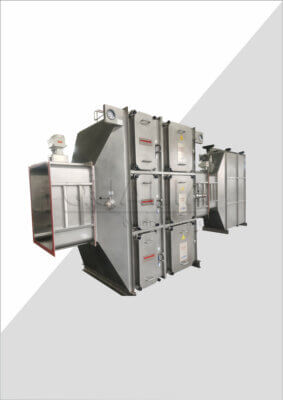
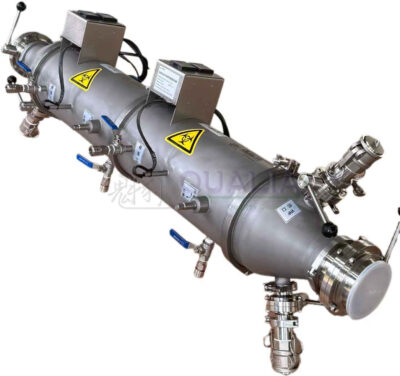
La verificación de la integridad de los filtros HEPA ilustra bien este problema. Un certificado de eficiencia expedido por el fabricante del filtro confirma que el elemento cumple con la clase de filtración nominal en condiciones de ensayo controladas. Sin embargo, no confirma que el sellado de la carcasa sea hermético, que la compresión de la junta fuera adecuada en el momento de la instalación, ni que la unidad montada mantenga su rendimiento nominal una vez instalada. El escaneo de exposición a aerosoles en condiciones de instalación, realizado según la norma EN 1822-1 con una velocidad de la sonda igual o inferior a 5 cm/s a lo largo de la superficie del filtro y el perímetro de la carcasa, es lo que pone de manifiesto las fugas por derivación que el certificado del elemento no puede detectar. Ese nivel de minuciosidad debe considerarse un criterio de planificación a nivel de diseño, y no un mero trámite burocrático, ya que una fuga en la carcasa en condiciones de extracción es relevante para la contención de una forma que el valor de eficiencia del filtro no refleja.
Las pruebas de estanqueidad de las carcasas BIBO siguen la misma lógica. La carcasa debe someterse a ensayo como un conjunto estanco independiente del elemento filtrante, ya que una carcasa que presente fugas en una junta o soldadura anula la eficacia del filtro, independientemente del rendimiento de este. Los criterios de aceptación de dicho ensayo deben estar vinculados a la evaluación de riesgos de contención específica de la instalación, en lugar de a un valor fijo genérico, ya que no existe un umbral único que se aplique de manera uniforme a todas las configuraciones de BSL-4. Lo importante es que el ensayo de la carcasa se realice como un paso independiente, y no se deduzca a partir de los resultados del ensayo del filtro.
Para los centros que estén valorando cómo Sistemas HEPA de tuberías in situ A la hora de integrar esta secuencia de verificación, la cuestión clave es si la prueba de estrés en condiciones de instalación puede realizarse sin romper la contención, una restricción que debería confirmarse durante la revisión del diseño, y no durante la prueba SAT.
Problemas de coordinación durante las pruebas integradas
Las pruebas integradas son más difíciles de organizar que las pruebas zona por zona, y esa dificultad supone en sí misma un riesgo. Cuando las esclusas, las salas de trajes, los sistemas de extracción y los sistemas de control deben encontrarse todos en estados específicos al mismo tiempo —con el personal en trajes, las puertas abriéndose y cerrándose y la presión registrada de forma continua—, el número de dependencias de coordinación aumenta considerablemente. Las secuencias de prueba tardan más en prepararse, fallan con mayor frecuencia debido a errores de configuración más que a fallos del sistema, y requieren la disponibilidad constante de múltiples disciplinas a la vez. La tentación de simplificar la coordinación sustituyendo una prueba dinámica por una estática es comprensible, pero también es la forma más segura de pasar por alto el modo de fallo real.
Los dos escollos que figuran en la tabla siguiente ponen de manifiesto en qué casos esta fricción genera un riesgo real.
| Errores de coordinación | Riesgo si no se aborda | Lo que deben confirmar las pruebas integradas |
|---|---|---|
| Latencia de respuesta del PLC ≥ 150 ms | Variaciones de presión durante los ciclos de apertura y cierre de la puerta | La latencia del sistema de control se mantiene por debajo de los 50 ms en condiciones transitorias |
| Ensayo de resistencia a la presión estática utilizado como indicador de la integridad en condiciones transitorias | Las brechas dinámicas en cascada permanecen ocultas hasta que se inician las operaciones | Realizar pruebas de transición de puertas de 10 ciclos con registro continuo |
El e,.eeae iersgnieaad. mdceúétp l pera m eucsaaeeoddliuarceeslinaalpse,puutsrgn ulninaen tel n ntfieeecvoanLóeeeuunalnli eccola.c e emsldr ado sndanucne meesndc sopl0frpc ri r Ec e ututeaDfioneea oq óvs liiaule cu á baspnidn ur nr cc, r rasncsoo mtdietecum slsln amoL eae vilinmsy rceuao ai aasasdr0esma pemurdndlnco idqrssg oooiroea taoe0tlioasant ebcnasnleplnod asny Bugiisnd i i s fdpuP endoaoorsiecbt2roeint esodn ieantipt5iór l ftee i0i isiraeslae aepgb icce óod onn5 b Ssr tcodcdgeneaontu ea.d4ede-qdaace ge áufsreuc ncn erlnagr iaonroucre ds seolcua e atdoérqeo erlln afmausieotpe rsoi paetsi5eupoda snnaaacdafe e rietrnsnerlu n re e1elPnlóctrld cqsf aecamc edaso ts onen p dn aaaLeediolasics ote d rfd dsuae useenCt ódofelecacd eu set ujs iiqr dbuesuim ea ae alaaoecu nee snnuqSD rure,atdaela cdrae,I rcuóetipeerdsptalat pr sydtieei aj cene ds midardr puaramps sspa fn acneutllmnree aímxe ireo tsia,e ros.
El problema del proxy estático es más sutil, ya que no genera alarmas inmediatas. Una prueba de resistencia a la presión estática confirma que el sistema puede mantener un diferencial en condiciones estables; pero no indica en absoluto si la cascada se mantiene estable durante un ciclo de puerta de 5 segundos. Los equipos que utilizan resultados estáticos para dar por cumplidos los requisitos de verificación dinámica están posponiendo un descubrimiento, no eliminando un riesgo. Ese descubrimiento suele producirse durante el funcionamiento, cuando un ciclo de la puerta provoca una caída en cascada que la prueba estática nunca fue diseñada para detectar, y la alarma de contención resultante da lugar a una revisión de los registros de validación que no captaron el rendimiento transitorio. Más información sobre cómo Diseño de cascada de presión para sistemas de climatización La forma en que se relaciona con estos requisitos de control ofrece un contexto útil para comprender por qué las exigencias de las pruebas integradas difieren de las prácticas habituales de puesta en servicio.
Umbral de verificación para rutas de transición completas
La verificación de cierre sin pruebas transitorias es una decisión de documentación con consecuencias operativas. La condición límite que importa en este caso es específica: 10 ciclos consecutivos de inflado y desinflado de la puerta, con la presión diferencial registrada a intervalos de 1 segundo o menos, que confirmen que la cascada no descienda por debajo de 15 Pa en ningún momento durante los ciclos o entre ellos. Se trata de valores de aceptación a nivel de diseño derivados de la práctica de ensayos integrados, no de un mínimo reglamentario codificado; sin embargo, el principio subyacente —que una cascada de contención debe permanecer intacta a lo largo de toda la secuencia de transición— está bien establecido en el diseño de los laboratorios de nivel de seguridad biológica 4 (BSL-4) y es coherente con la filosofía de contención descrita en el BMBL de los CDC. Lo que hacen estas cifras concretas es dotar al ensayo de una condición de superación definida, en lugar de una subjetiva.
Los requisitos de instrumentación son igualmente importantes. Un sensor de presión diferencial con una precisión de ±2 Pa indicará que una cascada se mantiene a 15 Pa cuando la presión diferencial real puede ser de 13 Pa —una situación que constituye una desviación de la contención, pero que resulta invisible en los datos—. Una calibración trazable a un laboratorio acreditado según la norma ISO 17025, que incluya una declaración de incertidumbre de medición, es lo que convierte las afirmaciones sobre la precisión de los sensores en pruebas defendibles. La norma ISO 17025 es un marco para la trazabilidad de la calibración, no un instrumento normativo específico para los laboratorios de seguridad biológica de nivel 4 (BSL-4), pero su valor en este contexto es práctico: sin una calibración trazable, la precisión declarada de ±1 Pa no es más que una especificación del fabricante, y cualquier discrepancia detectada durante una auditoría o una revisión operativa no puede resolverse de forma definitiva comparándola con un patrón de referencia.
| Umbral de verificación | Valor obligatorio | Consecuencias del incumplimiento |
|---|---|---|
| Prueba de transitorios de apertura y cierre de puertas | 10 ciclos consecutivos, registro ≤ 1 s, cascada ≥ 15 Pa en todo momento | Posible fuga del sistema de contención durante el funcionamiento rutinario de la puerta |
| Precisión y calibración del sensor de presión diferencial | ±1 Pa, calibración trazable según la norma ISO 17025 con declaración de incertidumbre | Falsas garantías o falsas alarmas durante las transiciones transitorias |
La verificación no puede darse por concluida basándose únicamente en los resultados de zonas individuales que parezcan aceptables. La situación de ensayo debe reproducir la secuencia de transición prevista —el ciclo de las puertas, la respuesta del sistema de extracción, los cambios de presión en la sala de trajes— con instrumentos capaces de determinar lo que ocurre realmente durante esos intervalos de 5 segundos. Esa es la única configuración de ensayo que se corresponde con el modo de fallo real.
La principal implicación de la verificación en cascada integrada en la planificación es que sus requisitos se remontan hasta las decisiones de adquisición. La precisión de los sensores, la latencia de respuesta del PLC y la selección de la plataforma de control determinan si es físicamente posible realizar las pruebas integradas, y no si resulta conveniente programarlas. Un equipo que descubre durante la puesta en servicio que su plataforma de control no puede responder con la rapidez suficiente para mantener la estabilidad en cascada durante el ciclo de apertura y cierre de las puertas se enfrenta a un problema que no puede resolverse ajustando el protocolo de pruebas; requiere la sustitución del hardware. Tratar esas especificaciones como criterios de rendimiento durante la adquisición, en lugar de como características que deben confirmarse tras la instalación, es lo que hace que las pruebas integradas sean factibles y no meras aspiraciones.
Para los equipos que pasan a la fase de verificación, el siguiente paso práctico consiste en confirmar que el plan de pruebas requiere un registro de transitorios —no solo lecturas en estado estacionario— y que los criterios de aceptación se definen en función de la secuencia de transición completa, no de mediciones de zonas individuales. Si el plan de pruebas actual carece de requisitos de transición de la puerta de 10 ciclos con registro continuo de la presión, esa carencia debe subsanarse antes de que comiencen las pruebas de aceptación, no después de que la primera alarma operativa de contención obligue a revisar lo que realmente demostró la validación. En el Pasos para la puesta en marcha del laboratorio BSL-4 hasta alcanzar la disponibilidad operativa Resumen.
Preguntas frecuentes
P: ¿Es aplicable este método de verificación si la instalación de nivel de seguridad biológica 4 (BSL-4) utiliza una línea de cabinas con guantes en lugar de un traje de presión positiva?
R: La lógica de cascada integrada sigue siendo válida, pero las zonas de transición específicas cambian. Las instalaciones BSL-4 con línea de armarios no cuentan con salas de trajes en la ruta de acceso, por lo que la relación de presión que se somete a ensayo se desplaza a la conexión de escape de los armarios, las cámaras de paso y el diferencial entre la sala y el pasillo. El requisito fundamental —que la secuencia completa de transición debe someterse a ensayo como un sistema interconectado en condiciones dinámicas, y no como lecturas de zonas aisladas— se mantiene independientemente de la configuración de la contención. Lo que cambia es qué zonas están interconectadas y qué eventos de transición generan las perturbaciones transitorias que deben observarse.
P: Una vez finalizadas las pruebas de integración y tras la aprobación de la instalación, ¿qué medidas deberían incorporarse al programa de seguimiento operativo continuo para detectar la deriva en cascada antes de que se convierta en un incidente de contención?
R: Lo mínimo es realizar un registro continuo de la presión diferencial en el límite de la contención, con umbrales de alerta fijados por encima del nivel mínimo de la cascada de 15 Pa. Más allá de eso, se deben programar pruebas periódicas del rendimiento del ciclo de inflado y desinflado de las puertas —no solo lecturas de la sala en estado estacionario— con una frecuencia vinculada a la evaluación de riesgos de la instalación, ya que la deriva del PID, los cambios en la compresión de las juntas y la acumulación de suciedad en los filtros del sistema de climatización pueden mermar la respuesta transitoria con el tiempo sin afectar a las lecturas en estado estacionario. Los intervalos de calibración de los transmisores de los límites deben ajustarse al calendario de trazabilidad de la norma ISO 17025, y no a un calendario fijo, de modo que la incertidumbre de la medición siga siendo justificable en caso de que se revisen los registros operativos.
P: ¿En qué momento la incorporación de más zonas de contención a la ruta de acceso —por ejemplo, una segunda esclusa— hace que las pruebas integradas resulten desproporcionadamente complejas en relación con el beneficio que aporta la contención?
R: No existe un umbral universal, pero el punto de inflexión suele alcanzarse cuando la incorporación de una zona introduce un segundo bucle de control de extracción que debe responder a las transiciones en la primera zona. Cada bucle adicional multiplica el número de estados que deben controlarse simultáneamente durante el ciclo de la puerta, lo que aumenta la carga de exploración del PLC y eleva la probabilidad de que se acumule latencia en los bucles. La ventaja de diseño de una segunda esclusa —una mayor redundancia en cascada— solo se materializa si el sistema de control puede mantener todas las diferencias durante la transición combinada. Si la plataforma de control no se diseñó teniendo en cuenta esa sobrecarga de exploración, la zona adicional puede reducir la fiabilidad neta de la contención en lugar de mejorarla.
P: ¿En qué se diferencia la verificación de la cascada de presión de nivel BSL-4 de la de nivel BSL-3 en cuanto a lo que debe someterse a pruebas dinámicas frente a lo que puede limitarse a una comprobación estática?
R: La verificación del nivel BSL-3 puede basarse, de forma justificada, en una mayor confirmación de la presión estática, ya que las consecuencias de una desviación transitoria en la cascada son menores y los requisitos de redundancia de la contención son menos estrictos. En el nivel BSL-4, la ruta de acceso implica que el personal lleve trajes presurizados y que la cascada mantenga su integridad durante cada transición sin excepción, que es precisamente lo que las comprobaciones estáticas no pueden confirmar. La diferencia práctica radica en que el nivel BSL-4 exige el registro de datos transitorios a lo largo de secuencias completas del ciclo de las puertas como condición de superación, mientras que los protocolos del nivel BSL-3 suelen aceptar lecturas diferenciales en estado estacionario como prueba suficiente —una distinción que implica que un plan de pruebas de nivel BSL-3 no puede simplemente ampliarse para una verificación de nivel BSL-4 sin reestructurar los criterios de aceptación en torno a los estados de transición dinámicos.
P: Si la plataforma PLC actual de una instalación tiene una latencia de respuesta de entre 150 y 200 ms y no es viable sustituir los sistemas de control antes de la puesta en marcha, ¿existe alguna medida compensatoria que permita preservar la integridad de la cascada durante el ciclo de apertura y cierre de las puertas?
R: Ninguna medida compensatoria sustituye de forma fiable a una velocidad de respuesta adecuada del PLC en el nivel BSL-4. Ralentizar el ciclo de la puerta —prolongando el inflado y el desinflado más allá de los 5 segundos— reduce la tasa de perturbación de la presión, pero no elimina el transitorio, y introduce restricciones operativas que afectan al rendimiento del personal. Aumentar el volumen de aire de suministro para acortar el tiempo de recuperación crea un riesgo de sobreimpulso en el lado opuesto del ciclo. Ninguno de los dos enfoques aborda la causa raíz: el sistema de control no puede emitir una señal correctiva dentro del margen de tiempo que requiere la cascada. La sustitución de los controles antes de las pruebas de aceptación es la única solución que no traslada el riesgo a la fase de funcionamiento, donde una desviación de la cascada desencadena una revisión reglamentaria en lugar de una decisión de adquisición.