
A BSL-3 facility can pass every physical inspection and still fail pre-operational approval because its validation package cannot connect a design requirement to a test result. The most expensive version of that failure appears late: an auditor requests traceability between a URS item and the evidence that it was satisfied, and the owner discovers the chain was never built — not because the work wasn’t done, but because vendor submittals were accepted without checking whether they addressed the right requirements. Reconstructing that chain after commissioning, under audit pressure, is slower and more costly than building it correctly during DQ. Understanding where the traceability gaps typically open, and what kind of evidence is needed at each layer, is what separates a package that closes cleanly from one that generates corrective actions before the facility opens.
URS Traceability Through DQ and Vendor Submittals
The earliest and most consequential gap in BSL-3 validation packages is accepting vendor submittals before confirming they answer the URS. This matters because the submittal phase feels like a documentation step, but it is actually the last reliable moment to catch a design mismatch before equipment is installed and harder to change.
The BSL-3 commissioning feature set — directional airflow, interlocked doors, sealed surfaces, HEPA filtration, hands-free sink, and controlled access — functions as a baseline URS against which every DQ decision should be measured. Per WHO Laboratory Biosafety Manual guidance, initial HVAC design verification must be performed and documented by a qualified person before the facility begins operation. That requirement does not appear in most vendor submittals by default; the owner has to create the traceability link explicitly during DQ, or it will not exist.
Autoclave specifications illustrate the failure pattern most clearly. Factory-programmed sterilization cycles are often developed for generic load conditions. For BSL-3 applications involving specific waste streams — animal carcasses, bedding, mixed biological material — those default cycles may not achieve adequate sterilization across the actual load distribution the facility will generate. If the URS specifies effective decontamination of BSL-3 waste but the DQ documentation does not include a cycle adequacy review against site-specific waste types, the vendor submittal for the autoclave passes through the package without ever being challenged. The error surfaces later, during waste decontamination validation, as a load redistribution problem that requires re-commissioning work that should have been resolved during DQ.
A related traceability requirement applies to autoclave effluent decontamination: one of three configurations must be selected and documented — internal HEPA filter, external HEPA filter, or external decontamination chamber. This is not a preference; it is a design commitment that must appear in both the DQ record and the vendor submittal, because the selection drives downstream test protocol design and handover record content.
| URS Element | DQ Verification Requirement | Vendor Submittal Concern |
|---|---|---|
| BSL-3 containment features (directional airflow, interlocked doors, sealed surfaces, HEPA filtration, hands-free sink, controlled access) | Initial HVAC design verification performed and documented by a qualified person before operation | Submittals must confirm all containment features meet design specifications |
| Autoclave sterilization of specific waste types (e.g., animal carcass, bedding) | Validate that cycle parameters achieve adequate sterilization; redefine load distribution if factory default cycles are insufficient | Factory default cycles may not meet URS; cycle design and load simulation data required |
| Autoclave effluent decontamination system | Document the selection of one acceptable system: internal HEPA filter, external HEPA filter, or external decontamination chamber | Submittals must specify which system is provided and design basis |
The table above maps URS elements to the DQ verification requirement and the specific submittal concern each one raises. The practical check is whether each row can be traced forward to a named test protocol and backward to a URS line item. If either direction is broken, the DQ does not close.
Test Protocols and Handover Records Auditors Can Follow
A test protocol that an auditor can follow is not simply one that exists — it is one that names an acceptance criterion, specifies how the test is performed, and links the result to the URS item it satisfies. Facilities that assemble handover packages by collecting contractor test certificates without confirming those certificates answer the right questions routinely produce packages that are difficult to defend under scrutiny.
The airflow reversal test is the most critical containment verification for BSL-3 facilities and also the most frequently misinterpreted. The acceptance criterion is unambiguous: no reversal of air beyond the containment boundary under exhaust fan failure or power failure conditions. The method requires care because a positive pressure excursion following a failure event is not the same as airflow reversal. Confirming which condition exists requires a smoke stick or dry ice test at the closed door — a simple field method that produces observable, documentable evidence. Without that step, a pressure gauge reading alone cannot distinguish a safe transient excursion from a containment breach, and the test record cannot support the required conclusion.
Annual facility verification has its own defined minimum scope: directional airflow confirmation, airflow gauge calibration, HEPA filter certification, and alarm functional checks. These are ongoing compliance requirements, not a substitute for initial verification. The records generated annually must be retained in a form that remains accessible for audit, not archived in a format that requires reconstruction to review.
Waste decontamination validation requires a facility-specific test protocol rather than a generic procedure. Thermocouples and biological indicators are used together to calculate lethality expressed as F0, and the cycle parameters are defined based on actual load conditions. The accepted kill standard for BSL-3 waste sterilization is a log6 reduction — this reflects established biosafety practice drawn from WHO LBM guidance and should be treated as the working threshold for protocol acceptance, with the understanding that specific regulatory requirements may vary by jurisdiction and application.
| Protocolo de ensayo | Criterios de aceptación | Method / Trigger |
|---|---|---|
| Airflow reversal test | No reversal of air beyond the containment boundary under exhaust fan failure or power failure | Use smoke stick or dry ice test at the closed door; confirm a positive pressure excursion is not reversal |
| Verificación anual de las instalaciones | Directional airflow maintained, airflow gauges calibrated, HEPA filters certified, alarms functional | Perform each check annually; documentation retained for audit |
| Waste decontamination validation | Log6 kill (proper lethality) across waste loads | Use thermocouples and biological indicators to calculate F0; define cycle parameters; re-validate after major waste stream changes |
Major HVAC changes — fan replacement, ductwork modifications, structural alterations — function as re-verification triggers. When those events occur, the handover package must be updated with new test records, not annotated with a note referencing the original documentation. An unchanged handover package attached to a modified facility is an evidence gap, not a closed record.
Retrospective Justification Risk From Untraceable Documents
Untraceable documents do not create a paperwork problem. They create a burden-of-proof problem at the worst possible moment — during a pre-operational inspection or regulatory audit — when the owner must reconstruct a chain of evidence that was never built in sequence.
The autoclave drain scenario demonstrates the concrete form this risk takes. In BSL-3 facilities where factory-default sterilization cycles were accepted without validation, there is a documented failure pattern in which inadequately sterilized waste material is expelled through the autoclave drain during the purge phase, posing a direct contamination risk. If the validation package does not contain cycle adequacy records — if the only documentation is a manufacturer’s factory certificate for standard cycles — there is no traceable evidence that the specific waste types processed in that facility were ever validated. Correcting that gap after the fact requires re-running biological indicator studies under operational conditions, reconstructing load distribution data that may not have been recorded during initial commissioning, and demonstrating to a regulator that the facility has not been operating outside its validated parameters during any period when the waste stream characteristics differed from the original equipment specification.
That reconstruction is not impossible, but it is time-consuming, expensive, and structurally defensive in tone — the owner is explaining a gap rather than presenting affirmative evidence. For regulated biopharma projects operating under GMP-aligned frameworks, retrospective justification also carries the implication that the original qualification may be considered incomplete, which can trigger broader documentation reviews beyond the specific item in question.
The preventive logic is straightforward: if a document cannot be traced from a URS requirement through a DQ decision to a test result with a named responsible party, it does not belong in the final handover package as-is, and that gap should be resolved before the package is submitted for acceptance — not after the facility has been running.
Lean Package Versus Audit-Defensive Validation Depth
The choice between a lean validation package and an audit-defensive one is a risk allocation decision, not a resource efficiency decision. Both approaches can be technically compliant; what differs is where the risk lands if the package is challenged.
A lean package centers on meeting minimum requirements: initial HVAC failure mode testing with standard documentation, annual verification checks covering the defined minimum scope, and accepted test records for waste decontamination validation. For a BSL-3 facility operating outside heavily regulated pharmaceutical manufacturing — an academic research institution, a government laboratory, a diagnostic facility — that depth is often appropriate and sustainable. The package is easier to assemble, easier to maintain across annual verification cycles, and proportionate to the regulatory exposure.
For regulated biopharma projects, that same lean approach shifts risk forward in a predictable way. Annual facility verification covers directional airflow, gauge calibration, HEPA certification, and alarm checks — but it does not regenerate the failure mode evidence from initial verification, and it does not capture the behavioral data that a building automation system (BAS) records during actual failure events. An audit-defensive package captures and stores BAS data from failure events as supplementary verification, creating a real-world performance record that extends beyond the annual snapshot. This is not a minimum compliance requirement; it is an optional layer that materially strengthens the package’s defensibility when a regulator asks whether the facility’s containment performance matches its design verification.
| Fase de validación | Lean Package | Audit-Defensive Package |
|---|---|---|
| Initial HVAC verification | Failure mode testing (e.g., exhaust fan failure, power loss) with standard documentation | Same failure mode testing with comprehensive documentation and data capture |
| Verificación anual de las instalaciones | Light checks: directional airflow, gauge calibration, HEPA filter certification, alarm checks | Same annual checks plus capture and storage of BAS data from failure events as additional verification |
| Event-driven data capture | Not performed | BAS failure-event data stored to strengthen audit defense beyond minimum annual testing |
The decision rule is practical: assess the regulatory exposure of the project first, then choose the package depth that matches it. The friction teams consistently underestimate is that upgrading from a lean to an audit-defensive package after commissioning is disproportionately expensive — the BAS data from early failure events cannot be reconstructed, and the initial failure mode testing cannot be repeated under the same conditions. The depth decision must be made before initial verification begins, not after.
Equipment Records Versus Room-Level Evidence Needs
Vendors deliver what they are responsible for: equipment certification records, factory acceptance test data, material certificates, and calibration documentation for instruments they supply. Those records are necessary but structurally insufficient for a BSL-3 validation package, because the facility’s containment performance depends on conditions that no single piece of equipment creates alone.
The autoclave load redistribution example makes this concrete. A vendor certificate confirming the autoclave operates to factory specification is accurate — but it does not address whether the cycles defined in that specification are adequate for the actual waste stream the facility will generate. When the initial waste types were animal carcasses and bedding rather than the standard laboratory waste the factory cycles were designed for, the equipment certification record was technically correct and operationally inadequate at the same time. The room-level evidence — a validated load distribution reflecting site-specific waste characteristics, with F0 data confirming log6 lethality — had to be developed separately, because the vendor was not responsible for it and had no basis to generate it.
The same evidence gap appears at the structural level. Facility verification must include room-level checks for unsealed penetrations, cracks, and breaks in surfaces — conditions that are entirely outside the scope of any equipment certificate. Per WHO LBM facility verification practice, the room envelope itself requires documented inspection as part of the validation package, not as an informal walkthrough. A containment breach through an undetected penetration is not a failure of equipment; it is a failure of room-level verification, and no vendor submittal will catch it.
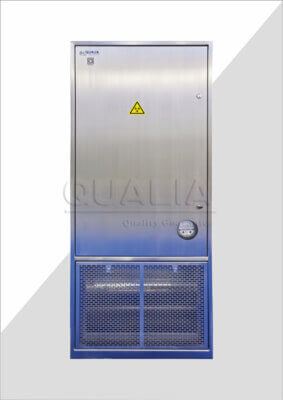
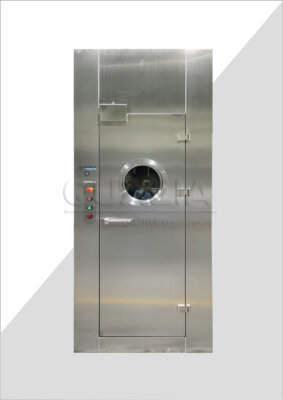
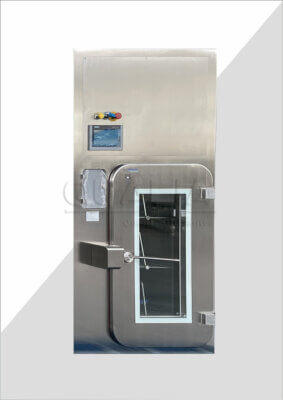
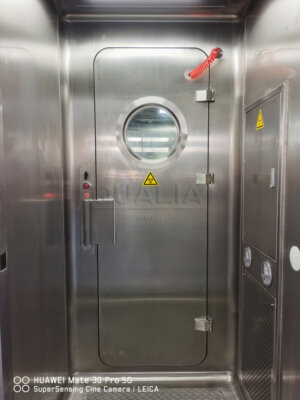
For modular BSL-3 installations in particular, where the line between equipment record and room-level evidence can be less obvious, this distinction matters at the procurement stage. Understanding what the supplier is responsible for documenting — and what the owner must independently verify — should be part of the pre-contract scope discussion, not a discovery made during handover review. The Laboratorio modular móvil BSL-3/BSL-4 design context is one where that supplier-versus-owner evidence boundary warrants explicit definition before commissioning begins.
Document Acceptance Gate for BSL-3 Validation Packages
The handover package acceptance gate is not a formality that can be treated as a milestone checkbox. It is the last structured opportunity to confirm that each URS item has been satisfied by traceable evidence before the facility enters operation — and the consequences of bypassing it are not administrative, they are operational. A facility that opens with an incomplete package does not have a gap that will be resolved later; it has an ongoing compliance liability that grows with every day of operation undocumented.
The pre-operation gate has one condition that functions as an absolute: initial HVAC design verification documentation must be completed, reviewed, and accepted before operation begins. This reflects the verification logic underlying science- and risk-based qualification frameworks — including those described in ASTM E2500-25 for manufacturing systems — which treat documented evidence of design functionality as a prerequisite for authorized use, not as documentation that can follow the start of operations. If that documentation is not accepted before the facility opens, the verification sequence is inverted, and the burden of demonstrating that containment was maintained during any pre-documentation operating period falls on the owner.
Two additional gates govern the package’s ongoing validity. The first is triggered by major changes: fan replacement, ductwork modifications, or structural alterations require design functionality re-verification and updated handover records accepted before the modified facility returns to operation. The second is specific to waste decontamination: validated protocols, with log6 kill confirmed through thermocouple and biological indicator data, must be accepted as part of the initial validation package — not referenced from an external procedure document that may be updated independently.
| Gate | Condición | Documentation Acceptance Requirement |
|---|---|---|
| Pre-operation acceptance | Before facility operation begins | Initial HVAC design verification documentation completed, reviewed, and accepted |
| Re-verification after major changes | Fan replacement, ductwork changes, structural modifications | Design functionality re-verified and updated handover records accepted |
| Waste decontamination protocol acceptance | As part of initial validation package | Validated waste decontamination protocols (log6 kill confirmed with thermocouples, BIs, F0) accepted as standard procedure |
The acceptance condition for the full package is binary and practical: if any URS item cannot be traced forward to a test result with a named responsible owner, the package is not ready to close. Tracking down that traceability before the gate is a bounded effort. Reconstructing it after the facility is operational, under audit conditions, is not.
The most reliable way to assess whether a BSL-3 validation package will hold under scrutiny is to trace it backward from the test evidence to the URS, then forward from the URS to the responsible party for each requirement. If either direction breaks — because a vendor submittal answered a different question than the URS asked, because a room-level check was never performed, or because the waste decontamination protocol was not formally accepted — the package has a gap that will surface at the least convenient time.
Before accepting any package for handover, confirm that initial HVAC design verification documentation is complete and accepted, that waste decontamination protocols carry lethality data for the actual waste types the facility will process, and that room-level evidence — penetration checks, smoke-stick airflow reversal results, load distribution validation — is present alongside equipment certification records. Those are the conditions under which the acceptance gate closes cleanly. Everything else in the package depends on those foundations being in place first.
Preguntas frecuentes
Q: What happens if a BSL-3 facility has already opened before initial HVAC design verification documentation was formally accepted?
A: The owner faces a retroactive burden-of-proof problem that cannot be cleanly resolved through documentation alone. Operating before the acceptance gate closes inverts the verification sequence — the owner must now demonstrate that containment was maintained during every day the facility ran without accepted documentation, a showing that is structurally defensive rather than affirmative. Depending on the regulatory body involved, this may trigger a broader documentation review beyond the HVAC records and could delay or condition formal facility approval. The practical path forward is to engage a qualified person to perform a gap assessment against the original URS, determine what re-verification is feasible under current conditions, and prepare a formal corrective action record — but accept that some initial failure-mode evidence from commissioning conditions can no longer be recovered.
Q: At what point does annual verification no longer substitute for a new initial verification cycle?
A: Annual verification becomes insufficient the moment a major change occurs — specifically fan replacement, ductwork modification, or structural alteration. At that threshold, the original initial verification record is no longer valid for the changed configuration, and design functionality re-verification must be performed and accepted before the modified facility returns to operation. Annual checks covering directional airflow, gauge calibration, HEPA certification, and alarm function are a maintenance-level confirmation of an already-verified state; they are not designed to re-establish a baseline after the physical system has changed. Treating an annual check as sufficient following a major change leaves an explicit traceability gap in the handover package.
Q: Does a modular BSL-3 installation shift any of the room-level validation responsibilities to the supplier?
A: No — the owner retains responsibility for room-level evidence regardless of how the facility was procured or assembled. A supplier of a modular BSL-3 installation can provide equipment certification records, factory acceptance test data, and calibration documentation for the systems they supply, but they are not positioned to generate site-specific evidence such as validated load distribution data for the actual waste stream the facility will process, smoke-stick airflow reversal results under the installed conditions, or penetration and surface integrity checks of the assembled envelope. The supplier-versus-owner evidence boundary should be defined explicitly before commissioning begins — not discovered during handover review — because the gap between what a supplier delivers and what the validation package requires is not self-correcting.
Q: How should a team decide between a lean validation package and a deeper audit-defensive one before commissioning begins?
A: The decision should be driven by regulatory exposure first, not by resource constraints. A lean package is appropriate and proportionate for BSL-3 facilities operating outside regulated pharmaceutical manufacturing — academic, government, or diagnostic settings where the minimum verification scope matches the oversight environment. For regulated biopharma projects, the lean approach transfers risk forward in a predictable way: BAS failure-event data that is not captured during initial commissioning cannot be reconstructed later, and the initial failure-mode testing cannot be repeated under the same conditions once the facility is operational. Because upgrading package depth after commissioning is disproportionately expensive, the depth decision must be made before initial verification begins. If there is genuine uncertainty about the project’s future regulatory classification, the default should be the deeper package — the cost of capturing supplementary data during commissioning is substantially lower than the cost of explaining its absence during audit.
Q: If a vendor’s autoclave submittal is technically accurate for its factory specification, what specifically makes it insufficient for a BSL-3 validation package?
A: A vendor submittal accurate to factory specification confirms that the equipment performs as designed under the conditions the manufacturer used to develop the specification — typically generic load conditions, not site-specific waste streams. For BSL-3 applications, the URS requires effective decontamination of the actual waste types the facility will generate, which may include animal carcasses, bedding, or mixed biological material that behave differently than standard laboratory waste during sterilization cycles. The vendor certificate does not and cannot address whether log6 lethality is achieved across that specific load distribution, because the vendor has no visibility into site operations. The room-level evidence — thermocouple and biological indicator data confirming F0 values for validated load configurations — must be developed by the owner or a qualified third party, and it must be formally accepted as part of the validation package. Without it, the submittal leaves the URS decontamination requirement untraced to any test result.