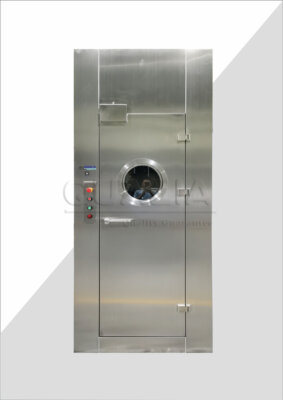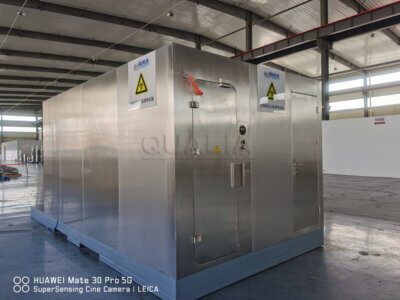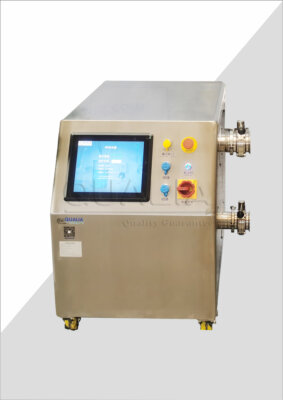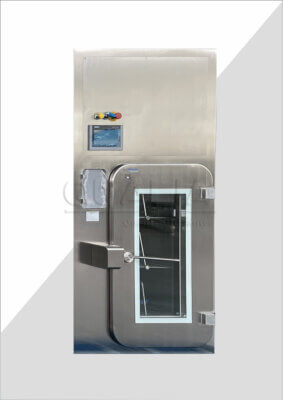

Use-frequency information helps a supplier propose the right pass box door type, seal arrangement, interlock logic, and service interval because a daily cycle count alone does not describe how demand actually arrives or how the hardware will age. The variables that change the recommendation most are whether demand is concentrated into short windows, whether the same box handles multiple load families with different transfer purposes, and whether the site is operating at an established baseline or expects a future step-change. A pass box specified against a flattened daily average will be under-engineered for its peaks and over-specified in ways that do not protect the boundary that actually matters.
Describe Typical Use and Concentrated Demand
The most useful thing a buyer can give a supplier early is not a single number but the shape of demand across the working day—and across the production calendar. A daily cycle total is a starting point, but it can conceal situations that matter to the door and seal design.
Concentrated demand is the common case in cleanroom and biosafety work. Consider a morning gowning window in a BSL-3 suite where twenty material transfers happen in ninety minutes, then the box sits idle for four hours. The door, gasket, and interlock mechanism experience that burst as a thermal and mechanical sequence—repeated openings in rapid succession, each one affecting the seal seating before the previous cycle has fully recovered. A supplier reading a bare daily average cannot model that sequence; a supplier given the peak window and its duration can assess whether the proposed seal type and interlock dwell time are appropriate for it.
Describe Typical Use and Concentrated Demand: Buyer Review Matrix
| Duty description | Useful supporting detail | Ambiguity avoided |
|---|---|---|
| Typical daily use | What each count represents | Openings confused with complete transfers |
| Concentrated use | Distribution across the working period | An average hiding busy intervals |
| Cargas mixtas | Relative occurrence and transfer purpose | One average hiding different tasks |
| Estimated demand | Estimate basis and status | Forecast treated as observed history |
Describe the following for a typical operating day:
- the shift structure and when transfers are most concentrated
- the approximate number of cycles in the peak window versus the remaining day
- how many consecutive openings from one side can occur before the interlock resets under normal use
- whether the box is idle overnight or over a weekend, and whether any idle-period conditioning is expected
Campaigns and scheduled batch cycles add another layer. A box serving a fill-finish suite may run at modest daily use for most of the year, then hit a sustained high-intensity period during a product campaign. That campaign loading is part of the duty the door and seal must survive, and it should be described separately as a known periodic condition rather than rolled into an annualized average.
If the usage data comes from an estimate rather than a recorded operating history—from a process flow assumption, from an analogous facility, or from a planned workflow that has not yet run—label it as such when providing it to the supplier. An estimated duty that has been treated as a confirmed baseline can produce a maintenance schedule that starts mis-calibrated from day one.
An estimate labeled as an estimate gives the supplier room to offer a conservative service interval and revisit it after the first operating year; an estimate presented as fact closes that conversation before it starts.
Separate Door Use from the Transfer Task
Door openings and complete transfers are not the same unit, and conflating them produces a duty description that is internally inconsistent. Establish a clear counting convention and hold it throughout the supplier information.
A single transfer may require two door openings on the clean side and one on the access side—six door-side events for a double-door box if both operators cycle the interlock. A fumigation cycle in a VHP pass box adds an additional sequence that is mechanically distinct from a material movement. If a dunk tank is in the circuit for liquid immersion decontamination before the pass box stage, the upstream handling adds time and a separate load event that affects how often the pass box itself is approached and opened. State what your count represents: whether it is “door actuations” per side per unit time, “transfer completions” end-to-end, or some other unit the facility already uses.
Productos relacionados
- Caja de pases de bioseguridad — Utilice la lista de componentes correspondiente para iniciar una solicitud de presupuesto específica para la configuración; el tipo de junta, los herrajes, los servicios, los repuestos y el alcance del servicio deben figurar detallados en la respuesta.
Different load families using the same box create a subtler version of the same problem. A box that handles both small reagent packages and larger assembled components has two meaningfully different cycle profiles: the small-package transfer may be quick and frequent; the component transfer may be slow, may require the door to remain open longer, and may occur only a few times per shift. If one load family dominates, a single representative profile may be adequate. If they are genuinely distinct in frequency, duration, and the physical demands they place on the door—particularly on a pneumatic-seal door that is energized for the full open dwell—both should be described, with their relative occurrence noted.
The transfer purpose also matters in ways that affect the VHP or decontamination cycle, not just the mechanical count. A pass box that performs a validated VHP transfer cycle on every pass places different demand on the seal integrity over time than one that uses the VHP function only for high-consequence loads and runs the remainder as a simple interlocked transfer. Separating these in the duty description allows the supplier to scope the seal and cycle verification requirements appropriately rather than applying the most demanding assumption to all events.
Request the Offered Maintenance Basis
A supplier’s proposed service interval is only as useful as the duty assumptions behind it—ask for both together.
When a supplier offers a maintenance schedule, a gasket-replacement interval, or a component-life claim, request the duty basis that underpins it and the exclusions that apply. A stated interval of, say, one year for a door seal may be derived from a generalized use assumption—a fixed number of cycles per day, a particular temperature range, a specific seal material in contact with a standard disinfectant. If your actual profile involves a concentrated morning burst, a different disinfectant, or a VHP exposure frequency that the supplier’s model did not include, that interval may not hold.
The specific questions worth putting to the supplier at RFQ stage or early in the design review:
- What cycle count or operating-hour assumption underlies the offered service interval?
- Does the interval apply to both sides of a double-door box independently, or to the box as a combined unit?
- What exclusions apply—particular seal materials, chemical exposures, ambient temperature ranges, or cycle dwell times outside a defined band?
- Para un bag-in/bag-out filter arrangement where the exhaust filter change is part of the maintenance sequence, is the filter-change interval calculated on the same duty basis as the door seal, or independently?
This last point matters because the filter change and the door seal service may fall on different schedules derived from different assumptions, and aligning them to a single planned maintenance window requires knowing both bases. A supplier who can present the maintenance model transparently—not just the interval—is in a position to adjust the schedule when the first year of actual operating data is available.
Request the duty basis behind every interval the supplier quotes, not just the interval itself.
Where a mechanical-seal door is proposed rather than a pneumatic-seal door, the maintenance access question changes character. A mechanical seal’s compression is set at installation and adjusted at service, and its condition can be assessed without energizing the door. A pneumatic seal requires the inflation circuit to be live before the seal geometry is established. These are distinct inspection and service sequences, and knowing which one is offered tells the buyer what access, tools, and operating status are required to perform the check—information that belongs in the site’s planned-maintenance procedure from the beginning, not discovered after handover.
Lecturas relacionadas
- Requisitos de diseño (URS) para equipos de alta contención: lo que los departamentos de control de calidad, ingeniería y compras deben definir antes de la solicitud de presupuesto — Prepare a clear description of current and planned use before asking for quotations.
- Cómo comparar proveedores de equipos de alta contención en función de la calidad de la respuesta de URS y el alcance de las pruebas — Compare how suppliers state their duty and maintenance assumptions.
- Lista de comprobación del control de cambios para la recertificación de equipos de contención — Keep a later production-duty change linked to the original purchase basis.
Keep Future Duty and Supplier Assumptions Distinct
A clean separation between current duty and anticipated future use protects both the design conversation and the purchase scope.
If production volume or workflow may expand after installation, state the planned change explicitly and separately from the current baseline when preparing the supplier brief. A box sized and configured for current demand can be presented in one column of the specification; the anticipated future load, with the timeline and confidence level attached, belongs in a separate column. This structure gives the supplier two distinct sets of conditions to respond to and allows them to flag which design decisions—seal type, interlock logic, aperture size, control architecture—would need to change if the future load materialized.
The alternative—blending a speculative future load into the present-duty description—tends to produce a design that is nominally built for a condition that does not yet exist and whose actual current-duty performance has not been explicitly confirmed. It also makes the supplier’s response harder to evaluate: if the offered maintenance interval and component life are based on a future load assumption, they may not be meaningful for the facility’s first operating years.
Describe current duty as what is known; describe future duty as what is anticipated, with its basis.
Supplier assumptions are a parallel concern. Every design proposal rests on assumptions that are not always stated: a particular daily cycle count, a duty cycle for the inflation system, a disinfectant compatibility presumption, a pressure-boundary condition at the pass box aperture. When a buyer provides a detailed use-frequency description, a good supplier will state which assumptions they applied and where they diverged from the buyer’s figures. If a proposal arrives without that mapping, ask for it.
For a pass box integrated into a pressure-cascaded suite—where the pressure differential across the aperture is part of the containment or clean-room design—the door duty description should include the pressure conditions under which the door typically operates and any events where the differential is atypical, such as during room recovery after a door event elsewhere in the cascade. These conditions affect the seal loading and the interlock response in ways that a pure cycle count does not capture.
Before approaching suppliers with a pass box requirement, have the following ready: the daily cycle profile broken into peak and off-peak windows, a clear definition of what the facility counts as one “use,” a list of load families and their relative frequency, any known campaign or batch intensification periods, and an explicit note on whether the duty figures are observed or estimated. If production expansion is anticipated, attach it as a separate described scenario with a provisional timeline rather than absorbing it into the base specification.
Referencias
- Anexo 1 de las BPF de la UE: Fabricación de medicamentos estériles (2022) — Utiliza el contexto de control de la contaminación en la fabricación estéril para identificar los equipos y las interfaces de la planta que deben revisarse; no proporciona valores de aceptación específicos para cada proyecto en lo que respecta a las cajas de transferencia ni a los sistemas cRABS.
- EudraLex, volumen 4, anexo 15: Cualificación y validación — Hay que diferenciar la documentación del proveedor de las decisiones relativas a la homologación y aceptación del proyecto; las condiciones y desviaciones notificadas siguen siendo específicas del sistema en cuestión.
- ISO 14644-7:2004 Dispositivos de separación — Los requisitos relativos a los dispositivos de separación de bastidores y las cuestiones entre clientes y proveedores se enmarcan dentro del ámbito de aplicación verificado de la norma; las cláusulas detalladas y los límites de los equipos quedan fuera de este resumen.
- Manual de bioseguridad en los laboratorios de la OMS, 4.ª edición (documento básico) — Prioriza el uso en laboratorio y los fundamentos de la evaluación de riesgos frente a una etiqueta genérica del equipo; este resumen no constituye una especificación de la puerta ni una autorización de las instalaciones.
Preguntas frecuentes
Q: Can forecast production be used before operating records exist?
A: Yes, with the estimate basis and status clearly identified. Keep current assumptions and later observed use separate so the supplier response remains traceable to the information provided.
Q: Should use frequency decide the seal arrangement by itself?
A: Use frequency is one input to the supplier response, alongside the transfer duty and offered maintenance basis. Keep the full arrangement response visible rather than treating one count as an automatic selection rule.
Q: How should competing maintenance offers be compared?
A: Compare their stated duty assumptions and included scope before comparing the interval or price. A response based on a different definition of use is not the same commercial proposition.