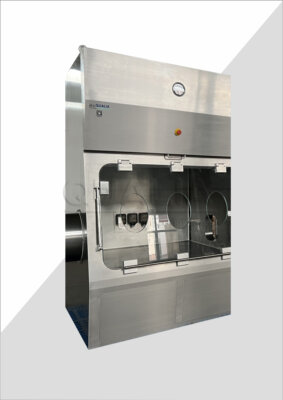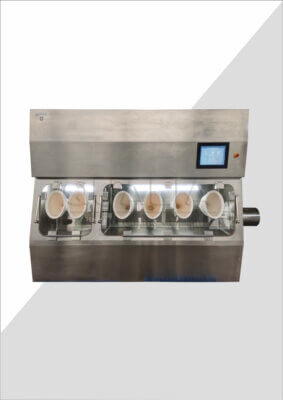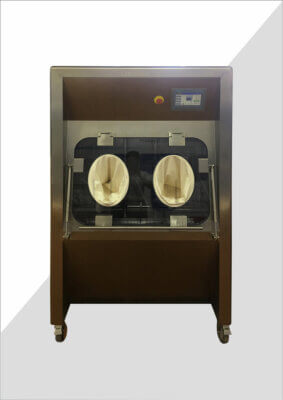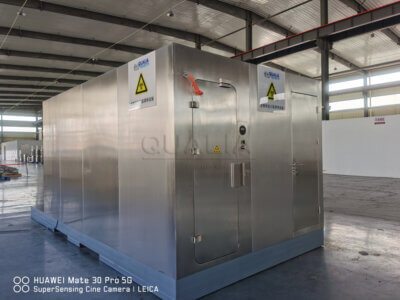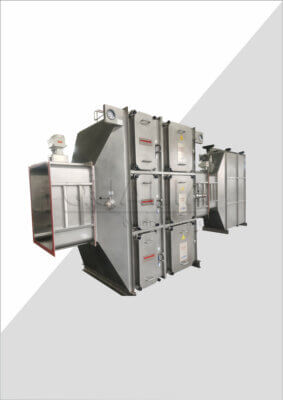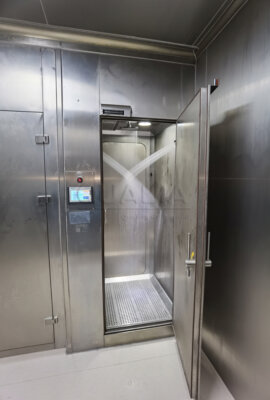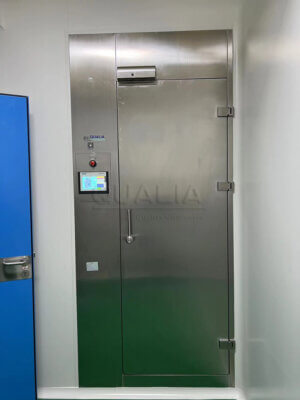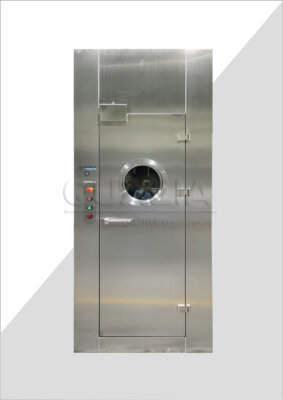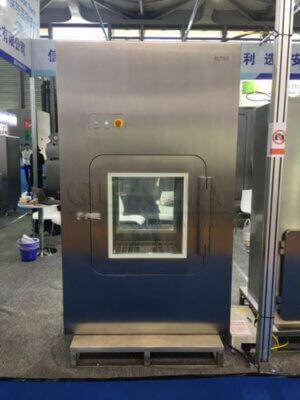

Teams that procure a VHP pass box without building the validation strategy in parallel tend to discover the gap during IQ/OQ, when biological indicator placement records, VHP distribution study data, and exhaust degradation evidence are all missing and must be reconstructed from partial information. The consequence is a validation cycle that restarts under schedule pressure, often against a commissioned workflow that was already sized around faster transfer times. The critical judgment is not whether VHP is more effective than simpler alternatives — it demonstrably is — but whether your release conditions specifically require documented chamber bio-decontamination, and whether your procurement specification captures every parameter that qualification will later need to verify. What follows gives you the technical basis to answer both questions before the design is final.
Biosafety release conditions that justify VHP use
The decision to specify VHP rather than a UV or chemical-wipe pass box should be driven by what the release condition actually demands. Where a transfer protocol requires verified kill assurance at the spore level — not surface cleaning, not UV exposure time, but a documented log-reduction against a resistant challenge organism — the technical case for VHP becomes the only defensible basis for material release.
The validation organism that frames this assurance is Geobacillus stearothermophilus. Its resistance profile places it at the upper boundary of what VHP must overcome, which is precisely why it serves as the design-basis organism rather than a conservative regulatory formality. If a VHP cycle can achieve a 6-log reduction against G. stearothermophilus, the kill performance against less resistant organisms follows. This logic is what the WHO Laboratory Biosafety Manual uses when framing decontamination validation for high-consequence containment environments — the challenge organism sets the floor, not the ceiling, for demonstrated efficacy.
The practical implication is narrower than it first appears. Not every biosafety pass box application requires spore-level kill assurance as a release condition. Where the hazard level, containment protocol, or regulatory submission requires documented chamber bio-decontamination as the evidence of safe material transfer, the selection threshold has shifted to VHP. Below that threshold, simpler systems with shorter cycle times and lower maintenance burden may be the better fit. The mistake is treating VHP as a feature upgrade rather than a process commitment — once the release condition requires validated chamber bio-decon, every other specification decision follows from that, including cycle parameters, surface finish, monitoring ports, and documentation scope.
Cycle variables that shape decontamination performance
The parameters governing a VHP cycle interact in ways that are easy to underestimate during procurement and expensive to correct after installation. The practical risk is not that any single parameter falls outside specification — it is that deviation in one creates cascading failure in another, and the qualification record has to account for all of them.
Humidity control is the most commonly underweighted interaction. The chamber must reach below 30% RH through a dedicated dehumidification step before the sterilization phase begins. If the facility HVAC delivers air at 55% RH into a warm chamber, that pre-cycle conditioning step takes real time and real energy, and if it is skipped or abbreviated under throughput pressure, kill performance degrades without triggering an obvious alarm. The cycle may complete normally from a controls perspective while biological efficacy is compromised. At the other end of the cycle, condensation risk during the sterilization phase is managed through flash evaporation and saturation control — these are not cosmetic design features but the mechanisms that protect both the load materials and the reproducibility of the cycle. Condensation deposits VHP unevenly, damages sensitive materials, and creates inconsistency that a distribution study will later expose.
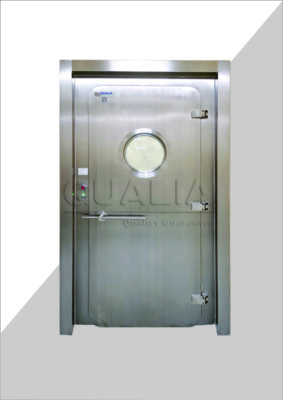
Chamber geometry matters for the same reason. A mirror-polished interior with rounded corners at Ra≤0.6 μm combined with horizontal laminar airflow is what makes the distribution study defensible. If the interior has weld seams, sharp angles, or rough surface patches, VHP can pool, condense, or fail to penetrate recesses — and those dead zones will show up in biological indicator results, not in routine parameter monitoring.
The cycle time figures and environmental prerequisites are design inputs, not regulatory mandates in isolation, and they need to be carried directly into your qualification protocols.
| Parameter | Spezifikation | Auswirkungen auf die Leistung |
|---|---|---|
| Empty / full load cycle time | ≤45 min empty; ≤60 min full | Defines baseline and maximum transfer turnaround for workflow planning |
| Process temperature | ≤37°C throughout cycle | Protects heat-sensitive materials from thermal degradation |
| Chamber start conditions | >15°C and 40–60% RH | Prerequisites for cycle initiation and run-to-run reproducibility |
| Decontamination humidity | <30% RH after dedicated dehumidification step | Critical for VHP kill efficacy; higher humidity compromises performance |
| Oberflächenbehandlung innen | Ra≤0.6 μm, mirror-polished rounded corners | Prevents dead zones; ensures even VHP distribution across all surfaces |
| Airflow and condensation control | Horizontal laminar flow with flash evaporation and saturation control | Supports uniform distribution; prevents condensation-related material damage and cycle inconsistency |
One consequence worth planning for explicitly: the ≤37°C process temperature requirement protects thermally sensitive materials, but it also constrains the cycle’s ability to accelerate decontamination through heat. All kill performance must come from VHP concentration and contact time at low temperature. This narrows the margin for recovery if any upstream parameter — humidity, distribution, generator output — falls short.
Residue and aeration concerns during chamber qualification
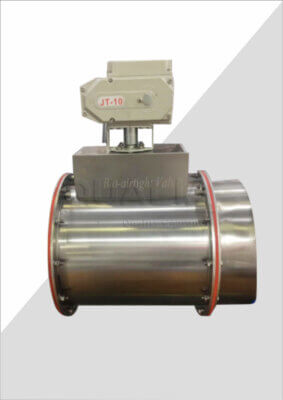
The 1 ppm residual VHP threshold is the safety release criterion that the aeration system is designed to meet before the inner door can open. VHP degrades to water and oxygen, so there is no persistent toxic residue — but the degradation pathway requires active ventilation to reach the 1 ppm threshold within a cycle time that does not stall the transfer workflow. Independent ventilation designed to exhaust residual VHP rapidly is what converts the chemical decomposition pathway into a reliable, schedulable release event rather than a waiting period of uncertain length.
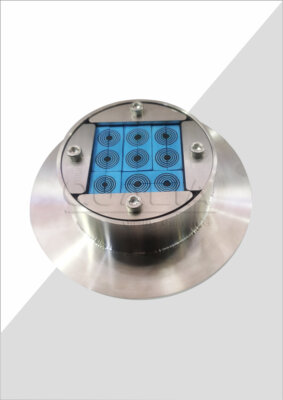
The qualification gap that most teams encounter is the absence of in-situ monitoring data. Optional test ports that allow real-time measurement of VHP concentration, particulate levels, and planktonic bacteria during the cycle are not decorative features — they are the points from which exhaust degradation curves are built and residue limit verification is documented. If a unit arrives on site without those ports, or if the qualification protocol does not specify where sensors must be placed and at what cycle phases readings must be logged, the aeration performance section of the OQ cannot be closed without retrofit or supplementary testing.
A second planning consideration is that the 1 ppm threshold must be verified under loaded conditions, not just empty chamber runs. The load affects airflow patterns, surface area for VHP absorption, and the effective volume of the aeration sweep. A degradation profile established on an empty chamber may not hold when the chamber contains dense packaging or containers with complex geometry. Building loaded-chamber aeration runs into the OQ protocol, rather than assuming empty-chamber data transfers, avoids a documentation gap that is straightforward to prevent but time-consuming to address after the fact.
Workflow impacts created by VHP integration
Cycle duration is the most predictable source of operational resistance, and it is consistently underestimated during selection. A 50 to 120-minute cycle window per transfer, depending on load complexity, is a fundamentally different operational footprint than a 5-minute UV pass box. If the workflow was designed around rapid material release — reagent kits entering a suite multiple times per shift, for example — that throughput assumption must be revisited before commissioning, not after. The teams that discover the mismatch post-installation are typically the ones that treated cycle time as a product specification to be noted rather than a workflow variable to be modeled against actual transfer frequency.
| Workflow-Faktor | Operative Auswirkungen | Planning Consideration |
|---|---|---|
| Cycle duration (50–120 min) | Can stall transfer workflow if not accounted for in scheduling | Build cycle time into transfer protocols and shift planning |
| Double-door interlocking with pneumatic sealing | Prevents cross-contamination; may trigger timeout alarms during extended handling | Operator training on alarm response and door sequence management |
| Online filter monitoring | Provides replacement alerts during routine operation | Integrate alerts into preventive maintenance scheduling to avoid unexpected downtime |
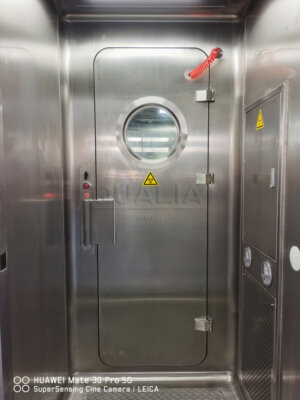
Double-door interlocking with pneumatic sealing is the correct design for contamination control, but it introduces a specific operational friction that training must address directly. When a door is held open past the timeout threshold — because an operator is repositioning load, because packaging is awkward, or because an alarm is being investigated — the interlock sequence resets and the cycle cannot proceed until the chamber is re-secured. Under throughput pressure, this creates a pattern of hurried handling that increases the risk of incomplete sealing rather than reducing it. The mitigation is not a design change but a protocol and training discipline decision that should be made before the system goes live.
Filter monitoring with online alerts integrates maintenance into daily operation, which is a genuine advantage over passive maintenance schedules — but only if the alert response protocol is defined in advance. An unexpected filter replacement during peak operational hours is a different problem from a planned replacement during a scheduled maintenance window. The alert system provides the lead time; whether that lead time is used effectively depends on whether the maintenance schedule was built around it.
Validated chamber bio-decon as the threshold for selection
The validation scope required for a VHP pass box used as a chamber bio-decontamination control is not a post-procurement activity. It is the specification against which the procurement decision should be made, because if the unit cannot support the validation program, the purchase has not solved the release assurance problem — it has deferred it.
The full validation lifecycle runs from URS through PQ under cGMP and GAMP5 traceability requirements: URS, FS, DQ, FAT, SAT, IQ, OQ, and PQ. Each stage produces documentation that must connect to the next. A unit that lacks test ports for distribution studies, does not meet the Ra≤0.6 μm surface finish required for defensible distribution results, or cannot demonstrate humidity control below 30% RH may not be qualifiable as installed. Discovering any of those gaps at IQ means the qualification program must either pause for equipment modification or proceed with documented deviations that will require justification at every subsequent stage. Neither outcome is efficient, and both were avoidable if the validation requirements were part of the procurement brief.
VHP sterilization is accepted in both US and Chinese pharmacopoeia, which provides a defined regulatory pathway for biopharmaceutical qualification in those jurisdictions and reduces the risk of post-approval challenge against the decontamination method. That pharmacopoeial acceptance should be treated as a jurisdiction-specific planning advantage rather than global regulatory equivalence, but for teams operating in those markets it meaningfully reduces qualification risk relative to methods that lack explicit pharmacopoeial standing.
The specific performance elements that define whether a validated chamber bio-decontamination claim is supportable are summarized below.
| Validierungselement | Anforderung | Was dies bestätigt |
|---|---|---|
| Biological indicator | Geobacillus stearothermophilus ATCC 12980 or 7953 | Uses the most resistant organism for challenge testing |
| Kill efficacy target | 6-log reduction (sterility assurance level) | Quantified decontamination performance standard |
| Cycle development scope | Parameter development, VHP distribution studies, biological challenge, exhaust degradation research | Comprehensive chamber bio-decontamination coverage |
| Regulatory basis | Accepted in USA and China pharmacopoeia | Clear regulatory pathway for validation |
| Documentation standard | cGMP and GAMP5 compliance from URS through PQ (URS, FS, DQ, FAT, SAT, IQ, OQ, PQ) | Full traceability across the validation lifecycle |
If your release condition requires documented 6-log reduction against G. stearothermophilus as the basis for material transfer, and your procurement specification does not explicitly address every row in that validation element table, the selection decision is incomplete. A VHP-Pass-Box that is specified to support this validation scope is a different procurement object than a VHP-labeled unit with no documentation lineage — the difference surfaces at IQ and cannot be negotiated away at that stage.
For facilities evaluating where to anchor the decontamination boundary within a larger BSL-3 or BSL-4 containment strategy, the relationship between pass box selection and broader decontamination architecture is worth reviewing in the context of decontamination practices in BSL-4 environments, where chamber bio-decon is one control layer among several that must be coordinated rather than substituted for one another.
The selection threshold for a VHP pass box is not driven by hazard level alone — it is driven by whether safe material release requires documented chamber bio-decontamination as its primary evidence. Once that requirement is confirmed, the procurement decision and the validation strategy must be developed together. Agreeing on acceptable cycle time against actual transfer frequency, confirming that the unit’s surface finish and monitoring ports support the distribution study and aeration verification your OQ will require, and specifying the biological indicator and residue threshold before design is final are the three checks most likely to prevent a qualification rebuild after commissioning. If any of those three elements is left to be resolved after purchase, the gap will be found during qualification — and at that point, the cost of resolution is measured in weeks rather than specification changes.
Häufig gestellte Fragen
Q: Our facility uses a hybrid decontamination approach — surface wipe-down plus UV exposure at the pass box. At what point does that combination stop being sufficient and make VHP the required choice?
A: The combination stops being sufficient the moment your release protocol requires documented chamber bio-decontamination as the primary evidence of safe material transfer — not supplementary evidence, not a secondary control. UV and chemical wipe protocols cannot produce a validated log-reduction record against a spore-forming challenge organism. If your containment protocol, regulatory submission, or internal SOP specifies that release is conditional on a verified kill claim at the chamber level, neither UV nor wipe-down can satisfy that condition regardless of how they are combined. The threshold is defined by what the release condition demands, not by the hazard level alone.
Q: Once the VHP pass box is commissioned and the initial validation is complete, what triggers a revalidation requirement?
A: Any change that could affect VHP distribution, contact time, or aeration performance triggers revalidation of the affected qualification stages. Practically, this includes generator replacement or model change, modifications to chamber geometry or surface finish, changes to the facility HVAC supply conditions that alter the pre-cycle humidity baseline, and significant changes to the load configuration used during OQ. Routine filter replacement documented under the online monitoring alert protocol does not typically require revalidation, provided the replacement is captured in the maintenance record and the post-replacement performance matches the qualified baseline. The safest operating principle is to define revalidation triggers explicitly in the validation plan before commissioning, so the threshold for each change category is agreed upon rather than adjudicated under pressure when a change occurs.
Q: Is a VHP pass box the right specification when the primary concern is protecting the product from contamination rather than protecting personnel from a biohazardous agent?
A: VHP is appropriate for aseptic product protection applications, but the cost-benefit calculation is different from a biosafety-driven selection. For product protection, the relevant question is whether the sterility assurance level required for your process can be reliably achieved and documented — if a 6-log reduction against G. stearothermophilus is the target, VHP delivers it. However, the 50–120 minute cycle time, utility dependence, and validation burden that are acceptable trade-offs in a biosafety context may be disproportionate if a cleanroom-integrated transfer system or rapid-transfer port could achieve the required sterility assurance with a lower operational footprint. The selection should be made against the specific sterility assurance requirement, not against VHP’s general capability, and the workflow impact of cycle time should be modeled against actual transfer frequency before specifying it.
Q: How does specifying a VHP pass box versus a standard biosafety pass box affect long-term lifecycle cost, and when does the difference matter most?
A: The VHP system carries higher lifecycle cost in three categories: utility consumption for hydrogen peroxide supply and ventilation, maintenance complexity from generator components and filter monitoring, and ongoing validation management when process changes trigger requalification. A standard biosafety pass box has a simpler mechanical footprint and lower consumable dependency. The cost difference matters most in high-throughput environments where cycle frequency is high, in facilities with constrained maintenance resources, and in programs where change control activity is frequent. The lifecycle cost premium is justified when the release condition genuinely requires validated chamber bio-decontamination — in that case, the alternative is not a cheaper pass box but an unsupported release claim. Where the release condition does not require it, the premium represents cost without a corresponding compliance return.
Q: What happens if the facility HVAC cannot reliably deliver supply air below 60% RH to the pass box installation point — does the unit’s internal dehumidification compensate fully?
A: Onboard dehumidification can compensate, but it adds cycle time and introduces a variable that must be qualified under your actual facility conditions rather than assumed from factory test data. The pre-cycle requirement is chamber humidity below 30% RH before the sterilization phase begins, and if incoming air is consistently at or above 60% RH, the dehumidification step must work harder and longer to reach that baseline. The risk is not that it cannot be achieved, but that the cycle duration established during qualification under those conditions may be longer than the procurement team anticipated, and that any seasonal or HVAC maintenance variability in supply humidity becomes a cycle reproducibility issue that the monitoring record must capture. The correct approach is to characterize the worst-case supply humidity at the installation point during facility design review and build that condition into the OQ protocol — not to assume internal dehumidification makes the supply condition irrelevant.
Verwandte Inhalte:
- Biosicherheits-Pass-Box: Typen und Auswahlhilfe für BSL-Anwendungen
- Pass Box in der Pharmaindustrie: GMP-Anforderungen und Konfigurationsleitfaden
- Transferkammern in Isolatoren für Sterilitätstests
- Passierscheinbox für das Biosicherheitslabor: Anforderungen nach BSL-Stufen
- BSL-Pass-Box: Eindämmung und Dekontamination nach biologischer Sicherheitsstufe
- Arten von Passboxen in der Pharmaindustrie: Statisch-Dynamisch-UV oder VHP?
- Biosicherheits-Durchgangsbox: Anforderungen an Konstruktion und Einschluss
- Pass Box im Mikrobiologie-Labor: Kontaminationsprävention Merkmale
- Arten von Passboxen: Dynamisch Statisch UV VHP und Biosicherheitsoptionen