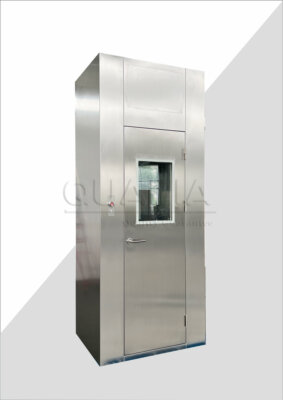


Procurement teams that select a modular BSL-3 laboratory primarily on delivery speed often discover that “on-time arrival” and “operational readiness” are two different outcomes. A module can reach the site on schedule and still fail pressure decay testing or utility acceptance if the site interface work was treated as a detail to resolve after the order was placed. That gap — between physical delivery and validated operation — is where project budgets and timelines absorb the most painful unplanned costs. Understanding where that gap opens, and which procurement decisions close it, is what separates a schedule advantage from a post-arrival rework problem.
Deployment Model Before Comparing Modular and Fixed Construction
The modular-versus-fixed decision is frequently framed as a construction-speed question, but speed is a downstream output, not the primary variable. The primary variable is deployment model compatibility: whether your site conditions, utility infrastructure, delivery path, and testing responsibilities can support modular construction before a purchase order is issued.
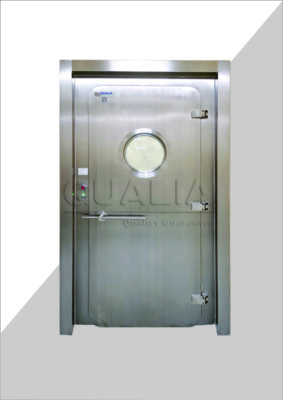
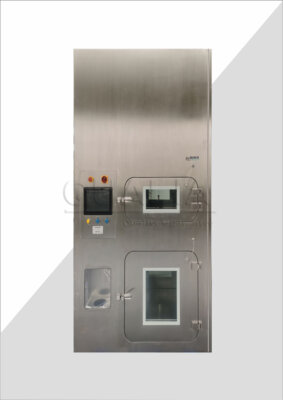
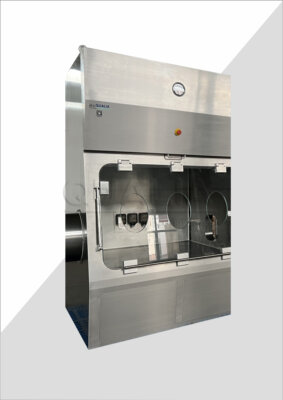
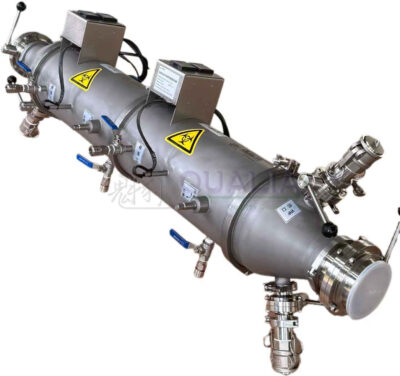
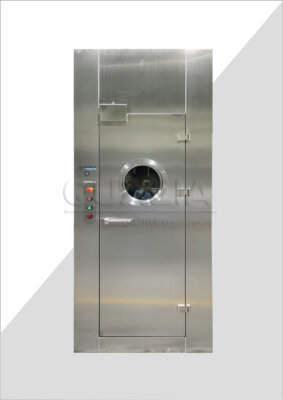
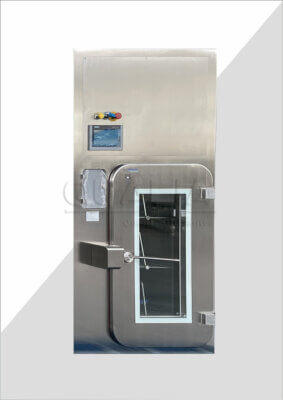
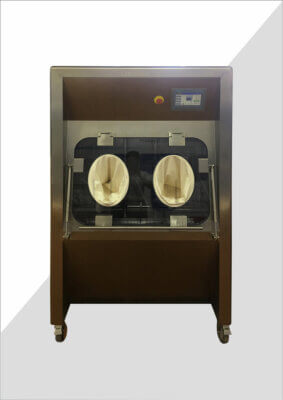
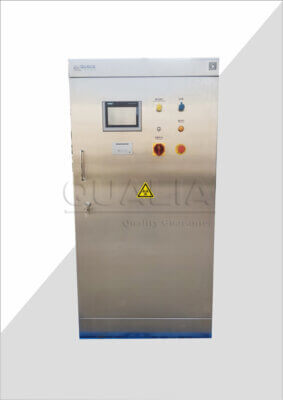
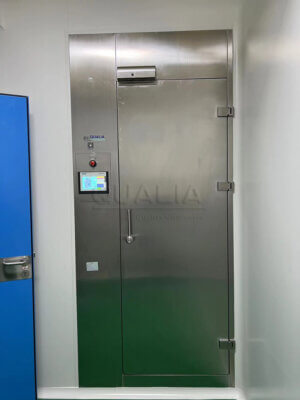
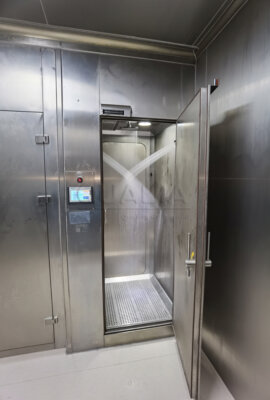
Modular BSL-3 laboratories are factory-assembled containment environments that arrive at the site in a substantially complete state. Fixed construction builds containment in place, integrating new systems into an existing or purpose-built structure. Each model carries a different risk profile, but neither profile is inherently superior. The wrong framing is assuming that modular always means faster or that fixed always means more customizable. The correct framing is identifying which model’s risk profile aligns with your current site conditions and project constraints.
For most projects, four conditions need to be defined before a meaningful comparison is possible: the transport route and delivery access to the installation point, the load-bearing or structural support requirements at the installation location, the utility tie-in interface between the site’s existing infrastructure and the module’s internal systems, and the contractual boundary between factory acceptance testing and site acceptance testing. If any of these four are undefined at the point of procurement, the project is not ready to select a deployment model — it is ready to define a scope of work that will eventually reveal which model fits.
This framing matters because the costs of misalignment are not symmetric. A modular project with undefined site conditions will absorb delays after arrival, when the module is already on-site and generating cost. A fixed project with undefined site conditions will absorb delays during construction, which is earlier in the timeline and generally more manageable. Neither option escapes the cost of poor upfront definition; they just absorb it at different project stages.
Factory Acceptance Versus Site Acceptance Responsibilities
The most contractually contested issue in modular BSL-3 procurement is rarely the price — it is the question of which party is responsible for which acceptance tests, and which tests completed at the factory must be repeated on site. Left ambiguous in procurement documents, this question surfaces at commissioning, when repeating tests is both time-consuming and difficult to assign cost to.
In a modular deployment, the vendor typically performs commissioning verification at the factory — demonstrating that HVAC performance, pressure differentials, air change rates, and containment integrity meet specification under controlled factory conditions. That factory acceptance testing (FAT) is valuable, but it tests the module in a factory environment, not at your site, connected to your utilities, at your elevation and climate. The site acceptance testing (SAT) then re-verifies performance under actual operating conditions. The friction point is determining which FAT results transfer directly to site acceptance and which must be re-demonstrated after installation.
ASTM E2500-25, which provides a science- and risk-based framework for specifying and verifying pharmaceutical and biopharmaceutical manufacturing systems, offers useful structural context here. It distinguishes between verification activities that are appropriate at different project stages rather than prescribing a single universal FAT/SAT split. That framing is practically useful because it supports treating the FAT/SAT boundary as a project-specific planning decision rather than a fixed regulatory threshold — which means it must be explicitly negotiated and documented at procurement, not assumed to follow a default industry pattern.
Two specific items are frequently underspecified in procurement documents. The first is personnel training: training for facility staff on containment protocols, emergency procedures, and system operation is logically a site acceptance activity, but it is often omitted from SAT scope definitions, which means it gets deferred until after formal acceptance is complete and creates operational readiness gaps at startup. The second is the division of responsibility when a module is relocated — initial site acceptance results do not transfer to a new installation location, and procurement documents that do not address relocation verification can create ambiguity about who is responsible for re-commissioning costs if the module is moved within its operational lifecycle.
Requiring vendors to provide a written commissioning and certification services description as part of procurement documentation — specifying which tests are performed at factory, which are repeated on site, and who bears the cost of retest if site conditions differ from factory assumptions — is the most direct way to close this risk before it reaches the commissioning phase.
Utility Tie-Ins and Transport Limits That Change Schedule Risk
Utility tie-in complexity is often the hidden driver of schedule variance in both modular and fixed BSL-3 projects, and it manifests differently depending on the deployment model. Understanding the failure pattern for each model clarifies which planning steps actually protect the schedule.
In fixed construction, utility infrastructure decisions can create cascading disruptions across adjacent occupied spaces. When roof-mounted HVAC exhaust systems require structural screen supports, the installation sequence affects the spaces below, and if those spaces are operational laboratories, the coordination overhead becomes significant — not just in scheduling but in maintaining containment integrity during construction. That type of cascading disruption is not an inevitable outcome of all fixed HVAC installations, but it represents a recognizable failure pattern when utility infrastructure routing is planned after structural commitments are already made. Weekly coordination meetings with lab staff to sequence work around active operations illustrate how quickly fixed-construction coordination cycles can extend the effective project timeline.
Modular BSL-3 laboratories address a portion of this risk through factory pre-engineering. Welded stainless steel HVAC systems designed for the destination climate reduce the scope of on-site utility rework because the system is already matched to anticipated operating conditions before it arrives. Self-contained mobile configurations go further, carrying their own power, water, and waste management systems, which removes site utility tie-in dependencies entirely. That is a meaningful schedule risk reduction — but it is a trade-off, not an elimination of all schedule exposure.
| Faktor | Modular BSL-3 Impact | Fixed Construction Impact |
|---|---|---|
| Utility Dependency | Self-contained mobile lab can carry own power, water, and waste management, eliminating site tie-in dependencies. | Full site utility tie-ins required; renovation can disrupt occupied spaces (e.g., roof screen supports impacting lower-level labs). |
| HVAC Installation | Welded stainless steel HVAC pre-engineered for destination climate; minimizes on-site rework. | Roof-mounted HVAC infrastructure may cause cascading disruptions; requires extensive on-site coordination. |
| Transport Limits | International shipping (e.g., US to Seoul) adds schedule risk; needs defined delivery path and crane access. | No transport-related delays, but site modifications add time. |
| Coordination Overhead | Fewer on-site parties improves schedule certainty. | Longer coordination cycles; weekly meetings with lab staff needed to avoid operational interruptions. |
The trade-off that the self-contained model introduces is transport route complexity. A mobile BSL-3 laboratory shipped internationally — for example, from a North American manufacturer to an East Asian site — faces delivery path constraints, customs clearance, crane access requirements, and site condition differences that fixed construction does not face. These are manageable constraints, but they need to be planned before procurement, not discovered during logistics coordination after the order is placed. Utility self-sufficiency reduces one category of schedule risk while transport and site interface constraints introduce another, and the net schedule advantage depends on how well both categories are defined upfront.
Modular Speed Versus Fixed-Construction Customization
Modular construction’s schedule advantage is real, but it is conditional. The advantage exists when site conditions are defined, utility tie-ins are pre-specified, and the delivery path is confirmed. When those conditions are met, the factory-parallel construction model allows civil site preparation to proceed simultaneously with module fabrication, compressing the overall project timeline in ways that sequential fixed construction cannot replicate.
A concrete reference point: CERTEK’s delivery of seven modular BSL-3 laboratory units to U.S. Army hospitals over a 2.5-year period provides a useful benchmark for understanding what modular deployment pace looks like under a structured program. That figure reflects a specific vendor context and a specific procurement environment, not a universal industry standard — but it illustrates that modular programs can sustain a predictable delivery cadence when the site interface work is managed consistently across multiple deployments.
Fixed construction offers a different kind of value. When the installation site has unusual structural geometry, non-standard utility configurations, existing containment adjacencies that require specialized interface design, or programmatic requirements that exceed the envelope of available modular configurations, fixed construction can accommodate the complexity that modular formats cannot. The trade-off is coordination overhead: fixed renovation projects in occupied laboratory environments often require structured sequencing to avoid interrupting active operations, and that sequencing extends the effective project timeline even when the construction itself proceeds efficiently.
The practical implication is that modular and fixed construction are not competing on the same dimension. Modular construction optimizes for schedule certainty in well-defined site conditions. Fixed construction optimizes for geometric and programmatic fit in complex or unusual sites, at the cost of longer coordination cycles. Treating them as simply fast-versus-slow misframes the decision and leads to selecting modular for sites where the site interface work has not been done — which converts the schedule advantage into a post-arrival problem.
For facilities evaluating a BSL-3/BSL-4-Modul-Labor, the schedule advantage is most reliable when the four preconditions described in the first section — transport route, structural support, utility interface, and FAT/SAT boundary — are already confirmed at the time of procurement.
Site Interface Checks That Prevent Post-Arrival Modification
A modular laboratory that arrives on schedule but cannot pass site pressure testing or utility acceptance is not a deployment success — it is a deferred failure that is now harder to resolve because the module is physically present and generating cost without generating output. Post-arrival modifications in modular projects are more disruptive than pre-arrival design changes because they occur in a partially commissioned state, with less contractor flexibility and more operational pressure to achieve readiness.
The failure pattern most worth understanding is roof-level installation. Placing a modular BSL-3 unit on the roof of a multi-story building concentrates several interface risks in a single location: the roof structure must carry the module’s operational load, the delivery path must allow crane placement at a precise location within tight urban or campus constraints, and the utility connections must align with what the building’s mechanical systems can provide at roof level. Missing any of these checks before the module ships means discovering the problem when resolution options are limited.
| Check Item | Risk if Missed | Was zu überprüfen ist |
|---|---|---|
| Roof Load Capacity | Module cannot be placed or may cause structural damage. | Structural assessment of load-bearing capacity and support. |
| Delivery Path & Crane Access | Inability to deliver module to installation site. | Route clearances, turning radius, and crane staging area. |
| Utility Interface Compatibility | Module arrives but fails pressure testing or utility acceptance. | Utility interface specifications and pre-testing requirements. |
| Relocation Site Re-Verification | Site conditions at new location differ, forcing post-move modifications. | Re‑perform all site checks (load, path, utilities) before relocation. |
One failure pattern from fixed BSL-3 renovation is instructive here even though it originated in a different construction model: insufficient ceiling access panels in a fixed renovation required additional coordination mid-project to avoid interrupting laboratory operations. The underlying dynamic — a missing site interface detail that forced post-commitment modifications — is directly applicable to modular deployment. The difference is that in modular deployment, the post-commitment modification happens after the module has been fabricated and shipped, making it substantially more expensive and time-constrained to resolve.
Relocation also deserves specific attention. Site acceptance results from an initial installation do not carry over to a new location. Each time a modular unit moves, all site interface checks — structural load assessment, delivery path confirmation, utility interface verification, and pressure testing under new site conditions — need to be re-performed. Projects that plan for relocation as a lifecycle option but do not include re-verification scope in the relocation budget routinely underestimate the cost and timeline of moving an operational containment module.
For teams planning a deployment with relocation potential, the Mobiles BSL-3/BSL-4-Modul-Labor format is designed with transportability as a primary design parameter — but the site interface re-verification requirement applies equally regardless of how the module was originally engineered.
Procurement Gate for Modular BSL-3 Laboratory Selection
Modular BSL-3 procurement goes wrong most often at the gate stage — specifically, when procurement begins before the site interface, utility, and acceptance-testing questions are translated into vendor RFI requirements. The result is a purchase order placed against a product that is well-defined on the vendor side and under-defined on the buyer side, with the gap appearing during commissioning.
The procurement RFI is the most practical tool available to close that gap before it creates project risk. Each RFI category should be treated as a planning criterion that controls a specific category of procurement risk, not as a checklist item or a regulatory compliance exercise. The questions that matter most are the ones that establish shared expectations between buyer and vendor before the contract is signed.
| RFI Question Category | What to Request | Warum es wichtig ist |
|---|---|---|
| Commissioning & Certification | Vendor details on commissioning/certification services, including division of factory vs. site acceptance tests. | Clarifies testing responsibilities and reduces validation risk. |
| Utility Requirements | Full utility needs: power, water, gas, drainage, and HVAC redundancy. | Enables upfront utility planning and lowers schedule risk. |
| Zeitplan für den Einsatz | Typical timeline from order to operational status. | Allows comparison of modular speed with fixed construction options. |
| Ausbildung des Personals | Training provisions for facility personnel during site acceptance (SAT). | Ensures operational readiness; omission can delay startup. |
| Decommissioning & Relocation | Decommissioning, decontamination, and relocation capabilities. | Accounts for lifecycle flexibility and long-term value. |
The commissioning and certification category carries the highest validation risk. A vendor response that describes FAT scope without specifying which tests must be repeated on site — and under what conditions vendor responsibility for retest applies — leaves the buyer exposed to unplanned cost at the most constrained point in the project timeline. ISO 14644-4:2022, which addresses cleanroom design, construction, and startup, provides a useful process-reference framework for thinking about how commissioning activities should be structured across project phases; referencing it in an RFI signals to vendors that you expect a structured answer, not a general description.
The deployment timeline question deserves more rigor than it typically receives in procurement. Asking for a “typical timeline from order to operational status” without specifying what “operational status” means — validated under site conditions, fully commissioned, or simply physically installed — produces answers that are not comparable between vendors or between modular and fixed alternatives. Defining operational status as the point at which all SAT tests are complete and the facility is cleared for first use gives the timeline question a precise endpoint that makes comparisons meaningful.
Decommissioning and relocation provisions are worth surfacing at procurement even if relocation is not in the current program plan. The lifecycle flexibility of a modular BSL-3 unit is part of its total value, and vendors vary significantly in how they design for decontamination and disassembly. A facility that discovers post-procurement that its module was not designed for clean decommissioning faces either a costly remediation process or a disposal problem — neither of which is recoverable at that stage.
For a more detailed comparison of how stationary and mobile modular configurations differ in their site interface and operational requirements, Die Unterschiede zwischen stationären und mobilen BSL-3/BSL-4-Labors verstehen provides useful context for structuring the initial procurement decision.
The most actionable conclusion from this comparison is that modular BSL-3 construction delivers a genuine schedule advantage, but only when the project team has already resolved the site interface, utility, and acceptance-testing questions that are easy to defer at procurement and expensive to resolve at commissioning. A project that treats those questions as vendor responsibilities to sort out on arrival has not actually captured the schedule benefit — it has staged it at a later point where schedule recovery is harder.
Before issuing an RFI for a modular BSL-3 laboratory, the items worth confirming internally are: the delivery path and crane access at the installation location, the structural load capacity at that location, the utility interface specifications for power, water, drainage, and HVAC at the connection point, and a written position on which acceptance tests the project team will accept as completed at factory versus which must be re-demonstrated on site. With those four inputs defined, the procurement process can produce a contract that reflects a shared understanding of scope, test responsibility, and operational readiness — which is the actual condition that turns deployment speed into a project advantage.
Häufig gestellte Fragen
Q: Our site already has an existing BSL-2 laboratory with non-standard structural geometry — does that rule out modular BSL-3 construction entirely?
A: Not necessarily, but it does shift the decision toward fixed construction in most cases. Modular units are fabricated to defined dimensional envelopes and cannot be reshaped to fit irregular floor plans or unusual structural adjacencies after fabrication. If your existing structure has non-standard geometry that cannot accommodate a standard module footprint, fixed construction is the more practical path — it can be designed around the site rather than requiring the site to conform to a pre-built format. The more useful early step is a structural and dimensional survey before procurement begins, so the decision is based on confirmed site parameters rather than assumptions.
Q: Once a modular BSL-3 laboratory passes site acceptance testing, what is the immediate operational readiness step that projects most often skip?
A: Personnel training is the step most frequently deferred past formal acceptance. Training on containment protocols, emergency procedures, and system operation is logically a site acceptance activity, but it is routinely omitted from SAT scope definitions. The result is that a facility clears all technical acceptance tests and is formally commissioned, but staff are not operationally ready for first use. Including training explicitly in the SAT scope — with defined completion criteria and a responsible party — is the most direct way to prevent an operational readiness gap at startup.
Q: At what point does the schedule advantage of modular construction disappear relative to fixed construction?
A: The modular schedule advantage erodes when site interface conditions are undefined at procurement. Modular construction compresses timelines because factory fabrication runs in parallel with civil site preparation — but that parallel compression only materializes if structural load, delivery path, utility tie-ins, and FAT/SAT boundaries are already confirmed when the order is placed. If those conditions are unresolved, post-arrival modifications occur when the module is already on-site and generating cost, which absorbs the schedule lead. Fixed construction absorbs equivalent delays earlier in the timeline, during construction, when recovery options are broader. The crossover point is not a fixed metric — it depends on how much site interface definition work remains at the time of procurement.
Q: Is a self-contained mobile BSL-3 module actually lower overall risk than a utility-tied modular unit, or does it just move the risk?
A: It moves the risk rather than eliminating it. A self-contained mobile unit removes site utility tie-in dependencies entirely, which is a genuine reduction in one category of schedule risk. However, it introduces transport route complexity — international shipments, customs clearance, crane placement requirements, and site condition differences — that a utility-tied stationary module, installed domestically on a prepared foundation, does not face to the same degree. The net risk profile depends on which category is harder to manage for your specific deployment: utility interface complexity at a fixed site, or transport and site interface variability across multiple or remote locations. Neither configuration is universally lower risk; the relevant question is which risk category your project team is better positioned to control.
Q: How should a procurement team evaluate whether the total cost of a modular BSL-3 laboratory is actually lower than fixed construction once site interface and revalidation costs are accounted for?
A: The comparison requires defining a complete cost boundary that includes post-arrival items most modular quotes do not cover by default. Modular procurement pricing typically reflects the unit as fabricated and delivered, not the full cost to operational status. Site interface work — crane access, foundation or roof-load reinforcement, utility connection engineering, and SAT retesting — carries real cost that varies significantly by site. For any planned relocation, re-verification costs at the new location must also be included, since initial SAT results do not transfer. A procurement team that compares a modular quote against a fixed construction estimate without normalizing both to the same operational readiness endpoint — all SAT tests complete, staff trained, facility cleared for first use — is comparing two different scopes of work and will systematically underestimate the modular option’s true total cost.