
A common pattern in aseptic operations is the slow accumulation of small changes—a glove swap treated as routine maintenance, a new cleaning agent introduced without a formal change control, a loading pattern adjusted to improve throughput—each appearing too minor to trigger a requalification event. Months later, the same isolator that passed its last performance qualification shows airflow velocity drift, an unexplained rise in glove contamination recovery, or visible residue under UV inspection. The real cost surfaces not at the point of change but during an unplanned shutdown when a critical excursion forces a full requalification cycle, often revealing that the barrier boundary has been quietly degrading across multiple interfaces. The challenge is knowing which changes genuinely cross the line from routine operation into a need for structured evidence, and what that evidence should include.
Glove Replacement as Barrier Change
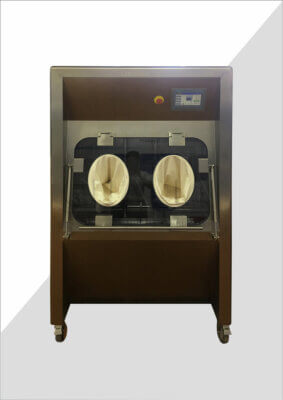
Glove replacement changes the physical barrier between the operator and the Grade A environment. Treating it like a surface-cleaning task misses the point: a new glove assembly creates a fresh seal, alters the glove’s mechanical flex characteristics, and introduces a material surface that may interact differently with VHP residuals or cleaning agents. When a site observes higher-than-typical recovery levels for glove contamination on a given port, that signal should trigger an evaluation of glove integrity as a containment boundary question, not just a personnel-retraining event.
The decision to requalify after glove replacement depends on risk. A single glove change on an established port design, performed per a validated procedure, may require only a post-change leak test and a visual inspection of seating alignment. But a batch replacement across multiple ports, a switch to a different glove material or supplier, or an accumulated history of early pinhole failures on a specific glove model can shift the assessment. Under EU GMP Annex 15, the significance of a change drives the requalification scope, and a glove replacement program that deviates from the qualified configuration should be treated as a barrier modification with potential knock-on effects for pressure stability and decontamination efficacy.
The mistake that most often creates downstream exposure is performing glove changes without a linked integrity test that simulates operational movement. A static pressure-decay test immediately after installation may pass cleanly on a glove that will leak after fifty flex cycles under working conditions. The trigger is not the glove swap itself but the absence of a verification step that reflects real use.
Transfer Interface Effects on Isolator Boundary
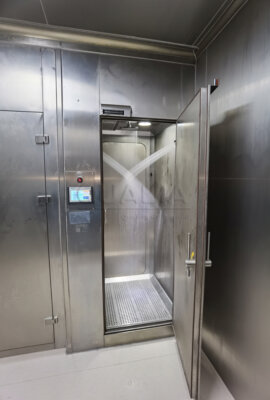
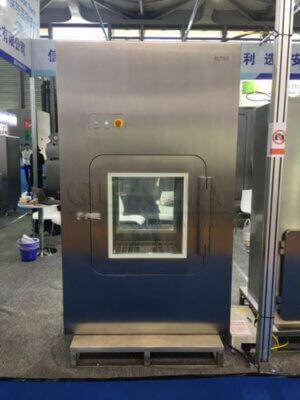
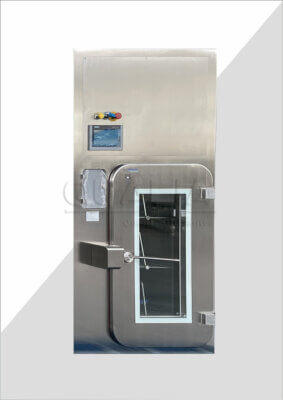
Changes to a transfer interface—whether adding a rapid transfer port, modifying loading automation, adjusting batch size, or redesigning stopper and vial configurations—directly interact with the isolator’s pressure and decontamination boundary. The ISO 14644-7 principle that material transfer must use validated mechanisms without opening the isolator barrier is not simply a design preference; it defines the boundary condition that the qualification state must maintain. When that interface is altered, the question is not whether the change affects containment but which parameters need verification.
| Modification or Change | Possible Boundary Effect | What Requalification Should Confirm |
|---|---|---|
| Barrier system modification (new RTP, alpha-beta port) | Pressure boundary shift, airflow disruption | Leak test, pressure hold, airflow mapping, VHP cycle efficacy |
| Loading automation change | Airflow pattern disturbance, pressure cascade alteration | Airflow velocity mapping, HEPA integrity, pressure decay |
| Increased batch size | Larger load may stress decontamination cycle or airflow | VHP load challenge, airflow uniformity mapping |
| Significant airflow system maintenance | Airflow and pressure boundary stability | Airflow mapping, pressure hold, HEPA leak test |
| Stopper/vial design change | Interface sealing, decontamination penetration | VHP cycle verification, closure integrity at interface |
The trigger for requalification is not the modification alone but the impact assessment result. If the change can affect airflow patterns at the boundary, pressure cascade stability, or the ability of the VHP cycle to penetrate the interface region, then the requalification scope must include those parameters. A loading automation change that shifts the timing or position of material entry can alter the dynamic pressure response that the isolator’s HVAC system was tuned to maintain. An increased batch size that places more thermal mass inside the isolator may demand a different VHP exposure profile. Each of these outcomes requires confirmation before the change is released for routine production, not after a sterility test failure exposes the gap.
The lyophilization interface adds another layer. Barrier system modification at the loading point, stopper design changes, or batch-size increases at that interface should trigger an assessment of whether airflow, exposure time, or mechanical stability are affected. Sites that defer this evaluation until the next periodic requalification often discover that the interface sealing question has been compounding across multiple campaigns, making the remediation more invasive than it would have been if addressed immediately after the change.
Cleaning Agent and Residue Change Impacts
A new cleaning agent, a different concentration, or a modified cleaning procedure can leave residues that matter for isolator performance even when they do not visibly affect surfaces. The risk assessment should consider three dimensions: surface material compatibility, residue interaction with VHP or another decontamination agent, and the potential for residue accumulation to alter environmental monitoring baselines. A cleaning change that increases non-volatile residue, for instance, may provide a substrate that interferes with microbiological recovery or creates a surface that binds sporicidal agents differently than the qualified material.
Annex 15 provides the framework for evaluating this kind of change. The cleaning process is part of the qualified state, and alterations that could affect product contact surfaces or environmental conditions require verification. That verification does not automatically mean full requalification; it may mean a focused residue study with surface sampling, followed by a single VHP cycle challenge to confirm that the new agent does not leave a decontamination-interfering film. The threshold for upgrading from verification to a broader requalification is evidence that the residue changes surface properties—wettability, conductivity, particulate shedding—in a way that could degrade Grade A conditions.
The failure pattern that quality units frequently miss is the cumulative effect of cleaning agent residue on HEPA filter media or return-air paths over time. A residue that passes an initial compatibility test may still build up across dozens of cycles, gradually altering airflow resistance. When airflow velocity deviation eventually triggers an investigation, the root cause is often traced back to a cleaning change approved months earlier without requalification of the airflow system.
VHP Cycle Change Review Inside the Isolator
VHP cycle parameters—load configuration, exposure time, aeration duration, injection rate—are not independent variables. Changing one can cascade into uneven distribution, incomplete microbial inactivation, or material stress that manifests only after repeated cycling. The case of VHP pooling on CG membranes inside an OPTIMA vial filling isolator illustrates the consequence clearly: condensation damage to hydrophobic surfaces required full refurbishment of eleven membranes, followed by a requalification scope that included surface tension testing, pressure hold, airflow velocity mapping, and smoke pattern visualization.
| VHP-Related Issue | Observed Consequence | Requalification Scope |
|---|---|---|
| Membrane cycle count exceeds 50 cycles | Hydrophobic surface degradation, seal integrity loss | Surface tension test, pressure hold, airflow mapping, smoke study (full refurbishment) |
| VHP pooling (condensation) on surfaces | Damage to membrane performance, uneven decontamination | Surface tension, pressure hold, airflow mapping, smoke study |
| Alteration of load configuration, exposure time, or aeration parameters | Risk of uneven VHP distribution, material stress, incomplete aeration | Load configuration mapping, exposure validation, aeration clearance measurement, material integrity check |
The operational tension is that cycle optimization often happens incrementally, driven by the need to reduce turnaround time or accommodate a new container format, without triggering a formal change control. The 50-cycle aging threshold reported for CG membranes is a design-specific observation, not a universal lifecycle limit, but it points to a broader principle: VHP exposure accumulates material stress. When a site tracks cycle count and correlates it with membrane surface performance, the decision to refurbish and requalify can be planned rather than forced by a pooling event. Without that tracking, the discovery happens during a failure investigation, and the requalification becomes urgent and unbudgeted.
Load configuration changes deserve particular scrutiny. Adding items, changing their orientation, or increasing the load density can create shadow zones where VHP concentration differs from the qualified pattern. A VHP cycle that was validated for a specific load configuration cannot be assumed to perform equivalently for a different one without exposure mapping at the new condition. Aeration changes that shorten the cycle time introduce the added risk that residual hydrogen peroxide levels at the point of use will exceed permissible operator exposure limits, a concern that links VHP cycle review directly to EHS and industrial hygiene monitoring.
Leak Airflow Monitoring and Decontamination Evidence
Leak integrity failure is the clearest trigger. When a pressure-decay or pressure-hold test fails, containment is no longer assured, and the isolator cannot be considered in a qualified state. Immediate remediation and full requalification follow, consistent with both Annex 1 expectations for aseptic processing barriers and Annex 15 requirements for requalification after a critical failure.
The more difficult judgment involves parametric drift that has not yet breached a limit. Unidirectional airflow velocity below 0.45 m/s at working height is a regulatory threshold under EU GMP Annex 1 for Grade A conditions, not an advisory figure. When velocity approaches that boundary, corrective action and requalification become necessary to restore the qualified Grade A environment. Similarly, ISO 5 particle count excursions demand environmental investigation and may require requalification of the cleanroom state.
| Überwachung der Parameter | Acceptance Threshold / Trigger | Action When Threshold Exceeded |
|---|---|---|
| Leak test integrity (pressure hold/decay) | Failure of leak test | Immediate remediation; full requalification per SOP |
| Unidirectional airflow velocity (Grade A) | Velocity < 0.45 m/s at working height | Corrective action; requalification to restore Grade A conditions |
| Airflow velocity deviation (membranes) | > ±15% from baseline on ≥3 membranes | Preemptive refurbishment and requalification (airflow mapping, HEPA test) |
| ISO 5 particle counts | Particle counts exceed Grade A limits | Environmental investigation; requalification of cleanroom state and airflow |
The airflow velocity deviation threshold of more than ±15% from baseline on three or more membranes came from a specific case study and should be treated as a site-specific preventive trigger, not a GMP-mandated criterion. Its value lies in the principle it illustrates: trending data against the qualified baseline can identify degradation before it breaches a regulatory limit. A site that establishes its own trending thresholds—based on historical performance, risk assessment, and maintenance history—can schedule requalification during planned downtime rather than responding to an excursion during production.
Decontamination evidence links the other monitoring parameters. If a leak test failure occurs near a transfer port, the requalification must confirm not only leak integrity but also whether the decontamination cycle remained effective at that compromised boundary. If airflow velocity has drifted, the VHP distribution pattern that was validated under baseline flow conditions may no longer hold. Requalification evidence that treats air, pressure, and decontamination as isolated checks misses the interdependence that matters for barrier assurance.
Trigger-to-Test Mapping for Isolator Requalification
EU GMP Annex 15 establishes the framework: requalification is required after changes that could affect process performance or product quality. The SOP-based triggers—relocation, modification, critical failure—implement that framework in practice, but the extent of testing must follow an impact assessment that examines whether airflow, exposure time, or mechanical stability are affected. A rigid checklist that applies the same test battery to every change wastes resources and can obscure the tests that matter for the specific trigger.
| Trigger / Event | Impact on Isolator Boundary/Performance | Requalification Tests and Evidence |
|---|---|---|
| System relocation | Misalignment, seal gaps, airflow distribution changes | Leak test, airflow mapping, HEPA filter integrity, pressure hold |
| Barrier modification (glove replacement, RTP, port change) | Boundary breach, airflow disruption, decontamination boundary shift | Leak test, pressure decay, airflow velocity mapping, VHP cycle challenge |
| Transfer interface modification (loading automation, batch size, stopper design) | Airflow patterns, pressure cascades, decontamination coverage | Airflow mapping, pressure hold, lyo interface integrity, VHP load challenge |
| VHP cycle count exceeded or pooling | Membrane degradation, uneven decontamination | Surface tension, pressure hold, airflow mapping, smoke study |
| Airflow velocity deviation >15% on multiple membranes | Loss of unidirectional flow uniformity, Grade A risk | Airflow velocity mapping, HEPA integrity, particle monitoring |
| Integrity failure (leak test) | Containment loss | Immediate remediation, full requalification (leak, airflow, HEPA, VHP) |
The mapping from trigger to test evidence should be explicit in the site’s requalification SOP. System relocation, for example, demands leak testing and airflow mapping because misalignment and seal gaps are the primary risks, but it may not require a full VHP cycle challenge if the decontamination system and load configuration remain unchanged. Barrier modifications such as glove replacement or RTP installation shift the boundary; the testing must confirm not only leak integrity but pressure decay across the modified zone and decontamination boundary stability at the new interface. VHP cycle count or pooling events point the investigation toward surface performance and distribution uniformity rather than baseline HEPA integrity.
Leak test failure is the only trigger on the map that commands a universal, non-negotiable full requalification scope. All other triggers lead to a scoped test plan based on the parameter most likely to be affected. The discipline is in resisting two common errors: overreacting with a blanket requalification for every glove change, and dismissing a batch-size increase at the transfer interface as an operational detail that does not require testing. The first error burns qualification budget and schedule; the second silently erodes the evidence basis that an inspection or audit will eventually require.
When an isolator moves from its qualified baseline, the real question for biosafety officers, QA teams, and engineering leads is not whether a particular change triggers requalification, but which evidence is needed to confirm that the change has not degraded containment, airflow, or decontamination performance. Defining that mapping in the site change-control procedure—before a glove fails, a VHP cycle pools, or an airflow measurement drifts—shifts requalification from a reactive scramble into a scoped, defensible verification. The next step is a review of the current requalification SOP against the actual modification history of the installed isolators: if any change approved in the last twelve months did not include a linked impact assessment covering leak integrity, airflow mapping, or decontamination boundary verification, that gap is the most productive place to start.
Häufig gestellte Fragen
Q: Do the same requalification triggers apply to biosafety isolators designed for containment rather than aseptic processing?
A: Yes, the physical triggers—glove replacement, transfer interface changes, leak test failure—apply to biosafety isolators as well, because they alter the containment boundary. However, the requalification evidence shifts from sterility assurance toward operator and environmental safety; pressure decay testing and airflow mapping remain critical, but decontamination cycle verification will focus on agent inactivation for the target organism rather than VHP sporicidal efficacy, and monitoring acceptance criteria align with biosafety level requirements instead of Grade A particle counts. For sites operating containment isolators, the impact assessment must evaluate whether the change could compromise the pressure cascade that protects personnel, not just the product. Biosafety isolator designs often use a negative pressure differential, so a glove change that affects seal integrity introduces an immediate personal exposure risk that demands leak testing before the isolator returns to use.
Q: After a trigger is identified, what should an impact assessment include before deciding the requalification scope?
A: The impact assessment must determine whether the change could affect airflow patterns at the barrier, pressure cascade stability, decontamination boundary integrity, or material surface properties in a way that degrades the qualified state. Start by evaluating the specific parameter the change touches—glove seal, transfer port seating, cleaning chemistry, or cycle exposure—and then map the potential knock-on effects to adjacent systems (for example, a new cleaning agent may leave a residue that alters VHP distribution or HEPA media resistance over time). The assessment should conclude with a test plan that covers the affected parameters only, resisting the temptation to default to a full requalification checklist unless leak integrity failure or multi-parameter impact is evident.
Q: What if our facility uses chlorine dioxide or another decontamination agent instead of VHP—do the cleaning and cycle change triggers still apply?
A: The triggers based on barrier changes and parametric drift still apply, but the evidence linked to decontamination cycle changes will differ in detail. A cleaning agent change, for example, still demands a residue compatibility review and verification that the new chemistry does not interfere with the sporicidal efficacy of your chosen agent, but the specific interaction (such as chlorine dioxide reactivity with certain polymer residues) will be different from VHP concerns. The principle remains: any change that could alter the qualified decontamination boundary or leave a performance-changing residue on product-contact or barrier surfaces must be verified, whether the agent is VHP, chlorine dioxide, or another validated method.
Q: How do I decide between a targeted verification and a full requalification after a modification like a glove material change versus a transfer port addition?
A: The distinction turns on whether the change modifies the isolator’s physical barrier configuration or merely substitutes a like-for-like component with equivalent specifications. A glove material change that introduces new flex characteristics or chemical resistance may need only a leak test with operational movement simulation and a visual seating check, because the boundary geometry remains unchanged. Adding a rapid transfer port, modifying loading automation, or altering stopper configurations at a lyophilization interface directly redefines the barrier envelope and will usually require airflow mapping, pressure decay testing across the new interface, and decontamination boundary verification, because the change can shift the validated airflow, pressure cascade, and VHP distribution patterns. When in doubt, assess whether the modification could affect more than one qualified parameter; if yes, scope upward from verification toward full requalification of the affected systems.
Q: Is it worth performing requalification after every cleaning agent change, even if the new product is chemically similar to the qualified one?
A: Not every substitution demands requalification. If the cleaning agent is chemically similar—same active chemistry, comparable concentration, and identical evaporation profile—a focused residue study plus a single VHP or decontamination cycle challenge to confirm no interference may be sufficient. Requalification becomes the appropriate response only when evidence shows the new agent alters surface wettability, conductivity, or residue accumulation in a way that could degrade Grade A conditions over time, or when repeated cycles lead to HEPA filter media loading. Setting a threshold for action—such as non-volatile residue above a defined level or a change in surface tension measurement—allows you to contain costs while maintaining defensible evidence that the barrier state has not silently degraded.