
Für Fachleute aus den Bereichen Pharmazie, Biotechnologie und fortschrittliche Fertigung ist die Festlegung eines Reinraums eine wichtige Entscheidung. Das Klassifizierungssystem ISO 14644-1 ist die universelle Sprache für Luftreinheit, aber die Auswahl der richtigen ISO-Klasse und die Sicherstellung, dass ein Design diese Klasse erreicht, sind komplexe Aufgaben, bei denen viel auf dem Spiel steht. Fehler bei der Berechnung der Luftströme, der Planung der Validierung oder der Anpassung an die Vorschriften können zu kostspieligen Requalifizierungen, Fehlern bei der Einhaltung der Vorschriften und Produktionsverzögerungen führen.
Die Umstellung auf vorgefertigte modulare Reinräume stellt ein neues Paradigma dar. Das Projekt wird von einer maßgeschneiderten Konstruktionsaufgabe zu einer leistungsorientierten Beschaffung von technischen Systemen. Das Verständnis dafür, wie sich ISO-Normen in modulare Konstruktionsparameter, Prüfprotokolle und Gesamtbetriebskosten umsetzen lassen, ist entscheidend für eine fundierte, zukunftssichere Investition, die sowohl technische als auch geschäftliche Ziele erfüllt.
ISO 14644-1 Grenzwerte der Partikelanzahl für ISO 4 bis ISO 8
Die Benchmark für den Betriebszustand
ISO 14644-1 definiert Reinraumklassen durch die maximal zulässige Konzentration von luftgetragenen Partikeln pro Kubikmeter Luft. Die Norm legt Grenzwerte für Partikel in zwei Größen fest: ≥0,5 µm und ≥5,0 µm. Ein weit verbreiteter Irrglaube ist, dass die Überprüfung dieser Grenzwerte ein einmaliger Vorgang ist. In Wirklichkeit basiert die Einhaltung auf der Betriebszustand-Zustand mit laufenden Geräten und anwesendem Personal. Dies erzeugt die höchsten Partikelzahlen und ist der einzige Zustand, der beweist, dass der Reinraum die Kontamination während der tatsächlichen Nutzung kontrollieren kann. Eine Prüfung im leeren Zustand ist in den meisten Branchen für eine behördliche Genehmigung nicht ausreichend.
Interpretation der Partikel-Konzentrationstabelle
Die logarithmische Skala der ISO-Klassifizierung bedeutet, dass jede Stufe eine Verzehnfachung der zulässigen Partikelzahl darstellt. Dies wirkt sich direkt auf die Komplexität der Konstruktion und die Kosten aus. So sind in einem Reinraum der Klasse ISO 5 nur 3.520 Partikel ≥0,5 µm/m³ zulässig, während in einem Raum der Klasse ISO 8 3.520.000 zulässig sind. Je strenger die Klasse, desto strenger müssen die technischen Kontrollen für die Luftbehandlung, die Filtration und die Personalverfahren sein. Branchenexperten empfehlen, den Grenzwert der Klasse in der Mitte und nicht am Rande anzusetzen, um einen Sicherheitsspielraum für betriebliche Schwankungen und Überwachung zu schaffen.
Anwendungsspezifische Klassenauswahl
Die erforderliche ISO-Klasse wird nicht isoliert gewählt. Sie wird von der Partikelempfindlichkeit Ihres Kernprozesses bestimmt. Für die aseptische Abfüllung ist eine Umgebung nach ISO 5 erforderlich, während einige Verpackungen für medizinische Geräte vielleicht nur ISO 8 benötigen. Die ISO-Norm ist jedoch nur eine Grundlage. Regulatorische Rahmenbedingungen wie EU GMP Anhang 1 oder USP <797> zusätzliche, spezifische Anforderungen auferlegen. Diese können eine häufigere Überwachung, spezifische Luftstrommuster oder vorgeschriebene Erholungszeittests umfassen. Die Wahl einer Klasse ohne diese regulatorische Überlagerung ist ein grundlegender Planungsfehler.
Wichtige Konstruktionsparameter: Luftstrom, Filtration und Druck
Entwicklung des Partikelkontrollsystems
Um die angestrebte ISO-Partikelzahl zu erreichen, müssen drei miteinander verknüpfte physikalische Parameter präzise gesteuert werden: Luftwechsel pro Stunde (ACH), HEPA-Filterabdeckung und Raumdruck. Dies sind keine unabhängigen Variablen, sondern ein berechnetes System. Die ACH-Rate ist der wichtigste Faktor für die Verdünnung und Entfernung von Partikeln. Strengere ISO-Klassen erfordern einen höheren ACH-Wert, was wiederum größere HLK-Systeme, mehr HEPA-Filter und einen höheren Energieverbrauch erfordert. Meiner Erfahrung nach, die ich bei der Beratung von modularen Projekten gesammelt habe, ist die genaue Modellierung der Wärmebelastung durch die Prozessausrüstung das am häufigsten übersehene Detail bei den ersten ACH-Berechnungen.
Die Entwicklung der Luftstromnormen
Traditionelle Richtlinien sahen weite ACH-Bereiche vor, was oft zu überdimensionierten, energieintensiven Räumen führte. Moderne vorgefertigte Reinraumkonstruktionen nutzen überlegene Dichtungen und vorhersehbare Luftstrommuster, um die Konformität am unteren, effizienteren Ende dieser Bereiche zu erreichen. Ein Reinraum nach ISO 8 könnte beispielsweise mit 15-20 ACH statt 48 ACH auskommen und so die Betriebskosten erheblich senken. Möglich wird dies durch CFD-Modellierung (Computational Fluid Dynamics) und die inhärente Konsistenz der modularen Paneelkonstruktion, die Lecks und unvorhersehbare Luftströmungen minimiert.
Druckdifferenzen und Kontaminationseindämmung
Eine positive Druckdifferenz ist ein unverzichtbares Konstruktionselement für die meisten Reinräume. Er wirkt als gerichtete Luftbarriere und verhindert das Eindringen ungefilterter Luft in die Reinraumzone. Eine typische Spezifikation ist 0,03″ bis 0,05″ Wassersäule (WC) relativ zu angrenzenden, weniger reinen Bereichen. Die Aufrechterhaltung dieser Differenz erfordert eine sorgfältige Abstimmung des Zu- und Abluftstroms. In modularen Konstruktionen werden integrierte Drucksensoren und automatische Klappensteuerungen zum Standard, um dieses Gleichgewicht dynamisch aufrechtzuerhalten und Türöffnungen oder Filterbeladungen zu kompensieren.
Erreichen der Konformität: Prüf- und Validierungsprotokolle
Die obligatorische Testsuite
Bei der Verifizierung nach ISO 14644-1 geht es nicht um eine einzelne Partikelzählung. Es handelt sich um einen formalen Prozess, der in ISO 14644-3, und erfordert eine Reihe von Tests. Dazu gehören die Partikelzählung in der Luft, die Geschwindigkeit und Gleichmäßigkeit des Luftstroms, die Dichtheitsprüfung der Filter und die Druckdifferenzmessung. Für jeden Test gibt es festgelegte Methoden, Probenahmestellen und Abnahmekriterien. Die Strategie für vorgefertigte Einheiten sollte Werksabnahmeprüfungen (Factory Acceptance Testing - FAT) beinhalten, bei denen diese Tests an den montierten Modulen in der kontrollierten Einrichtung des Anbieters durchgeführt werden. Dadurch wird das Projekt entlastet, da Probleme vor der Auslieferung erkannt und behoben werden können.
Integrierte Überwachung als Grundlage für die Validierung
Eine wichtige Erkenntnis aus den jüngsten Aktualisierungen der Vorschriften ist, dass die Umweltüberwachung jetzt eine Grundvoraussetzung ist und nicht mehr nur ein Zusatz. Ein Reinraum ist ein kontrollierter Prozess, und seine Daten sind der Beweis für die Kontrolle. Modulare Spitzendesigns enthalten Umweltüberwachungssysteme (EMS) mit Echtzeitsensoren für Partikel, Druck, Temperatur und Feuchtigkeit. Dieser kontinuierliche Datenstrom erfüllt nicht nur die Anforderungen der ISO 14644-2 für die laufende Überwachung, sondern liefert auch den für die cGMP-Konformität erforderlichen Prüfpfad. Das System muss zusammen mit dem Reinraum selbst validiert werden.
Dokumentation beschleunigt den Betrieb
Der Wettbewerbsvorteil bei vorgefertigten Reinräumen hat sich von der Bauqualität zur Dokumentationsqualität verlagert. Die Fähigkeit des Anbieters, eine umfassende, prüfungsfertige Dokumentation zu liefern - einschließlich detaillierter FAT-Berichte, Installationszeichnungen und Vorlagen für IQ/OQ-Protokolle - beschleunigt direkt Ihren eigenen Validierungszeitplan. Wir haben Projekte mit vollständigen Dokumentationspaketen mit solchen ohne verglichen und festgestellt, dass sich der Qualifizierungsaufwand auf Kundenseite um 30-50% verringert hat. Diese Dokumentation ist der Nachweis dafür, dass der Reinraum gemäß den Spezifikationen gebaut und getestet wurde.
Vorgefertigte vs. traditionelle Reinraumkonstruktion
Entkopplung von Bau und Kontamination
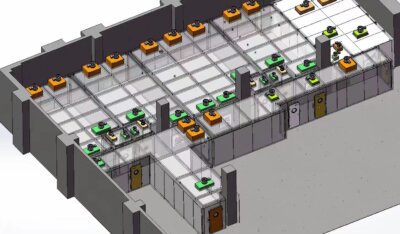
Der grundlegende Vorteil der modularen Vorfertigung ist die Trennung der Bauumgebung vom Installationsort. Herkömmliche Reinräume in Ständerbauweise erzeugen eine erhebliche Partikelkontamination durch Schneiden, Schleifen und Lackieren, die in oder in der Nähe der aktiven Anlage durchgeführt werden. Bei der Vorfertigung werden diese Arbeiten in eine kontrollierte Fabrik verlagert, wodurch die Störung vor Ort auf ein Minimum reduziert wird und eine wichtige Quelle für die Reinigung und Sanierung nach dem Bau entfällt. Dies führt zu schnelleren, besser vorhersehbaren Projektzeitplänen.
Vorhersehbare Leistung und Skalierbarkeit
Modulare Reinräume werden aus vorgefertigten, getesteten Komponenten gebaut. Diese Standardisierung führt zu einer vorhersehbaren Leistung. Luftströmungsmuster, Filterpassungen und Dichtungsmethoden sind einheitlich. Diese Vorhersagbarkeit vereinfacht den Validierungsprozess. Darüber hinaus bietet die modulare Bauweise eine inhärente Skalierbarkeit. Die Reinraumkapazität kann relativ einfach erweitert, neu konfiguriert oder verlagert werden. Dadurch wird der Reinraum von einem festen, sich abnutzenden Vermögenswert zu einer flexiblen Infrastruktur, die sich an veränderte Produktionsanforderungen oder Pipeline-Prioritäten anpassen kann.
Die Gesamtbetriebskostenperspektive
Während die anfänglichen Kapitalkosten vergleichbar oder manchmal sogar höher für hochwertige modulare Einheiten sind, spricht die Analyse der Gesamtbetriebskosten oft für die Vorfertigung. Die kürzere Bauzeit senkt weiche Kosten wie technische Überwachung und Ausfallzeiten der Anlage. Eine schnellere Bereitstellung beschleunigt die Generierung von Einnahmen aus neuen Produktionslinien. Ein geringerer Energieverbrauch durch optimierte Konstruktionen senkt die Betriebskosten. Das Potenzial zur Wiederverwendung oder Neukonfiguration schützt die langfristige Investition. Dieses Finanzmodell ist besonders überzeugend für das Management von Kapazitätsrisiken.
Kostenüberlegungen für vorgefertigte Reinraumprojekte
Treiber der Kapitalkosten
Die wichtigsten Faktoren für die Anschaffungskosten sind die ISO-Klasse und die erforderliche Bodenfläche. Eine strengere ISO-Klasse erfordert ein größeres HLK-System, mehr HEPA-Filter, fortschrittliche Steuersysteme und oft auch anspruchsvollere Materialien für Wände und Böden. Direkte Kosten für eine schlüsselfertiges mobiles BSL-3/BSL-4-Modul-Labor werden diese technischen Systeme widerspiegeln. Die Vorfertigung kann jedoch die Kosten durch eine effizientere Fertigung und durch die Minimierung unvorhersehbarer Arbeitskosten vor Ort und von Änderungsaufträgen, die bei herkömmlichen Bauten üblich sind, kontrollieren.
Betriebs- und Lebenszyklusökonomie
Die Betriebskosten sind der Punkt, an dem die Vorfertigung glänzt. Der Energieverbrauch für die Luftaufbereitung ist der größte laufende Kostenfaktor. Moderne modulare Konstruktionen mit ihrer hervorragenden Abdichtung und effizienten, richtig dimensionierten HLK-Einheiten können den Energieverbrauch im Vergleich zu älteren traditionellen Räumen um 20-40% senken. Darüber hinaus verwandelt die Möglichkeit, den Reinraum schrittweise umzugestalten oder zu erweitern, diesen von einem großen, seltenen Investitionsprojekt in eine überschaubare Betriebsausgabe. Auf diese Weise lässt sich die Kapazität genau an den Bedarf anpassen und die Kapitaleffizienz verbessern.
Bewertung von Lieferantenvorschlägen
Kostenvergleiche müssen ganzheitlich sein. Prüfen Sie, was alles enthalten ist: Beinhaltet das Angebot eine vollständige FAT, eine detaillierte IQ/OQ-Dokumentation und eine Schulung? Ist das UMS enthalten und validiert? Welche Garantien gibt es für Schalttafeln, Filter und Steuerungssysteme? Ein niedrigeres Erstangebot, das keine umfassende Dokumentation enthält oder minderwertige Kontrollsysteme verwendet, führt zu höheren versteckten Kosten während der Qualifizierungsphase und einem erhöhten Betriebsrisiko. Der kostengünstigste Anbieter liefert ein komplettes, validiertes System, nicht nur eine Struktur.
Auswahl der richtigen ISO-Klasse für Ihre Anwendung
Beginnend mit der Prozesskritikalität
Der Auswahlprozess ist eine risikobasierte Bewertung, die mit Ihrem Produkt und Prozess beginnt. Was ist die Folge eines einzigen Partikels oder einer mikrobiellen Verunreinigung? Bei injizierbaren Arzneimitteln ist es die Patientensicherheit, die ISO 5 (Klasse A) erfordert. Bei einigen elektronischen Bauteilen ist es die Produktausbeute, für die vielleicht nur ISO 7 erforderlich ist. Beziehen Sie Prozessingenieure und Qualitätsteams ein, um die kritischen Kontrollparameter zu definieren. Diese technische Anforderung ist der nicht verhandelbare Ausgangspunkt; geschäftliche Überlegungen folgen.
Überlappende regulatorische Mandate
Sobald die technische ISO-Klasse festgelegt ist, müssen Sie sich auf den spezifischen rechtlichen Rahmen einstellen. An dieser Stelle bieten vorgefertigte Reinräume einen erheblichen strategischen Vorteil. Zum Beispiel, USP Allgemeines Kapitel <797> erfordert eine primäre technische Kontrolle nach ISO 5 (z. B. eine Haube mit laminarer Luftströmung) innerhalb eines Pufferbereichs nach ISO 7. Eine modulare Konstruktion kann diese zonierte Umgebung mit entsprechenden Druckkaskaden leicht schaffen. In ähnlicher Weise wird die Revision 2022 von EU-GMP Anhang 1 legt den Schwerpunkt auf eine ganzheitliche Kontaminationskontrollstrategie (CCS). Die vorhersehbare Leistung eines modularen Reinraums und die integrierte Überwachung bieten eine solidere Grundlage für eine datengesteuerte CCS.
Zukunftssicherheit für Ihre Investition
Die gesetzliche Kontrolle entwickelt sich weiter. Die Entscheidung für eine Reinraumlösung mit inhärenter Anpassungsfähigkeit ist eine Form der Risikominderung. Ein modularer Raum kann aufgerüstet werden, z. B. durch Erhöhung der HEPA-Abdeckung oder Änderung der Luftstrommuster, um eine zukünftige, strengere Norm zu erfüllen. Diese Anpassungsfähigkeit sorgt für eine langfristige Widerstandsfähigkeit gegenüber Vorschriften. Berücksichtigen Sie bei der Auswahl einer Klasse nicht nur die heutigen Anforderungen, sondern auch die Entwicklung der Vorschriften in Ihrer Branche in den nächsten 5-10 Jahren. Kann sich Ihr Reinraum anpassen?
Aufrechterhaltung und Überwachung Ihrer Reinraumklassifizierung
Das fortlaufende Compliance-Programm
Die Erlangung der Klassifizierung ist der Anfang. Die Aufrechterhaltung der Klassifizierung erfordert ein dokumentiertes Programm, das der ISO 14644-2 entspricht. Dieses Programm umfasst routinemäßige Partikelzählungen, Druckdifferenzprüfungen, Filterintegritätstests und mikrobielle Überwachung. Die Häufigkeit dieser Tests ist risikobasiert und wird oft durch Ihre primäre Regulierungsnorm vorgeschrieben (z. B. erfordert Anhang 1 eine häufige Partikelüberwachung in Bereichen der Klasse A/B). Die Daten aus diesen Aktivitäten liefern einen objektiven Nachweis der Kontrolle und sind für die Vorbereitung auf Audits unerlässlich.
Integration von Menschen und Verfahren
Der Reinraum ist nur so sauber wie die Verfahren, die für ihn gelten. Strenge Umkleideprotokolle, validierte Materialtransfermethoden und definierte Reinigungs-/Desinfektionszyklen sind entscheidend für die Aufrechterhaltung des Betriebszustands. Diese verfahrenstechnischen Kontrollen müssen geschult, durchgesetzt und regelmäßig überprüft werden. Ein häufiger Fallstrick ist die Investition in fortschrittliche Hardware bei gleichzeitiger Vernachlässigung der menschlichen Faktoren und SOPs, die letztlich das Kontaminationsrisiko bestimmen. Zum Reinraumsystem gehören auch die Menschen, die sich in ihm aufhalten.
Die IT-Dimension des modernen UMS
Die heutigen Umweltüberwachungssysteme sind digitale, oft mit der Cloud verbundene Plattformen. Dies bringt neue Kriterien für die Auswahl der Anbieter mit sich: Datenintegrität und Cybersicherheit. Die Beschaffung muss IT-Spezialisten einbeziehen, die das UMS auf die ALCOA+-Prinzipien (Attributable, Legible, Contemporaneous, Original, Accurate sowie Complete, Consistent, Enduring, and Available) hin überprüfen. Sie müssen auch sicherstellen, dass die Konnektivität des Systems den unternehmensweiten Cybersicherheitsprotokollen entspricht. Der Reinraum ist nicht mehr nur ein physischer Raum, sondern ein Knotenpunkt in Ihrem Produktionsnetzwerk, und seine Daten müssen sicher und zuverlässig sein.
Nächste Schritte: Planung Ihres vorgefertigten Reinraumprojekts
Anforderungen definieren und Partner einbinden
Beginnen Sie die Planung mit einer endgültigen Spezifikation der Benutzeranforderungen (URS). In diesem Dokument sollten die erforderliche ISO-Klasse, die Abmessungen, die gesetzlichen Normen und die wichtigsten Leistungsparameter (Temperatur, Luftfeuchtigkeit) angegeben werden. Beauftragen Sie Anbieter von vorgefertigten Reinräumen bereits in der Konzeptionsphase. Beurteilen Sie sie nicht nur nach den Kosten, sondern auch nach ihrem Fachwissen in Ihrem spezifischen Regelungsbereich und ihrer Erfolgsbilanz bei der Bereitstellung umfassender Validierungsunterlagen. Ihre Front-End-Beratung sollte einen Mehrwert für Ihre URS darstellen.
Das Gebot der Werksabnahmeprüfung
Bestehen Sie auf einem detaillierten FAT-Protokoll als Teil Ihres Vertrags. Die Anwesenheit oder Überprüfung der FAT-Ergebnisse ist die effektivste Methode, um das Installationsrisiko zu verringern. Es wird bestätigt, dass die Module nach den Vorgaben des Drucks gebaut wurden, dass die Systeme korrekt funktionieren und dass die anfänglichen Partikelzählungen und Luftstromtests bestanden wurden, bevor das Gerät überhaupt bei Ihnen eintrifft. Klären Sie den Umfang der Unterstützung des Anbieters für die anschließende Installationsqualifizierung und Betriebsqualifizierung. Die besten Partner bieten eine schlüsselfertige Qualifizierungsunterstützung.
Betrachtung von Reinräumen als agile Infrastruktur
Und schließlich sollten Sie den Lebenszyklus im Auge behalten. Ein vorgefertigter modularer Reinraum ist kein statischer Kasten, sondern eine flexible Infrastruktur. Planen Sie, wie er für eine neue Produktlinie neu konfiguriert, für eine höhere Kapazität erweitert oder für eine strengere ISO-Klasse aufgerüstet werden kann. Diese langfristige Perspektive schützt Ihre Investitionen und stellt sicher, dass sich Ihre Anlage mit Ihrem Unternehmen und den gesetzlichen Vorschriften weiterentwickeln kann.
Die Entscheidung für einen vorgefertigten Reinraum hängt von drei Hauptprioritäten ab: Anpassung der ISO-Klasse an die Prozessanforderungen und die gesetzlichen Vorschriften, Auswahl eines Anbieters auf der Grundlage von Dokumentation und strengen Tests und nicht nur des Preises und Planung der Anpassungsfähigkeit über den gesamten Lebenszyklus. Ein modularer Ansatz verwandelt die Beschaffung von Reinräumen von einem Bauprojekt in den Erwerb einer validierten, leistungsgarantierten Infrastruktur.
Benötigen Sie professionelle Unterstützung bei der Spezifizierung und Validierung eines Reinraums, der Ihre genauen ISO- und gesetzlichen Anforderungen erfüllt? Das Ingenieurteam von QUALIA ist darauf spezialisiert, komplexe Normen in effiziente, konforme modulare Lösungen zu übersetzen. Setzen Sie sich mit uns in Verbindung, um die spezifischen Herausforderungen Ihres Projekts in Bezug auf Partikelkontrolle und Klassifizierung zu besprechen.
Für ein erstes Beratungsgespräch können Sie unsere technischen Spezialisten auch direkt erreichen unter Kontakt.
Häufig gestellte Fragen
F: Wie unterscheiden sich die Grenzwerte der ISO 14644-1 für die Partikelanzahl zwischen einem ISO 5 und einem ISO 8 Reinraum?
A: Die zulässige Partikelkonzentration in der Luft steigt zwischen diesen Klassen um den Faktor 1.000. Ein ISO 5-Reinraum erlaubt maximal 3.520 Partikel ≥0,5µm pro Kubikmeter, während ein ISO 8-Raum bis zu 3.520.000 Partikel der gleichen Größe zulässt. Die offizielle ISO 14644-1 Norm definiert diese Grenzwerte, die für den Betriebszustand mit anwesendem Personal gelten. Dieser drastische Unterschied bedeutet, dass durch die Wahl einer höheren ISO-Klasse die Anforderungen an die HLK und die Filterung deutlich gesenkt werden können, was sowohl die Investitions- als auch die langfristigen Energiekosten direkt senkt.
F: Welches sind die wichtigsten Konstruktionsparameter, die sich beim Wechsel von einem ISO-5- zu einem ISO-8-Fertigreinraum ändern?
A: Die erforderliche ISO-Klasse diktiert drei zentrale technische Spezifikationen: Luftwechsel pro Stunde (ACH), HEPA-Filterabdeckung und Luftstrommuster. Ein Raum der ISO-Klasse 5 benötigt in der Regel 240-480 ACH mit einer HEPA-Abdeckung von 35-70% an der Decke und einem unidirektionalen Luftstrom, während ein Raum der ISO-Klasse 8 vielleicht nur 5-48 ACH, eine HEPA-Abdeckung von 5-15% und einen unidirektionalen Luftstrom benötigt. Das bedeutet, dass die Größe des mechanischen Systems und das Energieprofil Ihres Projekts im Wesentlichen durch die angestrebte Partikelzahl bestimmt werden, so dass eine frühzeitige Bestimmung der Klasse für eine genaue Budgetierung entscheidend ist.
F: Welchen Nutzen hat die Werksabnahmeprüfung (FAT) für die Validierung eines vorgefertigten modularen Reinraums?
A: Bei der FAT werden die kritischen Teilsysteme des Reinraums vor der Auslieferung im Werk des Lieferanten zusammengebaut und getestet. Mit diesem Verfahren wird die Leistung, wie z. B. die Integrität der HEPA-Filter und die Druckeindämmung, in einer kontrollierten Umgebung validiert, wodurch die Risiken und Verzögerungen beim Bau vor Ort reduziert werden. Durch die frühzeitige Klärung von Problemen wird auch die anschließende Installation und Betriebsqualifizierung (IQ/OQ) vor Ort optimiert. Bei Projekten mit engen Zeitvorgaben oder in aktiven Anlagen sollten Sie Anbietern mit robusten FAT-Protokollen den Vorzug geben, um das Risiko in der Inbetriebnahmephase zu verringern.
F: Welche zusätzlichen Vorschriften muss ein Reinraum für die pharmazeutische Sterilherstellung neben der ISO-Klasse erfüllen?
A: Pharmazeutische Einrichtungen müssen die ISO 14644-1 durch branchenspezifische Vorschriften ergänzen. Die EU-GMP Anhang 1 Leitfaden definiert die Klassen A-D, die den ISO-Klassen entsprechen, und fügt umfassende Anforderungen für eine ganzheitliche Kontaminationskontrollstrategie (CCS) hinzu. Das bedeutet, dass Ihr Reinraumdesign und Ihr Überwachungsplan sowohl die Standards für die Partikelanzahl als auch die umfassenderen GMP-Erwartungen für die Sterilitätssicherung erfüllen müssen, was sich von Anfang an auf Verfahren, Dokumentation und Systemdesign auswirkt.
F: Warum ist die integrierte Umweltüberwachung jetzt eine grundlegende Designanforderung und kein zusätzliches Element?
A: Die kontinuierliche Überwachung von Partikeln, Druck, Temperatur und Luftfeuchtigkeit liefert die Echtzeitdaten, die erforderlich sind, um die dauerhafte Einhaltung von Normen wie ISO 14644-2 und cGMP. Es ermöglicht eine sofortige Reaktion auf Abweichungen und erstellt einen auditfähigen Datenpfad. Daher müssen Sie bei der Auswahl eines Anbieters dessen Umweltüberwachungssystem (EMS) auf Datenintegrität (ALCOA+) prüfen und sicherstellen, dass Ihr IT-Team dessen Cybersicherheit vor der Integration in Ihr Netzwerk prüft.
F: Wie wirkt sich der vorgefertigte modulare Ansatz auf die Gesamtbetriebskosten eines Reinraums aus?
A: Während die ISO-Klasse die anfänglichen Kapitalkosten für HLK und Filtration vorgibt, senkt die modulare Bauweise die Gesamtbetriebskosten, indem sie die Bauzeit verkürzt und eine Neukonfiguration ermöglicht. Die Möglichkeit, den Reinraum zu demontieren, zu verlagern oder zu erweitern, verwandelt ihn von einem festen Kapitalaufwand in ein flexibleres Betriebsmittel. Für Neugründungen oder Unternehmen mit ungewissem Kapazitätsbedarf bedeutet dies, dass die Kapazität schrittweise erweitert werden kann, so dass sich die Investitionen besser an den tatsächlichen Produktionsbedarf anpassen lassen und das langfristige finanzielle Risiko verringert wird.
F: Für einen USP <797> Welche ISO-Klassifizierungen sind in der Regel für eine Compounding-Apotheke erforderlich?
A: Die USP Allgemeines Kapitel <797> Norm schreibt eine Umgebung der ISO-Klasse 5 für die primäre technische Kontrolle (z. B. eine Haube mit laminarer Luftströmung oder einen Isolator) vor, in der kritische Mischungen hergestellt werden. Diese ISO 5-Zone muss sich in einem umgebenden Pufferbereich befinden, der mindestens den Normen der ISO-Klasse 7 entspricht. Diese mehrschichtige Anforderung bedeutet, dass Ihr Reinraumdesign zwei verschiedene kontaminationskontrollierte Zonen schaffen und aufrechterhalten muss, was sich auf die Anordnung, den Luftstromausgleich und die Platzierung der Überwachungspunkte auswirkt.
Verwandte Inhalte:
- Vorgefertigte BSL-3-Labore: Schnell einsatzfähige Lösungen
- ISO 14644 und biologische Sicherheitswerkbänke: Normen für saubere Luft
- Biosicherheits-Isolatoren: Leitfaden zur Einhaltung der ISO 14644
- Der vollständige Leitfaden für vorgefertigte Reinräume für pharmazeutische und biotechnologische Einrichtungen: Normen, Konstruktion und ROI-Analyse
- OEB4/OEB5-Isolatoren: Erreichen der ISO 14644-7-Konformität
- ISO 14644-1 Richtlinien für die Klassifizierung von Reinräumen
- Vorgefertigte Reinraumkosten pro Quadratmeter: Echte Budgetdaten nach ISO-Klasse und Industrie
- Vorgefertigter Reinraum im Vergleich zu traditioneller Kleinserienbauweise: 12 Kosten-, Zeit- und Leistungsunterschiede für regulierte Industrien
- Partikelzählung in der Luftdusche: Einhaltung der Normen