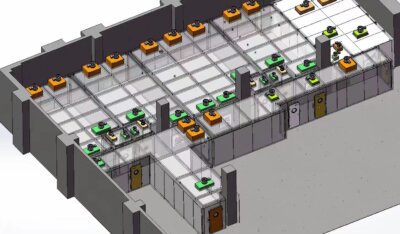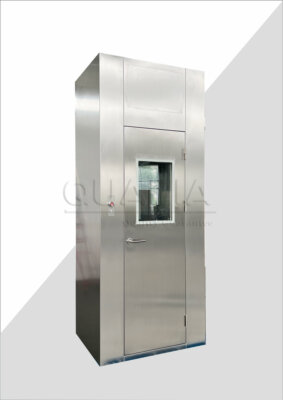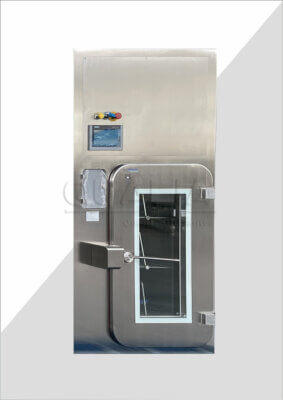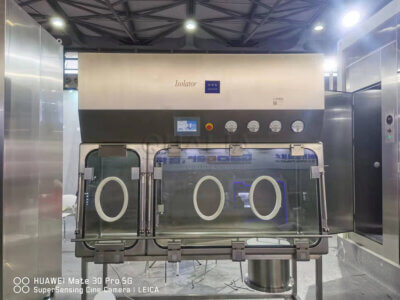

Sealing a room improperly before a decontamination cycle rarely announces itself until the dwell phase is already underway — concentrations fall short of the target, the cycle has to be aborted, and the room is out of service for an unplanned repeat run. That pattern is more common than most teams expect, and almost always traces back to decisions made in the preparation phase rather than in the generator itself. The difference between a clean first-pass cycle and a failed one often reduces to three verifiable conditions: whether the HVAC penetrations are truly gas-tight, whether seal integrity was confirmed by measurement before H₂O₂ was introduced, and whether the aeration decision at the end of the cycle was made using real data rather than elapsed time. Understanding exactly where those conditions are most likely to fail — and why — is what separates a repeatable decontamination programme from one that generates recurring compliance exposure.
HVAC Isolation and Gas-Tight Damper Sealing
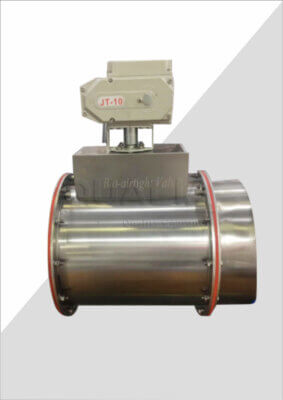
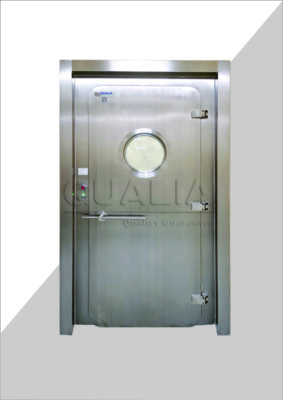
Every HVAC penetration into a fumigation zone is a potential loss path for H₂O₂ vapour, and the consequences of even modest leakage are disproportionate. A leakage rate of roughly 1% across supply and exhaust dampers can reduce vapour concentration by approximately 30% during the dwell phase — enough to compromise the log-reduction claim the cycle was designed to achieve. Gas-tight dampers rated for fumigation duty are the primary control, but their selection and sequencing matter as much as their specification.
The recommended isolation sequence for most installations is to shut supply dampers first, then exhaust dampers. This order temporarily favours negative pressure in the fumigation zone relative to adjacent spaces, which means any residual leakage through imperfect seals draws inward rather than pushing fumigant out. Reversing the sequence or closing both simultaneously removes that margin. The sequence should be treated as a practical operating procedure grounded in pressure-differential logic, not a universally codified regulatory mandate, but it is a detail worth formalising in site-specific SOPs rather than leaving to individual judgement on the day.
The more underestimated risk is pressure reversal during the active cycle. Heat loading from the vapour generator — which can reach operating temperatures around 80°C — or from any equipment left running inside the zone can increase room pressure by approximately 354 Pa per degree Kelvin of temperature rise. At sufficient heat load, a room that started at negative differential can cross through neutral and push positive, forcing fumigant through whatever gaps exist in damper seals or wall penetrations into adjacent corridors or mechanical spaces. This figure should be read as a quantified planning risk rather than a guaranteed outcome: actual pressure behaviour depends on room volume, thermal mass, and damper rating. But it illustrates why gas-tight damper specifications — particularly rated leakage class and temperature resistance — warrant careful review rather than default selection. If a Tragbarer VHP-Generator Typ II/III is being used in a room with modest volume, the thermal contribution relative to room air mass is more significant, and the pressure effect is proportionally larger.
Pressure Decay Test for Room Closure Verification
The pressure decay test is the only pre-cycle check that confirms whether the sealed room will actually hold under process conditions. Its value is straightforward: pressurise the room to 100–150 Pa above ambient using compressed air or a blower, isolate the pressure source, and monitor the rate of decay over a defined hold period. A room that holds pressure within an acceptable decay envelope has demonstrably intact seals. A room that fails has a leak that needs to be found and corrected before the cycle begins — not after.
The mistake pattern here is treating this test as a formality that gets signed off rather than as a binary decision gate. Teams under schedule pressure sometimes perform the test but accept borderline results, or shorten the hold time to compress the pre-cycle sequence. The downstream cost of that shortcut is concrete: if a leak is present, the dwell-phase concentration will underperform, the cycle will fail its biological indicator confirmation, and the entire preparation-gassing-aeration sequence has to be repeated. That unplanned delay routinely exceeds the time saved by accepting a marginal pressure decay result.
A secondary consideration is that the test also confirms the mechanical condition of damper actuators and sealing gaskets under realistic differential pressure, not just their static, unpressurised position. Damper mechanisms that appear fully closed during visual inspection may allow measurable leakage once a pressure differential is applied. The pressure decay test surfaces that failure mode before it matters. For rooms that have not been fumigated recently, or where maintenance has been carried out on HVAC components, this test should be treated as a non-negotiable step regardless of historical pass rates.
Real-Time H2O2 Monitoring for Aeration Safety
Aeration is not complete when the timer expires — it is complete when the atmosphere in the room is confirmed to be at or below the recognised re-entry threshold, commonly cited at 1 ppm for occupational exposure purposes. That distinction is not procedural pedantry: porous surfaces, room geometry, and cycle parameters can all cause residual H₂O₂ to persist well beyond a timer-derived estimate, and a measurement-based clearance is the only defence against premature re-entry into a still-contaminated space.
The sensor selection decision introduces a constraint that is easy to overlook. Electrochemical H₂O₂ sensors carry a baseline accuracy of approximately ±20%, which has very different implications depending on the concentration range being measured. A sensor calibrated for high-concentration monitoring — up to 2000 ppm for dwell-phase process control — does not have the resolution to make a reliable clearance determination near 1 ppm. The reading at that boundary could represent anywhere from 0.8 to 1.2 ppm, and using a high-range sensor to make that call is not a defensible safety decision. The practical requirement is to have two separate instruments: a high-range sensor for cycle monitoring during the gassing phase, and a dedicated low-range sensor (0–20 ppm) for aeration endpoint confirmation.
| Sensor Range | Typische Anwendung | Genauigkeit | Key Safety Risk |
|---|---|---|---|
| Low-range (0–20 ppm) | Aeration endpoint monitoring (sub‑1 ppm confirmation) | ±20% | Using a high-range sensor for low‑ppm readings can produce unreliable values, leading to premature room re‑entry |
| High‑range (up to 2000 ppm) | High‑concentration process monitoring (dwell gassing phase) | ±20% | Low‑ppm resolution is insufficient for aeration endpoint detection; risk of false safety clearance |
The consequence of mismatched sensor selection is not theoretical. A team running a single high-range sensor throughout the full cycle — a common cost-driven shortcut — will produce a clearance reading at the aeration endpoint that lacks the precision to distinguish between safe and unsafe residual concentrations. An audit that scrutinises the monitoring records will identify the mismatch, but the more serious outcome is an exposure event that occurs before any audit takes place. For rooms where aeration is expected to be prolonged, continuous real-time logging from a low-range sensor also provides the trend data needed to distinguish genuine approach to clearance from surface outgassing that temporarily spikes readings back above threshold.
Porous Surface Absorption and Extended Aeration
Uncoated drywall, untreated concrete, and similar porous substrates behave as a temporary reservoir for H₂O₂ vapour during a fumigation cycle. During the gassing and dwell phases, these materials absorb vapour from the room atmosphere; after the generator is stopped and active aeration begins, they release it slowly back into the air. The practical result is that aeration duration is not determined by the room volume alone — it is determined by the surface area and porosity of every material the vapour contacted.
This creates a planning constraint that matters most at two project stages: room design and cycle validation. A room finished with sealed, non-porous surfaces — epoxy-coated walls, stainless steel panels, sealed flooring — requires a shorter aeration period and produces a more predictable endpoint. A room with exposed concrete or uncoated drywall requires more time, and the endpoint is harder to predict from first principles. If a room’s surface composition changes after initial cycle validation — following a renovation, for example — the aeration parameters established during the original validation may no longer be adequate.
The practical implication for operations is that timer-based aeration schedules built for non-porous rooms should not be carried over directly to rooms with significant porous surface area. The WHO LBM4 guidance on aeration multipliers exists partly to provide a conservative planning baseline that accounts for this material behaviour, but the actual outgassing behaviour of a specific room is best characterised during validation using real-time concentration monitoring rather than estimated by surface type alone. For facilities conducting decontamination across multiple room types — a common scenario in BSL-3 laboratory corridors and adjacent support spaces — a single standard aeration timer is not adequate to cover rooms with materially different surface compositions. For complex spatial coverage, a VHP-Roboter allows better distribution management, but the surface-driven aeration constraint applies regardless of how vapour is distributed.
WHO LBM4 Aeration Duration Guidelines
The WHO LBM4 laboratory biosafety manual provides design-principle guidance on aeration duration that directly addresses the surface-porosity variable discussed above. Its framing ties minimum aeration duration to a multiple of the dwell time, with the multiplier varying by room surface type. This is not presented in the source as a globally binding regulatory minimum, but rather as informed guidance that sets a defensible baseline for facilities designing or reviewing their decontamination programmes.
| Room Surface Type | Minimum Aeration Period | Anmerkungen |
|---|---|---|
| Standard (non‑porous) | Twice the dwell time | Applies to rooms with sealed surfaces and minimal absorption |
| Porous (uncoated drywall, concrete, etc.) | Three times the dwell time | Extended period required to account for H2O2 absorption and slow outgassing |
The aeration multipliers serve a specific analytical function: they convert a known dwell duration into a minimum aeration planning figure without requiring complex outgassing modelling. For a standard non-porous room, twice the dwell time provides a reasonable lower bound. For rooms with significant porous surface area, the guidance extends that to three times the dwell time to account for the slower H₂O₂ release from absorbed material. These figures should be understood as starting points for programme design, not as ceilings. Site-specific factors — room geometry, air exchange rate during aeration, ambient temperature and humidity, and the actual concentration used during the cycle — can all shift the aeration endpoint earlier or later than the multiplier predicts.
The more important application of these guidelines is as an audit and review reference. Facilities that have established timer-based aeration schedules without explicit reference to dwell time or surface type are in a position that is difficult to defend if the basis for the timer setting is challenged. Anchoring the aeration duration to a recognised guideline framework, with documented justification for any site-specific adjustments, is a more defensible position than a schedule derived informally or inherited from a previous operator. For further background on how aeration fits within the full process framework, the VHP-Sterilisationsverfahren: 2025 Umfassender Leitfaden provides additional context on cycle phase design and parametric relationships.
The decisions that determine whether a room decontamination cycle succeeds or fails are concentrated almost entirely in the preparation and aeration phases, not in the generator settings. A room that fails a pressure decay test before the cycle begins will produce an undefendable dwell record; a room cleared by timer rather than measurement may send personnel into a space that is still above the 1 ppm threshold. Both failure modes are preventable, but only if the verification steps are treated as decision gates with defined acceptance criteria rather than procedural checkboxes.
Before finalising a decontamination programme for any new or modified room, confirm three things independently: that the HVAC isolation sequence and damper ratings are documented against the heat-load conditions specific to your generator and room configuration; that pressure decay acceptance criteria are defined in writing and linked to a pass/fail decision before H₂O₂ introduction; and that the aeration monitoring setup uses a low-range electrochemical sensor with appropriate resolution for sub-1 ppm confirmation. If the room contains significant porous surface area, the aeration duration baseline should be reviewed explicitly against the WHO LBM4 multiplier guidance and any existing timer-based schedules should be revalidated against real-time concentration data before being relied upon operationally.
Häufig gestellte Fragen
Q: Can a room that has never had a pressure decay test performed still proceed to fumigation if it has a clean maintenance history?
A: No — historical maintenance records do not substitute for a pre-cycle pressure decay test. Damper mechanisms that appear fully closed during visual inspection can allow measurable leakage once a pressure differential is applied, a failure mode that static inspection does not surface. A clean maintenance history tells you the components have been serviced; it does not confirm the assembled system holds at 100–150 Pa under process conditions on the day of the cycle.
Q: What is the correct next step once the low-range H2O2 sensor confirms the room is at or below 1 ppm?
A: Confirm the reading is stable over time, not just momentarily at threshold, before authorising re-entry. Porous surfaces can release absorbed H₂O₂ in pulses that temporarily drop the reading near clearance before spiking it back above 1 ppm. A sustained reading below threshold — not a single passing data point — is what the continuous trend log from a low-range sensor is designed to demonstrate.
Q: Does the recommended HVAC isolation sequence change if the fumigation zone is maintained at positive pressure during normal operations, such as a cleanroom?
A: Yes, the sequencing logic shifts in that context. The standard recommendation to shut supply dampers first is designed to create a temporary negative differential that draws any residual leakage inward. In a room configured for positive pressure, the baseline pressure relationship with adjacent spaces is already reversed, and the isolation sequence needs to be evaluated against the specific pressure map of that facility rather than applied as a generic default. This is a site-specific SOP decision that should be reviewed with the HVAC designer against the ISPE Good Practice Guide for HVAC.
Q: Is the WHO LBM4 aeration multiplier guidance applicable to pharmaceutical GMP environments, or is it specific to biosafety laboratories?
A: The WHO LBM4 guidance was developed in a biosafety laboratory context, so it does not carry direct regulatory authority in pharmaceutical GMP settings. However, its underlying rationale — tying minimum aeration duration to a multiple of dwell time to account for surface outgassing — is technically sound regardless of facility type. In the absence of a GMP-specific aeration duration standard, referencing and documenting the LBM4 multipliers as a design baseline, with explicit justification for any site-specific adjustment, is a more auditable position than an informally derived timer.
Q: How does the ±20% accuracy limitation of electrochemical H2O2 sensors affect the decision to use a single calibrated instrument across both cycle monitoring and aeration clearance?
A: A single instrument cannot reliably serve both functions. A high-range sensor covering up to 2000 ppm has the accuracy range needed for dwell-phase process control, but at 1 ppm its ±20% tolerance means the true concentration could be anywhere from 0.8 to 1.2 ppm — a spread that crosses the re-entry threshold in both directions. Relying on that reading to authorise room entry is not a defensible safety determination. The cost of a dedicated low-range instrument (0–20 ppm) is the minimum investment required to make a legally and operationally supportable clearance decision.
Verwandte Inhalte:
- VHP-Zyklusparameter: Was die Sterilisationseffizienz in Isolatoren beeinflusst
- How VHP Sterilization Process Works: From Conditioning to Aeration
- Chemische Abwasserdekontaminierung mit Natriumhypochlorit: Kontaktzeit- und Konzentrationsberechnungen für Batch-Systeme
- Auswahl einer VHP-Maschine im Hinblick auf Zyklusleistung und Verlässlichkeit
- Wie Sie die Spezifikationen von VHP-Sterilisationsgeräten vor der Beschaffung überprüfen
- VHP-Dekontaminationsausrüstung und Standards für BSL-3/4-Einrichtungen
- Wie Nebelduschen funktionieren: Zerstäubungsmechanismus, Kontaktzeit und Tröpfchenverteilung in Containment-Ausgängen
- Wie sich die Konzentration und der Zyklus von VHP-Wasserstoffperoxid auf die Materialverträglichkeit auswirken
- VHP-Desinfektion vs. Sterilisation: Welches Niveau erfordert Ihre Anwendung?