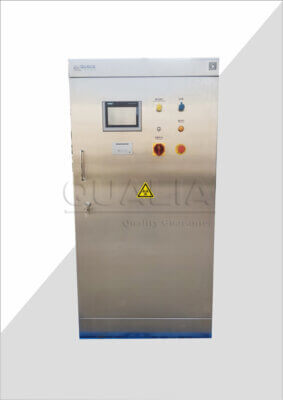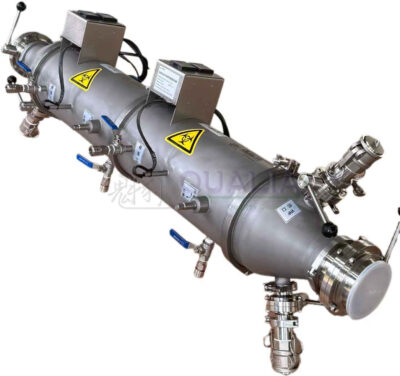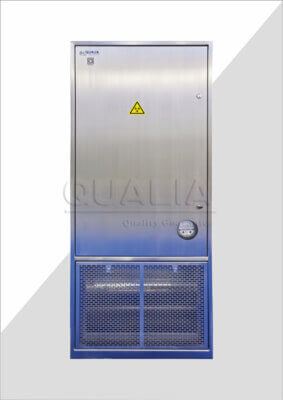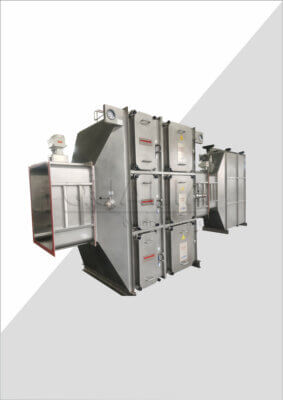


Most BSL-3/4 procurement teams reach proposal review before they’ve resolved a question the review itself can’t answer: where does the supplier’s scope end. When a proposal lists equipment names without stating included interfaces, excluded systems, or anticipated acceptance documents, the gaps don’t disappear — they migrate into commissioning as change orders, or surface during federal review when handover documentation cannot demonstrate integrated system performance. The friction point is not supplier competence; it’s that most RFQs never establish interface completeness as a pre-condition for proposal acceptance, so submissions advance through technical evaluation with structural scope gaps that become disputed cost items later. What follows is a structured review of what an RFQ must specify — and what a proposal must demonstrate — before technical evaluation begins.
BSL module boundary and included systems
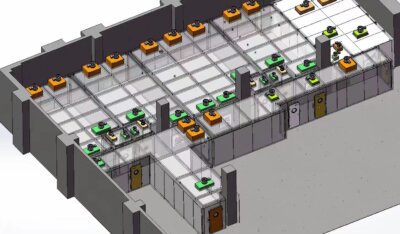
The most consequential scoping decision in a BSL-3/4 RFQ is the one that gets deferred most often: defining the module boundary with enough specificity that interface omissions are visible before award, not after.
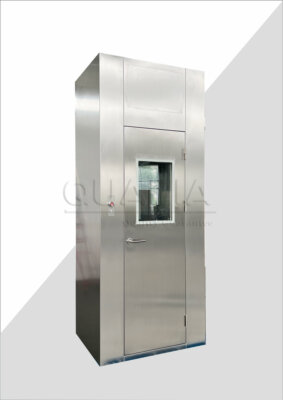
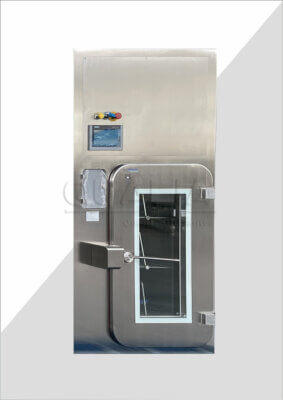
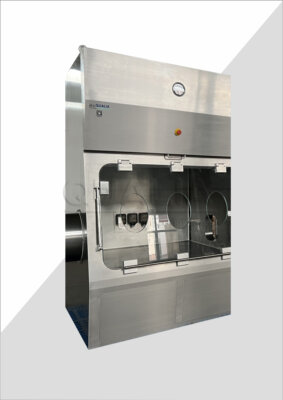
A module boundary that lists only primary containment equipment — biosafety cabinets, pass-throughs, airlocks — allows suppliers to treat backup generator power, UPS, security system interfaces, gas infrastructure, deionized water supply, and independent HVAC control systems as outside scope by default. Each of those systems requires interface evidence for module acceptance. When the RFQ doesn’t name them as included systems with defined handover requirements, the supplier’s exclusion is contractually defensible, even when the buyer assumed them to be covered.
For renovation projects, the boundary problem has a second layer. A pre-design investigation of existing building infrastructure — mechanical, electrical, controls, and structural — is a prerequisite for writing a defensible module scope. Without it, the RFQ cannot accurately define what the supplier is responsible for coordinating versus what the site or EPC team owns. The post-award consequence of skipping this step is typically a series of scope clarification requests that delay design commencement and produce change orders on items the buyer assumed were priced.
A specific constraint that RFQs for active facilities often omit: if the existing laboratory must remain operational during construction, that constraint must appear in the RFQ as a technical and procedural requirement, including contamination prevention measures and isolation strategy. Proposals that don’t address operational continuity may not be proposing a plan that is compatible with biosafety protocols already in place at the site.
Pressure cascade and HEPA exhaust RFQ evidence
Stating that a BSL-3 module will meet pressure cascade and HEPA exhaust requirements is not the same as requiring suppliers to demonstrate how that performance will be verified.
BMBL 6th Edition guidance establishes directional airflow and negative pressure relative to adjacent spaces as a functional biosafety requirement for BSL-3 laboratories — not as a design suggestion. An RFQ that cites this requirement without specifying the performance evidence the supplier must include in their proposal leaves the evaluation team without the data needed to compare submissions on this point. Proposals may reference compliance with BMBL guidance without including pressure differential data, airflow balance calculations, HEPA filter efficiency documentation, or a description of how cascade performance will be verified during acceptance testing. All of those items belong in the proposal; none of them appear automatically unless the RFQ asks for them explicitly.
The practical consequence is that two proposals may both claim BMBL-consistent design while being based on fundamentally different assumptions about where cascade verification responsibility lies — whether it belongs to the HVAC contractor, the module supplier, or the commissioning agent. If the RFQ doesn’t assign that responsibility, the buyer discovers the gap during IQ or OQ when the question of who demonstrates and documents pressure performance becomes a contractual dispute rather than a testing protocol.
For HEPA exhaust specifically, the RFQ should require that proposals identify the exhaust filtration configuration, state whether HEPA housings are bag-in/bag-out, and describe how filter integrity testing will be performed and documented. This level of specificity is not excessive for BSL-3/4 scope — it’s the minimum needed to evaluate whether the supplier has priced a complete containment exhaust system rather than the filtration components alone.
VHP and EDS interfaces in proposal scope
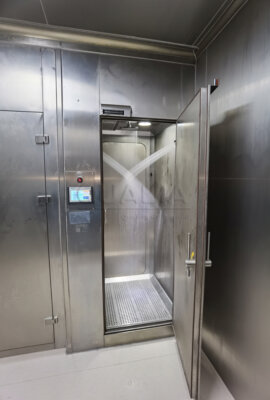
VHP decontamination and effluent decontamination systems are often treated as ancillary scope in proposals — listed as equipment line items without specifying the interfaces that determine whether they function as integrated containment systems.
For VHP, the interface questions that matter for acceptance are: What are the room envelope requirements for effective VHP cycle completion? Who is responsible for sealing penetrations to the supplier’s specified standard? How does the VHP system interface with the HVAC controls — specifically, does HVAC need to be in a defined state during cycle execution, and who controls that interlock? If those questions aren’t answered in the proposal, they become site coordination problems during qualification, when the schedule and change order cost are both at their worst.
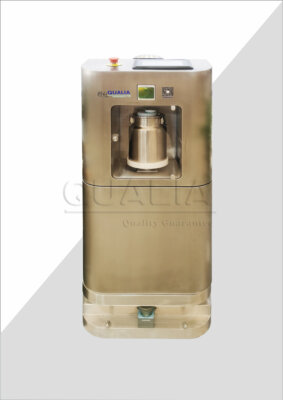
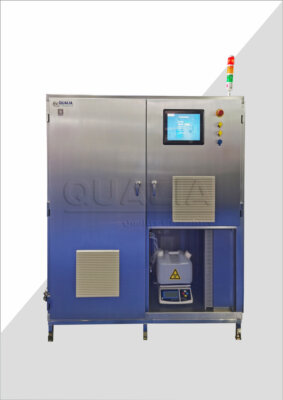
For EDS, the scope boundary issue is similar but affects a different project interface. An Systeem voor ontsmetting van effluenten must be sized and positioned relative to the laboratory drainage plan, connected to process controls, and validated with documented kill efficacy. Each of those steps involves at least one interface between the EDS supplier, the civil or mechanical contractor, and the site controls team. An RFQ that requests EDS as equipment supply without specifying those interface deliverables produces a proposal that prices the vessel and excludes the integration work — a gap that becomes a post-award scope dispute when installation begins.
The planning criterion here is straightforward: if VHP and EDS appear in the RFQ as equipment names only, the RFQ will generate proposals that are technically compliant and practically incomplete. Interface evidence for both systems — controls handover documentation, alarm integration, interlock logic, and validation protocol ownership — should be named in the RFQ as required proposal deliverables, not as items to be resolved during design development.
Supplier versus EPC responsibility for integration
Interface failures between installed containment equipment and building controls are among the most expensive post-award disputes in high-containment projects, and they are almost always traceable to a boundary that the RFQ left undefined.
The trade-off is a real one. Requiring fully integrated scope in the RFQ forces the buyer to resolve, before proposal review, exactly where supplier responsibility ends and EPC or site operations responsibility begins — particularly for HVAC controls handover, containment system interlocks, and utility connections. Most project teams treat this as a post-award negotiation because resolving it pre-bid requires internal alignment that is genuinely difficult to achieve before the supplier’s design information exists. The cost of deferring it, however, is that interface failures become disputed items with no contractual owner, which is precisely the condition that delays operational authorization when federal reviewers require integrated system performance evidence.
Four responsibility areas that consistently produce disputes when the RFQ leaves them unresolved:
| Responsibility Area | What the RFQ Should Specify | Risico indien onduidelijk |
|---|---|---|
| External agency interface and grant applications | Explicitly assign responsibility for interfacing with agencies (e.g., DoIT) and preparing grant applications | Supplier may exclude these tasks, causing interface gaps and funding delays |
| Redesign cost ownership if bids exceed budget | Designer (supplier or EPC) bears redesign costs when initial bids are over budget | Disputes over who pays for scope adjustments; project delays |
| Third-party commissioning agent | Identify an independent commissioning agent for acceptance testing, separate from supplier/EPC | Supplier bias in handover documentation; acceptance not objective |
| Site visit and site condition understanding | Require site visit and include clause that bidders are deemed to have understood site conditions regardless of attendance | Supplier misses site interface conditions; owner carries liability for errors |
The third-party commissioning agent requirement deserves specific emphasis. Separating acceptance testing from supplier self-certification is a process detail that supports objective handover, but it only functions if the commissioning agent’s scope is defined in the RFQ and the agent is contractually positioned to operate independently of both the supplier and the EPC team. An agent named in the contract but given no defined testing protocol, no access rights during installation, and no explicit authority to hold certificate of completion isn’t providing independent commissioning — they’re providing a signature.
Acceptance documents to request before review
Requesting acceptance documents as part of proposal evaluation is the only reliable way to confirm that the supplier has priced a complete handover, not just a complete installation.
For federally funded or federally reviewed BSL-3/4 facilities, the document set that supports operational authorization will typically include inspection and certification reports from federal reviewers such as NIH or ORNL, depending on the project context. Treating those as post-completion deliverables rather than proposal-stage commitments is a common planning error: if the supplier hasn’t priced the coordination, documentation, and scheduling burden of supporting federal inspection, the cost appears as a change order at the end of the project when there is no budget flexibility and schedule pressure is highest.
Beyond federal-level documentation, the RFQ should require proposals to identify the IQ/OQ/PQ document package structure: who authors each protocol, who executes testing, who approves deviations, and what the acceptance criteria are for each performance test. This is not a documentation formality — it is the mechanism by which the buyer can confirm that the proposal prices a validated and transferable system rather than a commissioned installation. A proposal that lists IQ/OQ/PQ as deliverables without specifying scope, authorship, and acceptance criteria has not priced validation; it has acknowledged that validation exists. For a detailed walkthrough of how commissioning integrates with qualification milestones in BSL-3 projects, the Uw BSL-3 laboratorium in gebruik nemen: Stap-voor-stap handleiding provides useful staging context.
The practical check for proposal review teams is this: if the acceptance document list in the proposal cannot be mapped to a specific test, a specific responsible party, and a specific acceptance criterion, the buyer cannot use that proposal to evaluate whether the supplier has priced complete handover. Requesting that mapping before proposal acceptance is not gold-plating the procurement — it is the minimum needed to prevent the documentation burden from landing entirely on the site team after award.
Proposal rejection point for missing interface scope
A proposal that cannot state included systems, excluded interfaces, and anticipated acceptance documents is not a complete proposal. Advancing it into technical evaluation doesn’t resolve the gaps — it transfers them into the project.
Two specific conditions that should function as hard rejection criteria rather than advisory flags:
| Rejection Criterion | Wat het bevestigt | Risico als het over het hoofd wordt gezien |
|---|---|---|
| Telecom coordination interface with DoIT is missing from scope | Proposal includes evidence of integration with external telecom systems | Proposal lacks required integration evidence; may be rejected at evaluation |
| Bidder did not attend mandatory site visit | Supplier demonstrated understanding of site conditions | Incomplete interface scope due to unknown site constraints; owner exposed to gaps |
The logic for treating these as rejection points rather than evaluation deductions is that both conditions indicate missing site or integration knowledge that cannot be substituted by price or technical specification quality. A proposal from a supplier who did not attend a mandatory site visit may be technically sophisticated and still be based on incorrect assumptions about existing infrastructure, access constraints, or operational adjacencies. Advancing that proposal into detailed evaluation doesn’t surface those assumptions — it buries them until design development, when correcting them requires scope revision, not just clarification.
The DoIT telecom interface condition reflects the same principle in a different domain: if external agency coordination is part of the project’s integration requirements and the proposal makes no provision for it, the buyer has no basis for assuming the supplier has priced or planned for it. Treating a missing interface as an implicit inclusion is a procurement risk that typically resolves as a change order, not as a design solution.
The broader rejection logic is that RFQs rarely establish missing interface scope as a formal disqualification condition, which means proposals with structural gaps advance through evaluation and the gaps compound — each evaluation stage adding specificity and assumption-building on top of an unresolved foundation. Establishing these conditions in the RFQ, with explicit rejection language, is the mechanism that prevents incomplete proposals from becoming post-award scope disputes. For buyers developing modular or deployable high-containment configurations, the interface scoping obligations apply equally to fixed and mobile formats; Mobiele BSL-3/BSL-4 Module Laboratoria introduce additional site interface complexity around utility connection points and pressure performance that the RFQ must address specifically.
The central implication of this RFQ framework is a timeline one: the decisions that determine whether a BSL-3/4 module can be accepted are not made at commissioning — they are made, or deferred, when the RFQ is written. A proposal that can demonstrate included systems, interface exclusions, acceptance document structure, and responsibility assignments for each integration boundary gives the buyer a basis for evaluating completeness before award. A proposal that cannot demonstrate those things is asking the buyer to assume the gaps will resolve themselves post-award, which is not a safe assumption at BSL-3/4 containment level.
Before any proposal advances to technical scoring, the review team should be able to answer four questions from the proposal document alone: What systems are included within the supplier’s module boundary? What interfaces are explicitly excluded and who owns them? What acceptance documents will the supplier deliver and on what basis? Who bears cost if the design requires revision after bids are received? If those four questions require post-submission clarification rather than proposal reading, the RFQ did not establish the scope conditions for a reviewable submission.
Veelgestelde vragen
Q: Does this RFQ framework apply if the project is a renovation of an existing facility rather than a new-build module?
A: Yes, but a renovation adds a scoping layer the article only partially addresses. For existing facilities, a pre-design investigation of current building infrastructure — mechanical, electrical, structural, and controls — must be completed before the RFQ is issued, not during design development. Without that investigation, the RFQ cannot accurately define what the supplier is responsible for coordinating versus what the site or EPC team already owns. Skipping it doesn’t simplify the RFQ; it shifts unresolved infrastructure conflicts into post-award scope clarification requests, which arrive as change orders once design has commenced and budget flexibility is gone.
Q: What is the immediate next step after confirming a proposal meets the interface scope conditions described here?
A: The next step is mapping every acceptance document listed in the proposal to three specific items: the responsible party who authors or executes it, the test or milestone it covers, and the acceptance criterion that governs it. A proposal that lists IQ/OQ/PQ as deliverables without that mapping has acknowledged that validation exists but has not priced it. Completing this mapping before technical scoring begins is what separates a proposal that prices complete handover from one that prices complete installation — a distinction that becomes financially material during qualification, when the documentation burden otherwise lands on the site team with no contractual basis for recovery.
Q: At what project scale or containment level does requiring fully integrated scope in the RFQ stop being practical?
A: Integrated scope requirements remain valid across BSL-3 and BSL-4 containment levels, but the practicality threshold shifts based on whether the buyer can resolve internal responsibility alignment before the RFQ is issued. The article identifies this as the genuine friction point: requiring integrated scope forces the buyer to define supplier, EPC, and site operations boundaries before supplier design information exists, which is structurally difficult for most project teams. The condition under which this becomes impractical is not project scale — it is internal organizational readiness. If the buyer cannot align on interface ownership before issuing the RFQ, the result is a scope document that defers those decisions to post-award negotiation, recreating precisely the gap the framework is designed to prevent.
Q: Is a supplier who offers a lower price but omits interface scope worth pursuing through clarification rather than rejection?
A: No, and the reason is structural rather than commercial. A proposal missing interface scope — excluded system statements, integration handover documentation, or acceptance document assignments — does not represent a lower-cost solution to the same scope. It represents a different scope with unpriced work that will surface as change orders during commissioning or federal review. Advancing that proposal into clarification rather than rejection treats a structural gap as a pricing question, which it is not. The clarification process cannot recover interface completeness that was never priced; it can only confirm that the supplier understood what was excluded. The cost difference between proposals only becomes meaningful when both are pricing the same integration boundary.
Q: Should the third-party commissioning agent be selected before or after the supplier is awarded?
A: Before award, or at minimum specified as a selection requirement within the RFQ itself. The article establishes that a commissioning agent named in the contract but given no defined testing protocol, no access rights during installation, and no explicit authority to hold certificate of completion is not providing independent commissioning. If the agent is selected after award, their scope is typically negotiated in a context already shaped by the supplier’s and EPC’s design decisions, which compromises the independence the role is meant to provide. Specifying in the RFQ that an independent commissioning agent will be engaged, with defined protocol authorship rights and access conditions, is what creates the contractual position from which objective acceptance testing can actually operate.
Gerelateerde inhoud:
- URS and RFQ Scope for High-Containment Equipment: Requirements, Supplier Evidence and Validation Boundaries
- High-Containment Equipment RFQ Checklist: Documents, Utilities, Controls and Validation Support
- Request a BSL-3 Laboratory Equipment and Modular Lab Proposal from QUALIA
- High-Containment Equipment RFQ Checklist: Documents, Tests, Utilities and Supplier Responsibilities
- BSL-3 Laboratory Supplier for Modular Labs, Airlocks, HEPA Exhaust and Decontamination Systems
- URS for High-Containment Equipment: What QA, Engineering and Procurement Should Define Before RFQ
- BSL-3 Module Laboratory Supplier Checklist: Factory FAT, Site SAT and Handover Documents
- BSL-3/4 Handover Package Checklist: Integrated Acceptance Evidence for Biosafety Officers and Facility Engineers
- VHP Pass Box RFQ Checklist: Chamber Size Door Interlocks Cycle Data and Documentation