De snelle ontwikkeling van mRNA-vaccins heeft een nieuw productieparadigma gecreëerd. Voor professionals die hun faciliteiten opschalen of nieuwe faciliteiten ontwerpen, is de belangrijkste uitdaging niet alleen het aanschaffen van apparatuur, maar ook het ontwerpen van een geïntegreerd systeem dat de efficiëntie van het platform in evenwicht brengt met de therapeutische flexibiliteit. Een veel voorkomende misvatting is dat mRNA-productie gewoon een verkleinde versie is van traditionele biologische producten. In werkelijkheid vereist het een unieke apparatuurfilosofie gericht op moleculaire kwetsbaarheid, flexibiliteit bij eenmalig gebruik en analytische precisie. Misstappen in de ontwerpfilosofie of supply chain-strategie kunnen leiden tot operationele knelpunten en toekomstige portfolio-uitbreiding beperken.
Aandacht voor apparatuurspecificaties is nu van cruciaal belang omdat de industrie verder gaat dan pandemische campagnes met enkelvoudige producten. De volgende fase vraagt om faciliteiten die in staat zijn om snel campagnes te veranderen voor variantvaccins en hoogwaardige therapeutica zoals gepersonaliseerde kankervaccins of eiwitvervangingstherapieën. Uw beslissingen over apparatuur vandaag bepalen uw concurrentiepositie en operationele veerkracht voor het komende decennium. Deze overgang vereist een strategische kijk op de totale eigendomskosten, niet alleen op de kapitaaluitgaven.
Kernapparatuur voor de productie van mRNA-vaccins: Een platformoverzicht
De mRNA-platformworkflow definiëren
Het productieplatform voor mRNA-vaccins is een gestandaardiseerd, meerstappenproces dat een specifieke set apparatuurvereisten dicteert. Deze workflow, op schaal gevalideerd voor COVID-19 vaccins, bestaat uit een upstream synthese en een downstream zuivering/formulering, elk met gespecialiseerde apparatuur. In tegenstelling tot traditionele biologische producten vindt het proces op kleinere fysieke schaal plaats, maar vereist het uiterste precisie om de kwetsbare RNA-molecule te beschermen.
De eis van een ontwerp voor eenmalig gebruik
Het hele platform is fundamenteel ontworpen rond bioreactoren, fermentoren en assemblages voor eenmalig gebruik. Deze filosofie voorkomt kruisbesmetting en versnelt het wisselen van batches, waardoor een kritieke afhankelijkheid van wegwerptoevoerketens ontstaat. Dit ontwerp maakt snelle campagnewisselingen mogelijk die essentieel zijn voor de productie van meerdere vaccinvarianten vanuit één faciliteit. Mijn ervaring is dat de logistieke planning voor deze verbruiksartikelen vaak meer doorlooptijd en risicobeperking vereist dan de installatie van de apparatuur zelf.
Strategisch diversificatietraject
De convergentie van de behoeften aan apparatuur met andere nucleïnezuurtherapieën betekent dat faciliteiten die zijn ontworpen voor mRNA gemakkelijk kunnen worden aangepast voor de productie van therapeutica met een hogere waarde. Dit biedt een strategisch diversificatiepad. Investeren in een flexibel, modulair mRNA-platform is niet alleen gericht op vaccins; het is een instapmogelijkheid op het bredere gebied van genetische geneeskunde, inclusief vectoren voor genbewerking en celtherapie.
Belangrijke apparatuur voor upstream-mRNA-synthese (pDNA & IVT)
Het Plasmide DNA Knelpunt
Upstreamproductie begint met het genereren van plasmide DNA (pDNA), het basismodel voor alle mRNA. Dit omvat bacteriële fermentatie in fermentoren voor eenmalig gebruik, meestal op een schaal van 5-50 L, gevolgd door centrifugatie, dieptefiltratie en meerstapschromatografie. De productie van plasmide DNA is het voornaamste knelpunt in de capaciteit. De meerdaagse fermentatie en complexe zuivering bepalen de upstream cadans. Investeren in pDNA-technologieën met een hoog rendement biedt een grotere hefboomwerking voor het opschalen van de totale productie dan alleen het optimaliseren van downstreamstappen.
Precisie in vitro transcriptie
De gelineariseerde pDNA-sjabloon voedt dan de In Vitro Transcriptie (IVT)-reactie, uitgevoerd in bioreactoren of mengvaten voor eenmalig gebruik. De schaal van IVT is relatief klein, vaak minder dan 100 L, maar vereist gecertificeerde nucleasevrije componenten en nauwkeurige temperatuurregeling (37°C) om RNA-degradatie te voorkomen. De apparatuur moet homogene menging garanderen zonder schuifkrachten te introduceren die de nascente mRNA-streng zouden kunnen beschadigen.
De volgende tabel geeft een overzicht van de belangrijkste apparatuur en parameters voor deze kritieke stappen stroomopwaarts.
Belangrijke apparatuur voor upstream-mRNA-synthese (pDNA & IVT)
| Processtap | Typische schaal / parameter | Belangrijkste apparatuur |
|---|---|---|
| Plasmide DNA (pDNA) Fermentatie | Schaal 5-50 L | Wegwerpfermentoren |
| pDNA-zuivering | Meerdaagse fermentatie | Centrifugeren, dieptefiltratie |
| pDNA-zuivering (vervolg) | Meerstappenproces | Chromatografie, UF/DF-systemen |
| In vitro transcriptie (IVT) | Schaal < 100 L | Bioreactoren/mengvaten voor eenmalig gebruik |
| IVT Reactiecontrole | Nauwkeurige 37°C-regeling | Temperatuurgestuurde agitatie |
Bron: ASME BPE-2022. Deze standaard zorgt voor een hygiënisch ontwerp, hygiënische materialen en hygiënische fabricage van kritieke upstreamapparatuur zoals fermentoren en bioreactoren, waardoor contaminatie wordt voorkomen en de procesintegriteit voor gevoelige pDNA- en IVT-reacties wordt gewaarborgd.
Downstream zuivering en formulering: TFF, chromatografie, LNP
Het kwetsbare product zuiveren
Het zuiveren van het ruwe IVT-mengsel kost veel apparatuur. Tangentiële stroomfiltratie (TFF) is essentieel voor de eerste bufferuitwisseling en concentratie. Dit wordt gevolgd door chromatografie - vaak met multimodale of anionuitwisselingsharsen in doorstroommodus - om kritieke onzuiverheden zoals dubbelstrengs RNA (dsRNA) te verwijderen. Een laatste UF/DF-stap formuleert het mRNA in de uiteindelijke buffer. Elke stap moet worden ontworpen om wachttijden en blootstelling aan nucleasen te minimaliseren.
Encapsulatie van lipide nanodeeltjes
Het gezuiverde mRNA wordt vervolgens ingekapseld via Lipid Nanoparticle (LNP) formulering. Dit maakt gebruik van microfluïdische precisiemengapparatuur om een reproduceerbare grootte van de nanodeeltjes en een hoge inkapselingsefficiëntie te bereiken. Na de formulering ondergaan LNP's nog een TFF-stap voor bufferwisseling en ethanolverwijdering vóór steriele filtratie. De inherente kwetsbaarheid van mRNA-LNP-complexen vereist momenteel opslag bij ≤ -65°C, waardoor stabiliteit een primaire drijfveer is voor O&O naar vriesdrogen.
De onderstaande tabel geeft een overzicht van de kritieke bewerkingen van de eenheden en hun specificaties in het downstreamproces.
Downstream zuivering en formulering: TFF, chromatografie, LNP
| Werking van de eenheid | Primaire functie | Kritische outputspecificatie |
|---|---|---|
| Tangentiële stroomfiltratie (TFF) | Bufferuitwisseling, concentratie | mRNA-concentratie en bufferformulering |
| Chromatografie | Verwijdering van onzuiverheden (bijv. dsRNA) | dsRNA-gehalte <0,5% |
| Definitieve UF/DF | Definitieve bufferformulering | mRNA in buffer voor eindopslag |
| Microfluïdisch mengen | LNP-formulering | Reproduceerbare nanodeeltjesgrootte |
| Post-LNP TFF | Ethanolverwijdering, bufferwisseling | Definitieve LNP-bufferwisseling |
Bron: Technische documentatie en industriespecificaties.
Eenmalig gebruik vs. roestvrij staal: Ontwerpfilosofie en flexibiliteit
De argumenten voor technologie voor eenmalig gebruik
De afhankelijkheid van het mRNA-platform van single-use technologie (SUT) is een definitieve ontwerpkeuze. SUT minimaliseert het risico op kruisbesmetting en vermindert de validatielast voor reiniging drastisch. Het versnelt de procesinstelling, wat essentieel is voor faciliteiten met meerdere producten. Hoewel roestvast staal duurzaam is voor campagnes met grote volumes en één product, botst de vaste aard ervan met de behoefte aan flexibele productie. De keuze valt dus op SUT.
Beheren van de kwetsbaarheid van de toeleveringsketen
Dit creëert een kritieke afhankelijkheid van een betrouwbare toeleveringsketen voor wegwerpcomponenten. Kwalificatie van leveranciers en back-up sourcing worden een belangrijk operationeel risico. Fabrikanten moeten overeenkomsten sluiten met meerdere leveranciers voor belangrijke assemblages zoals bioreactorzakken en filtermembranen om deze kwetsbaarheid te beperken. De strategische kosten liggen niet in de apparatuur, maar in het garanderen van een ononderbroken stroom van gekwalificeerde, steriele verbruiksartikelen.
Integratie van faciliteiten: Modulair ontwerp, nutsvoorzieningen & koelketen
Het voordeel van de Podular-architectuur
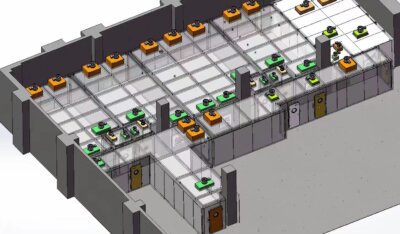
Moderne mRNA-faciliteiten geven de voorkeur aan modulaire, podulaire ontwerpen met geprefabriceerde cleanroompods die zijn geïnstalleerd in niet-geclassificeerde “grijze ruimte”. Deze modulaire, multi-suite pod-architectuur maakt snelle inzet, flexibele campagnewisselingen en insluiting van processpecifieke contaminanten mogelijk. Kapitaalplanning moet de voorkeur geven aan dergelijke flexibele faciliteiten met één verdieping boven traditionele fabrieken met meerdere verdiepingen om een snellere time-to-market te bereiken.
Kritische voorzieningen en milieubeheer
Tot de utiliteitseisen behoren panelen voor procesgassen en afval van oplosmiddelen, waarbij LNP-gebieden explosieveilige apparatuur nodig hebben voor de verwerking van ethanol. Verder moet het hele faciliteitsontwerp een robuuste koudeketen integreren, met vriezers voor ultralage temperaturen (≤ -65°C) voor zowel grondstoffen als het uiteindelijke medicijnproduct. De waterkwaliteit is van het grootste belang, met systemen die zijn ontworpen om te voldoen aan strenge zuiverheidsnormen om RNase-besmetting te voorkomen.
De integratie van deze aspecten vereist zorgvuldige planning, zoals blijkt uit de onderstaande overwegingen voor het ontwerp van faciliteiten.
Integratie van faciliteiten: Modulair ontwerp, nutsvoorzieningen & koelketen
| Facilitair aspect | Belangrijkste ontwerpkenmerk | Reden/vereiste |
|---|---|---|
| Architectonisch ontwerp | Modulaire, podulaire cleanrooms | Snelle inzet, flexibele campagnes |
| Lay-out voorkeur | Verdieping boven meerdere verdiepingen | Snellere time-to-market |
| LNP-gebied Nutsbedrijven | Explosieveilige apparatuur | Veiligheid bij het omgaan met ethanol |
| Koude keten opslag | Vriezers met ultralage temperaturen (≤ -65°C) | Stabiliteit van grondstoffen en eindproducten |
| Watersystemen | Standaards voor hoogzuiver water | Voorkomt vervuiling in processen |
Bron: ISO 22519:2020. Deze standaard specificeert eisen voor gezuiverd water en stoomsystemen, die kritieke hulpmiddelen zijn bij de mRNA-productie voor reiniging, buffervoorbereiding en als procesgrondstof, en die een directe invloed hebben op de productkwaliteit en het ontwerp van de faciliteit.
Analyse- en QC-apparatuur voor mRNA-productvrijgave
Een nieuw paradigma in kwaliteitscontrole
Kwaliteitscontrole voor mRNA-vaccins betekent een paradigmaverschuiving. Potentie wordt niet gemeten door biologische tests, maar door een rigoureuze fysisch-chemische karakterisering van kritieke kwaliteitskenmerken (CQA's). Dit vereist geavanceerde analytische instrumenten: Capillaire gelelektroforese (CGE) voor integriteit en poly-A staartlengte; UPLC-systemen met massaspectrometrie voor cappingefficiëntie en lipidenanalyse.
Kritische kwaliteitsattributen kwantificeren
Het testen van de vrijgave vereist kwantificering van capping-efficiëntie (>95%), dsRNA-gehalte (<0,5%) en sequentieverificatie. Dynamic Light Scattering (DLS) meet de deeltjesgrootteverdeling en qPCR kwantificeert rest-DNA. Investeringen in apparatuur moeten daarom prioriteit geven aan deze geavanceerde analytische tools en gespecialiseerde expertise, waardoor het QC-paradigma verschuift van biologische testen naar moleculaire analyses.
In de onderstaande tabel worden CQA's gekoppeld aan hun primaire analysemethoden.
Analyse- en QC-apparatuur voor mRNA-productvrijgave
| Kritisch Kwaliteitsattribuut (CQA) | Doelspecificatie | Primair analyse-instrument |
|---|---|---|
| mRNA integriteit / Poly-A staart | Lengte en integriteit controleren | Capillaire gelelektroforese (CGE) |
| Efficiëntie aftopping | >95% efficiëntie | UPLC met massaspectrometrie |
| dsRNA Inhoud | <0,5% onzuiverheidsniveau | Chromatografie / Specifieke analyses |
| Deeltjesgrootteverdeling | Consistente nanodeeltjesgrootte | Dynamische lichtverstrooiing (DLS) |
| Overblijvend DNA | Kwantificering en verificatie | qPCR-systemen |
Bron: Technische documentatie en industriespecificaties.
Opmerking: Terwijl USP <797> De analytische methoden voor mRNA CQA's worden gedefinieerd door platformspecifieke validatie en ICH-richtlijnen.
Totale eigendomskosten (TCO) en operationele overwegingen
Meer dan kapitaaluitgaven
Het berekenen van de TCO gaat verder dan kapitaalgoederen en omvat ook verbruiksgoederen, nutsvoorzieningen en arbeid. Het hoge verbruik van assemblages voor eenmalig gebruik en gespecialiseerde GMP-grondstoffen - enzymen, nucleotiden, lipiden - is een belangrijke lopende kostenpost. De operationele kosten worden ook bepaald door de strenge koudeketen en de energie-intensieve cleanroomomgevingen.
De grondstofgevoeligheid
Het proces is zeer gevoelig voor onzuiverheden in de grondstoffen en dwingt tot uitgebreide leverancierscontroles, dure reagentia van GMP-kwaliteit en strenge interne testen. Het aangaan van langdurige samenwerkingsverbanden met leveranciers is essentieel voor kostenbeheersing en batchconsistentie. Daarom moet de TCO-analyse rekening houden met de strategische kosten van de beveiliging van de toeleveringsketen, geavanceerde analyse en stabiliteitsverhogende R&D.
Een uitsplitsing van de primaire TCO-drivers maakt duidelijk waarop operationele budgetten zich moeten richten.
Totale eigendomskosten (TCO) en operationele overwegingen
| Kostendrijver | Categorie | Impact / Overweging |
|---|---|---|
| Verbruiksartikelen | Samenstellingen voor eenmalig gebruik | Grote lopende operationele kosten |
| Grondstoffen | GMP-kwaliteit enzymen, nucleotiden | Hoge kosten, onzuiverheidsgevoeligheid |
| Toeleveringsketen | Leveranciersaudits, back-up sourcing | Operationele risico's beperken |
| Nutsbedrijven | Koude keten (≤ -65°C), cleanrooms | Aanzienlijke energie- en kapitaalkosten |
| Investering in R&D | Lyofilisatie, continue verwerking | Concurrentievoordeel op lange termijn |
Bron: Technische documentatie en industriespecificaties.
Uw faciliteit klaarmaken voor de toekomst: Continue verwerking en vriesdrogen
De verschuiving naar continue productie
Om op lange termijn concurrerend te blijven, moeten fabrieken anticiperen op technologische ontwikkelingen. Continue productie zal de plaats innemen van batchverwerking, gedreven door de behoefte aan hogere productiviteit, betere real-time kwaliteitscontrole en een kleinere voetafdruk. Het is van cruciaal belang om vroegtijdig te investeren in O&O op het gebied van continue verwerking voor aangesloten IVT, perfusiechromatografie en inline microfluïdische formulering. Deze aanpak kan verkend worden door middel van geavanceerde procesontwikkeling en optimalisatiediensten.
De beperking van de koudeketen verminderen
Tegelijkertijd is vriesdroogapparatuur essentieel om de beperkingen van de koudeketen te verminderen. De ontwikkeling van een gevriesdroogd mRNA-LNP product biedt een potentieel doorslaggevend concurrentievoordeel voor markttoegang, vooral in omgevingen met weinig hulpbronnen. Het proactief betrekken van regelgevende instanties bij het formaliseren van platformanalyses en procesvalidatienormen zal toekomstige productgoedkeuringen aanzienlijk versnellen, waardoor regelgevende strategie een kernonderdeel wordt van toekomstbestendigheid.
De strategische apparatuurbeslissingen voor een mRNA-productiefaciliteit komen neer op drie prioriteiten: flexibiliteit, controle en vooruitziendheid. Geef de voorkeur aan modulaire ontwerpen voor eenmalig gebruik die flexibiliteit voor meerdere producten mogelijk maken. Investeer in geavanceerde analyseapparatuur om het unieke QC-paradigma van nucleïnezuurproducten te beheersen. Wijs niet alleen kapitaal toe aan het batchproces van vandaag, maar ook aan pilot-scale continue verwerkings- en vriesdrooglijnen die de standaard van morgen zullen definiëren.
Professionele begeleiding nodig bij het ontwerpen of optimaliseren van uw mRNA therapeutisch productieplatform? De experts van QUALIA zijn gespecialiseerd in het vertalen van deze complexe vereisten voor apparatuur en faciliteiten naar uitvoerbare, toekomstbestendige strategieën. Neem contact met ons op om uw specifieke projectuitdagingen en -doelen te bespreken. U kunt ons team ook rechtstreeks bereiken op Neem contact met ons op.
Veelgestelde vragen
V: Welke invloed heeft de keuze tussen apparatuur voor eenmalig gebruik en roestvrijstalen apparatuur op het operationele risico in een mRNA-fabriek?
Antwoord: Het mRNA-platform geeft de voorkeur aan technologie voor eenmalig gebruik om kruisbesmetting te voorkomen en snelle campagnewisselingen mogelijk te maken. Dit creëert een kritieke afhankelijkheid van wegwerp supply chains, waardoor leverancierskwalificatie en back-up sourcing een primair operationeel risico vormen. Voor projecten die flexibiliteit met meerdere producten vereisen, moet u overeenkomsten met meerdere leveranciers afsluiten en partnerschappen in de toeleveringsketen behandelen als een belangrijk strategisch onderdeel, niet alleen als een inkooptaak.
V: Welke analytische apparatuur is essentieel voor het testen van het vrijgeven van mRNA-vaccins en waarom is dat anders?
A: Het testen van vrijgave verschuift van biologische testen naar fysisch-chemische analyse van kritische kwaliteitskenmerken. Essentiële instrumenten zijn onder andere capillaire gelelektroforese voor de integriteit van RNA, UPLC-MS voor de efficiëntie van capping en qPCR voor rest-DNA. U moet capping-efficiëntie kwantificeren boven 95% en dsRNA-gehalte onder 0,5%. Dit betekent dat uw QC laboratoriuminvestering prioriteit moet geven aan geavanceerde moleculaire analyses en gespecialiseerde expertise boven traditionele bioassays.
V: Welke facilitaire ontwerpbenadering ondersteunt het best snelle inzet en flexibele productiecampagnes?
A: Een modulair, podulair ontwerp met geprefabriceerde cleanroompods die zijn geïnstalleerd in niet-geclassificeerde lege ruimte is optimaal. Deze architectuur maakt snelle implementatie mogelijk, isoleert processpecifieke verontreinigingen en vereenvoudigt campagnewisselingen tussen producten. Voor nieuwe investeringsprojecten die gericht zijn op snelheid en flexibiliteit, moet u modulaire faciliteiten met één verdieping verkiezen boven traditionele fabrieken met meerdere verdiepingen om de time-to-market te verkorten.
V: Hoe beïnvloedt de productie van plasmide DNA de totale productiecapaciteit van mRNA?
A: Het genereren van plasmide DNA is het primaire knelpunt in de capaciteit vanwege de meerdaagse fermentatie en complexe zuiveringsstappen. Het opschalen van de pDNA-productie biedt een grotere hefboom voor het verhogen van de totale vaccinproductie dan het optimaliseren van de downstreamstappen alleen. Dit betekent dat het ontwerp van uw upstreamproces en uw investering in pDNA-technologieën met een hoog rendement de algehele cadans en schaal van uw gehele productie bepalen.
V: Welke standaarden zijn van toepassing op de kritieke systemen en componenten in apparatuur voor mRNA-productie?
A: Het ontwerp en de fabricage van apparatuur moeten voldoen aan hygiënische normen zoals ASME BPE-2022 voor onderdelen van bioprocessing. Waterzuiveringssystemen die cruciaal zijn voor reiniging en als grondstof moeten voldoen aan ISO 22519:2020. Als u bioreactoren, filtratieskids of leidingen specificeert, moet u ervoor zorgen dat de leverancier aan deze normen voldoet om de integriteit en reinigbaarheid van het systeem te garanderen.
V: Wat zijn de belangrijkste kostenfactoren naast de kapitaalgoederen voor de Total Cost of Ownership van mRNA-vaccins?
A: De belangrijkste lopende kosten zijn verbruiksartikelen voor eenmalig gebruik, GMP-grondstoffen (enzymen, nucleotiden, lipiden) en de strenge koudeketen. Het proces is zeer gevoelig voor onzuiverheden, waardoor uitgebreide leverancierscontroles en interne tests nodig zijn. Voor een nauwkeurige TCO-analyse moet u rekening houden met de strategische kosten van de beveiliging van de toeleveringsketen, geavanceerde analyses en stabiliteits-O&O zoals vriesdrogen.
V: Hoe kunnen we een mRNA-productiefaciliteit toekomstbestendig maken tegen evoluerende technologie?
A: Investeren in O&O voor continue verwerking, die IVT, chromatografie en formuleringsstappen met elkaar verbindt voor een hogere productiviteit en betere kwaliteitscontrole. Ontwikkel tegelijkertijd vriesdroogcapaciteiten om de beperkingen van de koudeketen te verminderen. Het proactief betrekken van regelgevende instanties bij het formaliseren van platformanalyses zal ook toekomstige goedkeuringen versnellen. Dit betekent dat regelgevingsstrategie en procesinnovatie moeten worden behandeld als geïntegreerde, doorlopende kapitaalprioriteiten.
Gerelateerde inhoud:
- De complete gids voor apparatuur voor de productie van vaccins voor farmaceutische en biotechnologische faciliteiten: 2025 GMP Compliance-uitgave
- Vergelijking van cRABS modellen: Vind uw ideale systeem
- 5 strategieën voor het opschalen van in-situ filtratiesystemen
- Bioveiligheid isolatoren: Essentiële onderdelen voor vaccinproductie
- Enkele vs. dubbele biosafety isolatiedempers
- De definitieve gids voor het selecteren van in-situ filters
- Biotechnologische processen optimaliseren met in-situ filtratie
- Het meten van cRABS-prestaties: Belangrijke maatstaven voor succes
- Wanneer moet je upgraden naar een cRABS? 5 belangrijke indicatoren