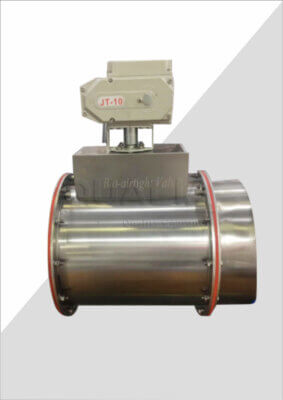

A venturi valve installed backwards in a BSL-3 decontamination space went undetected for ten years. Not because the equipment was defective when it left the factory — it almost certainly passed every acceptance test put in front of it — but because no one challenged the installed configuration against the actual site conditions after commissioning closed. The cost of that gap is not always a single catastrophic event; more often it accumulates silently as degraded pressure control, unreliable sensor readings, and control logic that has never been exercised under real failure conditions. The judgment that separates a defensible BSL-3 exhaust system from one that is merely documented is whether the acceptance evidence was collected in the building, with all ductwork, dampers, controls, and room interfaces in final configuration. What follows will help you identify which failure modes are structurally invisible to factory evidence, where responsibility becomes genuinely difficult to assign, and what site-specific evidence is required before an exhaust system should be accepted.
Site-specific duct and damper configuration
Factory acceptance tests the component. Installed-condition testing tests the decision — every field cut, damper orientation, duct branch, and wiring termination made after the equipment left the manufacturer’s floor. These are not the same challenge, and treating them as equivalent is the most durable source of long-term performance failures in BSL-3 exhaust systems.
The backwards venturi valve example is not a story about substandard equipment. It is evidence that configuration errors can survive the entire construction and commissioning sequence and persist for the operational life of a facility. A valve that is physically installed in the wrong orientation will not flag itself during a static pressure check or a visual walk-through unless someone is specifically looking for it. When the error involves directional devices in decontamination or exhaust pathways, the consequence is not a maintenance inconvenience — it is a long-term compromise of the airflow hierarchy that BSL-3 containment depends on.
The practical implication for testing scope is that duct and damper configuration verification must be performed in the as-built state, with each device confirmed against the design intent in its installed position and orientation. ISO 14644-3:2019 provides a framework for test methods applicable to cleanroom and controlled environments, and while it does not directly govern BSL-3 duct configuration verification, its installed-condition testing principles reinforce why component-level factory certification cannot substitute for field verification of the assembled system. The configuration check is not a redundancy — it is the first line of evidence that the exhaust system physically does what the drawings say it does.
Exhaust controls after installation and balancing
The failure modes that matter most in a commissioned BSL-3 exhaust system are not static — they happen in the transitions. Fan startup, fan failure, controlled shutdown, and sensor fault all produce dynamic interactions between exhaust capacity, supply response, room pressure, and damper position that cannot be meaningfully replicated in a factory environment. The factory tests a device or a panel; it cannot test what happens when that device responds to a signal from a building automation system that is responding to a room that is responding to a fan that just tripped.
Three documented failure scenarios illustrate why this matters in practice, and each sits at a different point in the control chain.
| Faalscenario | Real-World Consequence | Why Factory Evidence Misses It |
|---|---|---|
| Exhaust fan failure causes supply fan response delay | Momentary positive pressure and air reversal (seconds) | Dynamic fan-damper-room interaction not replicated in factory tests |
| Ramp time mismatch between exhaust and supply fans during controlled shutdown | Negative pressurization lasting 30–90 seconds | Transient timing behavior invisible to static factory testing |
| Faulty static pressure transmitter misleads BAS; exhaust fans ramp down while supply fans continue | Room over-pressurized by 2.5 in., gas piping damaged; BAS falsely indicates normal operation | Component-level sensor/control logic errors undetectable in standalone factory certification |
What these cases share is not a common defect type — the causes range from fan sequencing logic to sensor failure to BAS integration error. What they share is that the failure mode is only visible when the full system is operating in its installed state, with real control signals, real damper travel, and real room pressure feedback. A faulty static pressure transmitter that over-pressurizes a room by 2.5 inches while the BAS reports normal operation is not detectable by reviewing the transmitter’s factory calibration certificate. The damage to lab gas piping in that case was a downstream consequence of a controls integration gap, not an equipment defect.
For teams planning exhaust controls verification, the relevant test scope includes failure injection — not just confirmation that the system operates correctly under normal conditions. Fan trip scenarios, sensor fault simulation, and controlled shutdown sequences should each be run with high-resolution pressure trending at intervals small enough to capture momentary reversals. A trending log that samples every five minutes will not detect a pressure reversal that lasts seconds.
Leakage and pressure evidence factory tests miss
Factory documentation can confirm that a filter was tested, a fan met its rated curve, and a damper actuated on command. It cannot confirm that the assembled building behaves as designed under dynamic conditions — and for BSL-3 exhaust systems, the physical building is part of the containment system in ways that factory testing has no access to.
The four conditions in the table below represent distinct failure categories: one is an engineering trade-off in how airtight a facility is designed to be, one is a controls integration omission, one is a mechanical degradation condition, and one is an instrumentation failure. Each is invisible to factory certification for a different structural reason.
| Missed Condition | Gevolg | Revealed Only By On-Site |
|---|---|---|
| Building too airtight; intentional leakage not verified | Pressure control problems masked; directional airflow may fail during shutdowns | Pressure mapping and smoke testing |
| Supply and exhaust venturi valves never modulate because controls are not interconnected | Long-term pressure modulation failure (10 years) | Full system controls integration test |
| Main exhaust fan bearings severely damaged but fan still operational | Risk of sudden fan failure and containment loss | Physical inspection/vibration analysis |
| Failed differential pressure sensor and uncalibrated HVAC sensors | Unreliable pressure readings; inaccurate control and impaired incident detection | In-situ sensor calibration and validation |
The intentional-leakage point deserves specific attention because it runs against the intuition that a tighter building is a safer one. A BSL-3 lab that is built too airtight can appear to maintain stable pressure under static conditions while lacking the directional airflow paths needed to sustain containment during a dynamic event — a fan failure, a controlled shutdown, a filter replacement. The leakage that protects the facility in those moments must be intentionally designed into the envelope and then verified on site. If it is absent because it was never installed, or inadequate because balancing decisions changed the envelope characteristics, a static pressure reading will not reveal the problem. Pressure mapping and smoke testing in the installed condition will.
The controls integration gap — venturi valves that never modulated for ten years because their controls were never interconnected to the HVAC system — is a different category of invisible failure. No factory test of the valve, the controller, or the AHU individually would have detected the missing integration. This is the kind of omission that looks like normal operation right up until someone runs a full system integration test and discovers that the modulation the design depended on has never occurred. For the Bag In Bag Out systems serving BSL-3 exhaust filtration, integration verification of this type is equally critical — a Bag In Bag Out filter housing that is mechanically sound but whose bypass damper has never been confirmed to respond correctly in the installed control sequence provides incomplete containment assurance regardless of its factory test record.
Responsibility split for installation failures
The friction point in BSL-3 exhaust commissioning is not usually finding a failure — it is determining who is responsible for it. A symptom like incorrect pressure differential can originate from a factory defect in a sensor, an installation error in a duct run, a balancing decision that shifted airflow distribution, or a controls integration shortcut that was never flagged during construction. Once the construction phase closes and contractors have demobilized, untangling those origins becomes genuinely difficult and disproportionately expensive.
A ceiling collapse during controls programming at the University of South Alabama resulted in nearly $1 million in redesign and construction costs, plus schedule delays that compound beyond the direct financial impact. That case illustrates the financial consequence when factory defects and installation problems are not separated before full commissioning — not as a cost benchmark, but as an illustration of what happens when the discovery point comes too late and the attribution question has no clean answer. The cost of a failure discovered during installed-condition testing, while contractors and suppliers are still present, is categorically different from the cost of the same failure discovered after the facility is occupied.
An independent commissioning team engaged from the design phase — not brought in after construction is complete — is in the best position to document the boundary between factory-delivered performance and site-installed performance. This is a planning criterion, not a regulatory mandate, but it has a direct effect on whether responsibility disputes can be resolved quickly or whether they become protracted. When the commissioning record clearly tracks what was verified at the factory, what was verified at installation, and what was verified after balancing and controls integration, the origin of a post-occupancy failure is substantially easier to assign. When those records are merged or missing, every party has plausible deniability and no one has an obligation to remedy the problem efficiently.
Corrective action while suppliers remain available
A site assessment of a ten-year-old BSL-3 facility produced a remediation list that included replacing incorrectly installed venturi valves, recalibrating all HVAC sensors, and fully integrating AHU and exhaust fan controls that had never been connected. Each of those actions is technically straightforward. What makes them expensive and disruptive at year ten is not the technical complexity — it is that the original contractors are gone, the as-built documentation may not reflect what was actually installed, and the facility is operational.
The same corrective actions, identified during installed-condition testing before the facility enters service, are a different order of magnitude in terms of cost and schedule impact. Valve replacement when the installing contractor is still on site is a day’s work. Valve replacement in an operating BSL-3 facility requires decontamination protocols, access coordination, and potentially temporary containment measures. Sensor recalibration as part of commissioning is a scheduled activity. Sensor recalibration as a retrofit in an occupied facility is an unplanned interruption to operations.
The practical planning advantage is straightforward: installed-condition testing creates a window during which the people who built the system are still reachable, accountable, and contractually engaged. That window closes when the facility accepts the system. For BSL-3/BSL-4 module laboratories where exhaust system integrity is foundational to the containment model, using that window to complete full integration verification — not just static performance checks — is the most cost-effective risk management available at that project stage.
The specific corrective actions identified in any given site assessment should not be treated as a universal checklist. The point is not that every BSL-3 installation will require valve replacement or controls integration work. The point is that the corrective actions required will be substantially cheaper and faster to execute before the construction phase closes, and that installed-condition testing is the mechanism that identifies them while that window is still open.
Acceptance threshold for installed exhaust performance
CDC guidance is explicit on one point that has no ambiguity in how it should be applied: airflow must not reverse under failure conditions. Meeting that requirement demands site-specific trending data recorded at intervals small enough to detect momentary reversals — not a static pressure measurement at a single point in time, and not factory documentation showing that a fan met its rated performance curve. The dynamic interaction between exhaust failure, supply fan response, and room pressure during a fan trip is a site-specific event. It cannot be captured in advance, and factory evidence cannot substitute for it.
This is the one acceptance criterion in BSL-3 exhaust testing that carries direct regulatory weight, and the evidence required to satisfy it is categorically different from the evidence that factory certification provides. A trending log with five-minute sampling intervals may show stable average pressure while missing a reversal that lasted long enough to matter. The sampling resolution of pressure trending during failure simulation should be defined before testing begins, not after the data has been collected and reviewed.
Beyond the no-reversal requirement, the broader principle is that acceptance thresholds should be defined in terms of installed, dynamic performance — not as a confirmation that equipment arrived on site in working order. The ten-year-old facility that required substantial HVAC and exhaust system repairs to meet its original design intent is evidence that factory acceptance does not establish a performance baseline that holds through time. It establishes only that the equipment was acceptable before installation. Whether the installed system meets the design intent — and continues to do so — is a question that only site-specific evidence can answer.
For teams reviewing what site acceptance should actually require, the ASTM E2500-25 framework for specification, design, and verification of pharmaceutical and biopharmaceutical manufacturing systems offers a science- and risk-based structure that supports defining verification evidence requirements proportionate to the risk the system represents. Applied to BSL-3 exhaust, that means the acceptance package should include pressure trending under simulated failure conditions, controls integration evidence, leakage verification, and sensor calibration records — not as documentation formality, but as the evidence base that supports a defensible conclusion that the installed system performs as designed.
The strongest argument for installed-condition testing is not regulatory compliance — it is that factory evidence structurally cannot answer the questions that determine whether a BSL-3 exhaust system will perform when it matters. Pressure trends that reveal momentary reversals, smoke tests that confirm directional airflow paths, controls integration records that show dampers and fans responding correctly to failure signals: these are not redundant checks on top of factory acceptance. They are the first evidence that the system as built, balanced, wired, and integrated into its building actually does what the design required.
Before accepting a BSL-3 exhaust system, the evidence package should be reviewed against three questions: Does it include dynamic failure simulation with high-resolution trending? Does it confirm that every control interface — between the BAS, the AHU, and the exhaust fans — has been exercised in the installed configuration? And does it establish a documented baseline against which future performance can be measured? If any of those three are missing, the acceptance decision is being made on incomplete evidence, and the cost of what that evidence would have revealed will surface at a later, more expensive moment in the facility’s life.
Veelgestelde vragen
Q: What if the original contractors have already demobilized before installed-condition testing is complete — can deficiencies still be corrected efficiently?
A: Correction is still possible but significantly more expensive and slower. Once contractors have demobilized, there is no contractual lever to bring them back at their original rates, as-built documentation may not reflect what was physically installed, and any remediation in an operational BSL-3 facility requires decontamination protocols and access coordination on top of the technical work. The cost difference between correcting a failed controls integration during commissioning versus correcting it in an occupied facility is not marginal — it is categorical. Installed-condition testing is most valuable precisely because it creates a window of accountability before that window closes.
Q: At what point does adding more duct leakage for pressure relief start to compromise containment rather than protect it?
A: There is no universal threshold — the answer depends on the specific pressure differential targets, the room geometry, and the dynamic behavior of the exhaust and supply system during failure events. The design must specify an intentional leakage range, and site testing must confirm that the installed envelope falls within it. Too little leakage removes the directional airflow paths needed during shutdowns; too much undermines the pressure differential the containment model depends on under normal operation. Neither condition is detectable by static pressure readings alone — pressure mapping and smoke testing in the installed, balanced configuration are required to confirm the envelope behaves as designed across both conditions.
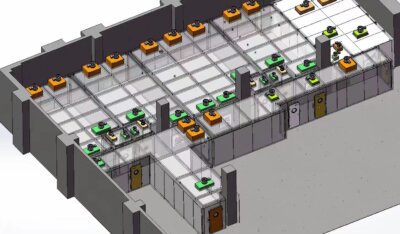
Q: How does installed-condition testing apply to a BSL-3 facility that uses modular construction rather than site-built ductwork?
A: Modular construction reduces some configuration variables but does not eliminate the need for installed-condition testing. The interfaces between modules — duct connections, control signal handoffs, BAS integration points, and damper responses across module boundaries — are all site-assembled conditions that factory acceptance of individual modules cannot verify. The same failure modes apply: fan trip response, sensor integration, and pressure behavior under dynamic conditions are system-level events that only emerge when the full installed configuration is operating together.
Q: Is an independent commissioning agent legally required for BSL-3 exhaust acceptance, or is this purely a risk management decision?
A: It is a risk management decision, not a regulatory mandate. Neither CDC guidance nor ISO 14644-3:2019 specifies that an independent commissioning agent must be engaged. The practical value is that an agent involved from the design phase can establish a clear, documented boundary between factory-delivered performance and site-installed performance — which is the record that determines whether a post-occupancy failure can be attributed and remedied efficiently. Without that documented boundary, every party in a dispute has plausible deniability. The decision to engage independent commissioning early is therefore a question of how much attribution risk the owner is willing to carry after the construction phase closes.
Q: If high-resolution pressure trending during failure simulation is required for acceptance, what sampling interval is actually sufficient to capture a momentary reversal?
A: The article establishes that five-minute intervals are insufficient and that sampling must be fine enough to detect reversals lasting seconds, but the specific interval should be defined before testing begins based on the control system’s response characteristics. For fan trip scenarios where supply fans can respond in seconds and pressure reversals may last only seconds, sampling at one-second or sub-second intervals is the appropriate starting point for that test sequence. The key principle is that the required resolution should be determined from the known response times of the exhaust and supply system — not set at a default interval and then evaluated retrospectively against the data collected.