
Energy Efficiency ROI: Prefab vs Traditional Cleanroom Operating Costs Over 15-Year Lifecycle

For facility managers and financial decision-makers in biotech and pharmaceuticals, the choice between prefabricated and traditional cleanrooms extends far beyond initial construction costs. The real financial impact unfolds over the facility’s entire lifecycle, where operational inefficiencies can silently erode ROI. Misconceptions persist that stick-built cleanrooms are inherently cheaper, but this view ignores the compounding effect of energy consumption, maintenance, and inflexibility.

The urgency for a data-driven decision has never been greater. With tightening ESG mandates and volatile energy prices, operational efficiency is now a direct financial variable. A 15-year Total Cost of Ownership (TCO) analysis is essential, shifting the evaluation from capital expenditure to a comprehensive model that includes energy, maintenance, reconfiguration, and asset recovery.

Prefab vs Traditional Cleanrooms: Core Design Differences

The Construction Methodology Divide

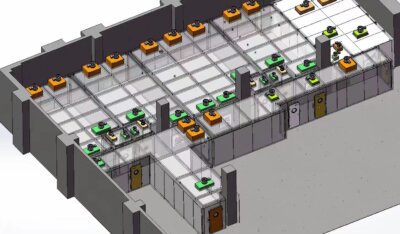
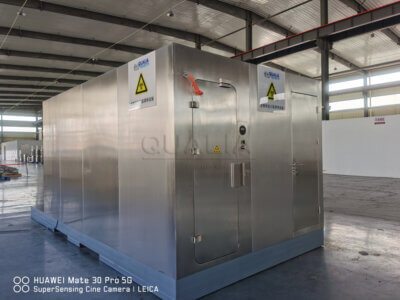
The fundamental divergence lies in construction philosophy. Prefabricated cleanrooms are engineered systems, assembled from factory-produced modules with integrated mechanicals. This controlled environment ensures superior envelope integrity, minimizing air leakage and thermal bridging—common sources of energy loss. Traditional stick-built construction, reliant on on-site workmanship, often results in variable seal quality. This inconsistency can introduce lifelong performance gaps and higher operational costs.

Strategic Implications Beyond the Build

These design differences have profound financial and strategic consequences. The modular approach transforms the cleanroom from a fixed facility cost into a depreciable, movable capital asset. This qualifies for an accelerated 7-year depreciation schedule versus a traditional build’s 39-year timeline, offering significant tax advantages. Furthermore, the inherent reconfigurability of prefabricated designs directly mitigates regulatory and product lifecycle risk. As FDA or ISO standards evolve, these spaces can be adapted without the prohibitive cost and downtime of a full demolition, serving as strategic insurance for volatile R&D pipelines.

Comparing 15-Year Total Cost of Ownership (TCO)

Moving Beyond CapEx

A genuine financial comparison requires abandoning the narrow focus on initial capital expenditure. The 15-year TCO model holistically accounts for capital costs, energy, maintenance, potential reconfiguration, and end-of-life value. While traditional construction may present lower upfront material costs, it carries higher risks of labor overruns and hidden expenses. For prefabricated units, the initial investment often includes integrated, high-efficiency systems, setting the stage for lower operational costs from day one.

The Compounding Power of Operational Savings

Over 15 years, operational savings—dominated by energy—compound to define true ROI. Strategic procurement must now prioritize this TCO model, incorporating often-omitted variables: production downtime during modifications, re-validation costs, and asset recovery. The classification of a modular cleanroom as equipment introduces a residual resale value, fundamentally improving net present value calculations. This comprehensive view consistently reveals that the highest efficiency option, though sometimes higher in initial CapEx, delivers the lowest TCO.

Quantifying the Lifetime Cost Breakdown

To make an informed decision, you need a clear side-by-side comparison of cost drivers. The following table breaks down the key financial components over a 15-year lifecycle, highlighting where each cleanroom type accrues or saves cost.

비용 구성 요소Prefabricated Cleanroom전통적인 클린룸
Initial Capital Expenditure (CapEx)종종 더 높음Lower upfront material cost
Construction Labor & OverrunsMinimized, factory-controlledHigher, variable on-site
15-Year Operational Costs (Energy)20-30%+ lowerLargest cost center
Asset Depreciation ScheduleAccelerated 7-yearStandard 39-year
End-of-Life / Residual ValueMovable asset, resale valueFixed facility, demolition cost
Reconfiguration / Downtime CostsLower, modular adaptationHigh, full demolition/rebuild

Source: ISO 14644-4:2022 Cleanrooms and associated controlled environments — Part 4: Design, construction and start-up. This standard provides the foundational requirements for cleanroom design and construction, which directly influence the integrity, performance, and long-term operational costs captured in a TCO analysis. A design adhering to these principles, as seen in optimized prefabricated units, minimizes lifecycle costs.

Energy Efficiency Showdown: Which System Consumes Less?

The Dominant Cost Driver

Energy consumption, driven by continuous HVAC and HEPA/ULPA filtration, is the largest operational cost center. Prefabricated cleanrooms hold a decisive advantage due to integrated design principles. Their superior airtight envelope reduces infiltration of unconditioned air, directly lowering the heating and cooling load. Furthermore, optimized airflow design with precisely positioned Fan Filter Units (FFUs) minimizes pressure drops and fan energy.

Embedded Intelligence and High-Efficiency Components

Modern modular systems often come with smart controls like Variable Air Volume (VAV) and energy recovery ventilators (ERVs) pre-installed, enabling demand-based operation that traditional systems struggle to match. Embedded high-efficiency components, such as IE5+ motors, maintain performance with less energy. In my analysis of facility energy reports, these embedded efficiencies consistently attack the largest cost center, delivering measurable savings.

Breaking Down the Efficiency Advantage

The cumulative impact of these design choices translates into direct, quantifiable savings. The following table details the specific efficiency factors where prefabricated cleanrooms excel and their typical impact on operational expenses.

효율성 팩터Prefabricated AdvantageTypical Savings Impact
Envelope AirtightnessSuperior, minimal air leakageReduces HVAC heating/cooling load
Airflow & Pressure DropOptimized design, lower static pressureLowers continuous fan energy
Standard Integrated ControlsVAV, ERV, smart systems pre-installedEnables demand-based operation
모터 효율성IE5+ high-efficiency motorsDirectly reduces power consumption
Overall Energy Consumption20-30% less than traditionalPayback in 24-36 months

Source: ISO 50001:2018 Energy management systems — Requirements with guidance for use. Implementing an Energy Management System framework is key to achieving and sustaining the operational efficiency gains highlighted in this table. The standard supports the systematic tracking and improvement of energy performance, which is critical for realizing the projected savings from high-efficiency components and smart controls.

Operational Performance & Maintenance Costs Compared

Consistency and Contamination Control

Operational performance hinges on consistent contamination control and the cost to sustain it. Prefabricated cleanrooms benefit from standardized components and factory-calibrated systems, reducing performance variability. Their efficient operation places less mechanical strain on components, extending equipment life and deferring major capital replacements. This reliability is non-negotiable for maintaining product quality and regulatory standing.

The Maintenance and Automation Multiplier

Designed service access in modular units reduces maintenance labor and associated downtime. Automation is the critical multiplier; integrated systems provide failsafe HVAC control, real-time particle monitoring, and automated compliance logging. This reduces human error—a primary contamination risk. In traditional facilities, retrofitting such integrated automation post-construction is complex and costly, making it a prohibitive afterthought rather than a foundational feature.

Measuring Long-Term Operational Costs

The design and integration choices made during construction have a direct and measurable impact on daily operations and long-term support budgets. This comparison outlines how these choices manifest in key performance and cost metrics over the cleanroom’s lifecycle.

성능 지표Prefabricated / ModularTraditional / Stick-Built
Contamination Control ConsistencyHigh, standardized componentsVariable, depends on workmanship
Maintenance Labor & DowntimeLower, designed service accessHigher, complex retrofits
System Strain & Equipment LifeReduced, extends capital lifeHigher, earlier replacements
Integrated Automation & MonitoringPre-installed, real-time dataCostly, complex to retrofit
Compliance LoggingAutomated, reduces human error수동, 고위험

Source: IEST-RP-CC012.3 Considerations in Cleanroom Design. This IEST Recommended Practice provides essential guidance for optimizing cleanroom design to achieve reliable performance and contamination control. The principles it outlines support the design choices—like standardization and serviceability—that lead to the lower long-term operational and maintenance costs associated with prefabricated cleanrooms.

Which Cleanroom Type Is Better for Your Facility Layout?

Assessing Spatial and Flexibility Needs

The optimal choice is dictated by spatial constraints and future flexibility requirements. Prefabricated modules excel in retrofits, leased spaces, or areas with physical limitations, as they can be assembled with minimal disruption to existing operations. Their design allows for precise fitting around structural obstacles. For new greenfield construction with a highly unique, permanent footprint, traditional building offers ultimate customization.

The Strategic Value of Modularity

However, the value of modularity extends beyond mere fit. It enables strategic geographic and operational agility. Units can be deployed for near-market manufacturing, disaster recovery, or pilot programs, decoupling production capability from a fixed asset. This portability supports rapid tactical responses and reduces expansion risks. The industry is evolving towards viewing cleanrooms as fully integrated “Process Pods”—self-contained, plug-and-play units with pre-validated processes. This evolution inherently favors modular designs, which can most rapidly deploy and network these pods, drastically reducing time-to-market. For facilities requiring future expansion or reconfiguration, a mobile BSL-3 or BSL-4 module laboratory offers a proven path to scalable, compliant capacity without traditional construction timelines.

Key Decision Factors: How to Choose the Right Model

Technical and Financial Parameters

Selection requires weighing technical specifications against strategic goals. Key technical parameters include target ISO classification, required air change rates, local climate, and utility rates—the latter dramatically magnifying the value of efficiency savings. Financially, a detailed 15-year TCO analysis is non-negotiable. This model must incorporate energy consumption forecasts, maintenance schedules, and the tax implications of different depreciation schedules.

Strategic Risk and Vendor Selection

Strategically, consider your industry’s regulatory volatility and product development lifecycle. The reconfigurable nature of prefabricated cleanrooms explicitly mitigates obsolescence risk from changing standards. Vendor selection is another critical factor. The market splits between generic modular vendors and specialized integrators with deep industry expertise. A specialized partner offers a de-risked, validated solution but may create vendor lock-in. A generic system offers more component flexibility but requires greater internal validation effort. The decision hinges on whether you prioritize guaranteed compliance and partnership or maximum design independence.

Validating Your Investment: Calculating Cleanroom ROI

Building a Comprehensive Financial Model

A defensible ROI calculation projects net savings over the 15-year lifecycle. Start by quantifying annual energy savings using specific kWh reductions for fan and cooling loads. Add cumulative maintenance and downtime savings from standardized components and predictive systems. Then, factor in financial advantages: accelerated depreciation (7-year vs. 39-year) and potential residual resale value. Finally, assign a monetary value to risk mitigation—the avoided cost of a future major rebuild for reconfiguration.

Turning Data into Defensible Value

This validation process underscores that modern ROI is tied to data integrity. Systems with integrated monitoring platforms provide the real-time audit trails that turn environmental control from a cost center into a source of demonstrable value, reducing hidden compliance costs. The highest ROI comes from solutions that combine embedded efficiency, financial agility, and strategic flexibility.

The ROI Calculation Framework

To move from concept to a validated business case, you need a structured approach to quantify each financial advantage. This framework outlines the key factors to include in your ROI model and how they contribute to the bottom line.

ROI Calculation FactorHow to QuantifyFinancial Advantage
Annual Energy SavingsSpecific kWh reduction (fan/cooling)Direct operational cost reduction
Maintenance & Downtime SavingsCumulative forecast vs. traditionalControlled support costs
Depreciation Benefit7-year vs. 39-year scheduleImproved cash flow, tax advantage
Residual / Resale ValueAsset recovery at end-of-lifeImproves net present value (NPV)
위험 완화 가치Avoided cost of future major rebuildStrategic flexibility, obsolescence hedge

Source: Technical documentation and industry specifications.

The highest ROI emerges from solutions that minimize lifetime energy consumption, maximize operational uptime, and retain future optionality. Prioritize a 15-year TCO analysis over initial CapEx, and select a design that aligns with both your technical specifications and strategic capacity for change. Energy efficiency and modular adaptability are not just features; they are the primary drivers of long-term financial performance and risk mitigation.

Need a professional assessment of which cleanroom solution delivers the optimal ROI for your specific application? The experts at QUALIA can help you model the 15-year TCO and design a facility that balances performance with financial agility. For a detailed consultation on implementing an efficient, future-ready cleanroom, you can also 문의하기.

자주 묻는 질문

Q: How does the construction method of a prefabricated cleanroom impact its long-term energy efficiency and financial treatment?
A: Prefabricated cleanrooms are built from factory-sealed modules, which create an airtight envelope that minimizes air leakage and thermal bridging, directly reducing HVAC loads. This integrated design contrasts with traditional builds, where on-site workmanship can compromise envelope integrity. Furthermore, modular units are classified as depreciable equipment over 7 years, unlike traditional construction’s 39-year schedule, offering significant tax advantages and improving net present value. This means facilities prioritizing predictable operational costs and financial flexibility should model the accelerated depreciation impact in their TCO analysis.

Q: What are the primary technical factors that give prefabricated cleanrooms an energy consumption advantage?
A: The decisive efficiency advantage stems from superior airtightness, optimized airflow design that reduces static pressure, and the pre-integration of high-efficiency components like IE5+ motors and smart controls such as VAV systems. These features collectively lower the continuous energy demand for HVAC and HEPA/ULPA filtration. Implementing an energy management framework like ISO 50001:2018 can help systematically capture these savings. For projects where energy is a major cost driver, expect a 20-30% efficiency gain, with payback often occurring within 24-36 months of operation.

Q: How should we calculate the true 15-year ROI for a cleanroom investment beyond just upfront capital costs?
A: Build a comprehensive model that quantifies annual energy savings from reduced kWh usage, cumulative maintenance and downtime savings from standardized components, and the financial value of accelerated depreciation. Crucially, assign a monetary value to risk mitigation, such as the avoided cost of a future major rebuild for reconfiguration. This holistic Total Cost of Ownership (TCO) view, guided by design standards like ISO 14644-4:2022, reveals the highest efficiency option typically delivers the lowest TCO. If your industry faces regulatory volatility, plan to quantify the strategic value of reconfigurability as a key ROI component.

Q: Why does a prefabricated cleanroom design lower long-term maintenance costs and operational risk?
A: Standardized components and engineered service access reduce labor hours and downtime for repairs. The integrated systems enable predictive maintenance through real-time monitoring, shifting from reactive fixes to scheduled, intelligence-driven upkeep. This proactive approach, aligned with industry guidance from organizations like the IEST, extends equipment life and safeguards product quality. This means facilities that cannot afford unexpected contamination events or production halts should prioritize designs with embedded automation and data logging capabilities from the outset.

Q: When is a traditional stick-built cleanroom a more suitable choice than a prefabricated modular system?
A: Traditional construction remains preferable for new, ground-up facilities requiring highly unique, non-rectilinear footprints or integration with exceptionally complex, fixed utility infrastructures. It offers ultimate customization when spatial constraints are minimal and future reconfiguration is not anticipated. However, this approach carries higher dependency on on-site workmanship for long-term envelope performance. For projects where the floor plan is unconventional and will remain static for decades, a traditional build may be justified, but you must invest in rigorous construction oversight and commissioning.

Q: What are the critical vendor selection considerations when procuring a prefabricated cleanroom?
A: The key decision is between a specialized integrator with deep industry expertise and a generic modular vendor. A specialized partner offers a de-risked, validated solution with guaranteed compliance but may create vendor lock-in. A generic system provides more component flexibility and potential cost savings but requires greater internal validation effort and technical oversight. If your operation lacks extensive in-house validation resources, you should prioritize a vendor with proven experience in your specific application and regulatory environment to mitigate implementation risk.

Picture of Barry Liu

Barry Liu

Hi, I'm Barry Liu. I've spent the past 15 years helping laboratories work safer through better biosafety equipment practices. As a certified biosafety cabinet specialist, I've conducted over 200 on-site certifications across pharmaceutical, research, and healthcare facilities throughout the Asia-Pacific region.

ko_KRKO
위로 스크롤
OSHA Regulations for Biosafety Cabinets Explained | qualia logo 1

지금 문의

직접 문의하세요: [email protected]