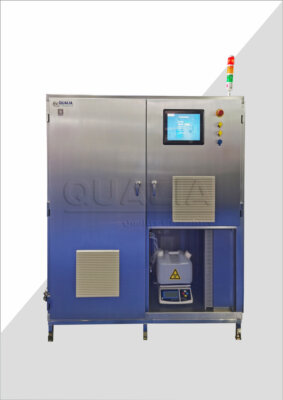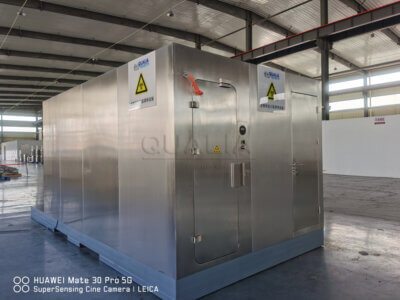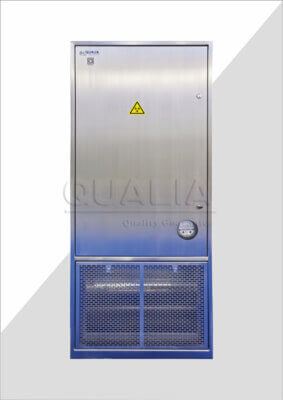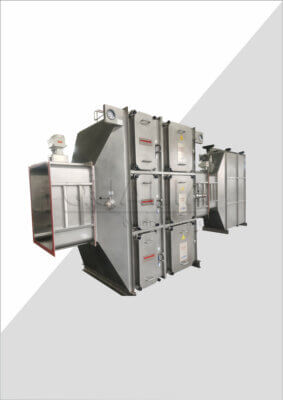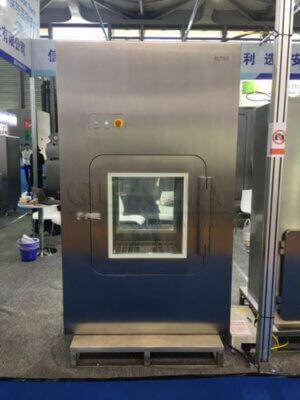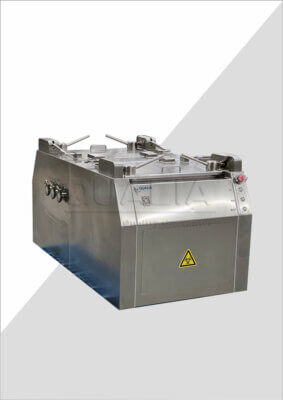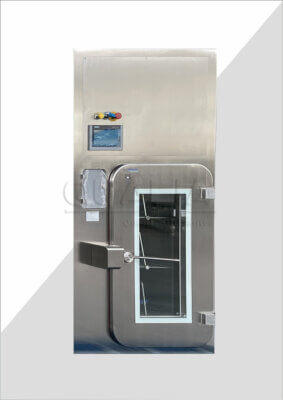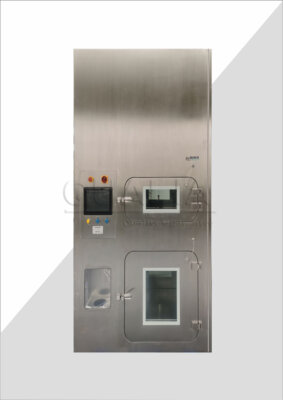

Specifying the wrong transfer device for a cross-grade boundary is not a minor procurement error that gets caught at commissioning — it is a compliance exposure that arrives fully formed at audit, with no clean path to retroactive justification. The more common version of this problem is subtler: a dynamic unit is correctly specified, but the wall design does not account for the difference between internal chamber size and external casing depth, and filter access ends up on the classified side. Every subsequent maintenance interval then requires a decision between contamination risk and deferred service. The judgment that prevents both failure modes is made at layout stage, when wall type, panel thickness, and service-side access can still be resolved before fabrication locks them in. What follows gives enough technical grounding to make that judgment accurately — on configuration, aperture behavior, wall design, coordination sequencing, and the specific condition that makes a dynamic configuration the defensible choice.
Protected room class at the transfer boundary
The decision between a static and dynamic pass box is not a matter of preference or budget — it is a function of what is on each side of the wall. When both rooms share the same cleanliness class and pressure, a static box performs its job without introducing compliance risk. When the transfer crosses a grade boundary — for example, moving materials from a controlled non-classified corridor into an ISO-classified production suite — a static box creates a structural problem that is difficult to walk back once the facility is operational.
The issue is not only particle control during the transfer itself. A static box offers no active purge, no filtered recirculation, and no guarantee that the aperture is protective between door events. Used at a cross-grade boundary, it relies entirely on operator discipline and sequential door handling to prevent the higher-grade environment from being exposed to the lower-grade side. That reliance is difficult to defend at audit and is structurally incompatible with the Material Airlock concept described in EU GMP Annex 1, which requires active filtered air supply flushing to protect the higher-grade environment during transfer.
The practical consequence of misspecification is not always immediately visible. The facility may operate for months before an audit or a contamination trend surfaces the underlying design gap. By that point, the wall is built, the box is installed, and remediation requires either replacing the unit with a dynamic configuration or adding compensating controls that the original layout was not designed to accommodate. Treating the static-versus-dynamic decision as a planning criterion tied to room classification — not as a post-construction correction — is the only reliable way to avoid that outcome.
| 구성 | Appropriate Transfer Scenario | 공기 흐름 및 필터링 | 규정 준수 위험 |
|---|---|---|---|
| Static Pass Box | Transfer between rooms of the same cleanliness class | Passive; no active filtered airflow or purge cycle | High when used for cross-grade transfers; difficult to explain to auditors and risks non‑conformance |
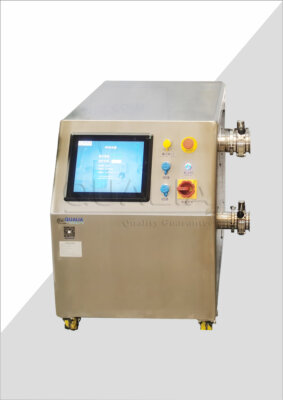
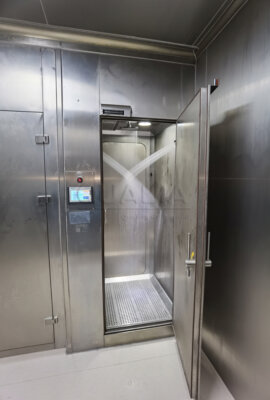
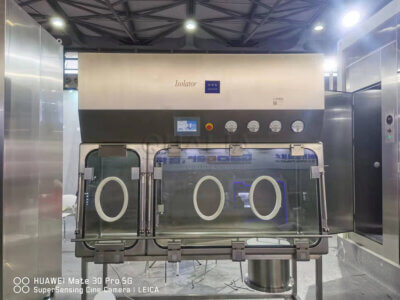
| Dynamic Pass Box | Transfer between rooms of different cleanliness classes and pressures (e.g., classified to CNC area) | Recirculating HEPA‑filtered air (G4 pre‑filter + H14 HEPA); acts as a Material Airlock (MAL) per EU GMP Annex 1 | Low; active flushing protects the higher‑grade environment and aligns with regulatory expectations |
One threshold worth applying directly: if the transfer boundary separates rooms of different cleanliness classes or carries a meaningful pressure differential, the dynamic configuration is the appropriate specification. The compliance risk of misapplying a static box at that boundary is not a remote edge case — it is a predictable audit finding that has a straightforward technical solution when addressed before the wall is closed.
Aperture airflow duties during loading and unloading
What the dynamic pass box is doing at the aperture during a transfer is more specific than the label “active airflow” suggests, and understanding the sequence matters for both validation planning and operator training. The chamber maintains a recirculating filtered air environment using a built-in fan, a G4 pre-filter, and an H14 HEPA filter. These are equipment specification figures, not regulatory thresholds, but they define the filtration architecture that supports ISO Class 5 conditions inside the chamber and they set the baseline for what the validation protocol needs to confirm.
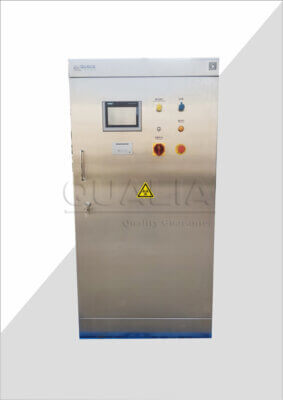
The airflow speed range for consistent particle removal at the opening is 0.36–0.45 m/s. This is a design parameter from equipment specification inputs — not a universally mandated value — but it provides a quantifiable target for commissioning and a reference point for drift detection during routine monitoring. The sequence that governs each transfer is where the fault-tolerant design becomes operationally relevant: opening one door triggers an electromagnetic interlock that locks the opposite door; after both doors are closed, both lock and a timed purge cycle runs before the next door is released. The purge window is configurable across a range up to 99 seconds, which gives the facility flexibility to align cycle time with validated particle decay curves for the specific chamber volume and airflow rate.
The practical implication is that the sequence logic removes the transfer’s compliance dependency from operator timing. An operator who opens the clean-side door too quickly does not bypass the purge — the interlock and the timer hold regardless of operator intent. That fault tolerance is the core engineering argument for the dynamic configuration at a cross-grade boundary, and it is also the basis for the validation claim: the protection is mechanical, not procedural.
| Duty Parameter | 사양 | 중요한 이유 |
|---|---|---|
| Airflow speed | 0.36–0.45 m/s | Quantifiable target for consistent particle removal at the opening |
| Filtration stages | G4 pre‑filter, H14 HEPA filter; built‑in recirculating fan | Continuously purifies chamber air during loading/unloading |
| Purge cycle | Timed purge, 0–99 seconds adjustable; both doors lock, purge runs, then doors unlock (green indicator) | Prevents simultaneous door opening and ensures contaminants are scrubbed before the next door opens |
| Door interlock | Electromagnetic interlock: opening one door locks the opposite; after closing both, purge cycle executes | Fault‑tolerant operation that does not depend on operator timing alone |
For commissioning planning, the adjustable purge range should be treated as a configurable design figure that needs to be locked during qualification, not left at factory default. The validated purge time should be documented and change-controlled, because shortening it post-qualification without re-validation removes the technical basis for the interlock’s protective claim.
Service clearances that must be reserved in the wall design
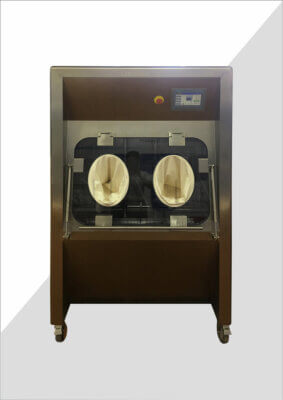
The most painful installation failure in this equipment category is not a specification error — it is a dimensional oversight. The external casing of a dynamic pass box is substantially larger than its internal chamber, and the discrepancy is not marginal. As a planning reference: a unit with a 500×500×500 mm internal chamber can have an external envelope of approximately 720×580×970 mm. That difference has to be resolved against the wall build before the panel is fabricated, not after the unit arrives on site.
The clearance requirement extends beyond the cut-out itself. Flanges are supplied as removable pieces and must integrate with the wall panel for a smooth, gap-free finish. If the flange depth is not confirmed against panel thickness before fabrication, the fit at installation is likely to require remediation — either shimming that compromises the seal or panel modification that disrupts the clean envelope. Both outcomes are avoidable with a single pre-fabrication dimensional review.
The clearance requirement that causes the most persistent operational damage is filter access. Pre-filter replacement at roughly six-month intervals and HEPA replacement at six-to-twelve-month intervals are recurring events across the facility’s lifetime. If the service path to those filters was not planned before the wall was built, maintenance access defaults to the classified side at every interval — a recurring contamination risk that the original layout decision created and that no procedural control fully resolves. DOP/PAO test ports for HEPA integrity verification carry the same access requirement: they need to be reachable from the non-classified maintenance side for routine validation without breaching the classified area.
| Clearance Item | 요구 사항 | 간과할 경우의 위험 |
|---|---|---|
| Wall cut‑out dimensions | External casing is significantly larger than internal chamber (e.g., WDPB‑500: internal 500×500×500 mm, external 720×580×970 mm) | Unit does not fit; structural rework and installation failure |
| Flange integration | Flanges for a smooth, gap‑free finish between unit and wall panel; supplied as removable pieces | Air leaks and loss of clean‑envelope integrity |
| Maintenance‑side access | Service access for G4 pre‑filter (every 6 months) and HEPA filter (every 6–12 months) without entering the classified side | Invasive maintenance on the clean side disrupts the classified environment |
| Validation port location | DOP/PAO test ports accessible from the maintenance side for HEPA integrity testing | Inability to perform routine validation without breaching the classified area |
The review check that belongs in the wall design brief before purchase is straightforward: confirm which side of the wall is the maintenance side, confirm that the external envelope fits the available space with service access intact, and confirm that filter access and test port locations are on the non-classified side. Recording those answers before the unit is ordered is the only way to guarantee they survive into the installation drawing.
Coordination failures between panel and equipment suppliers
The schedule risk in a dynamic pass box installation does not usually sit in the equipment itself — it sits in the coordination drawings, and specifically in decisions that arrive late to the panel fabricator. Three decisions need to be locked before panel fabrication begins, because each one has downstream structural consequences that cannot be absorbed after cut-out dimensions are confirmed.
Door opening direction — straight-through, L-shape, or three-way — affects both the cleanroom panel layout and operator workflow routing. A late change to door configuration does not affect only the pass box; it can require re-cutting or replacing wall panels and rerouting the approach path on one or both sides. Flange depth and design carry a similar blast radius: because flanges are supplied as removable pieces, a change to flange specification after panel fabrication has begun forces rework across both the panel interface and any MEP routing that was coordinated around the original depth. Mounting type — wall-mounted versus floor-mounted — is the decision with the longest lead time consequence, because a floor-mounted configuration requires floor slab preparation, base plate installation, and a support stand or leveling base. Discovering a floor-mounted specification after the slab is poured is a structural rework scenario, not a procurement adjustment.
The cost logic of early lock-in is straightforward: each of these decisions is inexpensive to change on paper and expensive to change in steel and panel. The coordination failure pattern is predictable — equipment and panel suppliers working from different drawing revisions, with flange or mounting details not reconciled until installation begins. Treating all three decisions as pre-fabrication lock points, not equipment options to be finalized later, is the practical protection against that pattern.
| Coordination Decision | Options / Details | Consequence of Late Change |
|---|---|---|
| Door opening direction | Straight‑through, L‑shape, or 3‑way | Rework of cleanroom panel layout and operator workflow |
| Flange depth / design | Removable flanges; depth affects panel fit and MEP routing | Rework across cleanroom panels and MEP; costly schedule impact |
| Mounting type | Wall‑mounted or floor‑mounted (DFLH); floor‑mounted requires floor slab preparation, base plate, and support stand or leveling base | Structural incompatibility during installation; slab rework |
Beyond the three physical decisions, the installation package for a dynamic unit adds electrical connections, airflow balancing, interlock wiring, and alarm integration to the MEP scope. Those tasks are not present in a static installation, and they need to appear in the MEP coordination drawings before the wall build progresses. Late addition of electrical and interlock scope to an already-coordinated MEP layout is where schedule slippage accumulates — not in dramatic single events, but in the sequential rework that follows each drawing revision.
Classification defense at the opening as the trigger for dynamic configuration
The decision to specify a dynamic pass box is most defensible when framed as an engineering response to a specific failure mode: the transfer opening itself, operated by a human following a procedure, cannot reliably protect the higher-grade environment against a lower-grade environment during routine handling. That failure mode is not hypothetical — it is the structural limitation of any passive system at a cross-grade boundary.
Operator timing as the primary defense is difficult to sustain at audit for cross-grade transfers. A static box with a procedural sequential-door protocol requires that every operator, on every transfer, executes the sequence correctly under production pressure. The consequence of a single mistimed door event is exposure of the higher-grade environment to the lower-grade side with no active particle removal running. The dynamic configuration changes the risk profile by making the protection mechanical: the electromagnetic interlock prevents simultaneous door opening regardless of operator action, the purge cycle runs before the clean-side door can be released, and the HEPA-filtered recirculation maintains an ISO Class 5 environment inside the chamber throughout the sequence. That environment is a design figure from equipment specification — not a self-certified regulatory claim — and it requires site validation to confirm, but it provides a measurable baseline that a purely procedural control cannot match.
The EU GMP Annex 1 Material Airlock concept supports this framing as a process reference: active filtered air flushing at the transfer boundary protects the higher-grade environment in a way that passive sequential door handling does not. The reference applies to the engineering principle, not as a universal governing rule for all jurisdictions and facility types, but it reflects a design logic that regulators in multiple frameworks have endorsed for cross-grade transfer points.
| Defense Approach | 작동 방식 | 위험 프로필 |
|---|---|---|
| Operator timing only (static box) | Operator must open and close doors sequentially without active particle removal | High risk of cross‑contamination when transferring between different cleanliness classes; difficult to defend to auditors |
| Dynamic pass box with active airflow control | Electromagnetic interlocking, timed purge cycle, and HEPA‑filtered recirculation maintain an ISO Class 5 (Grade A) environment inside the chamber | Fault‑tolerant; defends the opening even when operators make timing or sequence mistakes; aligns with the Material Airlock concept in EU GMP Annex 1 |
The trigger for dynamic configuration, reduced to its practical form, is this: if routine transfer operations at the boundary can degrade the protected class through normal human variation in procedure execution, active airflow control is the structurally sounder solution. Relying on operator discipline alone at that boundary is an audit position that is difficult to build and easy to challenge. The dynamic configuration does not eliminate the need for validated procedures, but it removes the transfer’s compliance dependency from operator timing as the primary control layer — and that distinction matters when the facility is under inspection.
The most consequential judgment in this process happens before the wall is built: confirming that the room classification on each side of the boundary actually requires a dynamic configuration, then recording the wall type, panel thickness, and maintenance-side access direction before the unit is ordered. Those three pieces of information determine whether the installation is straightforward or whether it accumulates rework across panel fabrication, MEP coordination, and commissioning access.
For procurement teams and design engineers moving from specification into fabrication, the practical checklist is short: lock door direction, flange depth, and mounting type before panel drawings are released for fabrication; confirm that filter access and DOP/PAO test ports land on the non-classified side; and add electrical, interlock, and balancing tasks to the MEP scope before the MEP coordination drawing is finalized. A biosafety pass box 또는 VHP pass box variant may also be relevant depending on the specific transfer scenario — the classification defense logic applies across those configurations, but the installation scope and wall design requirements follow the same pre-commitment review discipline outlined here.
자주 묻는 질문
Q: Does the dynamic pass box itself maintain ISO Class 5 during the purge cycle, or does that depend on the surrounding cleanroom holding its classification first?
A: The dynamic pass box maintains ISO Class 5 inside the chamber independently of the surrounding room conditions during the purge cycle, because the internal HEPA-filtered recirculation is self-contained. However, this internal classification is a design figure that requires site validation to confirm — the as-installed airflow speed and particle decay rate must be verified against the 0.36–0.45 m/s design parameter before the ISO Class 5 claim can be used as a validated control basis.
Q: After commissioning is complete, what is the first maintenance event that typically exposes a wall design mistake?
A: The first pre-filter replacement at roughly six months is usually when a filter access problem becomes unavoidable. If the maintenance side was not confirmed before the wall was built, this is the interval where teams first confront the choice between deferring service or entering the classified side — and neither option has a clean procedural justification. Identifying the service path before panel fabrication is the only point at which this outcome can be prevented without structural rework.
Q: If the facility operates under a non-EU regulatory framework, does the Material Airlock concept from EU GMP Annex 1 still apply as a design reference?
A: The EU GMP Annex 1 Material Airlock concept applies as a process engineering reference, not as a jurisdictional requirement, so it remains relevant outside EU-regulated facilities. The underlying design logic — that active filtered air flushing protects a higher-grade environment more reliably than passive sequential door handling — reflects a principle that regulators across multiple frameworks have endorsed for cross-grade transfer points. The reference supports the engineering argument for dynamic configuration regardless of which authority governs the site.
Q: At what point does a VHP pass box become the more appropriate specification than a standard dynamic pass box for cross-grade transfers?
A: A VHP pass box becomes the more appropriate choice when the transfer scenario requires sporicidal decontamination of the material surface, not just particle removal at the aperture. The classification defense logic and wall design discipline described for a dynamic pass box apply equally to a VHP configuration, but the installation scope expands to include VHP cycle validation, material compatibility review, and exhaust or catalyst management — factors that need to appear in both the MEP coordination drawings and the commissioning plan before fabrication begins. The VHP 패스 박스 product page provides configuration details relevant to that decision.
Q: How should the validated purge time be treated if production pressure later pushes for a shorter cycle?
A: The validated purge time must be treated as change-controlled documentation, meaning any reduction requires formal re-validation before it can be implemented operationally. Shortening the purge cycle without re-validation removes the technical basis for the interlock’s protective claim — the original validation confirmed particle decay within a specific chamber volume and airflow rate at the documented cycle length, and a shorter cycle has not been demonstrated to achieve the same result. Treating this as a procedural adjustment rather than a design change is a common audit exposure.