Class III Biosafety Cabinet vs Class II BSC: 12 Critical Differences for BSL-3 and BSL-4 Containment Selection

Selecting the right biosafety cabinet is a critical containment decision with significant safety, operational, and financial implications. The choice between a Class II and a Class III BSC is often framed as a simple upgrade path, but this is a fundamental misconception. These cabinets represent two distinct containment philosophies, each with a mandated role in the biosafety hierarchy. Misapplication can create compliance gaps, hidden operational costs, and unacceptable risk exposure for personnel and the environment.

The evolution of research involving high-consequence pathogens and potent toxins has intensified the focus on primary containment. Regulatory scrutiny is increasing, and facility audits now examine the integration of the cabinet with lab infrastructure and workflows. Understanding the 12 critical differences between Class II and Class III BSCs is no longer just about specification sheets; it’s about making a strategic investment that aligns engineering controls with your lab’s risk profile, regulatory mandates, and long-term research trajectory.

Class III vs Class II BSC: The Core Containment Principle

The Fundamental Containment Philosophy

The primary distinction is not one of degree but of principle. A Class II BSC is a partial barrier, relying on aerodynamic control. A carefully balanced inward airflow (face velocity) protects the operator, while HEPA-filtered laminar downflow protects the product, and exhaust air is filtered to protect the environment. In contrast, a Class III BSC is a total barrier—a gas-tight, sealed enclosure. All operator interaction occurs through attached, sealed glove ports, providing absolute physical separation between the user and the hazardous material. This core engineering difference dictates their non-negotiable application in biosafety levels.

Regulatory Mandates Dictate Selection

This selection is driven by 규제 복잡성. Biosafety Level (BSL) guidelines and standards like NSF/ANSI 49-2022 그리고 EN 12469:2000 codify which cabinet class is required or recommended for work with specific agents. Class II cabinets, particularly Type B2, are standard for BSL-3 work with defined risk mitigation. Class III cabinets are mandatory for all BSL-4 work and for certain high-risk BSL-3 procedures involving high-consequence pathogens or extensive aerosol generation. Compliance is a foundational safety and legal requirement, not a suggestion.

Impact on Laboratory Risk Assessment

Choosing the appropriate class is the first step in a validated risk assessment. A Class II BSC’s protection can be compromised by improper technique, rapid arm movement, or equipment placement that disrupts the critical airflow barrier. The Class III’s sealed design eliminates this variable, offering maximum containment but introducing different procedural risks related to material transfer and glove integrity. The decision framework must start here: the agent risk group and protocol hazards define the minimum acceptable containment class.

Cost Comparison: Capital, Operational, and Total Cost of Ownership

Understanding Capital and Infrastructure Costs

The purchase price is merely the entry point. A standard Class II Type A2 BSC is a significant but relatively straightforward capital expense for a single lab. A Class III BSC initiates a major facility project. This is due to Significant Infrastructure Demands. Class III units require a dedicated, hard-ducted exhaust system to the outdoors, often an independent supply air system, and sophisticated building HVAC controls to maintain the chamber’s mandated negative pressure without destabilizing the lab suite. The cost of structural penetrations, ductwork, and external blowers can dwarf the cabinet itself.

The Hidden Drivers of Operational Expense

Ongoing costs diverge sharply. Annual recertification for a Class II BSC follows the standardized NSF/ANSI 49-2022 protocol, a routine service for qualified technicians. Certification for a Class III cabinet involves expert-driven, complex, and non-standardized validation protocols, including pressure decay tests for leak-tightness. This Certification and Testing Regime demands specialized expertise, resulting in higher service fees and potential downtime. Furthermore, their Specialized Supply Chain affects parts availability and can extend lead times for repairs.

총 소유 비용 분석

A holistic view reveals the true financial commitment. The following table breaks down the key cost components, illustrating why Class III TCO is an order of magnitude greater than that of a Class II unit.

비용 구성 요소Class II BSC (Type A2)클래스 III BSC
Capital ExpenseSignificant but straightforwardMajor facility project
Infrastructure DemandMinimal to moderateDedicated, hard-ducted systems
연간 재인증Standardized (NSF/ANSI 49)Expert-driven, complex protocols
총 소유 비용Lower operational overheadHigh lifecycle & service costs

Source: Technical documentation and industry specifications. Cost structures are derived from industry procurement and facility integration case studies, as standards define performance but not specific financial metrics.

참고: Class III TCO is heavily influenced by specialized supply chains and non-standardized validation.

Which BSC Offers Superior Personnel and Environmental Protection?

The Spectrum of Protection

Protection levels are intrinsic to the design. Class II BSCs provide effective personnel and environmental protection for BSL-1, -2, and -3 agents by containing aerosols through maintained inward airflow and HEPA filtration of exhaust air. However, this protection is contingent on proper operation and intact airflow patterns. The Class III BSC is engineered for maximum protection, offering absolute containment for the operator and the environment, making it the only choice for BSL-4. Its sealed enclosure and redundant exhaust filtration (often two HEPA filters in series) ensure zero release.

The Critical Role of Exhaust Configuration

Within the Class II category, protection is not uniform. Exhaust Configuration Defines Utility and Hazard. A Type A2 cabinet recirculates a portion of air back into the lab, which is safe for microbiological work but dangerous if volatile chemicals or radionuclides are used, as these hazards are not captured by the HEPA filter. For such applications, a Type B2 cabinet, which exhausts 100% of air to the outside after filtration, is required. Selecting the wrong Class II subtype can inadvertently create significant exposure risks, undermining the cabinet’s protective function.

Validating the Safety Envelope

Superior protection must be demonstrable and validated. While Class II testing verifies airflow and filter integrity, Class III certification adds rigorous challenge testing for the entire sealed system. In our experience validating containment systems, the pressure decay test for a Class III cabinet is the definitive proof of its absolute barrier—a test that simply doesn’t apply to the aerodynamic containment of a Class II. This validation rigor is what justifies its use with the highest-risk materials.

Airflow, Filtration, and Pressure: A Critical Technical Comparison

Engineering Parameters Defined

These technical specifications create the operational safety envelope. A Class II cabinet maintains a specific inward face velocity (typically 75-100 linear feet per minute) and uses unidirectional laminar downflow. A portion of air is recirculated through a supply HEPA filter, while the rest is exhausted through another HEPA filter. Its internal pressure is nuanced, with the work zone under negative pressure relative to the room. A Class III cabinet eliminates face velocity; airflow maintains constant purging and a significant, chamber-wide negative pressure (e.g., 0.5″ water gauge).

Filtration Redundancy and Design

Filtration strategy is a key differentiator. In a Class II, supply air for the downflow is drawn from the room or is recirculated cabinet air, passing through one HEPA filter. In a Class III, supply air is independently HEPA-filtered before entering the sealed chamber, and 100% of exhaust air undergoes redundant HEPA filtration. This dual-barrier approach on the exhaust is a non-negotiable requirement for maximum containment applications.

The following table provides a direct technical comparison of these defining parameters.

매개변수클래스 II BSC클래스 III BSC
Containment PrincipleAerodynamic control (partial barrier)Absolute physical barrier
Inward Face Velocity75-100 linear feet per minuteNot applicable (sealed)
Work Zone PressureNegative (relative to room)Significant chamber-wide negative
Exhaust FiltrationSingle HEPA filterRedundant HEPA filtration (series)
공급 공기 여과Recirculated through HEPAIndependently HEPA-filtered

Source: NSF/ANSI 49-2022 그리고 EN 12469:2000. These standards define the minimum performance criteria, including airflow patterns, velocities, and filtration requirements that fundamentally differentiate Class II and Class III cabinet engineering.

Integration into the Containment Ecosystem

Modern safety standards reflect 진화하는 표준 that view containment as a system function. The technical performance of the BSC must be integrated with room pressure differentials, alarm systems, and facility monitoring. This systems-based approach is especially critical for Class III installations, where the cabinet’s negative pressure must be perfectly balanced with the lab’s HVAC to ensure both cabinet integrity and proper lab suite airflow.

Operational Workflow and Ease of Use: Class II vs Class III

Workflow Flexibility vs. Procedural Rigor

Operational efficiency differs drastically. Class II BSCs offer relative flexibility; materials are passed directly through the front opening, and common techniques like pipetting or using a microscope within the cabinet are performed with minimal hindrance. Class III workflow is inherently slower and more complex. All manipulation is done through glove ports, which limits dexterity and range of motion. Every item entering or exiting must go through a sealed pass-through chamber, such as an autoclave or dunk tank, adding significant time to procedures.

The Training and Proficiency Divide

This complexity necessitates specialized training. Class II techniques are widely taught and understood. Class III operations require rigorous training in glove port manipulation, material transfer via interlocked pass-throughs, and emergency procedures for glove rupture or system failure. The skill maintenance burden is higher, and turnover can significantly impact lab productivity during the onboarding period for new personnel.

Evaluating Convertible Cabinet Solutions

The market offers Flexible vs. Dedicated Solutions, such as convertible cabinets that can operate in both Class II and Class III modes. While appealing for multi-use spaces, The “Convertible” Hybrid Model introduces significant procedural risk. These units require full validation and maintenance in both operational modes, effectively doubling the certification burden and increasing lifecycle costs. Labs must critically assess whether the promise of flexibility outweighs the risks of mode-selection errors and the certainty of higher long-term validation expenses.

Decontamination, Maintenance, and Certification Complexities

Decontamination as the Critical Path

Decontamination is the non-negotiable gatekeeper for all service activities. For Class II cabinets, interior surfaces are typically decontaminated via manual wiping with appropriate disinfectants. Some models may support automated gaseous decontamination cycles. For Class III cabinets, a rigorous, validated gaseous decontamination (e.g., with hydrogen peroxide vapor) of the entire sealed chamber is mandatory before any maintenance or certification. Decontamination is the Critical Path, as regulatory codes enforce this through warning placards and procedural lockouts. This creates a legally enforced bottleneck that directly impacts lab uptime and requires meticulous staff training on validated cycles.

Comparing Certification Protocols

Certification complexity escalates with the cabinet class. Class II certification per NSF/ANSI 49-2022 focuses on inward face velocity, downflow velocity, HEPA filter integrity (DOP/PAO challenge), and airflow smoke pattern tests. Class III certification includes all these but adds critical tests for the absolute barrier: a pressure decay test to verify the chamber’s leak-tightness and a challenge test for the dual exhaust filter system. These additional tests require more time, specialized equipment, and expertise.

The procedural differences are summarized in the table below.

활동클래스 II BSC클래스 III BSC
Routine DecontaminationManual surface disinfectionMandatory validated gaseous cycle
Pre-Service RequirementBasic interior wipe-downFull chamber leak-tight decontamination
Key Certification TestsAirflow, filter integrityAdds pressure decay, dual filter challenge
Procedural Bottleneck최소Critical path for all maintenance
Staff Training FocusStandard techniquesRigorous procedural & safety protocols

Source: NSF/ANSI 49-2022 그리고 EN 12469:2000. Both standards outline decontamination requirements and field certification tests, with EN 12469 providing specific guidance for the more complex validation of Class III cabinet integrity and containment.

Impact on Laboratory Scheduling and Uptime

The decontamination and certification process for a Class III cabinet can take a lab offline for days, compared to hours for a Class II. This necessitates careful scheduling around research cycles and requires having validated backup procedures for ongoing experiments. The operational resilience of the lab must be planned around this mandatory downtime.

Space, Facility, and Infrastructure Requirements Compared

Physical Footprint and Lab Layout

The facility impact is substantial. A Class II BSC is typically a benchtop-sized unit with flexible placement options, often only requiring access to electrical power and possibly an exhaust connection. A Class III BSC is a larger enclosure with glove ports and integrated pass-throughs. Its placement is dictated by the need for hard-ducted exhaust and supply air penetrations, which must be planned during lab design or require major renovations. It often dictates the entire layout of a containment suite.

External Components and HVAC Integration

The infrastructure footprint extends beyond the lab. Class III systems require dedicated space for an external exhaust blower, supply air conditioning units, and potentially an exhaust incinerator. They demand sophisticated building HVAC controls to maintain the precise negative pressure differentials between the cabinet, the lab, and the anteroom. This reinforces the point on Significant Infrastructure Demands, transforming a cabinet procurement into a complex architectural and engineering project.

The comparative requirements are clear when laid out side-by-side.

요구 사항클래스 II BSC클래스 III BSC
Cabinet FootprintStandard lab benchtop unitLarger enclosure with glove ports
배기 시스템May be recirculated or ductedHard-ducted, sealed to outdoors
External ComponentsPossibly an exhaust blowerBlower, supply air, potential incinerator
HVAC 통합Moderate control needsSophisticated building pressure controls
Lab Layout ImpactFlexible placementDictates penetration & layout planning

Source: Technical documentation and industry specifications. While standards define cabinet performance, the specific facility and infrastructure demands for Class III systems are detailed in installation manuals and biosafety facility design guidelines (e.g., BMBL, WHO).

The Role of Digital Integration

현대 디지털 통합 adds another layer. Advanced BSCs, particularly Class III units, now feature embedded sensors for pressure, airflow, and filter status, with connectivity to building management systems (BMS). This turns the cabinet into an active, monitored node in the lab’s safety network but also adds requirements for data cabling, interface hardware, and IT security protocols for the BMS.

Selecting the Right BSC: A Decision Framework for Your Lab

Step 1: Define Non-Negotiable Requirements Based on Risk

The process begins with a formal risk assessment. Identify the biological agents (risk group), the specific procedures (aerosol generation potential), and any chemical or radiological hazards. Cross-reference this with your institutional biosafety manual and applicable regulations (e.g., CDC/NIH BMBL). This will dictate the minimum required cabinet class: Class II (specific type) for most BSL-3 work, Class III for BSL-4 and high-risk BSL-3.

Step 2: Analyze Protocols and Agent Compatibility

Evaluate your exact workflows. Will you use volatile chemicals? This mandates a 100% exhaust Class II Type B2 or a Class III. Are procedures lengthy or require complex equipment? The ergonomic limitations of Class III glove ports may be a significant factor. This step ensures the cabinet’s functionality matches your scientific methods, not just the agent list.

Step 3: Conduct a Total Cost of Ownership Analysis

Move beyond the purchase order. Model the full lifecycle costs using the framework provided earlier. For Class III, obtain detailed quotes for the required facility modifications—ductwork, HVAC upgrades, electrical work—and factor in the higher costs for specialized annual certification and potential downtime. For Class II, clarify the costs associated with the correct exhaust configuration (e.g., installing a dedicated duct for a Type B2).

Step 4: Assess Operational Realities and Future Needs

Consider your lab’s operational tempo and future direction. Does your work demand the flexibility of a Class II, or is it dedicated to maximum containment protocols justifying a Class III? If considering a convertible hybrid model, rigorously audit the validation and training costs for both modes against the perceived benefit of flexibility. Finally, vet potential suppliers for their Specialized Supply Chain capability to support the chosen technology with parts, service, and expert certification over the cabinet’s 15-20 year lifespan.

The decision between a Class II and Class III BSC is a strategic commitment to a specific containment philosophy, with cascading effects on safety, operations, and facility design. The correct choice aligns the engineering control perfectly with the identified risk, ensuring regulatory compliance and protecting your most valuable assets: your personnel, your research, and your community.

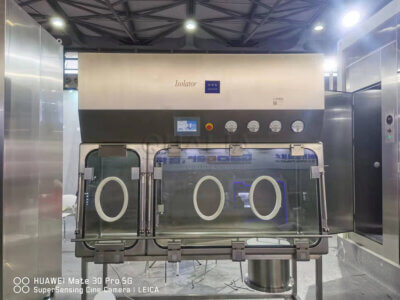
For labs working with potent compounds or high-risk powders that demand the highest level of personnel protection but may not require the full BSL-4 infrastructure of a Class III cabinet, an advanced OEB4/OEB5 containment isolator can provide a critical, sealed barrier solution. Need professional guidance to navigate this complex decision and implement the right primary containment strategy for your facility? The engineering team at QUALIA specializes in translating risk assessments into validated, operational containment solutions.

자주 묻는 질문

Q: When is a Class III BSC mandatory versus a Class II for BSL-3 work?
A: A Class III BSC is mandatory for all BSL-4 work and for specific high-risk BSL-3 procedures that demand absolute containment. For most BSL-3 work, a Class II cabinet is the standard. This selection is dictated by regulatory codes that mandate specific performance metrics for each biosafety level. If your protocols involve high-consequence pathogens or high-risk aerosol-generating techniques, you must plan for the infrastructure and operational demands of a Class III system.

Q: How does the total cost of ownership differ significantly between Class II and Class III cabinets?
A: While a Class II BSC is a major capital expense, a Class III cabinet transforms into a large-scale facility project. The total cost of ownership diverges due to the dedicated hard-ducted exhaust, external supply air systems, and sophisticated HVAC controls required for Class III operation. Furthermore, its more complex, non-standardized annual recertification is more expensive than the standardized process for Class II units. This means facilities must budget for significant infrastructure upgrades and higher lifecycle service costs when selecting Class III containment.

Q: What are the critical differences in airflow and pressure control between these cabinet classes?
A: Class II cabinets rely on a defined inward face velocity (typically 75-100 lfpm) and laminar downflow, with internal pressure zones that can vary. Class III units eliminate face velocity, instead maintaining a constant, chamber-wide negative pressure (e.g., 0.5″ water gauge) for purging, with all supply and exhaust air HEPA-filtered. This technical design is central to their role in integrated facility containment. For labs managing the highest-risk agents, this robust pressure and filtration control is non-negotiable for ecosystem safety.

Q: How do decontamination and certification protocols impact operational uptime for a Class III BSC?
A: Decontamination is a critical procedural bottleneck for Class III cabinets, as validated gaseous decontamination of the entire sealed chamber is mandatory before any maintenance or certification. This process, enforced by regulatory placards, directly impacts lab availability and requires meticulous staff training. Certification itself is more complex, adding pressure decay tests for leak-tightness to standard airflow and filter integrity checks. This means facilities must schedule significant downtime and allocate expert resources for these legally required procedures.

Q: Why is the exhaust configuration of a Class II BSC a critical safety selection factor?
A: The exhaust type defines the cabinet’s utility and potential hidden hazards. A Type A2 cabinet recirculates a portion of air, which is unsafe for volatile chemicals, while a 100% externally exhausted Type B2 is required for such agents. Selecting the wrong subtype can create exposure risks, as vapors or aerosols may not be properly captured. This means your risk assessment must explicitly account for all chemical and biological agents used to specify the correct Class II cabinet exhaust configuration.

Q: What are the key facility and infrastructure demands for installing a Class III biosafety cabinet?
A: Deploying a Class III BSC is a major capital project that dictates lab architecture. It requires dedicated space for an external exhaust blower and supply air systems, and must be hard-ducted via a sealed system to the outdoors. This integration demands careful penetration planning and advanced building HVAC controls to maintain mandated negative pressure. For labs considering this level of containment, you should engage facilities engineers early in the design phase to address these significant infrastructure demands.

Q: How should a lab evaluate the operational trade-offs of a convertible Class II/III hybrid cabinet?
A: Convertible hybrid models offer workflow flexibility but introduce procedural risk and increased lifecycle costs. They require complete validation, maintenance, and staff training for both operational modes, which complicates certification and raises the potential for user error during mode changes. This means labs must choose between a dedicated, optimized workflow and a flexible solution, weighing the benefits of multi-use capability against higher validation burdens and training complexity.

Picture of Barry Liu

Barry Liu

Hi, I'm Barry Liu. I've spent the past 15 years helping laboratories work safer through better biosafety equipment practices. As a certified biosafety cabinet specialist, I've conducted over 200 on-site certifications across pharmaceutical, research, and healthcare facilities throughout the Asia-Pacific region.

ko_KRKO
위로 스크롤
Mastering Environmental Monitoring in Closed RABS | qualia logo 1

지금 문의

직접 문의하세요: [email protected]