Chemical Effluent Decontamination Using Sodium Hypochlorite: Contact Time and Concentration Calculations for Batch Systems

Professionals tasked with designing or validating chemical effluent decontamination systems face a critical calculation challenge: determining the precise combination of sodium hypochlorite concentration and contact time required to achieve regulatory compliance. Underdosing risks pathogen survival and regulatory violations. Overdosing wastes resources and creates downstream treatment complications. The C×t relationship—disinfectant concentration multiplied by contact time—provides the theoretical framework, but translating this into operational parameters for batch treatment systems demands rigorous attention to pathogen resistance profiles, organic load interference, and hydraulic realities.

This article addresses the engineering and microbiological considerations that determine effective sodium hypochlorite dosing for batch effluent decontamination systems. BSL-2, BSL-3, and BSL-4 facilities operating under EPA and CDC guidelines must demonstrate consistent 6 log₁₀ reductions of target organisms. Achieving this performance standard requires precise calculations that account for variable effluent composition, pH dynamics, spore resistance, and the competing chlorine demand from organic matter. The following sections provide the technical foundation and practical calculation methods for designing and validating compliant batch treatment protocols.

Understanding the C×t Concept: The Core of Effective Disinfection

The Chemistry Behind Hypochlorous Acid Dominance

Sodium hypochlorite’s microbicidal activity stems primarily from undissociated hypochlorous acid (HOCl), not the hypochlorite ion (OCl⁻). This distinction drives system design decisions. When sodium hypochlorite dissolves in water, it establishes an equilibrium between HOCl and OCl⁻ that shifts dramatically with pH. Below pH 7.5, HOCl predominates—the form that penetrates microbial cell walls and oxidizes essential enzymatic systems. As pH rises above 7.5, the equilibrium shifts toward OCl⁻, a weaker disinfectant that requires substantially higher concentrations or longer contact times to achieve equivalent kill rates.

The disinfecting efficacy of chlorine decreases with an increase in pH that parallels the conversion of undissociated HOCl to OCl⁻. Facilities receiving variable influent streams must account for pH fluctuations when calculating dosing requirements. I’ve observed systems fail validation testing because influent pH variability of just 0.5 units altered the HOCl/OCl⁻ ratio enough to compromise sporicidal activity, despite maintaining target total chlorine concentrations.

C×t Parameters for Chlorine Disinfection Efficacy

매개변수사양Impact on Microbicidal Activity
pH 범위<7.5 optimalIncreased pH reduces HOCl, favors OCl⁻ formation
Free chlorine concentrationMeasured in ppm or mg/LHigher concentration reduces required contact time
연락 시간몇 분에서 몇 시간Inversely proportional to disinfectant concentration
Log reduction target6 log₁₀ for certain pathogensEPA requirement for regulatory compliance

출처: ASTM E1053-11, EPA Antimicrobial Testing Methods

Quantifying the C×t Relationship for Regulatory Compliance

The C×t product provides a mathematical framework for trading concentration against time to achieve target log reductions. Free chlorine concentration (C) measured in ppm multiplied by contact time (t) in minutes yields a C×t value that correlates with microbial inactivation. This relationship is not perfectly linear—doubling concentration does not precisely halve required contact time—but it provides a defensible basis for system design. The ASTM E1053-11 standard establishes virucidal activity assessment protocols that quantify these relationships under controlled conditions.

Batch system operators leverage C×t calculations to optimize treatment cycles. Systems processing high volumes with limited tank capacity benefit from higher concentrations and shorter contact times. Facilities with ample holding capacity and cost constraints may extend contact times to reduce hypochlorite consumption. Both approaches can achieve the required 6 log₁₀ reduction if properly validated against worst-case organic loading and target pathogen resistance profiles.

Determining Required Sodium Hypochlorite Concentration for Target Pathogens

Pathogen Resistance Hierarchies Drive Concentration Selection

Microbial resistance to sodium hypochlorite varies across five orders of magnitude. Enveloped viruses succumb to 200 ppm in minutes. 마이코박테리아 결핵 requires 1000 ppm. Bacterial spores demand 5700 ppm or higher in the presence of organic matter. This resistance hierarchy dictates concentration selection based on the most resistant organism likely to contaminate the effluent stream. BSL-3 facilities working with Mycobacterium species must design to tuberculocidal standards. BSL-4 operations treating spore-containing waste from decontamination activities require sporicidal validation.

Higher concentrations of chlorine are required to kill more resistant microorganisms, such as mycobacteria and bacterial spores. The type of bleach product used is critical for inactivation; proprietary stabilizers or pH differences can affect sporicidal efficacy. Testing demonstrated that some industrial sodium hypochlorite solutions at 12.5% concentration failed to achieve complete decontamination of >6 logs of B. thuringiensis spores at free chlorine concentrations ranging from 3000 to 9000 ppm, while specific germicidal bleach formulations succeeded at these levels.

Required Chlorine Concentrations by Target Pathogen

Target OrganismRequired Concentration (ppm)연락 시간Matrix Conditions
마이코박테리아 결핵1000Per tuberculocidal test method표준 조건
Bacterial spores (B. atrophaeus)1005분≥99.9% kill
C. 디피실 spores5000 (acidified bleach)≤10 minutes10⁶ spore load
B. thuringiensis spores57002시간5% FBS or 5 g/L humic acid
General viruses20010분25 virus panel
Poliovirus1500-225010분Presence of organic matter

참고: Higher concentrations required in presence of organic matter and for spore-forming organisms.

출처: AOAC Use-Dilution Method, ASTM E1053-11

Organic Load Impact on Effective Concentration

Organic matter in effluent streams exerts immediate chlorine demand that reduces the free chlorine available for disinfection. A study demonstrated that a free chlorine concentration of ≥5700 ppm with a 2-hour contact time achieved effective decontamination of >10⁶ Bacillus spores in complex matrices containing 5% fetal bovine serum or 5 g/L humic acid as organic simulants. Without this safety margin, rapid chlorine consumption by proteins, nucleic acids, and other oxidizable compounds drops effective concentrations below the threshold needed for spore inactivation.

For decontamination of blood spills, a 1:10 dilution of 5.25%–6.15% sodium hypochlorite provides approximately 5250–6150 ppm available chlorine after cleaning the surface. Validation studies for chemical effluent decontamination systems programmed treatment tanks to achieve 6500 ppm free chlorine as a safety margin, ensuring concentrations remained above 5700 ppm even with organic load variation. This approach accounts for the chlorine consumption that occurs between dosing and the establishment of steady-state free chlorine residual throughout the batch volume.

Product Formulation and Stabilizer Effects

Not all sodium hypochlorite solutions perform identically at equivalent chlorine concentrations. Proprietary stabilizers, pH adjustments, and surfactant additions alter sporicidal performance. I’ve reviewed validation failures where facilities switched from germicidal-grade bleach to industrial-grade sodium hypochlorite at the same target concentration, only to discover incomplete spore inactivation. The AOAC Use-Dilution Method provides standardized testing to compare formulation efficacy, but operators should validate any product substitution against their specific pathogen panel and organic load conditions.

Calculating Contact Time for Batch System Hydraulic Profiles

Batch Treatment Operational Sequence

Batch treatment systems operate in discrete cycles: effluent accumulation, disinfectant dosing, mixing, contact time hold, and discharge. Contact time begins when the disinfectant achieves uniform distribution throughout the batch volume and the target concentration is reached. This differs from continuous-flow systems where contact time derives from hydraulic retention time. The required contact time is inversely related to the disinfectant concentration, but this relationship follows pathogen-specific curves validated through laboratory challenge testing.

For 5700 ppm free chlorine, a 2-hour contact time was required to inactivate >10⁶ B. thuringiensis spores in the presence of organic matter. Contact times of ≤1 hour at this concentration proved insufficient for complete inactivation. At reduced concentrations of 3800 ppm, contact times ≤2 hours failed to achieve sterility, but extending contact to 20 hours produced complete inactivation. These non-linear relationships underscore the importance of concentration-specific validation rather than extrapolating from C×t products alone.

Contact Time Requirements for Batch Treatment

Free Chlorine Concentration (ppm)연락 시간Inactivation ResultTarget Organism
57002시간Complete (>10⁶ spores)B. thuringiensis with organic matter
5700≤1 hour불충분B. thuringiensis with organic matter
3800≤2 hours불충분B. thuringiensis with organic matter
380020시간Complete inactivationB. thuringiensis with organic matter
0.52-1.11 (residual)20 secondsNo virus recoveryEbola virus in sterilized wastewater

출처: CDC Policy on Disinfection

Mixing and Distribution Time Considerations

Effective contact time excludes the mixing period required to achieve uniform concentration throughout the batch volume. Tank geometry, agitator design, and bleach injection location determine mixing time. Dead zones in corners or near baffles may receive inadequate disinfectant during initial dosing. A chemical EDS batch system was programmed to fill a treatment tank, dose with bleach, agitate during the contact time, and then hold for the required period before discharge. The method of agitation and its timing required modification to ensure accurate liquid level readings and proper mixing of the disinfectant.

Conservative design treats mixing time as separate from contact time, starting the regulatory contact clock only after concentration measurements confirm uniformity. Tracer studies using dye or conductivity measurements validate mixing efficiency. Systems with multiple injection points or recirculation loops achieve faster distribution but add complexity. I calculate mixing time at 10-15% of total cycle time for well-designed systems, with contact time beginning after this distribution phase completes.

Temperature Effects on Contact Time Requirements

Biocidal activity increases with temperature, allowing reduced contact times in warm effluent streams. BSL-4 facilities processing autoclave condensate or thermal decontamination discharge may operate at 40-60°C, accelerating hypochlorous acid reactivity. Conversely, operations in unheated spaces during winter months experience extended contact time requirements as reaction kinetics slow. Temperature coefficients for chlorine disinfection typically show a doubling of reaction rate for each 10°C increase, but operators should validate performance across their operational temperature range rather than applying theoretical corrections.

Key Factors Influencing Sodium Hypochlorite Efficacy in Effluent Streams

Organic Load as the Primary Interference Factor

The presence of organic matter constitutes the most significant challenge to sodium hypochlorite efficacy in biological effluent decontamination. Proteins, lipids, carbohydrates, and nucleic acids exert immediate chlorine demand through oxidation reactions. Large spills of blood require cleaning before disinfection because the organic load would consume prohibitive quantities of disinfectant. Studies using 5% fetal bovine serum and humic acid as simulants demonstrated that complete inactivation of >10⁶ B. thuringiensis spores required 5700 ppm free chlorine and 2-hour contact time—concentrations and durations far exceeding those needed for clean water matrices.

Organic matter not only consumes free chlorine but also physically shields microorganisms from disinfectant contact. Clumped cells embedded in protein matrices or biofilm fragments resist disinfection even at high chlorine concentrations. A study on Ebola virus disinfection found that adding 1 mg/L sodium hypochlorite (0.16 mg/L residual) inactivated 3.5 log₁₀ units in 20 seconds, but further inactivation halted due to rapid consumption of the chlorine residual by the wastewater constituents. This demonstrates the importance of maintaining free chlorine residual throughout the contact period.

Factors Affecting Hypochlorite Efficacy in Effluent

요인효능에 미치는 영향완화 전략
Organic load (serum, blood, humic acid)Consumes free chlorine; shields microorganismsPre-cleaning or increased chlorine dose
pH elevation (>7.5)Shifts HOCl to OCl⁻; reduces microbicidal activityAcidify solution or increase concentration
Temperature decreaseReduces biocidal activity; extends contact timeIncrease contact time or concentration
Inorganic/organic contaminantsReact with hypochlorite; reduces available chlorineMonitor residual concentration continuously

참고: pH adjustment to 11.2 can increase viral decay for certain pathogens like Ebola virus.

출처: ASTM E1053-11

pH Dynamics Throughout the Treatment Cycle

Effluent pH varies with upstream processes—cell culture media, buffer solutions, cleaning agents, and metabolic byproducts all contribute to final pH. The disinfecting efficacy of chlorine decreases with an increase in pH that parallels the conversion of undissociated HOCl to OCl⁻. Sodium hypochlorite stock solutions are alkaline (pH 11-13), so adding disinfectant raises batch pH unless the effluent has significant buffering capacity or acidification is implemented. I’ve found that real-world batch systems experience pH increases of 0.5-1.5 units after bleach addition, shifting the equilibrium toward less effective OCl⁻ forms.

Some facilities acidify batches before or during bleach addition to maintain optimal HOCl concentrations. Sulfuric acid or hydrochloric acid dosing keeps pH below 7.5 throughout the contact period. This approach reduces the total chlorine required but introduces corrosion considerations and additional chemical handling. Testing showed that acidified bleach at 5000 ppm chlorine inactivated 10⁶ 클로스트리듐 디피실 spores in ≤10 minutes. The pH-activity relationship varies by pathogen—elevating pH to 11.2 significantly increased viral decay of Ebola virus over ambient conditions, demonstrating that optimal pH depends on the target organism.

Competing Chemical Demands on Free Chlorine

Inorganic and organic contaminants beyond typical biological constituents consume available chlorine. Reducing agents, ammonia, sulfides, and transition metals react with hypochlorite, diminishing the free chlorine concentration available for disinfection. Facilities that decontaminate equipment with reducing agents or process fermentation waste with high ammonia content face elevated chlorine demand. Water hardness does not inactivate hypochlorites, but facilities using well water or hard municipal supplies should test for other dissolved constituents that might compete for oxidant. Continuous free chlorine monitoring throughout the contact period verifies that residual concentrations remain above minimum effective levels despite competing demands.

Step-by-Step Batch Treatment Calculation: A Practical Example

Defining System Parameters and Target Concentrations

Calculation begins with establishing batch volume, target free chlorine concentration, and stock sodium hypochlorite strength. A validation study targeted 1001 L total volume (946 L effluent plus bleach addition) at 6500 ppm final free chlorine concentration using stock sodium hypochlorite at 114,500 ppm available chlorine. The 6500 ppm target provides a safety margin above the validated minimum effective concentration of 5700 ppm for sporicidal activity in organic-laden matrices. This margin accommodates concentration measurement uncertainty, organic load variability, and potential losses during mixing.

The volume of stock bleach required follows the dilution relationship C₁V₁ = C₂V₂, where C₁ represents stock concentration, V₁ is the required stock volume, C₂ is the target final concentration, and V₂ is the final batch volume. Rearranging yields V₁ = (C₂ × V₂) / C₁. This calculation assumes the stock concentration is accurate and stable—sodium hypochlorite degrades over time, particularly at elevated temperatures or in sunlight, so stock concentration should be verified by titration or photometry before calculating dose volumes.

Batch Treatment Dosing Calculation Parameters

매개변수Symbol예제 값Calculation Step
Stock sodium hypochlorite concentrationC₁114,500 ppmInput from bleach specification
Volume of stock bleach requiredV₁57 LSolve using C₁V₁ = C₂V₂
Target final free chlorine concentrationC₂6500 ppmBased on pathogen requirements
Final total volumeV₂1001 LEffluent volume + bleach volume
Acceptable concentration variance±10%6200-6800 ppm range for validation

참고: Actual effluent volume measurement determines precise bleach dosing; consistency runs validate operational parameters.

출처: EPA Pesticide Label Guidelines

Executing the Calculation Sequence

Using the formula V₁ = (C₂ × V₂) / C₁ with the values above: V₁ = (6500 ppm × 1001 L) / 114,500 ppm = 56.8 L, rounded to 57 L. This bleach volume added to 946 L effluent yields the 1001 L final volume at 6500 ppm target concentration. The calculation accounts for the volume contribution of the added bleach—ignoring this introduces error that compounds with higher target concentrations or weaker stock solutions. Facilities using 5.25% household bleach (52,500 ppm) would require 124 L to achieve the same final concentration, significantly altering the final batch volume.

A consistency run determined that actual effluent delivery volume was 832 L, not the assumed 946 L, explaining why less bleach than initially calculated was needed. The system achieved free chlorine concentrations between 6200 and 6800 ppm across multiple runs. This operational validation identified the true hydraulic performance and enabled dosing adjustment. Bleach pump delivery rate converts required volume to pumping time: a pump delivering 15 L/min would operate for 3.8 minutes to deliver 57 L. Flow meter verification confirms volumetric delivery matches pump specifications.

Adjusting for Operational Variability

Operational consistency requires maintaining target concentration within defined limits across sequential treatment cycles. For biological validation, the example system operated at 7300 ppm during routine operation so that even with 10% variance, concentration would remain >6200 ppm. This conservative approach ensures that worst-case conditions still exceed minimum effective concentration. Acceptable concentration variance of <10% across validation runs demonstrates process control capability. Facilities should validate dosing calculations through multiple cycles measuring actual free chlorine concentration, organic load, pH, and temperature to establish operational ranges that guarantee regulatory performance.

I recommend operators conduct consistency testing under maximum anticipated organic loading before biological validation. This identifies whether dosing calculations produce adequate free chlorine residuals when the effluent exerts high chlorine demand. Adjusting the target concentration upward compensates for organic consumption without requiring real-time concentration feedback control.

Monitoring and Validating Decontamination Performance in Batch Operations

Biological Indicator Selection and Challenge Testing

Validation requires demonstrating consistent log reduction of challenge microorganisms under worst-case conditions. Commercial 바실러스 아트로페우스 spore strips carrying 10⁶ spores provide standardized biological indicators for sporicidal validation. Laboratory-prepared Bacillus thuringiensis spore packets in dialysis tubing offer more stringent challenge—studies showed these required higher concentrations and longer contact times than commercial indicators for complete inactivation. The more resistant organism provides a conservative validation basis, ensuring that if B. thuringiensis achieves 6 log₁₀ reduction, less resistant pathogens will also be inactivated.

Biological indicators for chemical 폐수 오염 제거 시스템 are suspended at high, middle, and low points in the treatment tank to challenge mixing effectiveness and concentration distribution. A study found that commercial spore strips can release nearly all spores into the surrounding liquid upon agitation, which could lead to false-positive results if not controlled for in the validation protocol. This highlights a limitation—spores liberated into bulk liquid may experience different exposure than those remaining on carriers, potentially underestimating the treatment required for particle-associated organisms.

Validation Methods for Batch Decontamination Systems

유효성 검사 구성 요소테스트 방법성능 기준
생물학적 지표B. atrophaeus spore strips (10⁶)6 log₁₀ reduction
Laboratory-prepared spore packetsB. thuringiensis in dialysis tubingComplete inactivation; negative culture
Chemical monitoringFree chlorine photometer or test stripsMaintain ≥MEC throughout contact time
무균 테스트7-day incubation in growth mediumNo visible growth; negative agar plating
Operational consistencySequential batch cycles<10% variance in target concentration

참고: Spore strips can release spores into liquid upon agitation, requiring controlled validation protocols.

출처: CDC Policy Guidelines, AOAC Use-Dilution Method

Chemical Monitoring Throughout Contact Time

Maintaining minimum effective concentration throughout the contact period is critical. Free chlorine photometers provide accurate concentration measurements at 0.1 ppm resolution. Test strips offer field-convenient alternatives with reduced precision. Measurements should be taken immediately after mixing completion, at contact time midpoint, and before discharge to verify that organic chlorine demand doesn’t deplete residual below effective levels. For glutaraldehyde and ortho-phthalaldehyde used in other decontamination applications, minimum effective concentrations of 1.0%–1.5% and 0.3% respectively must be maintained—analogous chlorine monitoring ensures sporicidal concentrations persist.

Chemical monitoring validates the calculated dose produces the target concentration and identifies organic load conditions that consume excess chlorine. If mid-contact time measurements show concentrations dropping below minimum effective levels, either initial dosing must increase or organic load requires pre-treatment reduction. I’ve implemented continuous monitoring in systems with highly variable influent, using oxidation-reduction potential (ORP) probes as surrogate indicators of free chlorine residual to trigger automatic dose adjustments.

Post-Treatment Sterility Verification

Biological validation culminates in sterility testing of exposed indicators. Post-treatment sterility testing involves placing entire spore packets into growth medium and incubating for 7 days, followed by plating on agar to confirm no growth. CDC policy provides guidelines for inactivation testing, including the 7-day incubation period recommended for 탄저균 탄저병 surrogate organisms. All validation sterility check cultures must be negative for the target organism—even a single positive indicator invalidates the run and requires root cause investigation.

Validation protocols should include positive controls (unexposed spore strips) to confirm indicator viability and negative controls (sterile carriers) to verify media sterility. A validation study for a chemical EDS used both commercial B. atrophaeus indicators and laboratory-prepared B. thuringiensis packets—all validation sterility cultures were negative for the target organisms, demonstrating the system achieved >6 log₁₀ reduction under operational conditions. This dual-organism approach provides redundant verification that the treatment protocol is effective against diverse spore resistance profiles.


Effective sodium hypochlorite decontamination for batch effluent treatment systems depends on accurate calculation of concentration, contact time, and organic load compensation. Systems designed to 5700 ppm free chlorine with 2-hour contact time achieve sporicidal performance in worst-case organic matrices. Validation using resistant biological indicators confirms that theoretical C×t calculations translate to operational log reductions. Continuous chemical monitoring verifies that initial dosing calculations maintain effective residuals throughout the contact period despite organic chlorine demand.

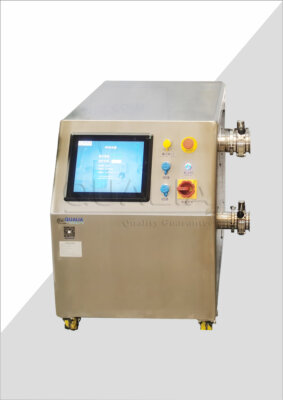
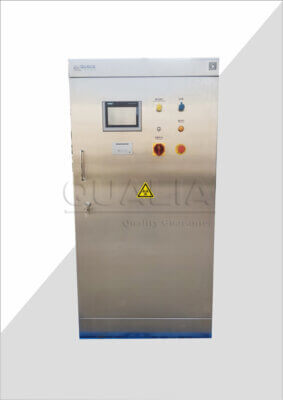
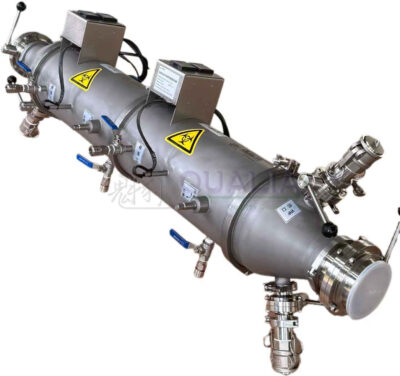
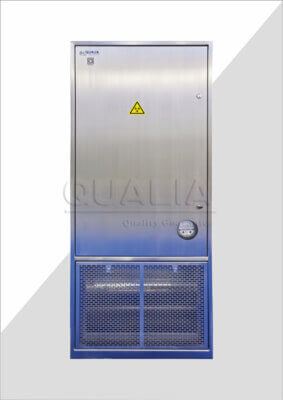
Need professional guidance implementing validated chemical decontamination for BSL-2, BSL-3, or BSL-4 liquid waste streams? QUALIA provides turnkey effluent decontamination systems with pre-validated treatment protocols, automated concentration control, and compliance documentation packages that meet EPA and CDC requirements.

For technical consultation on batch system hydraulic design, biological indicator selection, or validation protocol development, reach out at (Contact Us).

자주 묻는 질문

Q: How do I determine the required sodium hypochlorite concentration to inactivate highly resistant bacterial spores in effluent?
A: For bacterial spores like Bacillus thuringiensis, complete inactivation of >10^6 spores in the presence of organic matter requires a free chlorine concentration of 5700 ppm with a 2-hour contact time. Validation studies for chemical effluent decontamination systems (EDS) often program for a higher target, such as 6500 ppm, to maintain a safety margin above this effective concentration during operational variance. Lower concentrations, like 3800 ppm, require significantly longer contact times (e.g., 20 hours) for the same log reduction.

Q: What is the relationship between contact time and disinfectant concentration in a batch system, and how is it calculated?
A: Contact time (t) and disinfectant concentration (C) have an inverse relationship defined by the C×t product; achieving microbial inactivation requires maintaining a sufficient product of both variables. For a target pathogen, you must first establish the minimum effective concentration (e.g., 5700 ppm for B. thuringiensis spores) and then validate the corresponding contact time (e.g., 2 hours). The required volume of stock bleach is calculated using the dilution formula C1V1 = C2V2, where C2 is your target final concentration and V2 is the total batch volume.

Q: Why might a generic industrial sodium hypochlorite solution fail validation, and what should I specify when procuring bleach?
A: Generic industrial bleach may lack proprietary stabilizers or have a pH profile that reduces sporicidal efficacy, even at high free chlorine concentrations (3000-9000 ppm). For critical decontamination, specify a germicidal bleach product with an EPA pesticide label that supports your specific validation claims for target pathogens like bacterial spores. The formulation difference is critical, as testing shows efficacy can vary significantly between products at identical concentrations.

Q: What are the best practices for biologically validating a chemical effluent decontamination batch system?
A: Validation must demonstrate a consistent 6 log10 reduction of a challenge organism under worst-case conditions, following CDC Policy guidelines. Use laboratory-prepared spore packets (e.g., Bacillus thuringiensis in dialysis tubing) as a stringent method, as commercial spore strips can release spores and cause false positives. Place biological indicators at multiple points in the tank and incubate sterility checks for at least 7 days, with subsequent plating to confirm no growth.

Q: How does pH affect sodium hypochlorite efficacy, and should I adjust the effluent pH before treatment?
A: Lower pH favors the formation of hypochlorous acid (HOCl), the more microbicidal form, while higher pH shifts the equilibrium to the less effective hypochlorite ion (OCl-). While lowering pH can increase efficacy, adjusting large effluent volumes is often impractical; instead, ensure your C×t calculations are based on data derived at your effluent’s typical pH. For highly sensitive applications, such as viral decontamination, specific studies show elevating pH to 11.2 can also increase decay rates for certain pathogens, highlighting the need for pathogen-specific data.

ko_KRKO
위로 스크롤
VHP Sterilization in Healthcare: 2025 Best Practices | qualia logo 1

지금 문의

직접 문의하세요: root@qualia-bio.com

이 양식을 작성하려면 브라우저에서 JavaScript를 활성화합니다.
확인란