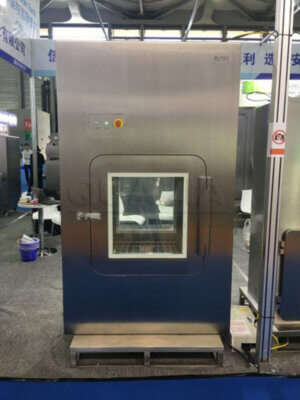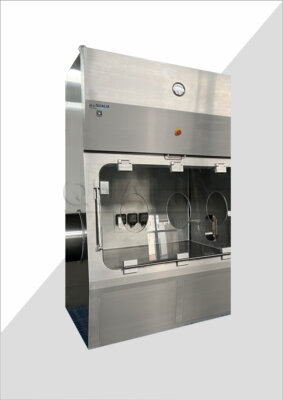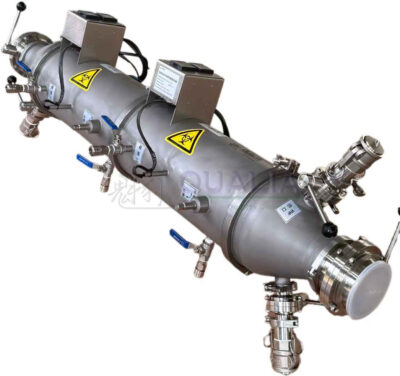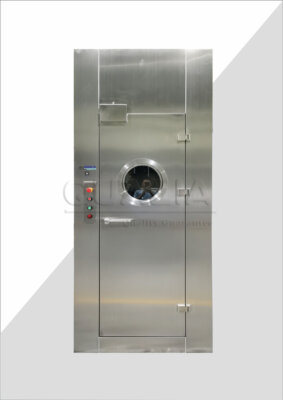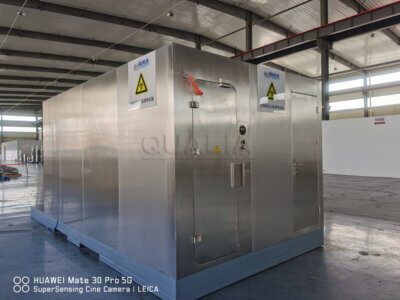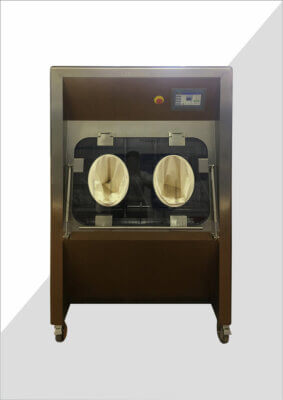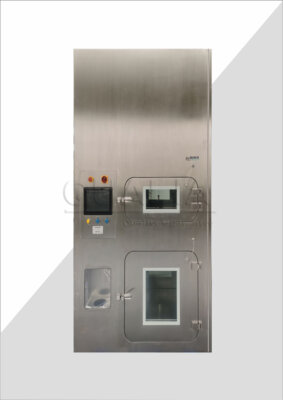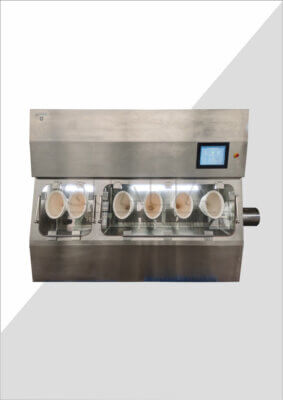


Before a cRABS retrofit reaches supplier design, the monitoring and control interfaces that must be defined include every measured condition the team needs to see, the system that owns each signal, the authority each connection carries, and the records that GMP or contractual obligations require. Projects that defer these definitions until after scope is set frequently discover mid-design that an available signal serves a different purpose than the retrofit actually needs, or that two systems display the same value with no agreement on which one governs. The right starting point is a structured interface requirement, written from the user’s decision inward, not from the signal list outward.
Start with the Monitoring Use Case
Every interface decision should begin with the condition the team needs to observe and the decision that observation informs.
A common mistake in cRABS retrofit projects is accepting an interface proposal because a signal already exists in the facility or on adjacent equipment. An existing differential pressure transmitter, for instance, may already feed the building management system (BMS), but the retrofit team may need that pressure reading to confirm barrier integrity before a door interlock releases—a use the BMS connection was never designed to support. Before any sensor or connection is added to scope, record the condition being monitored, the operational decision it enables, and who acts on it. If an accepted user requirement already documents that use, the signal can be assigned directly; otherwise, the use case must be written first.
관련 제품
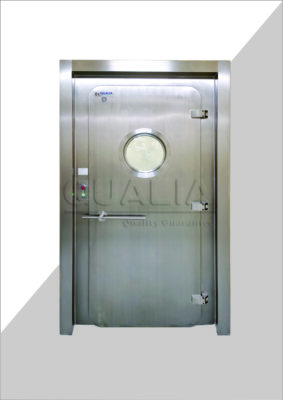
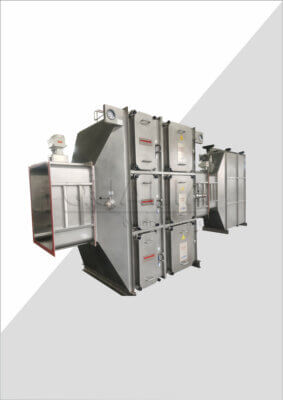
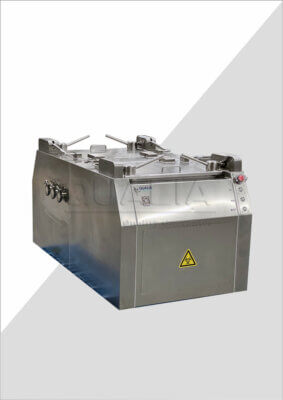
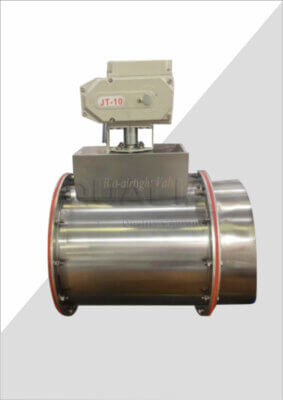
- 폐쇄형 제한적 접근 차단 시스템 - cRABS — 해당 장비에 대한 논의를 시작할 때, 계획된 개조 범위와 현장 정보를 함께 제시하십시오. 이 목록은 프로젝트의 유틸리티 또는 제어 사양서가 아닙니다.
This discipline matters especially for cRABS retrofit monitoring control interfaces because retrofits inherit legacy signal infrastructure. A signal that exists is not automatically a signal that serves. Pressure, temperature, humidity, airflow, and VHP concentration readings each carry a specific meaning in an aseptic barrier context—barrier confirmation, alert threshold, cycle validation, aeration endpoint—and the instrument range, response time, and alarm logic appropriate to one use may be entirely wrong for another.
Operating modes add a further layer. A cRABS unit passes through idle, pre-conditioning, VHP cycle, aeration, and production states, and some signals are physically unavailable or meaningless in certain states. A VHP sensor that saturates during the decontamination phase, for example, provides no useful aeration endpoint signal until it recovers—yet a standard point list built from normal-operation data will not show this gap. Each monitored condition should be mapped against the unit’s full mode sequence so that mode-dependent limits and information gaps are visible before the interface is priced.
Map Points and Receiving Systems
Each signal has one originating system and may reach several receiving displays or record destinations; both ends must be described.
Once use cases are recorded, the next task is to list every measurement or status point, identify where it originates, and name every system that is intended to receive it. This mapping is not the same as a signal list. A signal list records what exists; a point-and-receiver map records what is needed, where it comes from, and where it must go. For a typical cRABS retrofit, that map will include the cRABS control panel, the facility BMS, a supervisory control and data acquisition layer (SCADA), a manufacturing execution system (MES), and sometimes a laboratory information management system (LIMS) or standalone data logger.
Map Points and Receiving Systems: Buyer Review Matrix
| 인터페이스 항목 | Definition to request | Boundary exposed |
|---|---|---|
| Point origin | Source system and intended use | Who owns the information? |
| Receiving connection | Each display or record destination | Where must the information arrive? |
| System authority | Observe, request or command | What is the connection permitted to do? |
| Unavailable state | Documented state and visibility gap | When does the point cease to serve its use? |
When one point appears in several systems, the map must state clearly which system originates the value and which systems receive it. Duplicate visibility across displays is legitimate—pressure, humidity, and VHP concentration are routinely visible on both the barrier control panel and the facility screen—but it becomes a liability when the team cannot say which system holds the authoritative record. In a GMP environment, that ambiguity translates directly into a data integrity question: if two systems show slightly different values due to scan rate, scaling, or time-stamp differences, which record does the batch review rely on? Recording the originating system against each point prevents this from becoming a qualification-phase surprise.
For every point that appears in more than one system, name the originating system once, and treat every other appearance as a receiving record—not a second source.
Consider a project where differential pressure across the cRABS enclosure is displayed on the unit’s local HMI, forwarded to the BMS for facility overview, and also logged by the site’s SCADA historian for batch records. Three displays, one originating transmitter. The map should show the transmitter as the source, the BMS and SCADA as receivers, and note whether the SCADA historian’s time-stamping and resolution meet the batch record requirement. If the BMS display is for operator awareness only and the SCADA log is the GMP record, those two roles are different requirements and should be scoped and validated accordingly.
Airflow, filter differential pressure, door interlock status, and VHP generator handshake signals follow the same logic. Each has a physical origin, a primary use, and potentially several downstream displays or records with different technical and regulatory requirements attached.
Distinguish Information from Control Authority
Displaying a value and commanding a function are separate interface requirements, and conflating them creates both procurement and safety problems.
When a facility screen shows equipment status—a cRABS door state, a VHP cycle phase, a pressure alarm—the team must separately state whether that connection observes, requests, or commands a function. A BMS that displays barrier pressure is reading a value; a facility interlock that holds the cRABS door closed until room pressure is confirmed is commanding a hardware state. These are different electrical connections, different software configurations, different validation scopes, and potentially different purchase items from different suppliers.
Control authority is the specific question: which system can initiate a state change, and which can only report that a change has occurred? In a cRABS retrofit, typical authority boundaries include whether the cRABS unit’s own PLC holds exclusive door interlock authority, whether the facility SCADA can request a cycle abort, and whether the VHP generator’s end-of-cycle signal is a permissive for the cRABS aeration sequence or simply an informational status. Each of these is a design decision with safety and validation implications, and each must be named in the interface requirement before a supplier can price the connection.
The same boundary applies to alarm authority. An alarm that annunciates locally on the cRABS panel is a different engineering deliverable from one that also triggers a facility alarm management system response or generates a MES deviation record. The first requires only a local output; the second requires a protocol-defined interface, and the third requires both a receiving-system configuration and a GMP record chain. Naming these distinctions in the user requirement prevents scope gaps that only appear when integration testing begins.
For cRABS retrofit monitoring control interfaces specifically, the interaction between the VHP generator and the barrier control system deserves explicit treatment. Projects increasingly ask for a bidirectional handshake: the cRABS initiates the VHP request, the generator confirms cycle completion, and the cRABS releases the aeration sequence. Whether this handshake is a hardwired interlock, a network signal, or an operator-acknowledged step changes the validation approach and the failure mode when communication is lost. All three are achievable in a well-specified retrofit; the choice should appear in the interface requirement, not emerge from default supplier practice.
관련 자료
- 구매자는 cRABS 개조를 계획하기 전에 어떤 기존 현장 정보를 수집해야 합니까? — Prepare the site context needed before the interface register is populated.
- 고격리 장비 견적 요청서(RFQ)의 제어 및 인터록 요구 사항: PLC, HMI, BMS 및 경보 기록 — Frame supplier questions about control ownership and document scope; equipment-specific requirements still need project review.
- URS 요구사항을 DQ, FAT, SAT, IQ 및 OQ를 통해 추적하는 방법 — Connect the agreed interface requirements to later evidence responsibilities.
Allocate Integration Records and Verification
Records that support GMP activities need a defined owner, an intended use, and required supplier documentation before the interface scope is closed.
For every interface that connects to a GMP activity—batch release, environmental monitoring, decontamination cycle verification, or contamination control barrier confirmation—the user requirement must name the record owner, state what the record is used for, and specify what the equipment supplier is required to deliver. This is not a documentation preference; computerized-system validation scope, including whether a system requires full 21 CFR Part 11 or Annex 11 treatment, depends on the intended GMP use of the records it holds. An interface that is scoped as “informational” but later used as batch evidence creates a retroactive validation problem that is expensive to close.
Where equipment and facility suppliers share an interface, the requirement must name who supplies the point description and who confirms the receiving-system requirement. A common gap: the cRABS supplier delivers a point list with signal types and ranges, the facility automation integrator receives it and maps signals into the SCADA, but no one has formally agreed on the engineering unit scaling, the alarm thresholds, or whether the historian resolution meets the intended GMP record use. Both ends of the connection need an agreed meaning before the interface can be priced correctly. If a contracted interface owner coordinates both parties, that arrangement should be named in the requirement; otherwise both parties operate from independent assumptions.
Verification responsibilities follow from ownership. For each interface, the requirement should state who demonstrates that the signal arrives correctly, who confirms the receiving system processes it as intended, and what acceptance evidence the project retains. Factory acceptance testing (FAT) for the cRABS unit can include interface simulation—injecting a known signal state and confirming the receiver responds—but only if the test protocol is agreed before the FAT is designed. Attempting to add interface verification at site acceptance testing (SAT) after a fixed FAT scope is a recoverable situation, but it compresses the project schedule and limits the evidence available if the site integration reveals a discrepancy.
Non-GMP interfaces still require contractual clarity on ownership, even when formal validation is not required. A BMS display that is used only for operator awareness does not need a validation protocol, but it does need a clear statement of who configures it, who confirms it works, and whose scope covers a fault.
Before talking to a supplier, have ready: the full mode sequence for the cRABS unit, the list of points with use cases and receiver systems, the authority boundary at each connection, and the GMP record classification for every interface that touches a batch or decontamination activity.
What to bring into the supplier conversation is straightforward: a draft interface requirement that covers use cases, point origins, receiver systems, authority designations, and record classifications—cross-referenced to the cRABS operating modes where any signal is unavailable or limited. That document defines the scope; without it, interface design defaults to what the equipment supplier has built before, which may or may not match what this project actually needs.
참고 문헌
- EU GMP 부록 1 – 무균 의약품의 제조 (2022) — 검토 대상인 장비 및 현장 인터페이스를 파악할 때는 무균 제조 오염 관리 지침을 활용하십시오. 이 지침은 프로젝트별 패스박스 또는 cRABS의 승인 기준치를 제시하지 않습니다.
- EudraLex 제4권 부록 15 – 적격성 평가 및 검증 — 공급업체 문서와 프로젝트 적격성 및 승인 결정을 구분해야 하며, 보고된 조건 및 편차는 해당 시스템에 한정된다.
- EudraLex Volume 4 Annex 11 – Computerised Systems — Define intended GMP computerized-system use, responsible parties and traceable documentation; it does not choose alarm settings, protocols or retention periods.
- ISO 14644-7:2004 분리 장치 — 표준의 검증된 요약 범위 내에서 프레임 분리 장치의 요구 사항과 고객-공급업체 간 문의 사항을 다루며, 세부 조항 및 장비 제한 사항은 이 요약 범위에 포함되지 않습니다.
자주 묻는 질문
Q: Must every available point be sent to the site monitoring system?
A: No universal point list follows from the interface inventory. Select points against the stated user need, and keep unused available points distinct from required connections.
Q: Can one interface register serve both the equipment supplier and site integrator?
A: Yes, when both parties use the same version and their deliverables remain identifiable. A common register reduces conflicting descriptions without combining their contractual responsibilities.
Q: What should change when the receiving system is selected late?
A: Mark that destination as provisional and identify the affected interface commitments. Keep confirmed source information separate so a later destination decision does not reopen unrelated points.